Visualization Training for Running: The Application of Imagery Practice in Long-Distance Running
Introduction
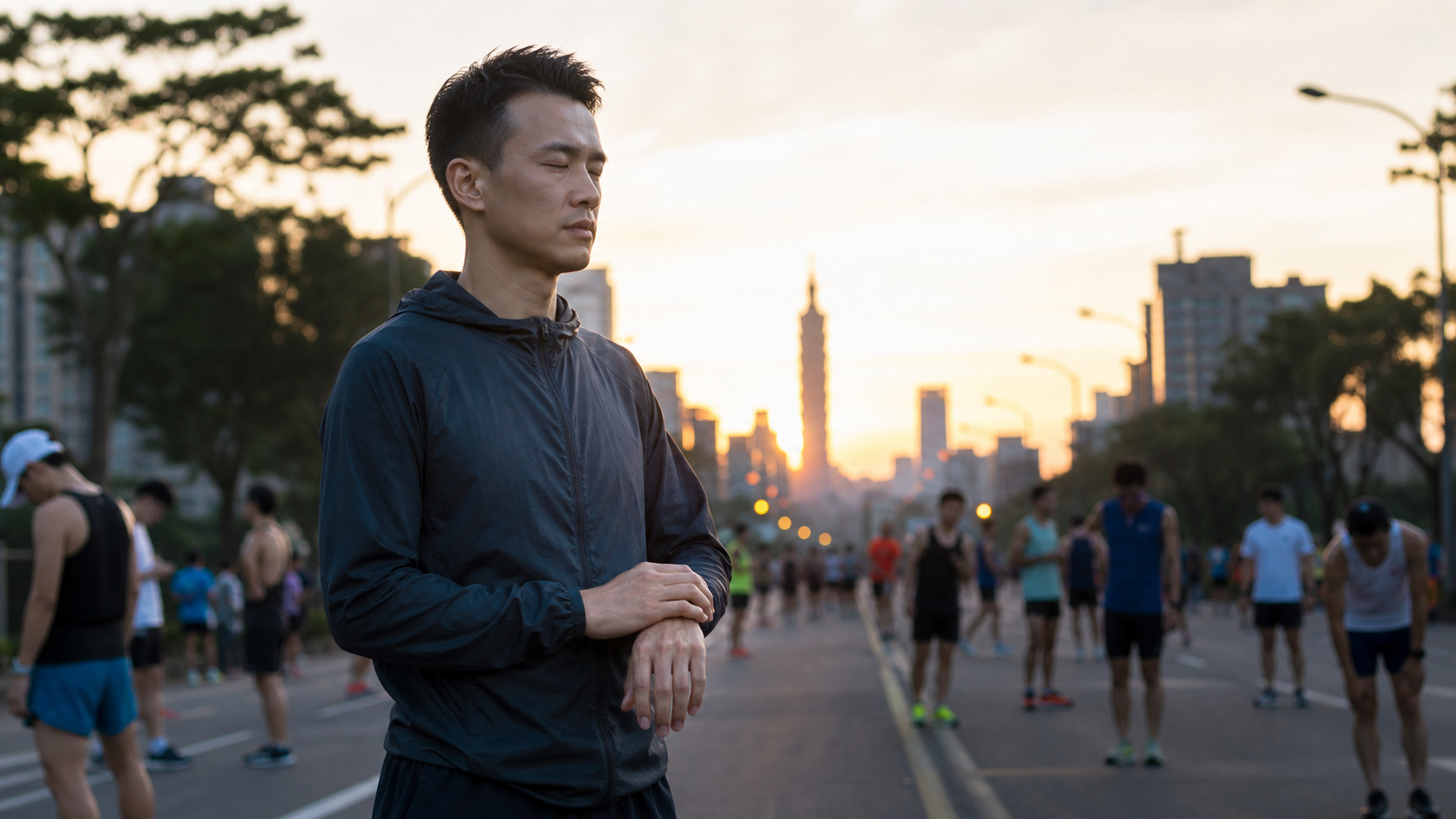
Imagine closing your eyes and feeling the thrill of standing at the starting line of the Taipei Marathon. You clearly feel the coolness of the morning, the breathing of the runners beside you, and the vibration alert on your watch. You imagine your stride as light and powerful, pushing through the 30km wall, continuing forward, and finally crossing the finish line.
This is not just daydreaming—this is Visualization Training, also known as Imagery Practice—a mental skill widely adopted by world-class athletes and supported by extensive scientific research.
The Neuroscience Foundation of Visualization Training
The brain has a remarkable property: the neural circuits activated when imagining an action highly overlap with those activated when actually performing it. Neuroscience research shows that when you vividly imagine running, the motor cortex, supplementary motor area, and cerebellum are all activated—almost identically to when you are actually running.
This means: detailed, vivid visualization practice can strengthen the neural patterns of running without expending physical energy. This offers significant benefits for runners during injury recovery, pre-race mental preparation, and breaking through psychological plateaus.
Five Key Benefits of Visualization Training
| Application Scenario | Specific Benefit |
|---|---|
| Pre-race Preparation | Reduces race anxiety, builds familiarity |
| Technique Improvement | “Practices” proper running form in the mind |
| Post-injury Recovery | Maintains neuromuscular connections, accelerates return to running |
| Mental Resilience | Rehearses difficult situations, builds coping confidence |
| Goal Reinforcement | Concretely experiences success, strengthens motivation |
Core Elements of Effective Visualization
The PETTLEP Model
The PETTLEP model proposed by sports psychologists Holmes & Collins is currently the most scientific visualization framework:
| Letter | Meaning | Application Method |
|---|---|---|
| P - Physical | Adopt the actual running posture | Stand and gently swing your arms |
| E - Environment | Imagine the real race environment | Taipei streets, spectators, aid stations |
| T - Task | Focus on specific technical movements | Foot strike pattern, arm swing |
| T - Timing | Imagine at actual speed | Don’t fast-forward; use the real pace |
| L - Learning | Adjust content as training progresses | From basic movements to full race simulation |
| E - Emotion | Incorporate real emotional feelings | Feel fatigue, joy, willpower |
| P - Perspective | Choose an internal perspective (seeing through your own eyes) | Rather than an external observer’s view |
The Most Important Principle: Multi-Sensory Integration
Effective visualization is not just about “seeing images”—it activates all senses:
- Visual: See the road ahead, other runners, the finish arch
- Auditory: Hear footsteps, cheering, your own breathing
- Tactile: Feel the force of your feet pushing off the ground
- Kinesthetic: Feel the stretching and contracting of muscles
- Emotional: Feel the sense of pride after passing the 30km mark
Specific Visualization Practice Protocols
Full Pre-Race Simulation (One Week Before the Race)
Practice 15–20 minutes daily, following this sequence:
- Quiet environment: Sit or lie down, close your eyes, and do 2 minutes of breathing relaxation
- Scene establishment: Imagine yourself standing at the race starting line, feeling the environmental details
- Full-course simulation: You don’t need to “run the entire course”—instead, select key segments:
- First 5km: Establish your pace, feel relaxed
- 21km halfway point: Check your status, keep moving forward
- 30–35km: Tackle the toughest section, maintain willpower
- Final 2km: Surge, feel the finish approaching
- Finish experience: Vividly imagine the moment you cross the finish line—seeing the numbers on the clock, feeling the applause of spectators, experiencing deep satisfaction
- Slow exit: Take deep breaths, let your emotions settle, then open your eyes
Technique Visualization (Daily Training)
Before a long run, spend 5 minutes imagining the technical movement you want to focus on improving that day:
- “Today I will focus on landing with a midfoot strike”
- Imagine yourself executing this movement perfectly 3–5 times
- After heading out, consciously connect the imagery with the actual sensation
Coping Rehearsal for Difficult Situations
Choose the race scenario you fear most and imagine yourself responding successfully:
- Imagine the fatigue at 30km, then imagine using positive self-talk to push through it
- Imagine bad weather (heat, wind, rain), then imagine adjusting your strategy and continuing forward
- Imagine falling behind your target pace, then imagine calmly accepting it and making the best choice
Practical Recommendations
- Practice daily, not just before races: Like physical training, visualization requires consistent practice to activate automatically on race day
- Start with short segments: Beginners should start with 5-minute single-segment practice, not attempt full-course simulation from the start
- Keep a visualization journal: After practice, write down “What did I imagine most clearly today?” to track progress
- Combine with music: Using the music you plan to listen to during the race during visualization can strengthen the brain’s race association
- You don’t need a “perfect” image: Some people are not skilled at generating clear visual imagery, but feeling the movements and emotions is equally effective—don’t give up because of this
Conclusion
Every great race is first completed in the mind of a runner on some quiet night before the starting line. Visualization training allows you to run not only with your legs, but with your entire brain. When you learn to vividly imagine success, your body already holds a blueprint, waiting to follow it on race day to complete your own story.
Related Reading
- Mental Imagery Training: Pre-Race Simulation Practice for Finishing the Race
- Visualization Technique Applications: Concrete Methods for “Pre-Running” the Full Course in Your Mind Before a Race
- Mental Imagery Training: Completing the Race in Your Mind
- Race Day Mental Warm-Up: The Science and Practical Script of Visualization
一個測試有沒有認真練車的方法😂 #公路車
10 個月前
西進武嶺 免費訓練分析服務 Intervals | 練不夠還是練過頭?你哪一種類型選手?AI模型告訴你! | 備戰神器 | 公路車 訓練 | CT Yeh
4 年前
2018 田中馬拉松 全程健跑 VR 360 環景錄影 體驗現場狂野加油氣氛! Insta 360
7 年前
實景訓練台) 彰化經典百K 高強度喵團 90分鐘 跟著一起練功 2019 Indoor workout Changhua Classic 100 Taiwan
7 年前
CT Talk) 數據面窺看 武嶺大神們 平時的備戰 共通點 (娛樂性質XD)
7 年前
本週北高前練習,連同天比的226們也來⋯鐵車真的太猛了 #cycling #北高
2 年前
iPhone內建一秒變長腿🤣 車友必備#cycling
2 年前
2019 柯P 超越北高 第一集團實錄 (11小時實錄請參考另一部影片) 一日雙城 一日北高 NeverStop Taiwan Long Distance Cycling Challenge
7 年前