Introduction
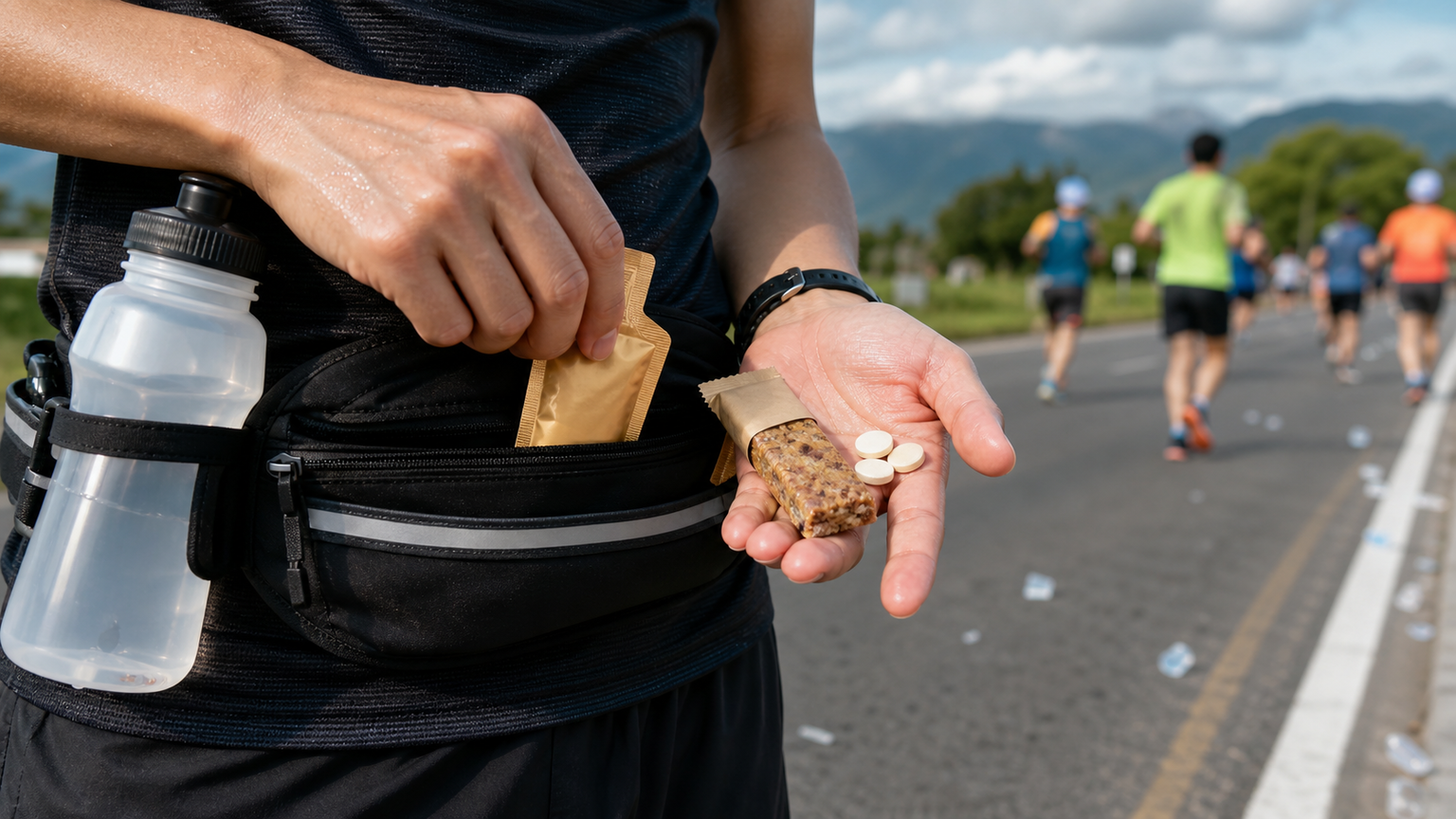
Over 42 kilometers of a marathon, you will pass through 15–17 aid stations. Each pass through an aid station is an opportunity to replenish energy, cool down, and reset your pace. Get your fueling strategy right, and you sustain your strength in the later stages; get it wrong, and stomach cramps, dehydration, or water intoxication could end your race early. Many runners neglect fueling practice in training, only to try a certain energy gel for the first time on race day—resulting in gastrointestinal distress and a wasted effort. Fueling strategy isn’t just about “what to drink,” but a complete plan of “when to drink, how much to drink, and how to drink.”
The Basics of Marathon Energy Needs
A 65 kg runner expends approximately the following during a marathon:
- Total energy: 2,600–3,200 kcal
- Carbohydrate expenditure: 400–500g (from muscle glycogen and blood glucose)
- Fluid loss: 1.5–3 liters (depending on temperature and individual differences)
- Electrolyte loss: 2–4g sodium, 0.5–1g potassium
The body’s muscle glycogen stores can support roughly 29–33 kilometers, and the energy for the remaining distance must come from external sources—this is the core reason fueling strategy exists.
The Function and Timing of Three Main Fueling Products
Water
Function: Cooling down, maintaining plasma volume, and facilitating the transport of electrolytes and sugar
Replenishment principles:
- Drink 100–200 mL at each aid station (every 2.5 km)
- Don’t wait until you’re thirsty to drink—the sensation of thirst typically lags behind actual need by 30–60 minutes
- Increase intake in hot weather (>20°C); reduce moderately in cool weather (<15°C)
- Avoid: Drinking a large volume at once (>400 mL) may cause stomach discomfort and carries a risk of diluting blood sodium
Water pickup tips:
- Don’t stop; grab the cup while maintaining a jogging pace
- Pinch a small fold in the cup’s rim to prevent water from spilling while drinking on the move
- No need to toss the cup immediately after drinking; keep holding it until the next trash bin
Sports Drink
Function: Simultaneously replenishes fluids, carbohydrates (approximately 6–8% concentration), and electrolytes (sodium, potassium, magnesium)
| Timing | Description |
|---|---|
| First 10 km | Water as the primary source, sports drink as a supplement (allowing the stomach to adapt) |
| 10–25 km | Consume 100–150 mL at each sports drink station, replacing some water intake |
| 25–35 km | Prioritize sports drinks to replenish blood glucose depleted by glycogen usage |
| After 35 km | Decide based on remaining energy, prioritizing finishing the race |
Note: Common sports drinks at Taiwanese races include Taiyen Ocean Alkaline Ionized Water or Pocari Sweat. Test the brand in training beforehand to confirm your tolerance and avoid gastrointestinal discomfort during the race.
Energy Gel
Function: Rapidly supplies a high concentration of carbohydrates (20–25g per packet), entering the bloodstream directly to maintain blood glucose
Fueling strategy (using a Sub-3 goal as an example):
| Timing | Approximate Distance | Description |
|---|---|---|
| First gel | 10–12 km | Liver glycogen begins to deplete slightly early on; maintain blood glucose proactively |
| Second gel | 18–20 km | Replenish before the halfway point to ensure ample fuel for the second half |
| Third gel | 25–27 km | Critical fueling to prevent hitting the wall at 30 km |
| Fourth gel | 33–35 km | If needed, the final energy boost for the latter stages |
Total: Carry 3–4 energy gels for the entire race, with one extra as backup
How to consume:
- Take energy gels with water (never alone! Concentrated sugar needs water to dilute it before it can be absorbed by the intestines)
- Time your intake 100–200 meters before an aid station, so you arrive just in time to wash it down with water
- Consume 1/2 packet at a time, swallowing in two mouthfuls to reduce stomach irritation
Aid Station Running Techniques
100m before aid station → Slow down to grab supplies (ease pace by 10–15 sec/km)
→ Take the supplies → Drink while jogging slowly (15–20 seconds)
→ Resume race pace
Common mistakes:
- Coming to a complete stop to drink (disrupts pace rhythm and lets muscles cool down)
- Drinking while running at full speed, causing choking (a slight slowdown is all that’s needed)
- Skipping aid stations (the 20 seconds saved in the later stages often costs 2–3 minutes of fading pace afterward)
Personalizing Your Fueling Strategy
Fueling needs vary significantly among runners; the following factors require individual assessment:
- Body weight: Heavier runners lose more fluid and need correspondingly higher intake
- Sweat rate: The majority of Taiwanese runners are heavy sweaters (evidenced by salt stains on white race shirts after the event) and need extra electrolyte replenishment
- Race pace: Sub-3 runners have higher metabolic rates and burn more carbohydrates per hour, so energy gel intervals should be shortened (one packet every 40–45 minutes)
- Aid station brands: Check the official website for announced aid station brands in advance and test the same products during training
Practical Recommendations
- Practice fueling in training: Fuel during every long run according to your race plan to confirm your stomach’s tolerance for each product
- Carry some of your own energy gels: Don’t rely entirely on race-provided products; bring 2–3 gels you’ve already tested
- Don’t skip fueling in the first half because you “don’t feel the need”: Preventive fueling is far more effective than remedial fueling
- Fueling is still necessary in cold weather: Thirst is less noticeable in cool conditions, but fluid needs don’t decrease—stick to your plan
- Log fueling details from every long run: Timing, brand, amount, and stomach response—build your personal fueling database
Conclusion
Marathon fueling strategy may seem trivial, but it’s a critical pillar of performance in the second half of the race. Every correct fueling action is the most practical investment in the version of yourself after the 30 km mark. Starting now, make fueling practice an essential part of every long run, so it becomes the most natural muscle memory on race day.
Related Reading
半日 小台灣 極限單車路線挑戰實錄
7 年前
CT暗黑廚房) 車友必備 宇宙無敵鮮蚵湯 幫助訓練恢復 天然食補 好市多 超肥鮮蚵 破PR
7 年前
#公路車 #Fitting 靠人工智慧APP 幫你調整單車
6 年前
靠單車減肥35公斤 心得分享與整理
7 年前
西進武嶺 免費訓練分析服務 Intervals | 練不夠還是練過頭?你哪一種類型選手?AI模型告訴你! | 備戰神器 | 公路車 訓練 | CT Yeh
4 年前
水金九不厭五分 10度寒流冷到不願停!feat. 卡卡 / 公路車 / CT Yeh
6 個月前
#公路車 #Vo2Max #最大攝氧量 測驗 體驗 | 心肺測試
6 年前
#公路車 #西進武嶺 配速配瓦實驗 坡度分析 四小時內攻略 建大盃 NeverStop #西進武嶺攻略
6 年前