Pre-Race Preparation for Competitive Swimming: Swim Cap Color Rules, Check-In Process, and Course Familiarization
Introduction
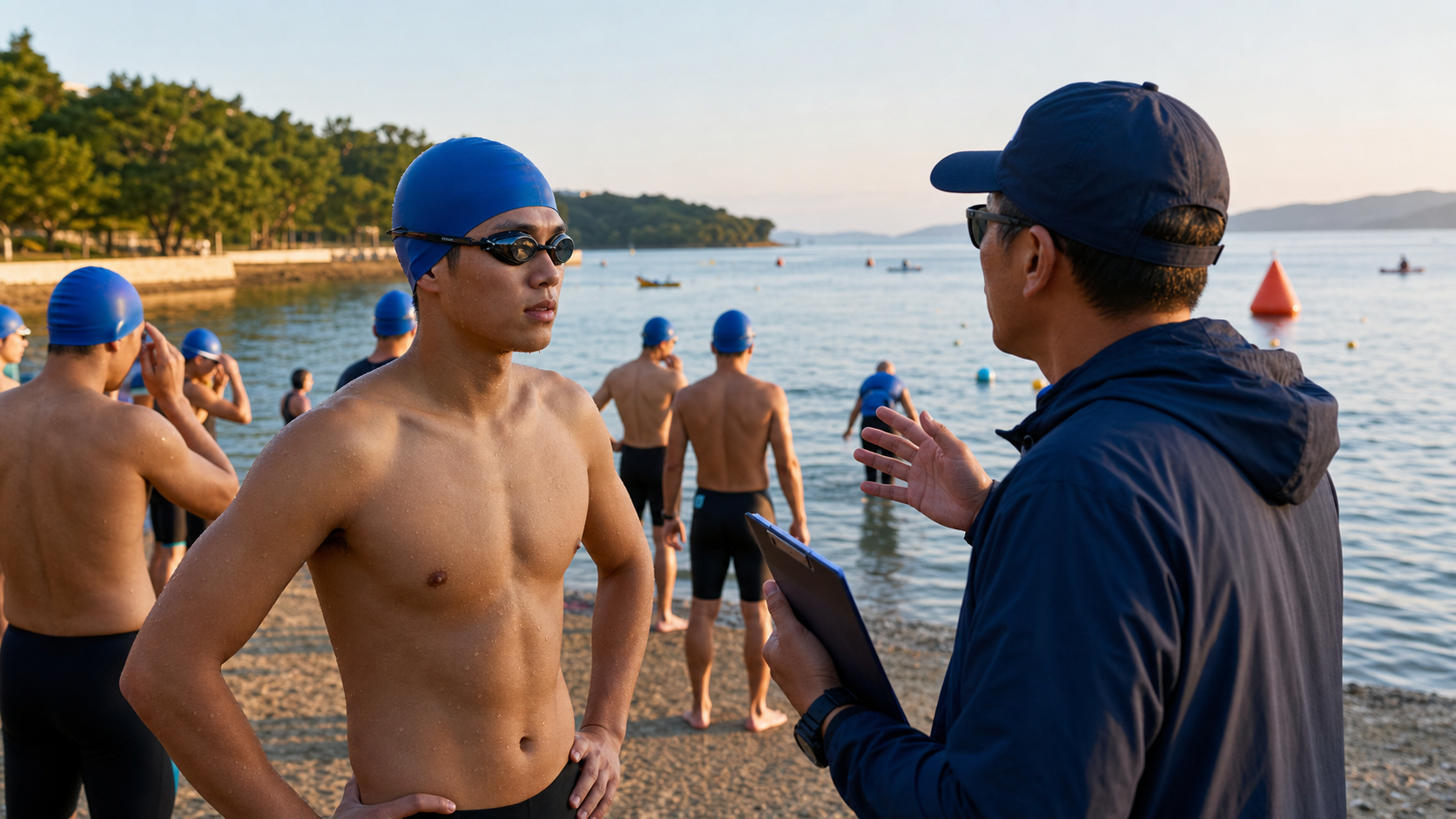
Many swimming enthusiasts stepping onto an open-water race course for the first time often waste a great deal of energy due to unfamiliarity with the administrative process: they cannot find the check-in location, do not understand what the swim cap colors mean, or do not know what time they need to gather. These seemingly trivial details, if they disrupt your rhythm before the race, can not only affect your mindset but also leave your body overly tense before the starting gun even sounds. This article will walk you through the complete pre-race process, from registration confirmation to entering the water, helping you prepare step by step.
The Meaning of Swim Cap Colors and Grouping Rules
Swim cap color is the most intuitive grouping identification tool in open-water events. Most races assign different colored swim caps based on “starting waves” or “athlete categories.” Race organizers, water safety personnel, and kayak guides all rely on swim cap colors to quickly identify which group each swimmer belongs to.
Common grouping methods are as follows:
- Elite Group: Usually white or black, starts first, with the most complete course guidance.
- Age Group: Different colors are assigned by age bracket—for example, red for ages 25–34, blue for ages 35–44, etc. Regulations vary by event.
- Relay Group: Often identified uniformly by a specific color (such as orange or yellow) to clearly distinguish them from individual participants.
- Beginner/Recreational Group: Some events, to protect first-time participants, set up a separate wave accompanied by escort boats.
Important reminder: Race organizers typically place the designated swim cap in the runner’s bag. You must not switch it out or use a different color, as doing so may result in a ruling of violation by officials or make you unidentifiable, and in an emergency, it could delay rescue response.
The Actual Steps of the Check-In Process
Although the check-in process varies slightly from event to event, the general structure is as follows:
| Step | Details | Recommended Time |
|---|---|---|
| Identity Verification | Present registration confirmation letter, ID card, or passport | 90–120 minutes before start |
| Pick Up Runner’s Bag | Swim cap, race number, timing chip band (ankle or wrist) | Same as above |
| Gear Inspection | Wetsuit (whether it complies with water temperature regulations), safety buoy | 60–90 minutes before start |
| Baggage Storage | Lock non-race gear into the designated storage area | 45–60 minutes before start |
| Athlete Briefing | Organizers explain the course, emergency procedures, and weather conditions | 30–45 minutes before start |
| Warm-Up Swim | Acclimate to water temperature, confirm buoy positions | 10–20 minutes before start |
Please pay special attention: If the event uses a timing chip, the ankle band or wristband must be securely fastened. A loose band not only affects timing but could also get tangled around your ankle in the water, creating a hazard.
Key Techniques for Course Familiarization
Scouting the course before the race is an indispensable routine for professional athletes, and amateur swimmers should take it just as seriously. Effective course familiarization covers the following aspects:
Visual Navigation Practice: From the shore, look from the start area toward the first turning buoy, and memorize the buoy’s color, shape, and landmarks in the background (such as ridgelines, tall buildings, lighthouses, etc.). In open water, lifting your head to search for buoys consumes time and energy. If you can imprint the “route map” in your mind before entering the water, your pace during the race will be smoother.
Water Temperature Testing: If the event allows, do a short test swim after check-in (usually 10–15 minutes) to let your body adapt to the day’s water temperature, while also confirming that your wetsuit fits properly and has no leak points.
Assessing Current Direction: During the test swim, deliberately swim a fixed segment to feel whether a cross-current is pushing you off course. If there is a noticeable cross-current, you will need to build in a compensation angle in your swimming direction during the race.
- Confirm emergency exit points: Locate the nearest shore access point. If you need to abandon the race midway, knowing the shortest exit route is critical.
- Remember the buoy color sequence: The start buoy, turning buoys, and finish guide buoy are usually different colors. Knowing the order will help you avoid swimming the wrong way.
- Talk with local swimmers: Local participants are most familiar with the water conditions. Asking a few questions before the race often yields practical intel you will not find in the race manual.
Practical Advice
- Check official race announcements the night before: Many events in Taiwan release the latest updates (course changes, water temperature notices, weather warnings) via official LINE groups or email the night before the race. Be sure to check once before going to bed.
- Arrive at the venue at least 90 minutes early: Parking, changing, check-in, baggage storage—every step needs buffer time. Rushing will only worsen your mental state.
- Prepare your gear the night before: Swim cap, goggles (including a spare pair), wetsuit, timing band, safety buoy, etc. Pack them into bags by category the night before so you do not have to search for anything on race day.
- Stay hydrated: The time between check-in and the start can exceed an hour. With Taiwan’s high summer temperatures, keep taking small sips of water before entering the water to avoid starting out already mildly dehydrated.
Conclusion
Pre-race preparation may look like administrative work, but it directly affects your mental stability and the quality of your start. Every detail—from the color of your swim cap to how the current feels during your test swim—is information you can grasp before the official gun sounds. Internalize these preparations as part of your pre-race routine, and you will be able to stand on the starting line calmer and more confident, saving your real energy for every stroke in the water.
Related Reading
- Complete Guide to Open-Water Race Rules and Essential Gear
- Grouping Strategy in Competitive Swimming: How to Choose Your Starting Position Based on Ability
- Complete Guide to When to Use Racing Swim Caps: Differences Between Training and Race Caps, Plus Proper Washing and Care
- Pre-Race Warm-Up Routine for Swim Meets: The Complete Process from Entering the Water to Stepping onto the Starting Block
FTL 與 SYB 車隊專訪 西進武嶺 實用攻略分享! 2小時 如何練?!你不知道的眉角!新手準備武嶺必看 EP1 | 實力派女車友 | 精華版 | 公路車 | CTYeh
4 年前
西進武嶺 自製新版AI配速表產生器 x 賽前攻略 抱佛腳! 沒有功率計也可以產生配速表嗎?有什麼其他眉角賽前要注意的呢? | 西進武嶺 / 東進武嶺 KOM 攻略 | 公路車 | CT Yeh
4 年前
新屋團體繞圈賽 | 眾多菁英好手賽道奔馳 | 千瓦女子軍團 | 無敵交管狂獲好評 明年你一定不能錯過 | #公路車
5 年前
西進武嶺 免費訓練分析服務 Intervals | 練不夠還是練過頭?你哪一種類型選手?AI模型告訴你! | 備戰神器 | 公路車 訓練 | CT Yeh
4 年前
2026 輪霸西濱200K 挑戰VLOG / 第一集團 / 首次參加..經驗不足、膀胱不足 /死守6H內 / AI戰鬥力顯示系統 / 公路車 / CT Yeh
4 個月前
2025南庄山水悠遊行 仙山KOM 網路直播! / 男菁英組A / 女菁英組A
9 個月前
2025 海鷗團體繞圈賽 網路直播 超激烈裁判長視角 / EIPC 李廷威、Waypoint 等眾多高手競爭 / feat. 卡密兒主持 / 海鷗繞圈賽
9 個月前
2023桃園團體繞圈賽 / 海鷗繞圈賽 | 全程空拍數據版 | 公路車 | CT Yeh
2 年前