Introduction
Most swimmers tend to focus on their time and ranking after a race, often overlooking the management of their body’s condition post-competition. In fact, the end of the race is not the conclusion of recovery, but its starting point. Due to the uncertainties of the outdoor environment (water temperature, sun exposure, salinity, psychological stress), open water swimming events place a greater combined toll on the body than pool races. Understanding the proper care rhythm for the 48 hours after a race can help you return to training condition in the shortest time possible while reducing the risk of injury from overtraining.
The First Hour After the Race (0–60 Minutes)
The first hour after crossing the finish line is the “golden window” for physiological recovery, and it is also the most easily overlooked period.
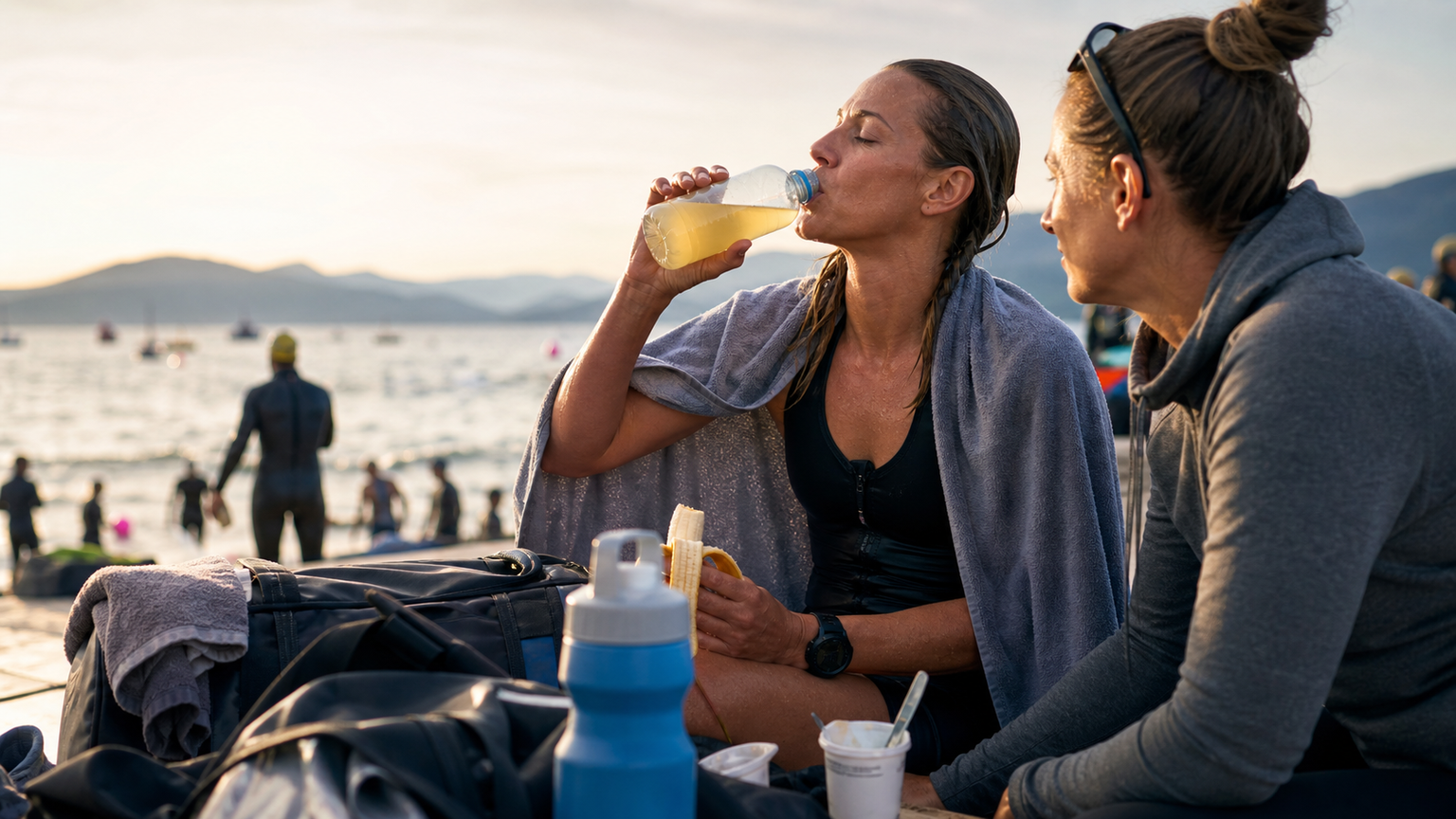
Replenish fluids and electrolytes immediately: After a long-distance swim, even in cool water, the body loses fluids through heavy sweating, respiration, and muscle metabolism. The first priority after crossing the finish line is to consume an electrolyte-containing beverage (sports drink or water mixed with electrolyte powder) within 15 minutes, rather than plain water, to avoid hyponatremia (diluting blood electrolytes by over-consuming plain water).
Quickly consume carbohydrates and protein: The 30–60 minutes post-exercise is the optimal window for muscle protein synthesis. It is recommended to consume foods containing both carbohydrates and protein within this window (e.g., banana with milk, yogurt, sandwiches), in a ratio of approximately 3:1 (carbs:protein), to aid glycogen replenishment and muscle repair.
Stay warm: After exiting cold water, your core body temperature may still be at a low point. Change into dry clothing immediately and wrap yourself in a blanket to avoid continued heat loss while standing around after the race. Conversely, in hot weather, avoid excessive exposure to direct sunlight and move to a shaded area to recover.
| Time Point | Priority | Notes |
|---|---|---|
| 0–15 minutes | Replenish 300–500ml of electrolyte drink | Avoid drinking only plain water |
| 15–30 minutes | Eat (carbs + protein) | Do not skip meals |
| 30–60 minutes | Warm up or cool down, light stretching | Avoid taking a cold bath immediately (after cold water swimming) |
| 60 minutes | Rest, avoid strenuous activity | Don’t let excitement drive you into high-intensity activity right away |
Day One After the Race (1–24 Hours)
The afternoon and evening of race day are when fatigue peaks. Many swimmers experience muscle stiffness and mild joint soreness, which is a normal response to residual lactate and mild muscle micro-damage.
Active recovery: If your body allows, a 15–20 minute easy walk after dinner can help promote blood circulation and accelerate lactate metabolism. This is more beneficial for next-day recovery than staying completely bedridden.
Bathing or warm shower: Warm water can relax muscles, ease joint discomfort, and also promote mental relaxation. If ice baths are available, some studies show that a 10–15 minute ice bath post-race can reduce acute inflammatory responses, but for the average amateur athlete, the comfort and practical effects of a warm shower are not significantly different.
Adequate sleep: Sleep is the most powerful recovery tool. Sleep quality on race night is often compromised by post-race excitement, muscle soreness, or the environment (accommodation at the race venue). Deep breathing relaxation techniques or gentle pre-sleep stretching can help you fall asleep.
- Avoid alcohol: Although alcohol may provide temporary relaxation, it disrupts the deep recovery phases of the sleep cycle and inhibits protein synthesis. Avoid it as much as possible within 24 hours after the race.
- Continue hydrating in intervals: Drink small amounts of water every 1–2 hours, aiming for urine that is light yellow to clear in color.
- Monitor physical warning signs: If you experience persistent headaches, chest tightness, severe muscle cramps, or abnormal body temperature, seek medical attention immediately. Do not take these lightly.
Day Two After the Race (24–48 Hours)
Many swimmers feel more sore on the second day after the race than the first. This is a normal manifestation of DOMS (Delayed Onset Muscle Soreness), which typically peaks 24–72 hours after exercise.
Easy recovery swim (if facilities are available): If you can access a pool, swimming 20–30 minutes at very low intensity with relaxed technique (e.g., backstroke or relaxed breaststroke) can significantly accelerate muscle recovery. The pace should be slow enough to “feel very easy,” with the goal of promoting blood flow rather than providing a training stimulus.
Light stretching and mobility work: Focus on the shoulder joints, hip joints, and ankle joints—the three areas most prone to tightness after long-distance swimming. Hold each movement for 30–45 seconds without forcing to maximum range of motion.
Continue recovery nutrition: The dietary strategy for day two is similar to day one—continue with high-quality protein intake (eggs, chicken, tofu, etc.) paired with plenty of vegetables and complex carbohydrates. Antioxidant-rich foods (dark leafy greens, berries, turmeric) help reduce inflammatory responses.
Practical Tips
- Don’t stop all activity just because you’re sore: Moderate, easy activity (walking, easy swimming) accelerates recovery better than complete bed rest. The key is keeping intensity below 60% of maximum heart rate.
- Document fatigue and body condition with photos or notes: After each race, use simple notes or a 1–10 scale to record sleep quality, muscle soreness levels, and overall energy. This data can help you make more scientific plans during the preparation phase of subsequent seasons.
- Evaluate your next training plan only after 48 hours: Once the post-race excitement has subsided and your body condition is more objective—around 48 hours later—decide when to return to formal training. Avoid impulsively scheduling high-intensity workouts while fatigue has not yet resolved.
- Share your post-race feelings with your coach or training partners: Timely sharing of your experience allows your coach to make the most appropriate adjustments when planning the next training cycle.
Conclusion
A race is a challenge for the body, and post-race recovery is the process that transforms that challenge into tangible progress. The 48-hour care after every race lays the foundation for the quality of the next training cycle. Treat recovery as part of your training, take it seriously, and you will find yourself not only performing better in each race, but also staying healthy and growing steadily throughout your competitive career.
Related Reading
- Quick Recovery After a Swim Race: Nutrition and Relaxation in the First 30 Minutes
- Recovery Nutrition After Swimming: Replenishment Principles for the Golden 30 Minutes
- Post-Basketball Game Recovery Process: Restoring 90% Performance Within 48 Hours
- Post-Race Recovery: Active Recovery and Training Adjustments the Day After
FTL 與 SYB 車隊專訪 西進武嶺 實用攻略分享! 2小時 如何練?!你不知道的眉角!新手準備武嶺必看 EP1 | 實力派女車友 | 精華版 | 公路車 | CTYeh
4 年前
Live) 備戰2019彰化經典百K 賽前攻略 (已完賽請看新影片
7 年前
西進武嶺 免費訓練分析服務 Intervals | 練不夠還是練過頭?你哪一種類型選手?AI模型告訴你! | 備戰神器 | 公路車 訓練 | CT Yeh
4 年前
CT暗黑廚房) 車友必備 宇宙無敵鮮蚵湯 幫助訓練恢復 天然食補 好市多 超肥鮮蚵 破PR
7 年前
西進武嶺 自製新版AI配速表產生器 x 賽前攻略 抱佛腳! 沒有功率計也可以產生配速表嗎?有什麼其他眉角賽前要注意的呢? | 西進武嶺 / 東進武嶺 KOM 攻略 | 公路車 | CT Yeh
4 年前
2023桃園團體繞圈賽 / 海鷗繞圈賽 | 全程空拍數據版 | 公路車 | CT Yeh
2 年前
CT 喇低賽) 武嶺牽車 才是王道 西進牽車四小時內秘訣 攝手位置 如何判斷 防抽筋小秘訣
7 年前
live) 超越北高 之一日北高12小時 策略
7 年前