Introduction
Ultramarathons refer to long-distance races exceeding the standard marathon distance of 42.195 km, while 100-mile races (approximately 160 km) such as Japan’s Ultra-Trail Mount Fuji (UTMF) and the United States’ Western States 100 represent the pinnacle challenge in the ultramarathon world. To complete a 100-mile race, aid station management is no less important than training itself—poor gear decisions can lead to hypoglycemia, dehydration, or gastrointestinal issues, directly ending your race prematurely.
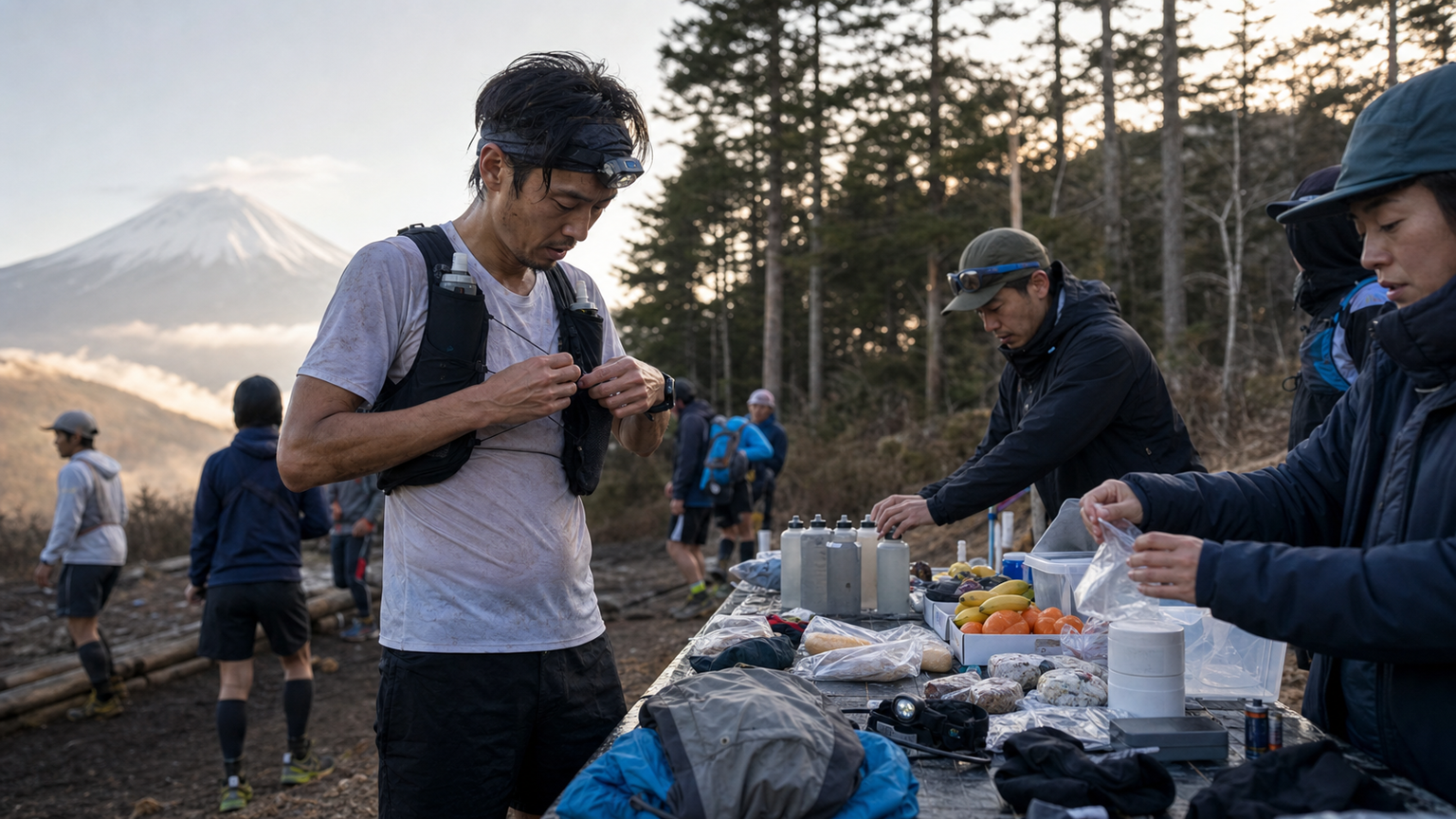
The Role of Aid Stations in Ultramarathons
In a regular marathon, aid stations are quick water stops; in ultramarathon events, aid stations serve as:
- Supply replenishment hubs: Exchange food, swap gear, recharge lighting batteries
- Medical checkpoints: Some major aid stations have medical staff on site for mandatory weight and health checks
- Mental reset zones: Receive encouragement from pacers or volunteers to recalibrate and keep moving
- Time checkpoints: Every aid station has a cutoff time; exceeding it means mandatory withdrawal from the race
Aid Station Gear Planning Strategy
100-mile races typically allow runners to place personal drop bags at major aid stations—this is the core tool for gear planning.
Drop Bag Contents Planning Example
| Aid Station (Mileage) | Recommended Gear | Purpose |
|---|---|---|
| 40-mile station | Clean socks, spare insoles, energy gels x6 | Change before nightfall, prevent blisters |
| 60-mile station | Spare headlamp batteries, lightweight jacket, solid food | Warmth and light replenishment for late-night sections |
| 80-mile station | First-aid medication, anti-chafing patches, specific preferred foods | Body is fatigued; comfort takes priority |
| 20 miles before finish | Thin-soled shoes (half size up for swollen feet), electrolyte tablets | Foot swelling is most severe in this section |
Aid Station Dwell Time Management
Veteran ultrarunners often emphasize: “Aid stations are where time gets eaten.” Many runners linger too long and eventually get caught by cutoff times. Recommendations:
- Plan what you need to do before arriving (change clothes, refuel, use the restroom) and prioritize.
- Set a maximum dwell time (no more than 10 minutes at regular aid stations, no more than 20 minutes at major ones).
- If you have a crew (personal support team), communicate your needs in advance via two-way radio or phone so they can have gear ready.
Nutrition Strategy: What to Eat and When
Ultramarathon fueling cannot rely solely on energy gels like a regular marathon, because races lasting 24–36 hours or more require real “food” for support:
- First half (0–50 miles): Focus on easily digestible energy gels, sports drinks, and bananas while gastrointestinal function is still normal.
- Middle section (50–75 miles): Solid food becomes increasingly important; peanut butter sandwiches, granola bars, and salty soup are all good choices.
- Final stretch (75–100 miles): Gastrointestinal function declines; switch to easily consumable foods like congee, hot soup, and ginger ale (to aid digestion).
Salt replenishment is equally critical. Consume 400–800 mg of sodium per hour using salt tablets or electrolyte drinks to prevent hyponatremia (exercise-associated hyponatremia).
Nighttime Aid Station Mental Strategies
The biggest challenge in ultramarathons is often not physical, but the mental breakdown at night. When entering an aid station:
- Actively talk to volunteers or your crew—verbal interaction quickly lifts your mood.
- Change into clean clothes or swap an accessory to “reset” your physical sensation.
- Hot food (noodle soup, hot ginger drink) is far more effective than sports drinks for restoring core body temperature.
- If you feel overwhelming sleepiness, a planned 10–20 minute nap beats pushing through and crashing later.
Practical Tips
- Prepare an aid station checklist: Print a list of supplies needed at each aid station and sew it onto your drop bag to avoid missing items when mentally fatigued.
- Test solid foods in advance: Simulate ultramarathon fueling during pre-race training to test which foods remain palatable after high-intensity exertion.
- Crew must understand the plan: If you have a support team, hold a full briefing on the fueling plan before race day.
- Know the cutoff times: Set reminders for each cutoff on your watch or phone to avoid lingering too long at aid stations.
- Body signals take priority over the plan: If you experience nausea, vomiting, confusion, or abnormal gait, immediately notify medical personnel—do not insist on continuing.
Conclusion
Aid station strategy in 100-mile ultramarathons is a precise art of logistics. Through advance drop bag planning, dwell time management, scientific nutrition strategies, and nighttime mental maintenance, every aid station can become a base of energy for you to set off anew. Every step of an ultramarathon completion stands on the shoulders of thorough preparation.
Related Reading
- Ultramarathon Nutrition Strategy: A Comprehensive Fueling Plan from Training to Race Day
- Ultramarathon Fueling Strategy: Timing Management of Solid Food, Fluids, and Electrolytes
- Ultramarathon and Long-Distance Race Strategy: Full Analysis of Energy Management, Run-Walk Intervals, Nighttime Sleep Deprivation, and Mental Segmentation
- Ultramarathon Pack Fueling Strategy: Mandatory Gear Checklist and Weight Management
西進武嶺 自製新版AI配速表產生器 x 賽前攻略 抱佛腳! 沒有功率計也可以產生配速表嗎?有什麼其他眉角賽前要注意的呢? | 西進武嶺 / 東進武嶺 KOM 攻略 | 公路車 | CT Yeh
4 年前
西進武嶺 免費訓練分析服務 Intervals | 練不夠還是練過頭?你哪一種類型選手?AI模型告訴你! | 備戰神器 | 公路車 訓練 | CT Yeh
4 年前
Live) 備戰2019彰化經典百K 賽前攻略 (已完賽請看新影片
7 年前
一日北高前的高裝檢 | 北高 360 | 挑戰11小時的裝備 | 一日雙塔 | 補給
6 年前
#公路車 #Fitting 靠人工智慧APP 幫你調整單車
6 年前
實景訓練台) 彰化經典百K 高強度喵團 90分鐘 跟著一起練功 2019 Indoor workout Changhua Classic 100 Taiwan
7 年前
崇越盃「西進武嶺」挑戰! / 天堂路史詩空拍 / 秘密爬坡武器/ PGYTECH CapLock MantisPod Power 續航拍攝棒 / 廢物伙伴軍團再次出征 / 公路車 / CT Yeh
2 年前
FTL 與 SYB 車隊專訪 西進武嶺 實用攻略分享! 2小時 如何練?!你不知道的眉角!新手準備武嶺必看 EP1 | 實力派女車友 | 精華版 | 公路車 | CTYeh
4 年前