Preparing for Overseas Marathons: Applying and Training for the Tokyo Marathon and Boston Marathon
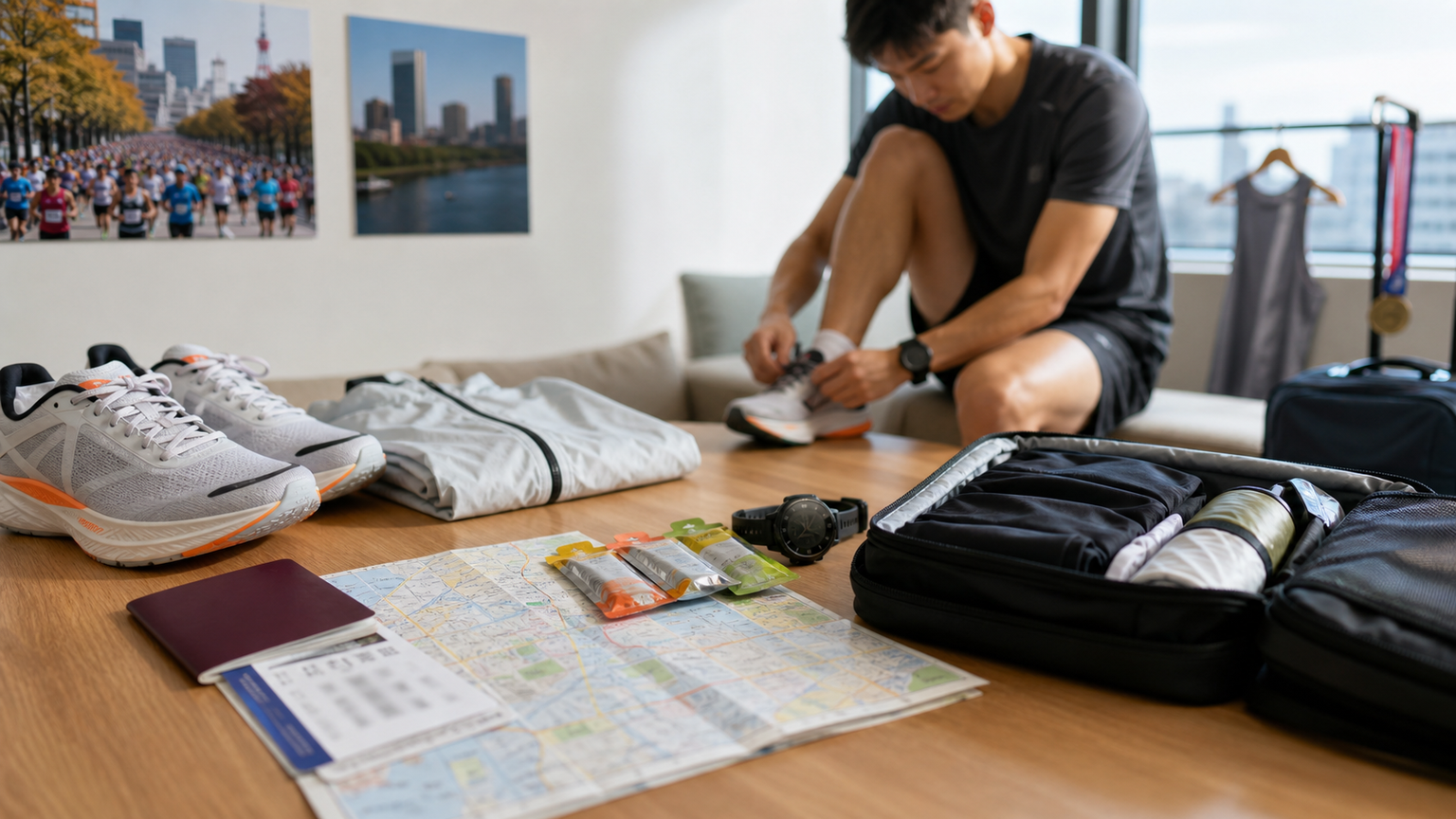
Introduction
For many Taiwanese runners, “running the Tokyo Marathon or Boston Marathon at least once in my lifetime” is a major goal of a long running career. Both races are part of the Abbott World Marathon Majors, the most prestigious events in global road running, attracting elite athletes and amateur runners from dozens of countries each year.
Tokyo Marathon
Basic Information
The Tokyo Marathon is typically held on the first Sunday of March each year. Starting from the Tokyo Metropolitan Government Building, the course passes famous landmarks such as Asakusa and Ginza, with the finish at the plaza in front of Tokyo Station.
How to Apply
The Tokyo Marathon uses a lottery system and is open to overseas runners. Taiwanese runners can apply through the following channels:
| Application Channel | Fee | Features |
|---|---|---|
| Official website lottery | Approx. JPY 10,800 | General lottery, acceptance rate approx. 10–15% |
| Charity Entry | Donation of JPY 100,000 or more | Guaranteed entry while supporting charity |
| Travel Package | Varies by package | Includes accommodation and entry; higher cost but guaranteed participation |
| Elite Qualification | Qualifying full marathon time | Men Sub-2:45, Women Sub-3:15 |
Official registration typically opens from July to August, with results announced from October to November. It is recommended to subscribe to the official newsletter for the latest information.
Tokyo Marathon Training Focus
- Course characteristics: The course is generally flat, with an out-and-back bridge section in the first half, a gentle uphill in the second half, and a slight downhill over the final 5 km. With clear sightlines after road closures and temperatures typically between 5–12°C, the conditions are ideal for setting a PB.
- Crowd strategy: The Tokyo Marathon has over 38,000 participants. The first 3–5 km are extremely congested, so do not start too fast; wait for the crowd to naturally thin out before picking up the pace.
- Cultural preparation: Japanese races have strict rules. Starting corrals are assigned by time group, so be sure to enter the correct corral. Aid stations are well organized, and there is no need to jostle for supplies.
Boston Marathon
Qualification Requirements (BQ Standards)
The Boston Marathon is one of the strictest qualifying marathons in the world. You must achieve a Boston Qualifying (BQ) time at a certified race to be eligible to register:
| Age Group | Men’s BQ Time | Women’s BQ Time |
|---|---|---|
| 18–34 years | Sub-3:00 | Sub-3:30 |
| 35–39 years | Sub-3:05 | Sub-3:35 |
| 40–44 years | Sub-3:10 | Sub-3:40 |
| 45–49 years | Sub-3:20 | Sub-3:50 |
| 50–54 years | Sub-3:25 | Sub-3:55 |
| 55–59 years | Sub-3:35 | Sub-4:05 |
Note: In recent years, due to the large number of applicants, the actual acceptance time has typically been 2–5 minutes faster than the BQ standard. Even after achieving a BQ time, you must submit it during the registration window, and competition is fierce.
Boston Marathon Course Features
The Boston Marathon course runs from Hopkinton to Boston, with a net elevation drop of approximately 130 meters. However, there are several significant climbs along the way, especially the famous “Heartbreak Hill” (approximately km 32–35), a continuous ascent that tests runners’ strength in the latter part of the race.
Training recommendations:
- Incorporate hill training in the latter part of your training plan to simulate the physical demands of Heartbreak Hill.
- Boston weather in April is unpredictable; bring a rain jacket and windproof layer.
- The local running culture is strong, and the crowds along the course are enthusiastic. The “Scream Tunnel” at Wellesley College is the liveliest section of the entire course.
Pre-Race Preparation Checklist for Overseas Marathons
Beyond training, participating in an overseas marathon requires additional preparation:
- Check passport validity: Ensure your passport is valid for at least 6 months beyond your return date.
- Travel insurance: Purchase travel insurance that covers emergency medical care and sports injuries, especially for high-intensity activities like a marathon.
- Bib pickup time: Major overseas races typically hold an expo 1–2 days before the race, and you must pick up your bib in person.
- Jet lag adjustment: If the time difference is more than 3 hours, it is recommended to arrive 3–5 days early to let your body adjust to the time zone.
- Luggage restrictions: Running shoes (including a spare pair), energy supplies, and carbon-plated shoes—the carbon plates are thin and fragile—should be carried in your carry-on luggage.
Practical Tips
- Run a few marathons in Taiwan to build confidence before registering for Tokyo: Having a full marathon finish record helps you better understand your own capabilities.
- Plan at least 6 months ahead for BQ preparation: BQ times are demanding and require systematic speed training to achieve.
- Join overseas marathon communities for Taiwanese runners: There are several Facebook groups where Taiwanese runners share information about the Tokyo and Boston Marathons, offering first-hand insights and accommodation recommendations.
- Keep your pre-race day schedule relaxed: Only do light walking; avoid standing too long for sightseeing and draining your legs.
- Make good use of the race expo: There are usually brand sales and race merchandise available, but manage your shopping time and don’t stand until your feet ache.
Conclusion
The Tokyo Marathon and Boston Marathon represent the spirit of road runners striving for excellence. The former attracts runners from around the world with its meticulous race culture and stunning city scenery; the latter selects the most determined trainers through its strict qualification requirements. Whichever race you are targeting, every kilometer of training from today onward is part of that journey.
Related Reading
- Road Race Registration Tips: Lottery Systems for Popular Races and Qualifying Entry Applications
- Road Race Registration Strategies: Lottery and Early Bird Timing for Popular Marathons in Taiwan
- Six-Star Marathon Application Guide: Entry Tickets for Boston, Tokyo, and London Marathons
- Complete Taipei Marathon Guide: Registration, Course Analysis, and Pacing Strategies
單車 一日北高 ( 雙城 ) 肥宅雙人瘋狂行 紀錄片 REACTO
10 年前
一日北高前的高裝檢 | 北高 360 | 挑戰11小時的裝備 | 一日雙塔 | 補給
6 年前
如何 搶 #中央山脈 報名 #公路車 #報名 #搶票
7 年前
2019 夏季KOM 5小 完賽心得 準備攻略 東進武嶺 夏季登山王之路 Taiwan KOM Challenge
7 年前
[海外單車] 日本 茨城 霞之浦單車 銀杏 慢遊體驗
7 年前
爬坡ITT實境)台中 魔王 松鼠坡 首航 6:12 大肚山 大三元 科福路
8 年前
日本公路最高登山賽,台灣首位YT挑戰實錄,乘鞍登山賽40週年,賽前篇完整版,請到我的YT收看 #公路車 #cycling
11 個月前
2025 乘鞍岳登山賽 比賽全紀錄篇 / 完整路線攻略介紹 / 日本版武嶺 公路最高點 / 高山空拍絕景 / 明年會開團! / 公路車 / CT Yeh
10 個月前