Emergency Response After a Cycling Accident: On-Site Management of Abrasions, Fractures, and Head Impacts
Introduction
Although cycling is a relatively safe sport, crashes still happen from time to time. From minor road abrasions to severe fractures or head impacts, each type of injury has its corresponding emergency response principles. As a cyclist or riding partner, mastering basic first aid knowledge is an essential skill every enthusiast should possess.
Common Types of Injuries in Cycling Accidents
| Injury Type | Common Mechanism of Injury | On-Site Treatment Priority |
|---|---|---|
| Skin Abrasions (Road Rash) | Falling and sliding | Stop bleeding → Clean → Bandage |
| Fractures (Most Common: Collarbone, Wrist) | Landing on hands, shoulder impact | Immobilize → Do not move → Seek medical attention |
| Head Impact | Head hitting the ground | Assess consciousness → Do not move neck → Call for rescue |
| Internal Organ Contusion | Abdomen striking handlebars or ground | Seek medical evaluation → Do not eat or drink |
Treatment of Skin Abrasions (Road Rash)
Abrasions are not life-threatening, but large or deep wounds can easily become infected if not properly treated.
On-Site Treatment Steps
- Assess safety: First, move the injured person away from the danger zone (the roadway) to ensure on-site safety
- Stop bleeding: Use a clean cloth (e.g., a jersey or clothing) to apply gentle pressure to the bleeding area; do not rub vigorously
- Clean the wound: When conditions allow, rinse thoroughly with plenty of clean water to remove debris such as gravel; if water is insufficient, do not forcibly remove embedded foreign objects
- Bandage: Cover with sterile dressing from a first aid kit, or use clean fabric for simple bandaging
- Follow-up care: After returning indoors, carefully clean the wound with warm water and mild soap to remove residual grit, then apply antibiotic ointment and cover with a moist dressing (such as Tegaderm or pharmacy wound dressings)
Abrasion wounds require daily dressing changes. Watch for signs of infection—increased redness, swelling, heat, pain, pus, or fever—and seek medical attention if any of these occur.
Treatment of Suspected Fractures
The most common fractures in cycling accidents are collarbone fractures (from impact or force transmitted after landing on an outstretched hand) and wrist fractures (Colles’ Fracture, from direct force on an outstretched hand).
On-Site Treatment Principles
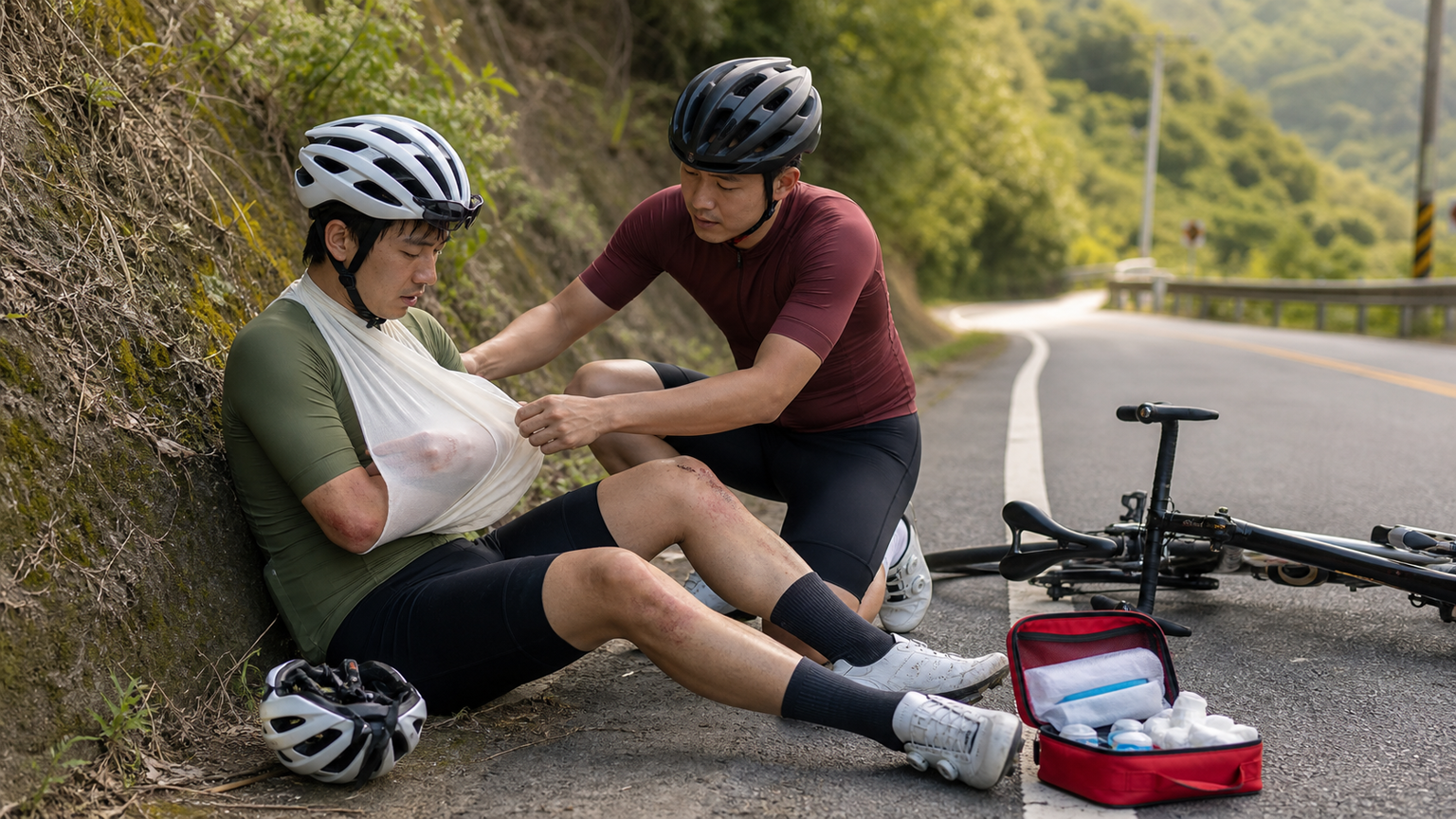
- Do not attempt to realign: Non-medical personnel must never try to “push” the fractured area back into place
- Immobilize the injured limb: Use clothing or a triangular bandage to create a sling to immobilize the arm, reducing further damage from movement
- Apply ice to reduce swelling (if available): Wrap ice or a cold drink bottle in cloth and apply indirectly to the affected area, 15–20 minutes at a time
- Seek medical attention immediately: Fractures require X-ray confirmation; some fractures (such as displaced collarbone fractures) may require surgery
After a collarbone fracture, the injured arm typically cannot be raised, there is noticeable tenderness at the fracture site, and sometimes the collarbone contour may appear deformed.
Emergency Response to Head Impacts
Head injuries are the type that requires the most caution in cycling accidents, as improper movement can worsen potential cervical spine injuries.
Emergency Assessment Process (AVPU Scale)
- A (Alert): The injured person can respond and knows where they are
- V (Voice): Responds to their name being called with eye contact or movement
- P (Pain): Responds to skin pinching but cannot respond to voice
- U (Unresponsive): No response to any stimulus—activate 119 emergency services immediately
Treatment Principles for Head Impacts
Call 119 immediately and do not move the injured person in the following situations:
- Loss of consciousness (even briefly)
- Vomiting, nausea, or worsening headache
- Unequal pupil sizes
- Blood or clear fluid from the ears or nose
- Confusion or slurred speech
Important: Even if the injured person is wearing a helmet, assessment after a head impact must not be skipped. A helmet can reduce impact force but cannot completely prevent concussion. If the helmet is cracked or visibly deformed, it must be replaced (even if it looks normal on the outside, the internal structure may have been compromised).
Practical Advice
- For long-distance or mountain rides, it is recommended to carry a basic first aid kit: sterile dressings, elastic bandages, triangular bandages, and alcohol wipes
- Stay in contact with regular riding partners; inform them of your route and estimated return time before departure
- When riding in Taiwan’s mountain areas, note the location of the nearest medical facility (you can mark them in advance using Google Maps)
- Completing a first aid training course (such as the Red Cross CPR+AED course) is essential gear for every outdoor sports enthusiast
Conclusion
Preventing accidents remains the most important principle—a cautious riding attitude and proper safety equipment are the best protection. But when an accident unfortunately occurs, staying calm and providing correct on-site first aid is the most precious way riders can look out for one another. Every safe return home is the most beautiful finish line of a ride.
Related Reading
- Handling Road Cycling Accidents: On-Site First Aid for Abrasions, Impacts, and Fractures
- Cycling Accident First Aid: Wound Care and Guidelines for Seeking Medical Attention After a Road Fall
- On-Site Management of Cycling Accidents: First Aid Knowledge and Reporting Procedures
- Emergency First Aid for Road Bike Injuries: On-Site Response to Head Trauma, Fractures, and Abrasions
摔車後補裝備: 好市多新款單車安全帽& Specialized Romin 北高整路屁股都不痛的坐墊 | 一千元居然有MIPS | CT Yeh | 公路車
4 年前
碟煞公路車 銑面器 !? 原來銑完差這麼多! 降低蹭碟機率! | TIME 公路車 保養小記錄 | CT Yeh
3 年前
#公路車 #Fitting 靠人工智慧APP 幫你調整單車
6 年前
Canyon 公路車斷把手 五年老車特規還能修嗎? 維修保養全記錄 feat. 501單車監理站 | 公路車 | CT Yeh
4 年前
單車 一日北高 ( 雙城 ) 肥宅雙人瘋狂行 紀錄片 REACTO
10 年前
爬陡坡被爆胎的車友跑步超車 #cycling #里佳部落
9 個月前
高雄綠園道鐵路自行車道 / 外地人能輕鬆駕馭 還是整路崩潰? / 2025 全線開通 春節實地探索一次!(附GPS連結)/ 公路車 / CT Yeh
1 年前
靠單車減肥35公斤 心得分享與整理
7 年前