Introduction
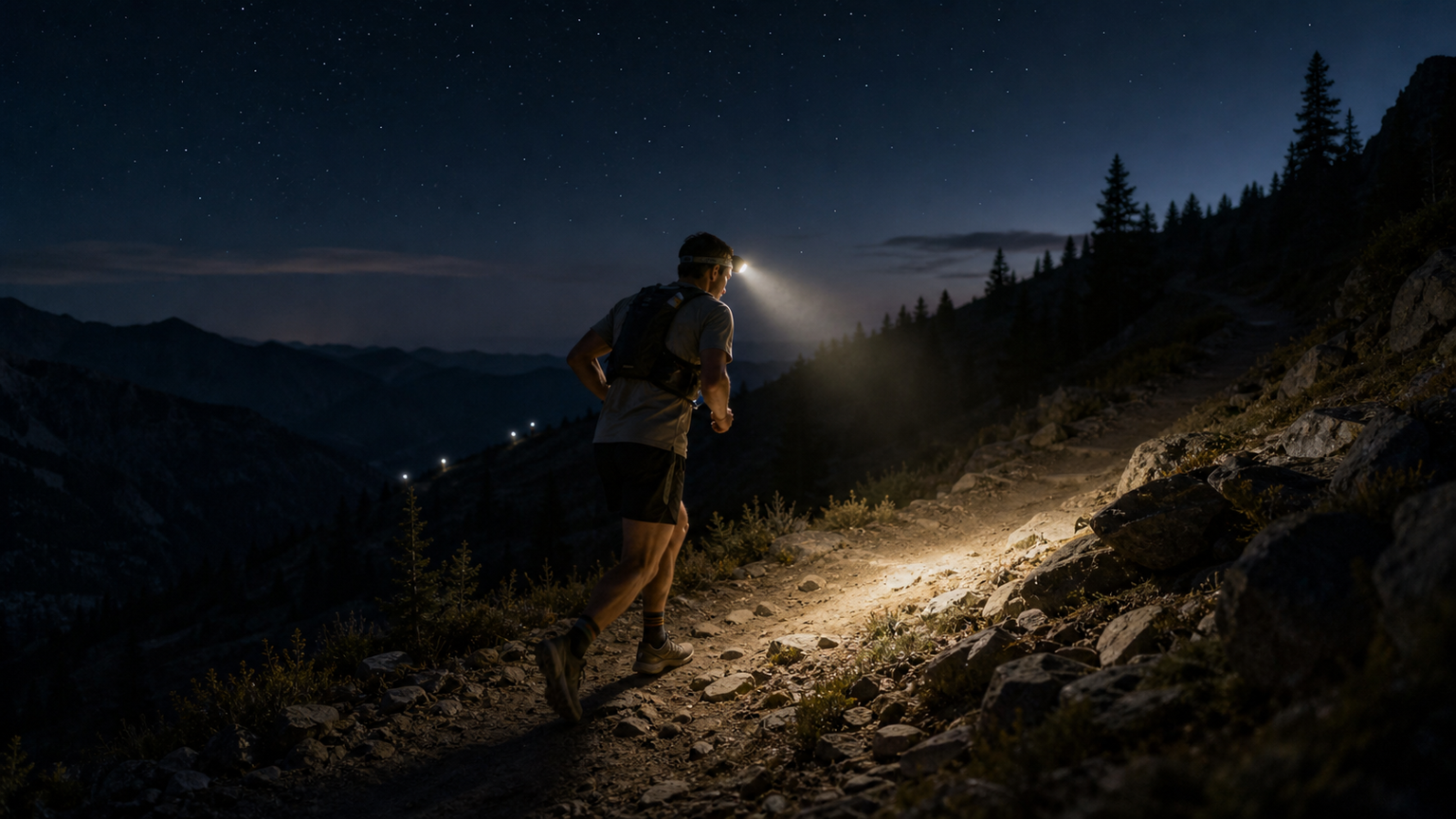
For many runners, the night section of an ultramarathon is the toughest part of the race. After sunset, your vision is confined to the beam of your headlamp, the ground beneath your feet becomes hard to read, and hours of accumulated fatigue, loneliness, and drowsiness wash over you all at once. But some runners say night running is the most captivating part of an ultramarathon—the starry sky in the mountains, the cool air, the primal feeling of a headlamp cutting through the darkness. The key lies in preparation. This article shares mental coping strategies for the night section and a guide to choosing a headlamp.
The Mental Challenges of Night Running
The difficulty of the night section isn’t just limited visibility—much of it comes from the psychological side:
1. Isolation and Distorted Perception of Time
During the day, you can see runners ahead and behind you, feeling like you’re part of the whole race. After dark, each person’s headlamp beam becomes its own isolated universe, with only three meters of ground in view, and time begins to pass abnormally slowly. If you don’t anticipate this sense of isolation in advance, it can amplify into enormous psychological pressure at night.
How to cope: Schedule night training runs during your preparation period to get your body and mind accustomed to the rhythm of the dark ahead of time. Tell yourself before the race: “The night is temporary; there’s always a finish line or aid station before dawn.”
2. Negative Thinking Triggered by Fatigue
The night section of an ultramarathon usually falls in the latter half of the race, when your body is already highly fatigued, and your brain is especially prone to falling into a negative loop: “I can’t finish,” “My legs are done,” “I might as well drop out.” These voices tend to be loudest at two or three in the morning.
How to cope:
- Do mental rehearsals during your preparation: plan what you’ll say to counter negative thoughts when they arise (for example: “This voice is fatigue talking, not me”)
- Set small goals: “Make it to the next streetlight,” “Make it to that rock”—don’t think about how many kilometers remain
- Fill the mental space with music or podcasts (if race rules allow)
3. Drowsiness and Microsleep
Runners in races longer than 24 hours will encounter drowsiness, and under extreme fatigue, you may even experience “microsleep” while running—briefly losing consciousness for a few seconds. This is extremely dangerous on mountain trails.
How to cope: When you reach an aid station with chairs, a short 10–20 minute nap (set an alarm) is more worthwhile than pushing through; caffeine (energy gels or black coffee) is especially effective at night.
Headlamp Selection Guide
Choosing the right headlamp greatly improves your sense of safety and comfort during night running. Here are the key purchasing considerations:
| Specification | General Night Running Needs | Ultramarathon Needs |
|---|---|---|
| Brightness | 200–400 lumens | 400–800 lumens (higher required on mountain trails) |
| Beam Pattern | Flood beam is sufficient | Flood + spot beam switching |
| Battery Life | 3–5 hours | 8–10+ hours on the highest mode |
| Weight | 80–100g | The lighter the better, but without sacrificing brightness |
| Water Resistance | IPX4 | IPX4 or higher (mountain areas have more fog/rain) |
Recommended Brands and Features
- Petzl (France): The Nao and Swift RL series feature reactive lighting (automatically adjusts to the environment), a mainstream choice in the ultramarathon world
- Black Diamond (USA): The Spot and Storm series are reliable and durable, with flexible battery options (AAA or rechargeable)
- Fenix (China): Great value for money; the HL60R and HM65R have excellent beam quality
- Silva (Sweden): Loved by trail runners; the Trail Speed series is lightweight with a focused beam
Backup Power Strategy
- You must carry a backup headlamp or spare batteries for night races (many races also mandate this)
- Rechargeable headlamps: bring a spare charging cable; you can charge briefly at aid stations
- Battery-powered headlamps: carry two sets of batteries; swapping batteries at an aid station is faster than charging
Adjusting Your Stride at Night
With limited visibility in the dark, you need to actively adjust your stride:
- Shorten your stride: Gives you more reaction time for what’s ahead
- Look 2–3 meters ahead, not just at your feet
- Slow down on descents: Rocks and tree roots are hard to distinguish on downhill sections at night; better to take more time than to risk a fall
- Lift your feet a bit higher: Tripping hazards on the trail look flatter at night than they do in daylight; lifting your feet higher reduces the chance of falling
Practical Tips
- Complete at least three night training runs: Test your headlamp and mental state in real darkness
- Wear reflective gear at night: If the race course has vehicle traffic, a reflective vest or clothing greatly improves safety
- Tell your running partner your night plan: Arrange to meet at aid stations, encourage each other, and check on each other’s condition
- Night nutrition is more important than daytime: It’s easy to forget to fuel when fatigued; set a watch reminder
- Bring a light jacket: Temperatures drop sharply in mountain areas after dark, even in summer it can fall below 15 degrees; put it on when stopping at aid stations
Conclusion
The darkness is a hurdle in ultramarathons, but also an opportunity for transformation. The joy runners feel the moment dawn arrives after running through the night is a gift that daytime racing can never provide. Be prepared, choose the right gear, and treat the darkness as a friend rather than an enemy. The night section is one of the most treasured memories of your ultramarathon journey.
Related Reading
- Night Running Strategies for Ultramarathons: Headlamp Selection and Night Running Mental Preparation
- Ultramarathon Night Running Techniques: Headlamp Brightness, Night Heart Rate, and Night Fueling Rhythm
- Pacing the Night Section of Trail Races: The Solitary Battle Under a Headlamp—The Dual Challenge of Pacing and Psychology
- Mental Preparation for Your First Ultramarathon: Managing Expectations for the Unknown Distance
iPhone 12 Pro 夜間騎車動態錄影 效果屌打 GoPro Hero 9 | 公路車 團練
5 年前
FTL 與 SYB 車隊專訪 西進武嶺 實用攻略分享! 2小時 如何練?!你不知道的眉角!新手準備武嶺必看 EP1 | 實力派女車友 | 精華版 | 公路車 | CTYeh
4 年前
一日北高前的高裝檢 | 北高 360 | 挑戰11小時的裝備 | 一日雙塔 | 補給
6 年前
沉浸室內單車練功房開箱! 100吋大畫面,最便宜的花費? 居然還能K歌!? | 公路車 | CT Yeh
3 年前
CT 喇低賽) 單車 比賽總是沒照片? 攝影師的觀點大公開 姿勢就是力量! 請加速1.25倍收看
7 年前
CT 喇低賽) 武嶺牽車 才是王道 西進牽車四小時內秘訣 攝手位置 如何判斷 防抽筋小秘訣
7 年前
雷達尾燈 雷不雷? 邁金L508 智慧雷達尾燈 情境考驗實測 | 同場加映 2千元等級的專業車錶 C406 Pro | 公路車 | CT Yeh
3 年前
一日北高 11小時 賽後心得分享篇 | TWB北高360 | 一日雙城 | 單車 | 公路車
6 年前