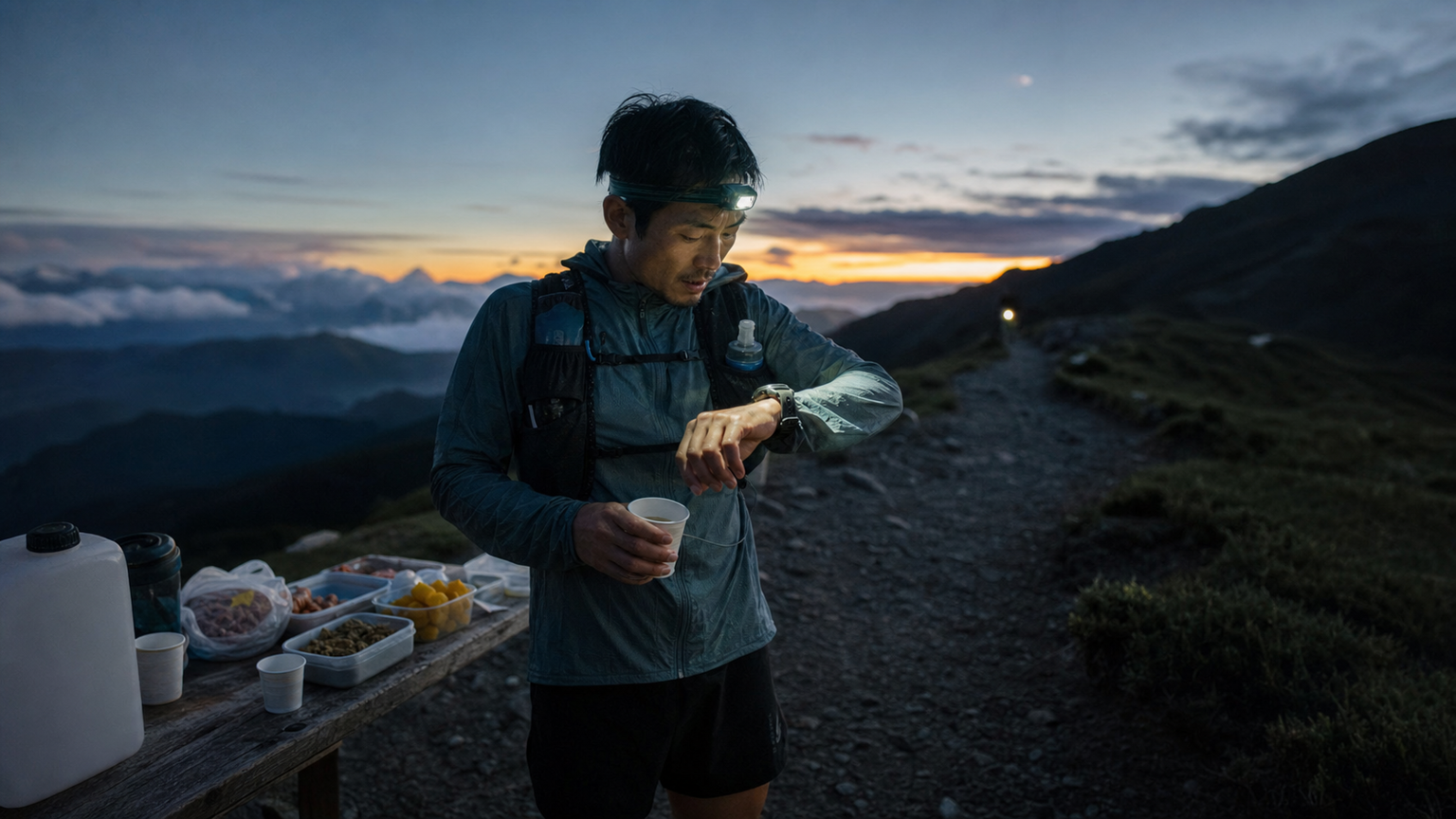
Introduction
After running for 20 hours on an ultramarathon course, your brain starts playing tricks on you: rocks by the trail look like animals, you start losing your sense of direction, and you even close your eyes for a few seconds mid-stride. This isn’t a hallucination—it’s the real physiological response to sleep deprivation. For runners competing in 24-hour timed races, 100-milers, or multi-day ultramarathons, maintaining judgment and physical function under sleep deprivation is one of the key skills for finishing. This article shares science-based strategies for staying awake and managing sleep.
The Physiological Effects of Sleep Deprivation
After being continuously awake for more than 17 hours, cognitive function declines to a level equivalent to a blood alcohol concentration of 0.05%; beyond 24 hours, it’s equivalent to 0.1% (the drunk-driving standard in most regions). Specific effects include:
- Impaired judgment: Difficulty assessing dangerous trail conditions, greatly increasing risk on mountain paths
- Slower reaction time: Balance reactions slow down when stepping on unstable ground
- Mood swings: Particularly prone to feelings of despair, anger, or crying without reason
- Visual hallucinations: Prolonged sleep deprivation can cause visual hallucinations, especially in the dark
- Abnormal pain perception: Sometimes you feel no pain at all (numbness), other times you become overly sensitive to pain
| Hours Awake | Cognitive Impact | Recommended Response |
|---|---|---|
| 17–20 hours | Mild cognitive decline | Increase fueling frequency, watch the terrain |
| 20–24 hours | Moderate, judgment noticeably affected | Introduce caffeine, consider a brief rest |
| 24–36 hours | Severe, risk of visual hallucinations and emotional breakdown | Planned naps, travel with a companion |
| 36+ hours | Extremely severe | Mandatory nap, not advised to proceed alone |
Pre-Race Sleep Strategy: The “Sleep Banking” Concept
Many ultramarathon runners deliberately increase their sleep time in the days before a race—this is called “Sleep Banking.” Research shows that getting adequate sleep (8–9 hours) for several consecutive days before a race can delay the onset of sleep deprivation’s negative effects during the event.
- 5–7 days before the race: Target 8–9 hours of sleep each night
- Night before the race: Many runners can’t sleep well due to nerves—this is normal. Sleep from 2–3 days before the race matters more than the night before
- Nap supplementation: If you have the chance in the week before the race, a daily 20–30 minute nap can effectively build your sleep bank
Caffeine Strategy: The Most Effective Wakefulness Tool
Caffeine is one of the most important fueling components during the nighttime segment of an ultramarathon, but timing is critical:
- Start time: Recommended to begin using it after 16–18 hours of wakefulness (usually at night), to avoid burning through your tolerance too early
- Dosage: 50–100mg per dose (about one small cup of black coffee or one caffeinated energy gel), avoid large single doses
- Interval: Replenish every 90–120 minutes to maintain a steady blood concentration
- When to stop: If you plan to nap at an aid station, stop caffeine intake 90 minutes before the nap
- Watch your stomach: Caffeine can irritate the GI tract; those with sensitive stomachs should be cautious
Caffeine source options: energy gels (caffeinated versions), black coffee, alertness tablets (such as Vivarin), cola (also provides sugar).
Planned Napping: The Ultramarathon’s Secret Weapon
The secret of many veteran ultramarathoners is “don’t push through—nap strategically.” A proper nap can greatly improve your subsequent running ability:
- Optimal nap length: 10–20 minutes (a “Power Nap”), without entering deep sleep, so you don’t wake up feeling more tired
- Nap location: A chair or the floor at an aid station, with a travel pillow or someone to hold you up
- You must set an alarm: A nap without an alarm can turn into 2 hours, completely destroying your rhythm
- Post-nap “inertia”: You may feel worse for the first 5–10 minutes after waking—this is normal, and it improves once you start moving again
Non-Sleep Wakefulness Strategies
When napping isn’t possible or appropriate, the following strategies can help maintain alertness:
- Conversation: Talk with other runners or volunteers to activate the brain’s social circuits
- Music or podcasts (if race rules allow): Upbeat music can temporarily boost your spirits
- Cold water on your head: Splash cold water on your face at aid stations or soak a towel and place it on the back of your neck—effective for staying alert
- Talk or sing out loud: Sounds crazy, but it genuinely works
- Change your running environment: Switch from downhill to uphill, from running to walking—change the stimulus pattern
Practical Advice
- Agree with a running partner to monitor each other at night: If your partner observes abnormal behavior (stumbling, slurred speech), they have a responsibility to make you rest
- Inform aid station staff of your condition: They are trained and can assess whether medical intervention is needed
- Don’t be ashamed to say “I need to rest”: Pushing through and making dangerous decisions costs far more than a 15-minute rest
- Bring headphones but don’t force their use: On remote mountain trails at night, you should maintain auditory awareness; only use them on safe sections
Conclusion
In ultramarathons lasting over 24 hours, the ability to stay awake is itself a skill that can be trained and managed. Understanding the effects of sleep deprivation, building a pre-race sleep bank, using caffeine scientifically, and taking planned naps at the right times—combining these four strategies lets you keep moving safely and alertly before dawn arrives. Every step is a choice made with a clear mind.
Related Reading
- Sleep Deprivation Management in Ultramarathons: Staying Awake Strategies for 24-Hour Races
- Sleep Deprivation Management in Extreme Endurance Sports
- Sleep Management in Trail Races: Whether, When, and How Long to Sleep in 100-Mile Events
- Nighttime Fueling for Ultramarathons: Caffeine Use Strategies and Timing Control for Night Segments
CT 喇低賽) 武嶺牽車 才是王道 西進牽車四小時內秘訣 攝手位置 如何判斷 防抽筋小秘訣
7 年前
西進武嶺 免費訓練分析服務 Intervals | 練不夠還是練過頭?你哪一種類型選手?AI模型告訴你! | 備戰神器 | 公路車 訓練 | CT Yeh
4 年前
2019 夏季KOM 5小 完賽心得 準備攻略 東進武嶺 夏季登山王之路 Taiwan KOM Challenge
7 年前
CT 喇低賽) 單車 比賽總是沒照片? 攝影師的觀點大公開 姿勢就是力量! 請加速1.25倍收看
7 年前
iPhone 12 Pro 夜間騎車動態錄影 效果屌打 GoPro Hero 9 | 公路車 團練
5 年前
2016/4/20 - 中社路 夜騎 半年甩肉14KG 後測
10 年前
戰略) Zwift Race 如何咬在第一集團 如何評估自己要開多少推力 (請開1.5倍速看)
7 年前
一日北高 11小時 賽後心得分享篇 | TWB北高360 | 一日雙城 | 單車 | 公路車
6 年前