Introduction
The moment you cross the finish line of an ultramarathon, many runners’ first thought is: “I want to run farther next time.” But before that thought can be put into action, the body needs time to complete a massive repair project. The damage an ultramarathon inflicts on the body is beyond imagination—massive muscle fiber tearing, temporary immune system suppression, abnormal kidney stress, and altered intestinal mucosal permeability. Neglecting post-race recovery won’t just hurt your performance in the next race; it can also cause long-term health damage. This article systematically outlines the recovery timeline and strategies after finishing an ultramarathon.
Immediate Post-Race Phase (0–24 Hours)
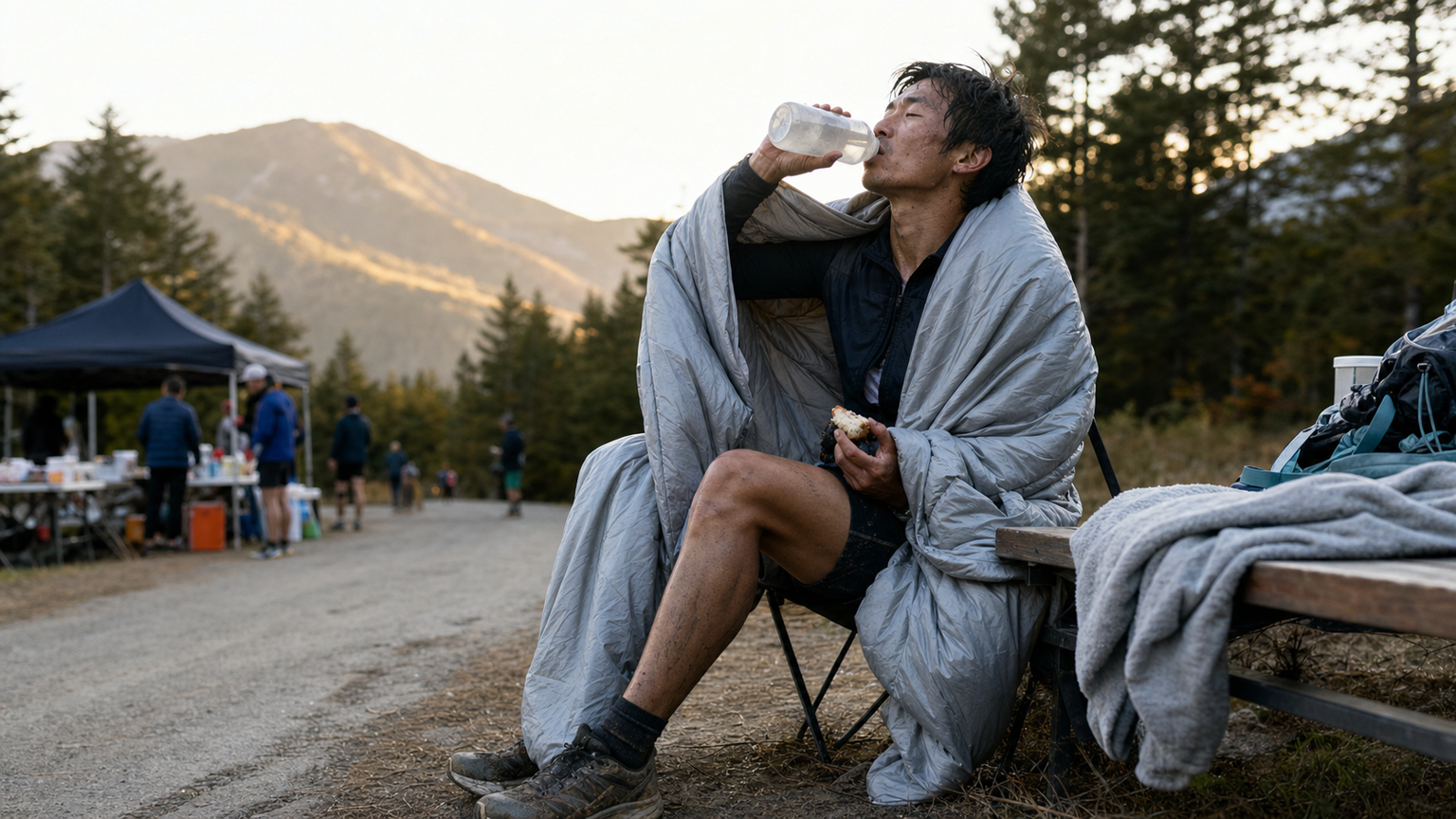
The First Few Hours After Finishing
After finishing an ultramarathon, the body needs immediate attention to the following issues:
- Staying warm: After prolonged exercise, thermoregulation declines, and hypothermia is possible even in mild weather. Change into dry, warm clothing.
- Rehydration and electrolytes: Continue consuming electrolyte-containing drinks after the race, rather than drinking large amounts of plain water.
- Eating immediately: Consume food containing carbohydrates and protein within 30–60 minutes of finishing to kickstart muscle repair.
- Monitor urine color: If urine appears dark brown (rather than dark yellow), it may be a warning sign of rhabdomyolysis and requires immediate medical attention.
- Avoid immediate cold-water baths: Brief localized cold therapy (e.g., on the knees) is fine, but full-body cold-water immersion should wait until recovery is well underway.
Sleep Is the Most Important Recovery Tool
On the night after the race, get as much sleep as possible. The body secretes growth hormone during sleep, which is the primary driver of muscle and tissue repair. If post-race excitement makes it hard to fall asleep, try:
- Staying away from phone screens
- A warm shower (not cold) to promote parasympathetic nervous system activation
- Gentle stretching or breathing exercises
Acute Post-Race Recovery Phase (Days 1–7)
| Day | Typical Symptoms | Recommended Activities |
|---|---|---|
| Days 1–2 | Severe muscle soreness (DOMS), difficulty walking | Rest, light walking, plenty of sleep |
| Days 3–4 | Soreness begins to ease, but muscles still fatigued | Easy swimming or cycling (10–20 minutes) |
| Days 5–7 | Marked improvement, but not full recovery | Easy walking or non-impact exercise |
Do not run this week, no matter how good you feel. Post-ultramarathon recovery operates on both a perceptual level and a cellular level—feeling good does not mean the cells have repaired.
Key Nutritional Priorities
- Protein: Ensure 25–35g of quality protein at each meal to accelerate muscle repair (daily total of 1.6–2.2g per kg of body weight)
- Anti-inflammatory foods: Turmeric, berries, dark leafy greens, and fish rich in Omega-3
- Avoid excessive alcohol: Alcohol suppresses protein synthesis and sleep quality; best avoided for the first week post-race
- Continue iron supplementation: The impact of foot strikes during long runs damages red blood cells (footstrike hemolysis); pay attention to iron intake after the race
Mid-Term Recovery (Weeks 2–4)
Guidelines for Returning to Running
The “one mile per day” rule is widely circulated in the ultramarathon community: for every 1 mile (1.6 km) of race distance, take one full day of complete rest and recovery. This is only a rough guideline, but it provides a conservative baseline:
- 50K ≈ 31 miles → roughly 31 days until full recovery
- 80K ≈ 50 miles → roughly 50 days until full recovery
- 160K ≈ 100 miles → roughly 100 days until full recovery
However, “full recovery” does not mean you cannot run for a month; rather, it refers to the time needed for the muscular, skeletal, immune, and endocrine systems to all return to pre-race levels.
Recommended Activity Pace for Weeks 2–4
- Week 2: Easy swimming, cycling, yoga; may attempt a 20–30 minute easy run (if pain-free)
- Week 3: Gradually increase easy running volume to 20–30K per week, at a purely aerobic pace
- Week 4: If feeling good, attempt one 10–15K long run and observe how the body responds
The Immune System’s “Open Window”
For 3–72 hours after an ultramarathon, the immune system enters an “open window” period—immune function is temporarily suppressed, and the risk of infection rises significantly. Preventive measures:
- Avoid prolonged stays in crowded public places (such as public transit)
- Wash hands frequently
- Get adequate sleep
- Temporarily avoid close contact with sick people
- Consider supplementing with Vitamin C and zinc
Managing Common Post-Race Injuries
- Blisters: Puncture with a sterile needle to drain, disinfect, and cover with a breathable dressing; avoid peeling off the skin
- Black toenails: No special treatment needed; the nail will fall off naturally and regrow (may take 3–6 months)
- Knee pain: If pain persists for more than a week after the race, see an orthopedic or sports medicine specialist
- Tendinitis (Achilles/IT band): Rest, ice, physical therapy—do not push through and continue training
Psychological Recovery Matters Too
“Post-Race Blues” after an ultramarathon is quite common. Runners may lose their sense of direction after achieving their goal, and the mood swings caused by physical exhaustion can lead to unexplained low spirits 1–2 weeks after finishing.
Ways to cope:
- Allow yourself to feel this emptiness; it is normal
- Don’t rush to set the next goal (wait at least a week)
- Share your post-race feelings with other ultramarathon runners
- Redirect energy toward non-running activities like spending time with family and socializing
Practical Advice
- Get a full post-race physical assessment: 1–2 weeks after the ultramarathon, schedule an appointment with a sports medicine physician or physical therapist to check for hidden injuries
- Keep a photo and journal log: Document each stage of post-race recovery as a reference for future race preparation
- Don’t return too early: “Feeling ready” and “truly fully recovered” are often 2–4 weeks apart
- Make recovery part of your training plan: Treat post-race recovery as the first week of preparing for your next ultramarathon
Conclusion
Finishing an ultramarathon is an ending, and also a beginning. Your body spent months preparing for the race, burned through dozens of hours on the course, and now it needs time to rebuild. Give it that time—let the cells complete their repair in quiet, and let your bones, tendons, and mind all return to a stronger state. The success of your next ultramarathon begins with full recovery today.
Related Reading
- Physical Recovery After an Ultramarathon: A Gradual Return to Training Two Weeks Post-Race
- Recovery After a Half Marathon: A One-to-Two-Week Repair Plan
- Recovery Nutrition After an Ultramarathon: A Phased Dietary Strategy for the 72 Hours Post-Race
- Physical Recovery After a Marathon: A Two-Week Post-Race Plan
CT暗黑廚房) 車友必備 宇宙無敵鮮蚵湯 幫助訓練恢復 天然食補 好市多 超肥鮮蚵 破PR
7 年前
摔車後補裝備: 好市多新款單車安全帽& Specialized Romin 北高整路屁股都不痛的坐墊 | 一千元居然有MIPS | CT Yeh | 公路車
4 年前
FTL 與 SYB 車隊專訪 西進武嶺 實用攻略分享! 2小時 如何練?!你不知道的眉角!新手準備武嶺必看 EP1 | 實力派女車友 | 精華版 | 公路車 | CTYeh
4 年前
一日北高前的高裝檢 | 北高 360 | 挑戰11小時的裝備 | 一日雙塔 | 補給
6 年前
#公路車 #Fitting 靠人工智慧APP 幫你調整單車
6 年前
Live) 備戰2019彰化經典百K 賽前攻略 (已完賽請看新影片
7 年前
西進武嶺 免費訓練分析服務 Intervals | 練不夠還是練過頭?你哪一種類型選手?AI模型告訴你! | 備戰神器 | 公路車 訓練 | CT Yeh
4 年前
一日北高 11小時 賽後心得分享篇 | TWB北高360 | 一日雙城 | 單車 | 公路車
6 年前