Introduction
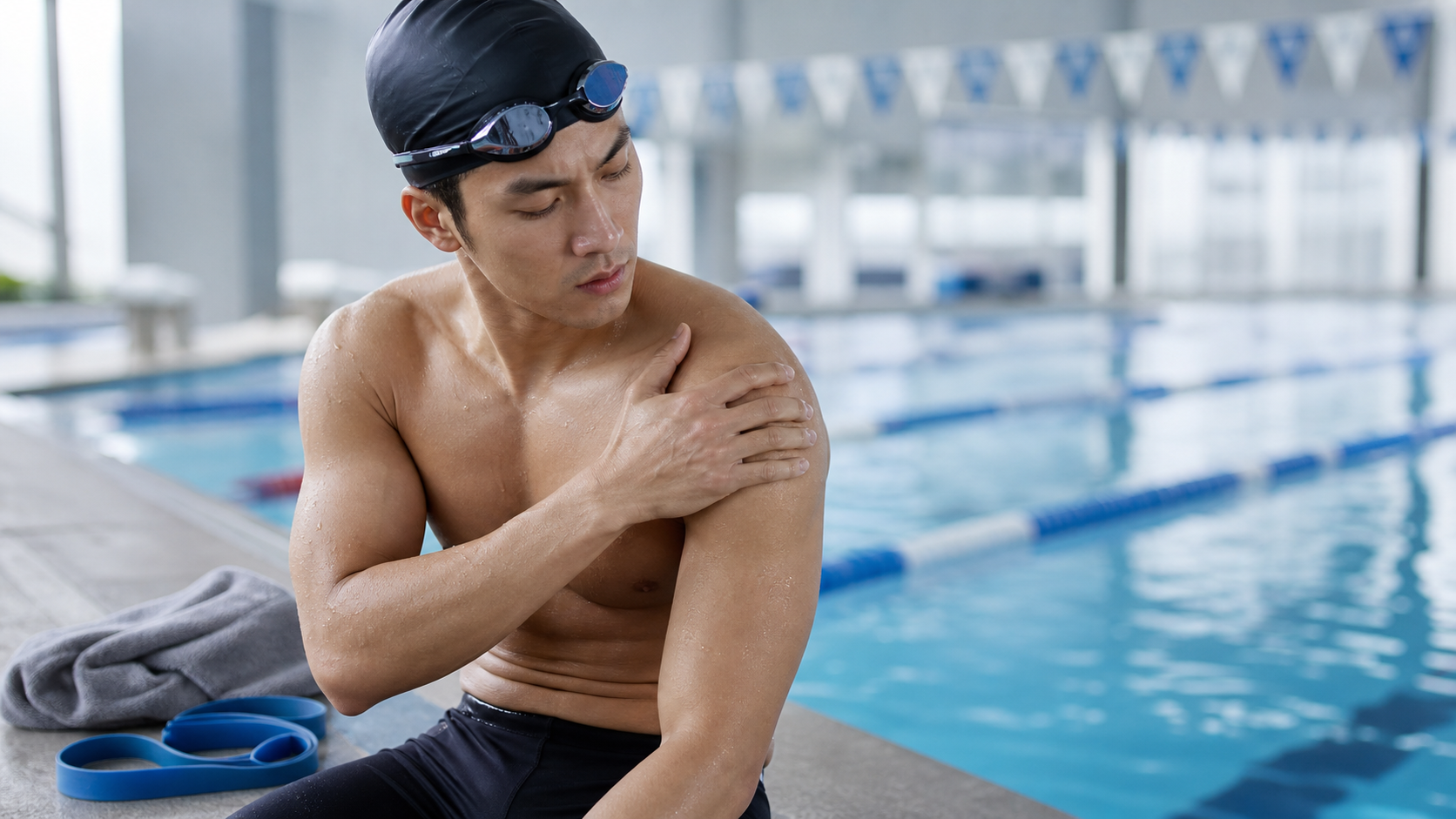
“Swimmer’s Shoulder” is a collective term in sports medicine for shoulder pain syndromes related to swimming, encompassing various pathologies such as rotator cuff tendinitis, subacromial impingement syndrome, long head of biceps tendinitis, and labral tears. Research shows that the prevalence of shoulder injuries among elite swimmers is as high as 40–70%, and even recreational swimmers have about a 30% chance of developing shoulder pain symptoms after prolonged training. Since the shoulder is the primary force-generating joint in swimming, with approximately 1,000 shoulder rotations required per 1,500 meters swum, the highly repetitive movement pattern makes the shoulder the most vulnerable anatomical site in the sport of swimming.
Analysis of the Causes of Swimmer’s Shoulder
Structural Vulnerability of the Rotator Cuff
The rotator cuff consists of the supraspinatus, infraspinatus, teres minor, and subscapularis, which are responsible for stabilizing the humeral head within the glenoid fossa. The supraspinatus tendon has poor blood supply (the “watershed zone”) as it passes through the subacromial space, resulting in slow recovery after injury. The continuous pulling motion during swimming causes the supraspinatus tendon to be repeatedly subjected to mechanical compression against the bony structures of the acromion, leading to chronic inflammation and even partial tears over time.
Injury Mechanisms of Technical Deficiencies
- Dropped Elbow: If the elbow drops below the wrist during the pull phase after hand entry, it causes compensatory internal rotation of the shoulder joint, increasing supraspinatus impingement
- Crossover: The hand crossing the midline of the body upon entry forces the shoulder joint into an impingement position
- Unilateral Breathing: Breathing to only one side over a prolonged period creates muscle imbalance between the two shoulders
- Head-Lift Breathing: Excessive upward head tilt triggers lumbar compensation, which in turn alters the shoulder joint’s movement trajectory
Training Load Overload
| Risk Factor | Description | Prevention Strategy |
|---|---|---|
| Sudden increase in training volume | Weekly swimming volume increases by more than 10% | Follow the 10% rule |
| Excessive unilateral pulling drills | Heavy use of pull buoy training | Balance the ratio of upper to lower limb training |
| Overuse of paddles | Paddles increase rotator cuff load by 50–70% | Limit paddle usage time |
| Insufficient shoulder flexibility | Those with limited internal rotation have higher impingement risk | Perform regular shoulder mobility training |
Rotator Cuff Strengthening Exercises
The foundation of preventing swimmer’s shoulder lies in building rotator cuff strength. The following exercises are recommended 3 times per week, 15–20 minutes per session:
Dry-Land Rotator Cuff Training
- Band External Rotation (ER): Keep the elbow bent at 90 degrees and tucked against the side of the body, rotate the forearm outward to strengthen the infraspinatus and teres minor; 3 sets × 15 reps
- Prone I, Y, T Raises: Lie prone on a training bench and perform I, Y, and T-shaped movements to train the scapular stabilizer muscles; 3 sets × 12 reps
- Scapular Retraction: Resist the band to retract the scapulae, strengthening the rhomboids; 3 sets × 20 reps
Key Technical Corrections
- On hand entry, point the fingers toward the diagonal front, with the entry point directly in front of the same-side shoulder, without crossing the midline
- Early Vertical Forearm (EVF) technique: ensure the elbow is higher than the wrist during the initial phase of the pull
- Practice bilateral breathing, typically based on breathing every 3 arm strokes
Self-Assessment of Swimmer’s Shoulder and When to Seek Medical Attention
- Night Pain: Shoulder pain worsens during sleep, which may indicate a rotator cuff tear
- Pain at Specific Angles During the Pull (Painful Arc): Pain is most severe when the arm is raised between 60–120 degrees, indicating impingement syndrome
- Arm Weakness: Inability to lift the upper arm or a sense of strength loss when combing hair; a full-thickness tear must be ruled out
- No Improvement After Rest: If symptoms do not resolve after one week of stopping training, ultrasound or MRI evaluation should be performed
Practical Recommendations
- 10-minute shoulder warm-up before training: Include arm circles, scapular activation (wall slides), and light band warm-ups
- Limit paddle usage: Paddles should not exceed 20% of total training volume per session
- Perform weekly shoulder stabilizer training: Dry-land training is the most effective strategy for preventing swimmer’s shoulder
- Ice after swimming: On high-volume training days, applying ice to the shoulder for 10–15 minutes after swimming can reduce inflammatory accumulation
- Regularly evaluate swimming technique: Have a coach record and analyze your stroke technique each season to detect movement flaws early
- Adjust immediately when symptoms appear: Do not “keep swimming through the pain”; reduce training volume and correct technique right away when mild pain occurs
Conclusion
Swimmer’s shoulder is not an inevitable fate for swimmers, but an overuse injury that can be prevented through proper training, technique optimization, and systematic rotator cuff strengthening. For competitive athletes, establishing a long-term working relationship with a sports medicine physician is especially important; for recreational swimmers, “stop immediately when something feels wrong and seek professional evaluation” is the best strategy for protecting the shoulders.
Related Reading
- Complete Analysis of Swimmer’s Shoulder: Causes, Diagnosis, and Prevention
- Swimmer’s Shoulder: Identification and Causes of Rotator Cuff Syndrome
- The Complete Diagnosis and Treatment Guide for Swimmer’s Shoulder
- The Complete Guide to Preventing Swimmer’s Shoulder: Causes, Diagnosis, and Strength Training for Rotator Cuff Injuries
抖肩舞 台灣x日本交流版 (台灣 vs 前橋) 赤城山登山賽 coincidance
8 年前
[教學] Premiere 影片 手震 修正 教學 防抖 單眼 影像 GoPro 穩定 Video Stabilization
8 年前
一日北高/長距離團騎 常見問題補充篇 / 組團或跟團的眉角 / 壯車友容易被瘦車友慢性拉爆 / 原來屁股痛可能是這個原因...? / 風場配速法 / 公路車 / CT Yeh
2 年前
Insta 360 One 超級防手震技術實測
7 年前
一日北高常見問題大集合 | 攻略 | 路線 | 訓練 | 補給 | 自行車 單車 | 一日雙城 | 雙塔 | TWB北高360 | 屁股痛
6 年前
2026 輪霸西濱200K 挑戰VLOG / 第一集團 / 首次參加..經驗不足、膀胱不足 /死守6H內 / AI戰鬥力顯示系統 / 公路車 / CT Yeh
4 個月前
松運深水池拍攝 作品 防寒衣品牌
8 年前
滑雪新手們慘摔學習全紀錄(請開字幕),滑雪好好玩 | Snowboard + Ski | 岩原 スキー場 | 滑雪APP使用 | GoPro Max
6 年前