Introduction
“Swimmer’s Ear” is the common term for otitis externa, a condition that leads millions of people worldwide to seek medical care each year. According to US CDC data, there are approximately 2.3 million outpatient visits for otitis externa annually in the United States, with a significant proportion related to water activities. Taiwan is surrounded by sea, and with its year-round warm and humid climate, swimming pools, beaches, and stream activities are popular, making otitis externa one of the most common ENT issues in summer. Understanding the mechanisms and prevention of otitis externa can help swimming enthusiasts protect their ear canal health while enjoying water sports.
Mechanisms of Otitis Externa
The Healthy Ear Canal’s Self-Defense Mechanisms
A healthy external ear canal has multiple layers of protection: the epithelial cells of the ear canal self-clean by migrating outward, and earwax (cerumen) has mild acidity (pH 4–5) and antibacterial properties, forming a natural barrier. The weakly acidic environment of the ear canal inhibits the growth of most bacteria and fungi.
How Moisture Disrupts the Defense Mechanisms
After swimming or diving, water retained in the ear canal can:
- Dilute the acidic protective layer of earwax, raising the ear canal’s pH and losing its antibacterial effect
- Softens the ear canal skin, reducing the epithelial barrier function
- Provides a warm, moist environment, becoming an ideal culture medium for bacteria and fungi
The most common pathogens are Pseudomonas aeruginosa and Staphylococcus aureus, which are especially prevalent in inadequately chlorinated pools or natural water bodies.
High-Risk Factors
| Factor | Description |
|---|---|
| Frequent swimming | Swimming more than 5 times per week leaves insufficient time for the ear canal to repair itself |
| Ear-picking habit | Cotton swabs destroy protective earwax and create micro-abrasions |
| Headphone use | In-ear headphones impede ear canal ventilation, accelerating the formation of a moist environment |
| Pre-existing eczema or psoriasis | Skin barrier function is already compromised |
| Narrow ear canal anatomy | Water drains out naturally with greater difficulty |
Symptom Severity of Otitis Externa
Otitis externa can be classified into three grades of severity; proper assessment determines whether medical attention is needed:
- Mild: Slight itching in the ear canal, mild discomfort, no significant pain, possibly a small amount of clear discharge
- Moderate: Noticeable ear pain (worsened when pulling on the earlobe), swelling sensation, slight hearing loss, yellowish-white discharge
- Severe: Intense pain, complete swelling and closure of the ear canal, significant hearing loss, possibly accompanied by fever and swollen lymph nodes
Moderate to severe otitis externa requires medical attention; self-medication may delay treatment or mask symptoms. Physicians typically use ear drops containing antibiotics and steroids; severe cases require clearing the ear canal before applying medication.
Correct Post-Swim Ear Care Steps
Immediate Measures (After Swimming)
- Tilt-and-drain method: Tilt your head to each side alternately, with the ear canal facing downward, allowing gravity to help water drain naturally
- Single-leg hopping method: While the ear faces downward, gently hop on the same-side leg, using inertia to help expel water
- Low-heat hair dryer drying: Hold the dryer about 30 cm from the ear canal and dry it with low heat (cool air) to avoid burns
- Diluted vinegar solution (preventive): Mix equal parts white vinegar and isopropyl alcohol; after swimming, instill 3–5 drops into each ear, then tilt to let the liquid drain out. This helps restore the acidic environment of the ear canal
Things to Avoid
- Do not use cotton swabs to clean inside the ear canal: Cotton swabs push earwax deeper and damage the skin
- Do not swim during an ear infection: Swimming during an infection can worsen the condition
- Do not self-administer over-the-counter antibiotic ear drops: Improper use may induce antibiotic resistance
When and How to Choose Ear Plugs
Ear plugs are the most direct tool for preventing swimmer’s ear, but not all ear plugs are equally effective:
- Silicone ear plugs: Soft and moldable, providing a good seal; suitable for most people. Rinse with clean water and air-dry after swimming
- Custom ear molds: Made from impressions taken by an ENT specialist; offer the best seal and are suitable for those with recurrent infections
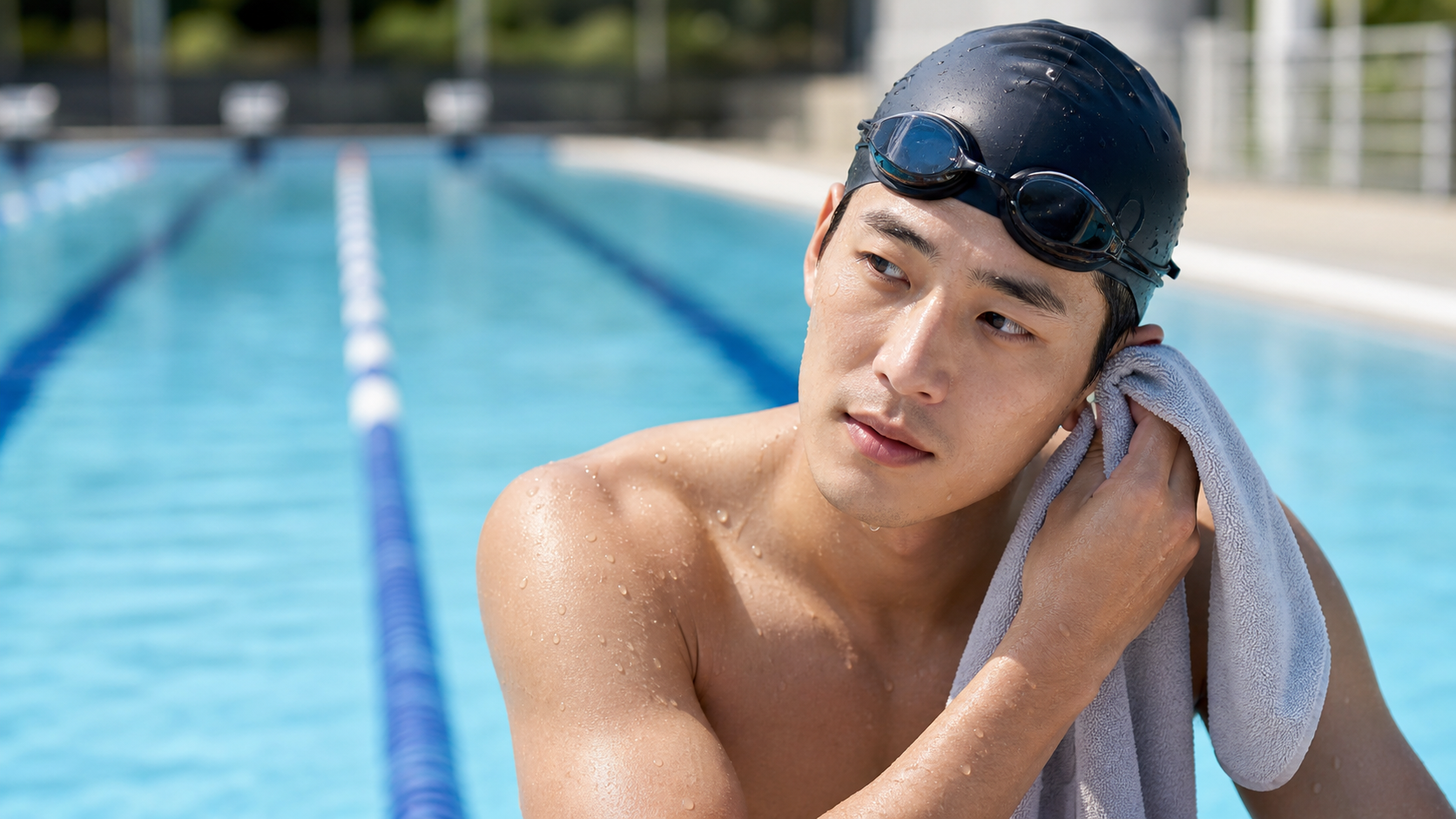
- Swim cap as a supplement: Wearing a swim cap can cover the auricle and reduce water entering the ear canal, but it cannot fully replace ear plugs
Practical Recommendations
- Establish a post-swim drainage routine: Perform the tilt-and-drain method immediately after every swim; don’t wait until you feel discomfort
- Preventive diluted vinegar solution: For frequent swimmers (4+ times per week), use after every swim; it is inexpensive and highly effective
- Replace ear plugs: The sealing effectiveness of silicone ear plugs declines after more than 3 months of use; replace them regularly
- Avoid prolonged immersion in natural water bodies: Streams and lakes harbor a wider variety of bacteria, posing a higher infection risk than well-maintained pools
- Refer recurrent infections to an ENT specialist: If otitis externa occurs more than 3 times within a year, evaluation for structural abnormalities of the ear canal or immune deficiency is warranted
Conclusion
Swimmer’s ear is a highly preventable condition, and the key lies in establishing a “post-swim ear care” routine. The combination of moisture, temperature, and environmental bacteria creates the perfect conditions for otitis externa, while proper drainage techniques, appropriate acidic protection, and avoiding mechanical injury are the best strategies to break this chain. As long as swimming enthusiasts incorporate ear care into their routine after every swim, they can significantly reduce the risk of infection and continue to enjoy the pleasures of water sports.
Related Reading
- Post-Swim Ear Care: Prevention and Management of Swimmer’s Ear (Otitis Externa)
- Swimming Ear Problems: Prevention of Swimmer’s Ear (Otitis Externa) and Choosing Ear Plugs
- Swimmer’s Ear (Otitis Externa): Prevention and Proper Management
- Swimming Ear Problems: A Complete Guide to Preventing Otitis Externa (Swimmer’s Ear)
洗單車神器 吹水機! 實際洗車用用看 暴力洗鍊條大法 | 公路車 | CT Yeh
4 年前
3C開箱) SoundBot 老車升級智慧音響 SB360 藍芽 免持 接收器 Aux in 手機 汽車音響 美國聲霸
7 年前
水金九不厭五分 10度寒流冷到不願停!feat. 卡卡 / 公路車 / CT Yeh
6 個月前
自助洗車場 洗單車 50元有找 清鍊條大法 居然還有小小兵
7 年前
單車 重低音 藍芽喇叭 音質實測 SoundBot SB525 Real Sound Test
8 年前
碟煞公路車 銑面器 !? 原來銑完差這麼多! 降低蹭碟機率! | TIME 公路車 保養小記錄 | CT Yeh
3 年前
摔車後補裝備: 好市多新款單車安全帽& Specialized Romin 北高整路屁股都不痛的坐墊 | 一千元居然有MIPS | CT Yeh | 公路車
4 年前
一日北高常見問題大集合 | 攻略 | 路線 | 訓練 | 補給 | 自行車 單車 | 一日雙城 | 雙塔 | TWB北高360 | 屁股痛
6 年前