Wan Jin Shi Marathon: Complete Guide to Pace Adjustment and Aid Station Distribution Along the Coastline Winds
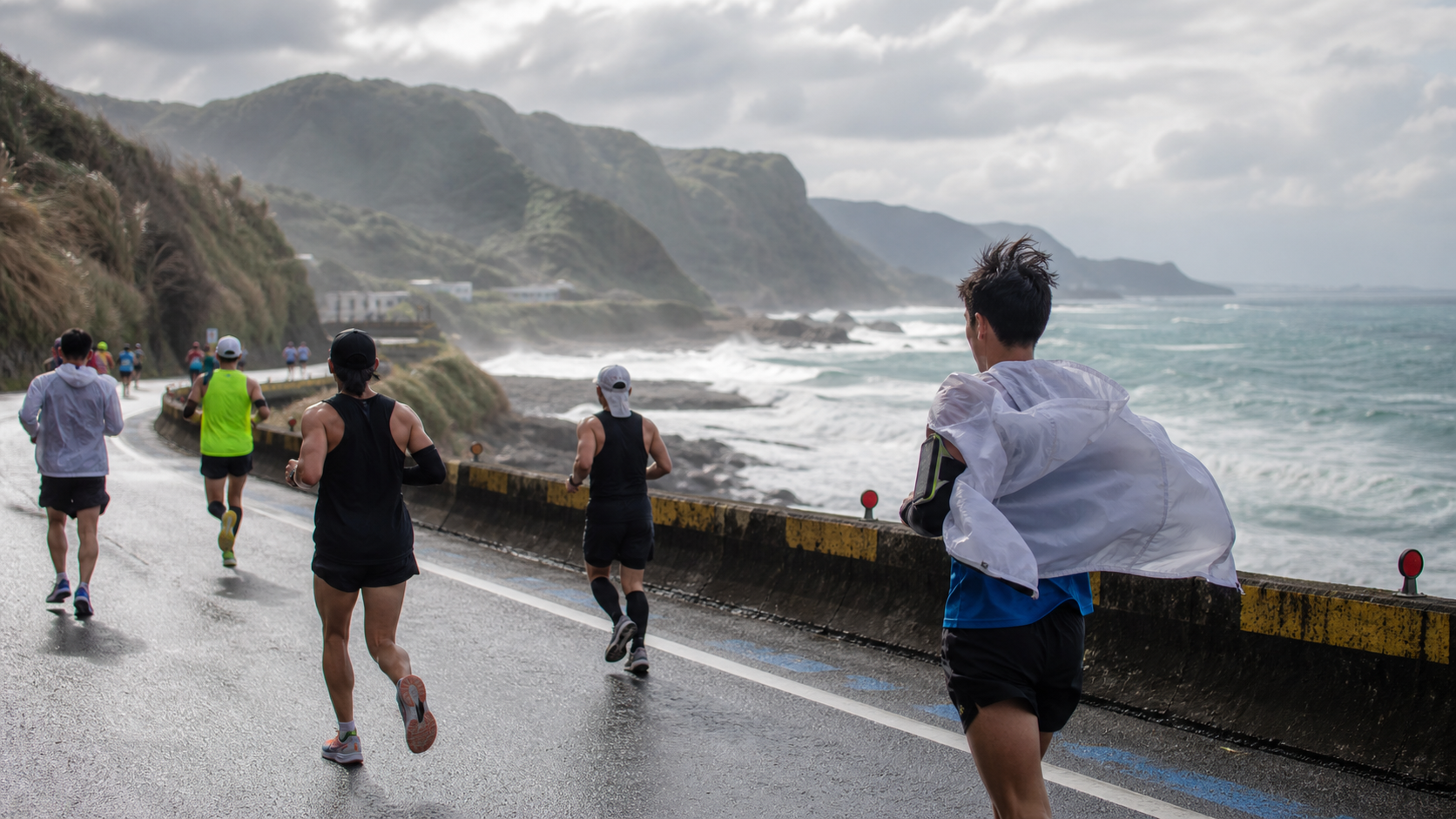
Wan Jin Shi Marathon: Complete Guide to Pace Adjustment and Aid Station Distribution Along the Windy Coastline
Introduction
The Wan Jin Shi Marathon (Wanli—Jinshan—Shimen) is one of Taiwan’s most unique coastal marathon events, held every March along the North Coast of New Taipei City. The course hugs the coastline along Provincial Highway 2, with the magnificent Pacific Ocean view on one side and steep coastal cliffs on the other—a truly breathtaking sight. However, the northeast monsoon has not fully subsided in March, making strong winds a common invisible opponent for all runners. Running smart in the wind is the biggest key to finishing the race.
North Coast Wind Field Characteristics
The Wan Jin Shi course faces northeast. Although the northeast monsoon weakens in March, the coastal terrain accelerates wind speeds, and runners often encounter gusts exceeding force 5 to 7 on the Beaufort scale in certain sections. Here are the basic wind patterns along the course:
| Section | Wind Direction Characteristics | Impact Level |
|---|---|---|
| Wanli Section (0–10 km) | Predominantly crosswind | Moderate, affects balance |
| Jinshan Section (10–22 km) | Headwind | Strong, greatest pace loss |
| Shimen Section (22–35 km) | Tailwind | Favorable, allows acceleration |
| Return Section (35–42 km) | Crosswind turning headwind | Most draining when energy is low |
The northeast wind’s impact along the coastline is highly directional. Runners should check weather forecasts before race day to determine the prevailing wind direction and plan their pacing strategy in advance.
Pace Adjustment Strategy: Running with the Wind
On a windy course, stubbornly sticking to a preset pace is the most common mistake. The recommended approach is the “dynamic pacing method”:
- On headwind sections, let go of pace and protect your heart rate: When facing headwinds, focus on perceived effort, allowing your pace to slow 30–60 seconds off target, but ensure your heart rate stays below your aerobic threshold.
- On tailwind sections, make up time: When entering tailwind sections, don’t deliberately accelerate—let your body be “carried by the wind,” saving energy while naturally picking up speed.
- On crosswind sections, watch your stride: Crosswinds can easily distort your running form. Shorten your stride and increase cadence to maintain a stable center of gravity.
- Draft with a group: On headwind sections, find runners with similar pace and take turns leading in a V-formation or single-file line, saving 10–15% of your energy.
Aid Station Distribution and Usage
Aid stations at the Wan Jin Shi Marathon are typically located at the following positions (based on kilometer markers, with slight adjustments each year):
- 5 km mark: Water, sports drink, early hydration point
- 10 km mark: Water, sports drink, some local specialty foods
- 16 km mark: Full aid, bananas, salt packets
- 21 km mark (near half-marathon turnaround): Largest aid station, offering a variety of foods
- 26 km mark: Water, electrolyte drinks
- 30 km mark: Important aid station; the course becomes more desolate beyond this point
- 35 km mark: Water, energy foods
- 40 km mark: Final aid station before the finish
Since shops are scarce along the North Coast route, it’s recommended to stop at every aid station to refuel—don’t gamble on “drinking at the next one.”
Local Specialty Aid You Can’t Miss
The Wan Jin Shi Marathon is famous for its local specialty aid stations. Common items include:
- Jinshan sweet potatoes: Rich in carbohydrates, ideal for refueling after the 20–25 km mark
- Warm ginger tea: Warms the body and replenishes electrolytes, especially popular when coastal winds are strong
- Salted peanuts: Replenish salt and help prevent cramps
- Local beverages: Some aid stations occasionally offer regional specialty drinks
Clothing and Gear Recommendations
The perceived temperature on the North Coast in March varies greatly with the wind. Recommended preparations:
- Functional windproof long-sleeve top or light jacket (may be needed in the first half of the race)
- Compression tights or leggings to reduce the impact of crosswinds on your running form
- Ensure your hat is securely fastened, or choose a design with wind-resistant brim features
- Avoid loose-fitting clothing, as crosswind resistance significantly increases energy expenditure
Practical Tips
- Check the weather two days before the race; if strong winds are forecast, adjust your target pace down by 5–10%
- On headwind sections, remind yourself “this stretch is a deposit”—don’t let emotions push you into a hard fight
- After the half-marathon mark, replenish with sodium-containing electrolytes to prevent late-race cramps
- If running with training partners, plan a rotation for taking turns breaking the wind
Conclusion
The Wan Jin Shi Marathon combines beauty and challenge in equal measure. The magnificent coastal scenery is the best mental fuel for runners, while the northeast monsoon tests everyone’s pacing wisdom. Accepting the wind’s presence, adapting to its changes rather than fighting against it—that is the true essence of this North Coast marathon. In the moment the sea breeze hits you, you’re not just running; you’re having a conversation with nature.
Related Reading
- Wan Jin Shi Marathon Guide: Wind Direction Strategy and Aid Station Distribution on the Coastal Course
- Wan Jin Shi Marathon: Complete Guide to North Coast Scenery and Wind Speed Challenges
- Wan Jin Shi Marathon Guide: Elevation Response and Weather Variables on the Coastal Scenic Route
- Wan Jin Shi Marathon Guide: Rolling Hills Pace and Aid on the Coastal Mountain Road
大武山後門26%歡樂陡坡!JJSC南台灣單車行Day2 / 被颱風追著跑 / 公路車 / CT Yeh
2 年前
台北闊瀨陡坡 騎旅 / 日本單車雜誌編輯車友臨時加入!/ 髮香才是最強的 / feat. 北迴歸線小隊 / 公路車 CT Yeh
6 個月前
一日北高前的西濱集訓 | 跟著11小時軍團 | 300W踩不動的大逆風 | 輪車破風差幾瓦?
6 年前
水金九不厭五分 10度寒流冷到不願停!feat. 卡卡 / 公路車 / CT Yeh
6 個月前
西進武嶺 自製新版AI配速表產生器 x 賽前攻略 抱佛腳! 沒有功率計也可以產生配速表嗎?有什麼其他眉角賽前要注意的呢? | 西進武嶺 / 東進武嶺 KOM 攻略 | 公路車 | CT Yeh
4 年前
一日北高/長距離團騎 常見問題補充篇 / 組團或跟團的眉角 / 壯車友容易被瘦車友慢性拉爆 / 原來屁股痛可能是這個原因...? / 風場配速法 / 公路車 / CT Yeh
2 年前
密境!雙灣自行車道 / 環法日月潭 x YAKIMA 百人大約騎 / 公路車 / CT Yeh
11 個月前
大武山20%魔王陡坡【JJSC南台灣遊騎Day2】!屁股真的要裂開了...凡士林抹滿也沒用?神秘金教堂還有超便宜夜市
3 個月前