文章導覽
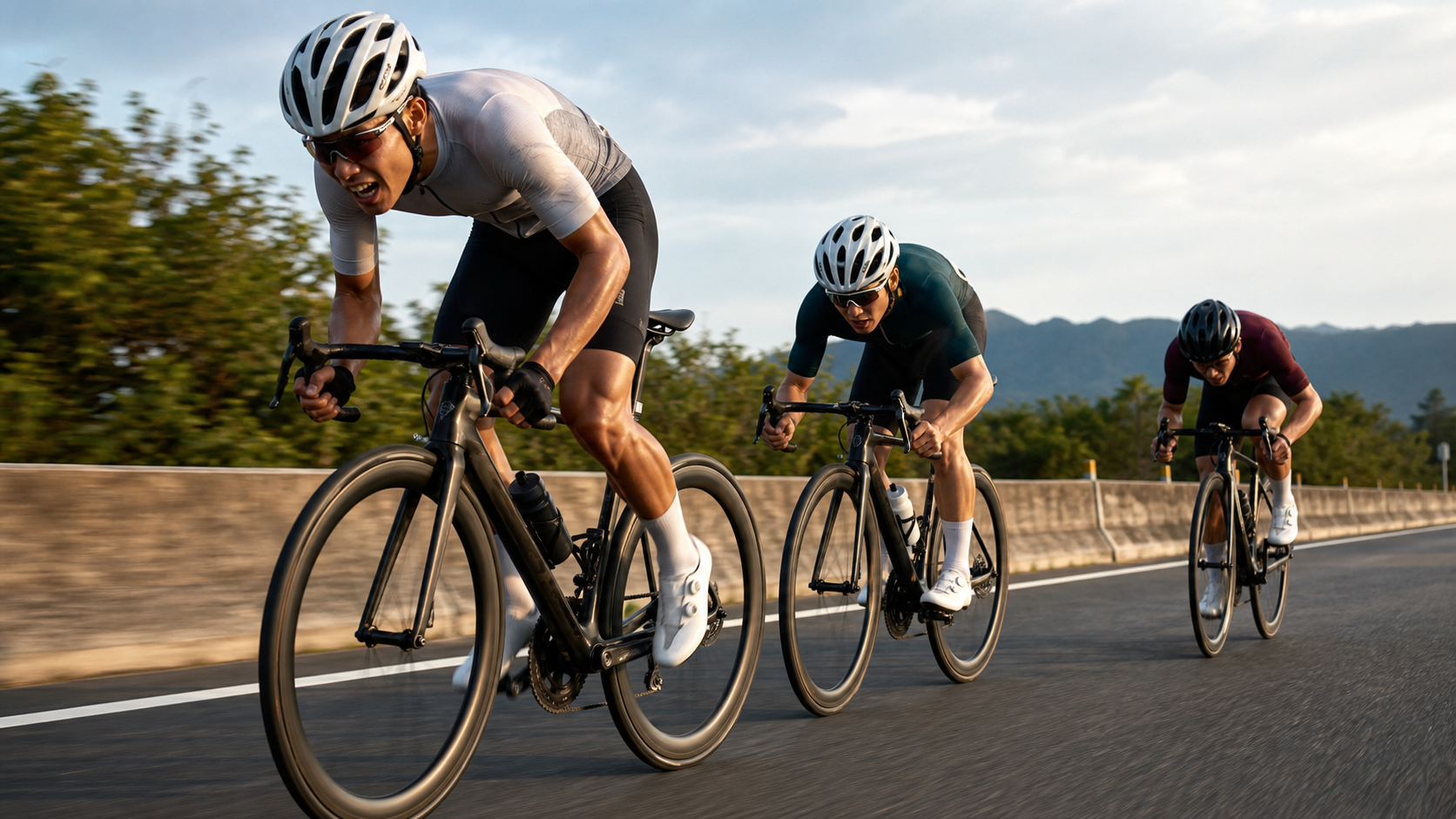
5, 15, and 30 Second Sprints: The Truth About Three Energy Systems
“Sprint” is a vague term in bike racing. 5, 15, and 30 second sprints each correspond to completely different energy systems, and pacing, gearing, and body position should all differ.
Energy System Comparison
| Sprint Duration | Energy Source | Primary Contribution Ratio | Reason for Failure |
|---|---|---|---|
| 5 seconds | ATP-PCr | 85% phosphagen + 15% glycolysis | ATP depletion |
| 15 seconds | Transition zone | 50% phosphagen + 50% glycolysis | PCr depletion, lactate begins to accumulate |
| 30 seconds | Anaerobic glycolysis | 20% phosphagen + 70% glycolysis + 10% aerobic | Hydrogen ion accumulation, muscle acidification |
5 Second Sprint: Pure Explosiveness
Typical scenario: 100 meters before the finish line, exiting a corner in a criterium
- Power target: 95-100% of personal Peak Power
- Cadence: Spinning up to 120-140 rpm
- Gear: Starting on 53×13 or 53×14
- Body position: Fully out of the saddle, bike swaying aggressively side to side
- Pacing: No pacing needed—burn it all
A 5 second sprint barely uses oxygen, so breathing is not the limiting factor. The key is the starting reaction: the explosive power to jump from 50 km/h to 65 km/h.
15 Second Sprint: The Mixed Zone
Typical scenario: Fighting for position at the base of a climb, breaking away from the pack in a circuit race
- Power target: 80-85% of Peak, but sustained for 15 seconds
- Cadence: 100-115 rpm
- Gear: 53×15 or 53×16
- Body position: Out of the saddle for the first 5 seconds, can sit back down and push for the last 10
- Pacing: Can’t go all-out in the first phase, or you’ll blow up in the last 5 seconds
15 seconds is the hardest duration to master—one second of wrong pacing and you lose. In training, use a power meter to record your output every second and learn to “hold back” in the first 3 seconds.
30 Second Sprint: The Lactate Battle
Typical scenario: Team time trial relay, long-range attack
- Power target: 60-70% of Peak
- Cadence: 90-105 rpm
- Gear: 53×16 to 53×17
- Body position: Mostly seated, can stand and surge across the line in the final 5 seconds
- Pacing: Reverse pacing—hold back early, add more in the later phase
In the last 10 seconds of a 30 second sprint, lactate concentration can exceed 15 mmol/L, with intense muscle burning and vision going white. Whether you can hold on comes down to lactate tolerance, not absolute strength.
Training Recommendations
- Weekly allocation: 5sec × 1 session, 15sec × 1 session, 30sec × 1 session, trained separately
- Don’t mix sessions: After a 30 second session, don’t chase 5 second peaks the same day—neural fatigue
- Warm up thoroughly: At least 45 minutes of aerobic work plus 3 progressive accelerations before a 30 second sprint
Conclusion
Next time you watch a race, pay attention to the sprinters’ body position and duration: pure explosiveness means standing all the way, the mixed zone means alternating sit and stand, and lactate tolerance means almost fully seated. Choose the right energy system, and you won’t get passed in the final 50 meters.
Related Reading
- Bike Sprint Power Training: Workout Design from 5-Second to 30-Second Max Power
- Sprint Training Methods: Neuromuscular Explosive Power Development for Road Cyclists
- Sprint Power Development Training: A Complete Workout from Neuromuscular to Anaerobic Explosive Power
- Sprint Power Training: The Twin Engines of Peak Power and 30-Second Power