A Common Tragedy
Amateur athlete Xiao Zhang squatted for 6 months, progressing from 60kg to 120kg, feeling he was improving rapidly. One day, his form broke down, his lower back gave out, and he suffered a lumbar disc herniation. He had to stop training for six months. Back to square one.
The lesson from this story: Form is 100 times more important than Weight.
Why Is Form So Critical?
1. Injury Risk
Injury rates with incorrect form:
| Movement | Injury Rate with Correct Form | Injury Rate with Incorrect Form |
|---|---|---|
| Squat | < 2% | 15–25% |
| Deadlift | < 3% | 20–35% |
| Bench Press | < 2% | 10–15% |
| Pull-Up | < 1% | 5–10% |
2. Training Effectiveness
Incorrect form = the target muscle groups aren’t being trained. For example, if your knees drift too far forward during a squat, the load shifts to the knee joints instead of the glutes and quadriceps.
3. Movement Pattern Memory
Your body “remembers” the movement patterns you practice. Perform 1,000 incorrect squats, and your movement patterns will be wrong when you run.
Key Form Points for the Five Major Lifts
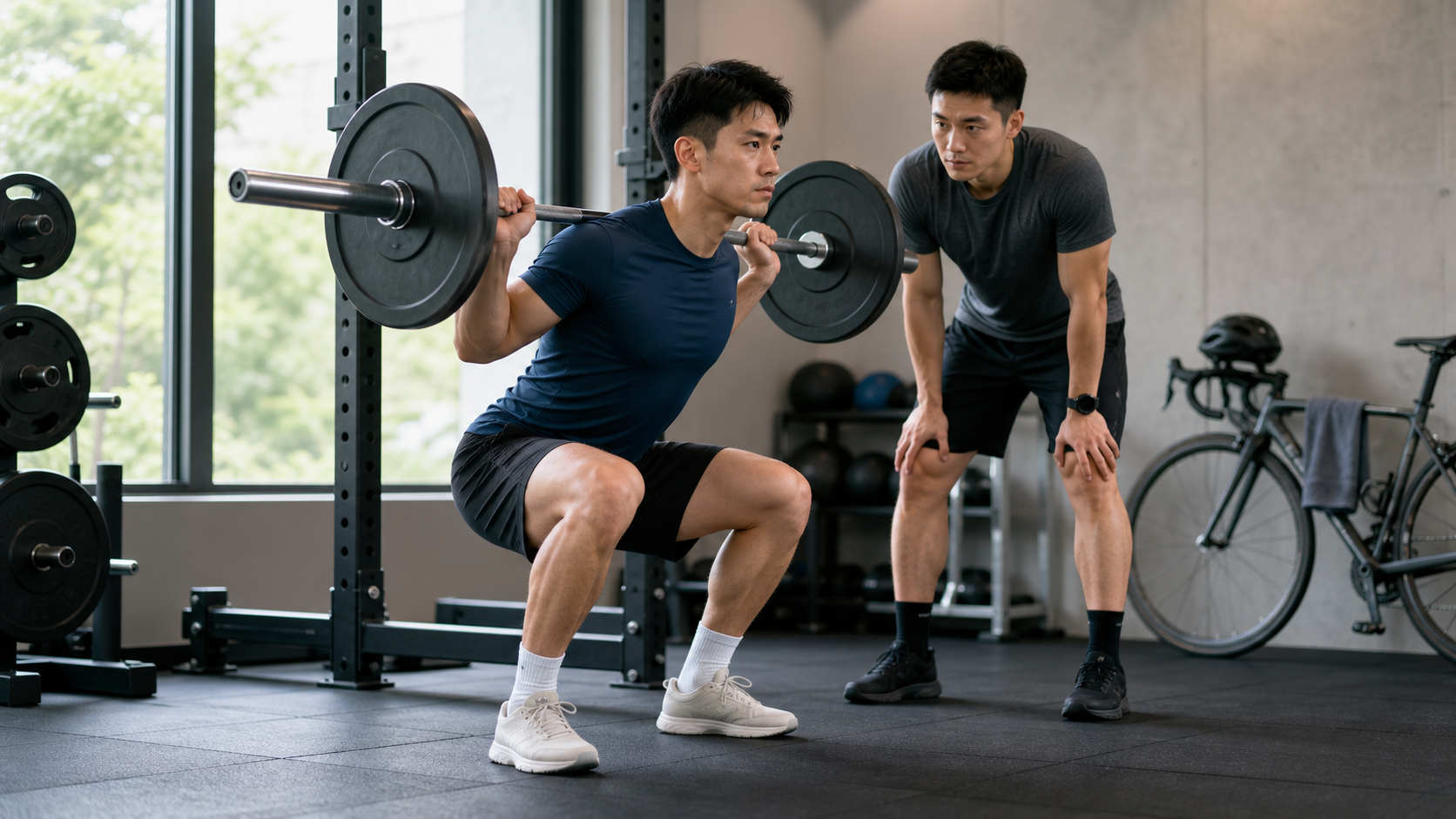
1. Back Squat
Correct Technique
- Bar position: mid-traps (high-bar position) or rear delts (low-bar position)
- Feet: shoulder-width apart or slightly wider, toes turned out 10–15 degrees
- During descent: hips and knees bend simultaneously, knees track over toes
- Depth: thighs at least parallel to the ground
- Torso: keep core braced, lumbar spine neutral
Common Errors
- Knee Valgus: weak hip abduction
- Good Morning Squat (hips rising too fast): insufficient leg strength
- Heels lifting off the ground: poor ankle mobility
- Excessive forward lean: weak core or poor positioning
Corrective Exercises
- Goblet Squat: practice keeping the torso upright
- Box Squat: practice depth and hip hinge
2. Deadlift
Correct Technique
- Starting position: barbell directly over the mid-foot
- Feet: hip-width apart
- Hip position: slightly higher than knees (not a squat position)
- Back: shoulder blades retracted, chest up, lumbar spine neutral
- Pulling: hips and knees extend simultaneously, bar stays close to the shins
- Lockout: hips fully extended, shoulders pulled back
Common Errors
- Rounded back: uneven pressure on the discs, extremely high injury risk
- Hips too low, turning it into a squat: legs do most of the work, back muscles aren’t trained
- Bar too far from the body: longer lever arm, increased risk of lower back injury
3. Bench Press
Correct Technique
- Shoulder blades: retracted, depressed, and pressed into the bench
- Feet: planted firmly on the ground to generate “leg drive”
- Grip width: 1.5 times shoulder width
- Lowering the bar: to the lower edge of the sternum, elbows at 45 degrees (not 90 degrees)
- Pressing up: elbows tuck slightly toward the body, bar follows an arc back to the start
4. Pull-Up
Correct Technique
- Grip width: slightly wider than shoulders
- Starting position: fully hanging, shoulder blades actively depressed
- Pulling up: chest approaches the bar
- Lowering: slow and controlled, shoulder blades remain depressed
Common Errors
- Using momentum to swing: hips swinging back and forth
- Not completing the full range of motion: only doing half reps, incomplete muscle development
- Shrugging shoulders: neck compensates, shoulders prone to injury
5. Overhead Press
Correct Technique
- Bar starting position: in front of the collarbone
- During the press: tilt the head back slightly to make room, then press the bar directly overhead
- Lockout: arms fully extended, bar directly above the ears
- Core: squeeze glutes, ribs down, lumbar spine neutral
Best Strategies for Learning the Movements
1. Start with Light Weights
Beginners should start with an empty barbell (20kg) or dumbbells, learn the movement, then add weight.
2. Record Yourself to Self-Check
Set up your phone from the side and the front, record your training, and review the footage to spot problems.
3. Get In-Person Coaching from a Trainer
3–5 personal training sessions can save you from countless future injury risks.
4. Mirrors Are a Tool, Not a Crutch
Mirrors help you check your form, but there are no mirrors on the field or in competition. Develop your “proprioception.”
The Principle of Adding Weight: The 2-for-2 Rule
If you complete 2 more reps than your target in two consecutive training sessions at the prescribed number of sets, add 2.5–5% next time.
For example:
- Target: 4 sets × 5 reps @ 100kg
- You complete 4 sets × 7 reps in two consecutive sessions
- Next session, increase to 102.5–105kg
Conclusion
Strength training is a lifelong endeavor, not a 6-month sprint. Take it slow, get the movements right, and 10 years from now, you’ll thank yourself.
Related Reading
- Strength Training Movement Quality Checklist: 8 Technical Errors Endurance Athletes Most Commonly Make
- The Complete Squat Guide: A Coach’s Practical Handbook from Biomechanics, Common Errors to Progressive Programming
- The Importance of Weight Training for Cyclists: A Guide to Squats, Deadlifts, and Core Training
- Weight Training Basics for Cyclists: Correct Form for Squats, Deadlifts, and Single-Leg Exercises
實景訓練台) 彰化經典百K 高強度喵團 90分鐘 跟著一起練功 2019 Indoor workout Changhua Classic 100 Taiwan
7 年前
一日北高/長距離團騎 常見問題補充篇 / 組團或跟團的眉角 / 壯車友容易被瘦車友慢性拉爆 / 原來屁股痛可能是這個原因...? / 風場配速法 / 公路車 / CT Yeh
2 年前
一日北高常見問題大集合 | 攻略 | 路線 | 訓練 | 補給 | 自行車 單車 | 一日雙城 | 雙塔 | TWB北高360 | 屁股痛
6 年前
福隆鐵人團練隨拍
8 年前
CT 喇低賽) 武嶺牽車 才是王道 西進牽車四小時內秘訣 攝手位置 如何判斷 防抽筋小秘訣
7 年前
一個測試有沒有認真練車的方法😂 #公路車
10 個月前
[教學] Premiere 影片 手震 修正 教學 防抖 單眼 影像 GoPro 穩定 Video Stabilization
8 年前
戰略) Zwift Race 如何咬在第一集團 如何評估自己要開多少推力 (請開1.5倍速看)
7 年前