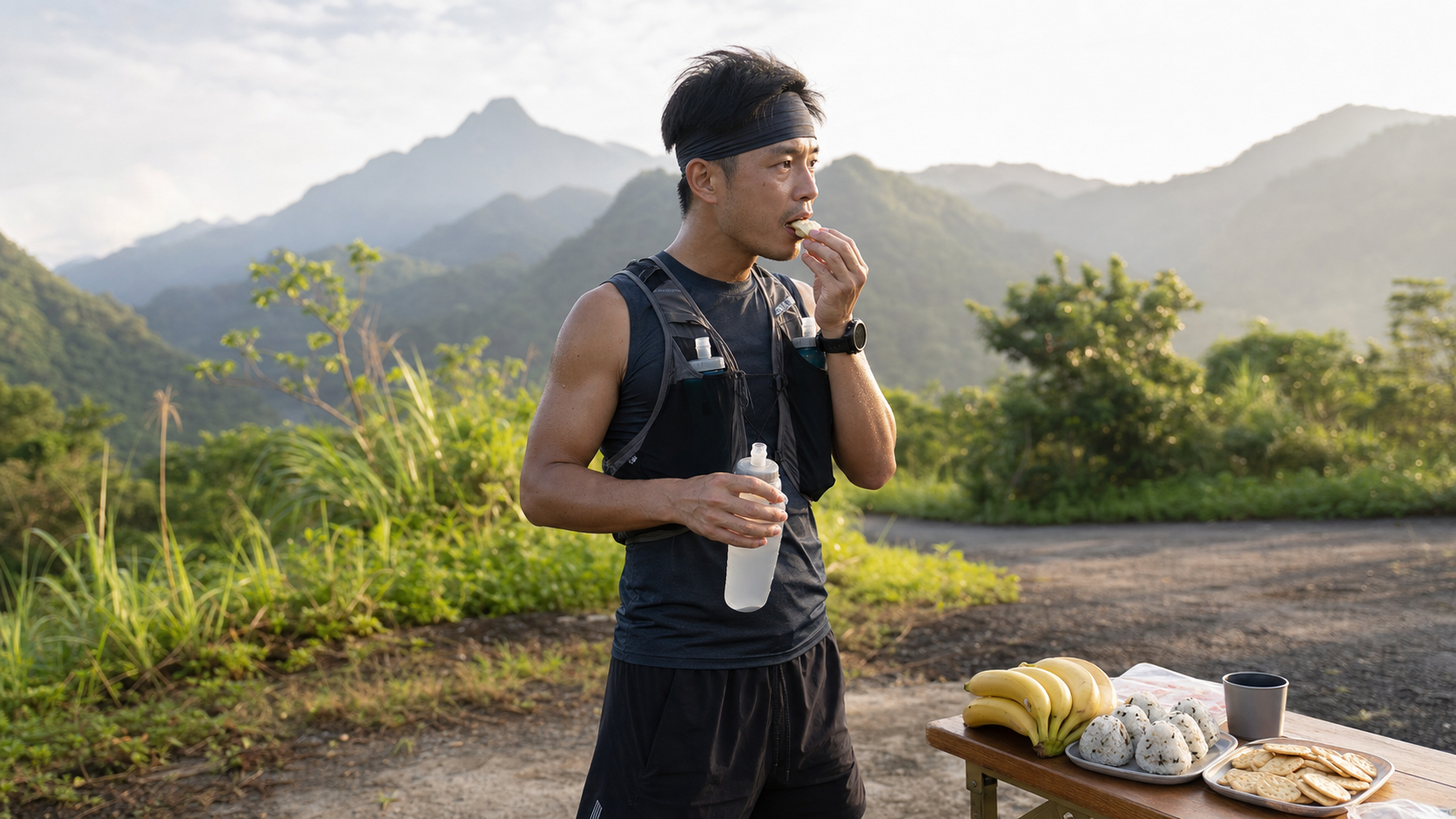
Ultramarathon Gut Training: How to Train Your Gut to Accept Solid Food During Training
Introduction
For many ultramarathon beginners, the first attempt at solid food during a long-distance race often turns into a nightmare—acid reflux, nausea and vomiting, and a complete inability to eat. These problems do not stem from an innate physical condition, but rather from a gut that has not undergone sufficient “eating-while-exercising training.” The human digestive system is highly adaptable, and through gradual gut training, the vast majority of runners can effectively absorb solid fuel while exercising at intensities above 65% of VO₂max.
This article will walk you through the physiological mechanisms of gut adaptation and provide a practical gut training plan that Taiwanese ultramarathon runners can implement.
1. Why Do Gut Problems Occur While Running?
During exercise, the body redistributes blood—large volumes are diverted from the digestive system to the muscles, potentially reducing intestinal blood flow by 30–70%. This state of “intestinal ischemia” can lead to:
- Significantly slowed gastric emptying
- Increased intestinal permeability (commonly known as “leaky gut”)
- Reduced digestive enzyme secretion
- Disrupted smooth muscle peristalsis
Additionally, the mechanical impact of running directly stimulates the intestinal wall, and the use of high-osmolarity fuel products further amplifies the risk of gastrointestinal discomfort.
2. Core Principles of Gut Training
The concept of gut training comes from sports science research, and its core logic is: by repeatedly eating during exercise, the gut gradually adapts and improves absorption efficiency. Studies show that four to six weeks of consistent gut training can significantly reduce the incidence of gastrointestinal discomfort and raise the upper limit of carbohydrate absorption.
Key Training Principles
- Progressive overload: Start with liquids → semi-solids → solids, and from low intensity → high intensity
- Specificity principle: Practice eating at intensities close to race pace, not just during easy runs
- Consistency: Eat during every training session, not only on long-run days
- Variety of food trials: Rotate through different textures and sweet/savory flavors
3. Six-Week Gut Training Plan
| Week | Food Form | Training Intensity | Hourly Carbohydrate Target |
|---|---|---|---|
| Week 1 | Isotonic sports drink | Easy run (Z2) | 30g |
| Week 2 | Sports drink + gel | Easy run (Z2) | 45g |
| Week 3 | Gel + half a banana | Tempo run (Z3) | 45g |
| Week 4 | Banana + salted crackers | Marathon pace (Z3-4) | 60g |
| Week 5 | Mixed solids (rice ball/fries) | Race pace (Z4) | 60g |
| Week 6 | Full race fueling simulation | Long training race | 60–90g |
4. Solid Food Selection Strategy During Training
Common solid foods at Taiwanese ultramarathon aid stations, ranked from easiest to hardest on gastrointestinal tolerance:
- Banana: High in potassium, easy to digest, with a balanced ratio of starch to fructose—the most gut-friendly solid starting point
- Plain white rice ball (no filling): Low osmolarity, and rice starch is well tolerated at high intensities
- Salted soda crackers: Provide sodium, but their dry texture requires pairing with fluids
- Cherry tomatoes: Rich in water and electrolytes, but those with high acidity should watch for acid reflux
- Watermelon chunks: Great for hydration, but higher in fiber—use caution in the later stages of a race when the gut becomes sensitive
Foods to Avoid (High Risk)
- High-fat foods (fried items, nut butters)
- High-fiber vegetables
- Spicy or heavily seasoned foods
- Carbonated beverages
5. How to Execute Gut Training During Training
Schedule one fixed “gut training run” per week, ideally during your Saturday long run:
- Eat a normal breakfast 30 minutes before heading out (avoid running on an empty stomach)
- Eat every 20–30 minutes after the run begins
- Record your gut response after each feeding (comfort rating on a 0–10 scale)
- If severe discomfort occurs, step back to the previous food form
Mental preparation is also important: Early-stage gut discomfort may make you want to give up, but mild discomfort is a normal sign of adaptation and must be distinguished from severe cramping.
6. Practical Tips
- Use a training log to record gut responses each session and identify your personal tolerance threshold
- Your final long run before race day (3 weeks out) should fully simulate your race fueling strategy
- Avoid trying new foods for the first time on race day—all fuel should have been tested in training
- If you have chronic gut issues, consider supplementing with probiotics (Lactobacillus strains); research shows they may help improve intestinal barrier function in athletes
Conclusion
The gut is an ultramarathon runner’s second pair of legs. Once your fueling system collapses, no amount of fitness will save you. Invest six weeks in gut training, and you’ll find yourself able to enjoy solid food in the later stages of a race, maintaining a steady energy output. This isn’t a matter of talent—it’s a matter of training—and that’s something you can control.
Related Reading
- Ultramarathon Gut Training: Keeping Your Gut Able to Digest Solid Food at High Intensity
- Road Running Gut Training: How to Get Your Gut Used to Digesting Fuel While Running
- Ultramarathon Gastrointestinal Issues: Preventing and Managing Gut Discomfort in Long-Duration Exercise
- Gut Training: How to Get Your Digestive System Up to Race Intensity
FTL 與 SYB 車隊專訪 西進武嶺 實用攻略分享! 2小時 如何練?!你不知道的眉角!新手準備武嶺必看 EP1 | 實力派女車友 | 精華版 | 公路車 | CTYeh
4 年前
CT 喇低賽) 武嶺牽車 才是王道 西進牽車四小時內秘訣 攝手位置 如何判斷 防抽筋小秘訣
7 年前
一日北高常見問題大集合 | 攻略 | 路線 | 訓練 | 補給 | 自行車 單車 | 一日雙城 | 雙塔 | TWB北高360 | 屁股痛
6 年前
CT暗黑廚房) 車友必備 宇宙無敵鮮蚵湯 幫助訓練恢復 天然食補 好市多 超肥鮮蚵 破PR
7 年前
一日北高/長距離團騎 常見問題補充篇 / 組團或跟團的眉角 / 壯車友容易被瘦車友慢性拉爆 / 原來屁股痛可能是這個原因...? / 風場配速法 / 公路車 / CT Yeh
2 年前
Never Stop 西進武嶺 前後雙機 完整全程錄影 訓練台 實境
8 年前
西進武嶺 免費訓練分析服務 Intervals | 練不夠還是練過頭?你哪一種類型選手?AI模型告訴你! | 備戰神器 | 公路車 訓練 | CT Yeh
4 年前
約騎爆笑地獄梗 大腸怎麼了🤣 #公路車 #cycling
3 年前