Ultramarathon Pre-Race Carbohydrate Loading: How to Properly Execute the 48-Hour Carb Supercompensation Protocol
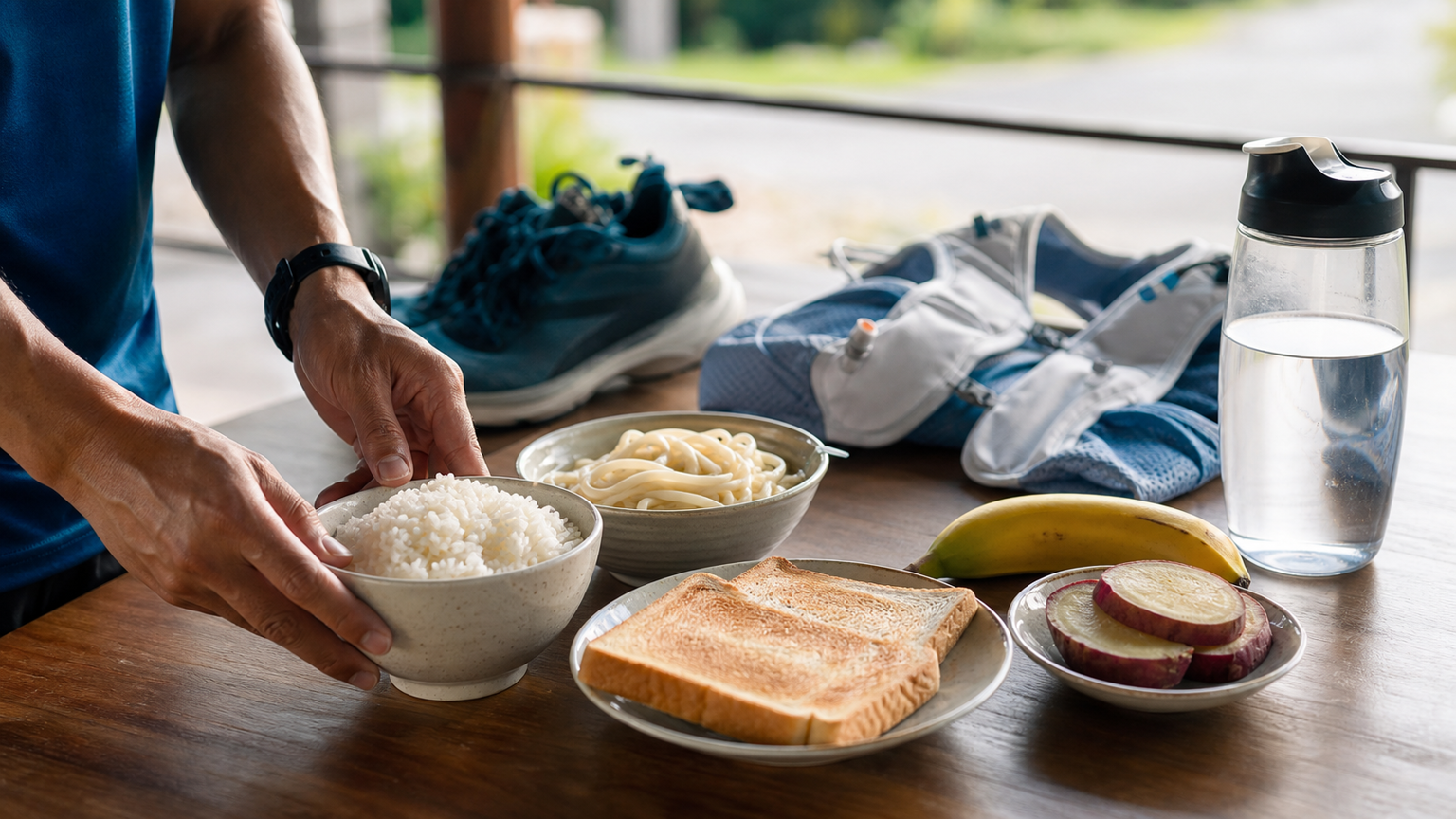
Carbohydrate Loading Before an Ultramarathon: How to Properly Execute a 48-Hour Carb Supercompensation Protocol
Introduction
“Eating a lot of carbs before a race” is a concept many runners know, but “eating a lot” and “properly executing carbohydrate loading” are completely different things. Incorrect carbohydrate loading can lead to gastrointestinal discomfort, rapid weight gain (mostly water weight), poor sleep quality the night before the race, and even starting the race with a heavy stomach. This article provides a science-based 48-hour carb supercompensation protocol, specifically designed for the needs of ultramarathon runners.
1. The Physiological Basis of Carbohydrate Loading
Muscle glycogen is one of the primary energy sources for an ultramarathon. Under normal training conditions, muscle glycogen stores are approximately 300–400g, which can be increased to 450–600g through carbohydrate loading. This 20–40% improvement translates to an additional 60–90 minutes of high-performance output.
Each gram of stored glycogen carries approximately 3g of water, so body weight typically increases by 1–2kg during carbohydrate loading. This is normal, and that water will be released during the race as glycogen is depleted.
2. The 48-Hour Carbohydrate Loading Plan
Target Intake
| Body Weight (kg) | Daily Carbohydrate Target (g) | Primary Food Sources |
|---|---|---|
| 50 | 450–500g | White rice, noodles, sweet potatoes, toast |
| 60 | 540–600g | White rice, noodles, sweet potatoes, toast |
| 70 | 630–700g | White rice, noodles, sweet potatoes, toast |
| 80 | 720–800g | White rice, noodles, sweet potatoes, toast |
(Recommended 7–10g of carbohydrates per kg of body weight)
Schedule (Using a Sunday Race as an Example)
2 Days Before the Race (Friday)
- Increase daily carbohydrate intake to the lower end of the target range
- Significantly reduce training volume (easy 20–30 minute run or complete rest)
- Begin reducing fiber intake (reduce vegetables and whole grains)
1 Day Before the Race (Saturday)
- Reach the upper limit of carbohydrate intake
- Complete rest or only 15 minutes of light activity
- Reduce the proportion of fat and protein intake
- Drink plenty of water (to ensure glycogen is stored with accompanying water)
3. Food Choices for Carbohydrate Loading
Suitable Foods
- White rice: Approximately 45g of carbs per bowl (200g cooked), low fiber, gut-friendly
- White noodles/udon: Approximately 40–50g of carbs per serving (200g)
- White toast: Approximately 15g of carbs per slice, easy to increase quantity
- Bananas: 27g of carbs each, also provides potassium
- Low-fiber juice (diluted): Quickly replenishes liquid carbohydrates
- Sweet potatoes (peeled): Approximately 26g of carbs per 100g, but relatively higher in fiber, consume in moderation
Foods to Avoid
- High-fiber foods (brown rice, oats, large amounts of vegetables): Increase gastrointestinal burden
- High-fat foods (fried foods, nut butters): Delay gastric emptying
- Spicy foods: Irritate the intestines
- New foods: The days before a race are not the time to test new foods
4. Complete Sample Diet for the Day Before the Race (Using a 70kg Athlete as an Example)
Breakfast (07:00): 2 bowls of white rice (90g carbs) + eggs (protein) + 200mL low-fiber juice (20g carbs)
Morning Snack (10:00): 1 banana (27g) + 2 slices of white toast (30g) = 57g carbs
Lunch (12:00): Large serving of udon noodles (80g carbs) + small amount of chicken breast + small amount of green vegetables
Afternoon Snack (15:00): 200g sweet potato (52g carbs)
Dinner (18:00): 2 bowls of white rice (90g carbs) + steamed fish + small amount of blanched greens
Evening Snack (20:00): 1 banana (27g) + 500mL sports drink (30g carbs)
Total Carbohydrates: Approximately 456g (meets the lower target limit for a 70kg athlete)
5. Common Mistakes and Precautions
- Eating too much at once: Spread intake across 5–6 meals to avoid gastrointestinal discomfort from large single meals
- Neglecting hydration: Add 300mL of water for every 100g of carbs to help with glycogen storage
- Eating too much fiber: High-fiber foods increase intestinal residue before a race; switch to a low-fiber diet 48 hours before the race
- Consuming too much fat: The proportion of fat naturally decreases during a high-carb period; avoid adding extra oils
- Dinner too late or too large the night before the race: Finish your last main meal 10–12 hours before the race
Conclusion
Carbohydrate loading is not “eating a huge meal before the race” — it is a 48-hour strategy that requires planning. By properly executing carbohydrate loading, you will have more ample energy reserves than your competitors at the starting line, laying the foundation for a perfect performance in your ultramarathon.
Related Reading
- Marathon Pre-Race Carb Loading: A Practical 3-Day High-Carbohydrate Meal Plan
- Ultramarathon Fueling Strategy: The Rhythm of Energy and Electrolytes from 50K to 100K
- Carb-Loading Three Days Before a Race: Complete Plan and Practical Template
- Marathon Carb Loading 3 Days Before the Race: A Complete Guide to Food Choices and Portion Calculations
CT暗黑廚房) 車友必備 宇宙無敵鮮蚵湯 幫助訓練恢復 天然食補 好市多 超肥鮮蚵 破PR
7 年前
西進武嶺 免費訓練分析服務 Intervals | 練不夠還是練過頭?你哪一種類型選手?AI模型告訴你! | 備戰神器 | 公路車 訓練 | CT Yeh
4 年前
Live) 備戰2019彰化經典百K 賽前攻略 (已完賽請看新影片
7 年前
一日北高前的高裝檢 | 北高 360 | 挑戰11小時的裝備 | 一日雙塔 | 補給
6 年前
CT 喇低賽) 武嶺牽車 才是王道 西進牽車四小時內秘訣 攝手位置 如何判斷 防抽筋小秘訣
7 年前
#公路車 #Vo2Max #最大攝氧量 測驗 體驗 | 心肺測試
6 年前
靠單車減肥35公斤 心得分享與整理
7 年前
2016/4/20 - 中社路 夜騎 半年甩肉14KG 後測
10 年前