Ultramarathon Gastric Emptying Rate: The Relationship Between Intensity and Food Form in Affecting Nutrient Absorption
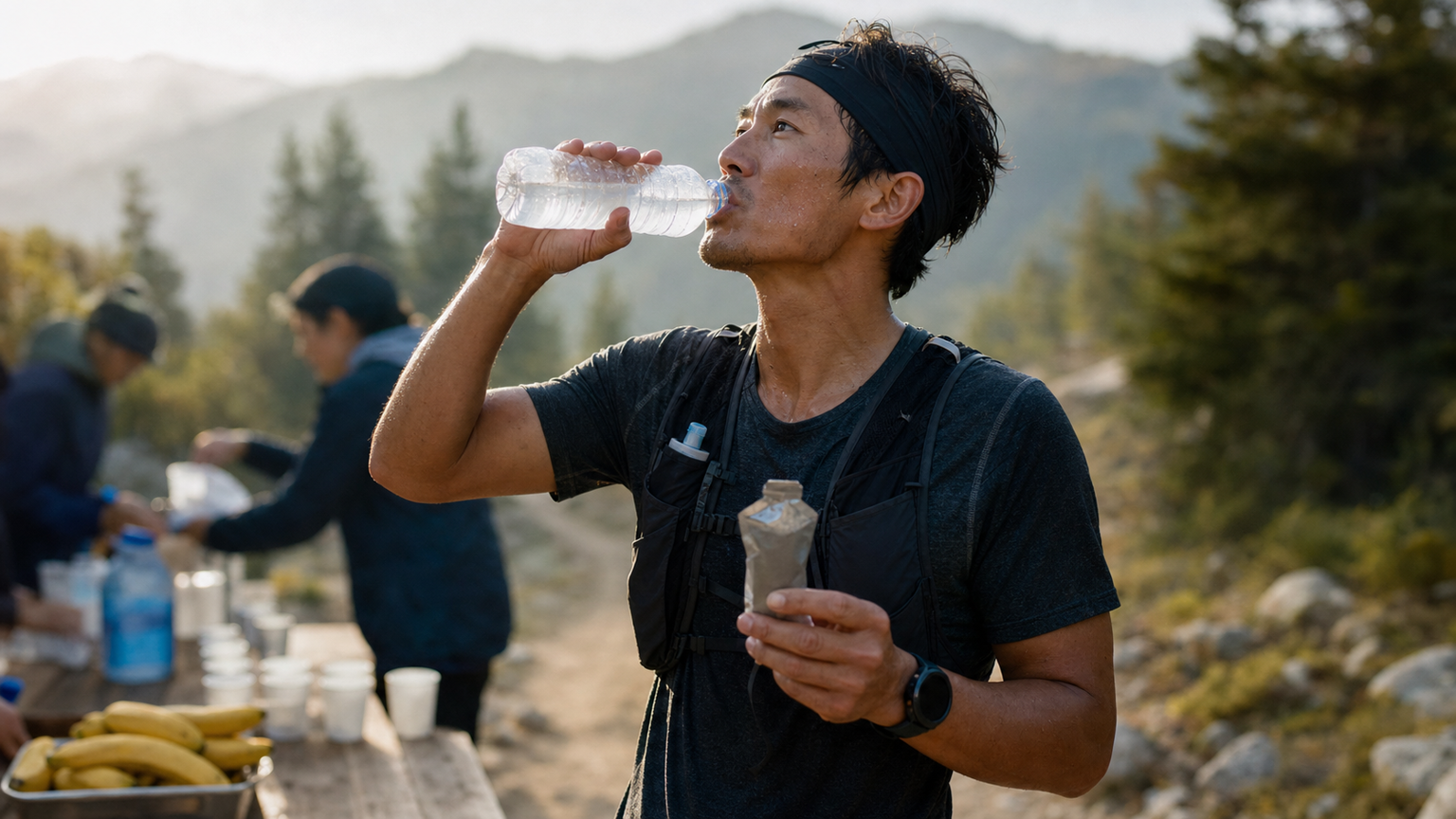
Gastric Emptying Rate in Ultramarathons: The Relationship Between Intensity and Food Form on Supplement Absorption
Introduction
The moment you swallow an energy gel does not mean the energy is already available for your muscles. Food must first pass through the stomach and enter the small intestine before it can be absorbed into the bloodstream. The “gastric emptying rate”—the speed at which food moves from the stomach into the small intestine—is a key factor determining fueling efficiency. In endurance events like ultramarathons, changes in gastric emptying rate directly affect the timing and effectiveness of supplement absorption.
1. Basic Physiology of Gastric Emptying
Gastric emptying is regulated by the following factors:
- Pyloric sphincter: Controls the rate at which chyme enters the duodenum
- Neuroendocrine signals: Including hormones such as glucagon and CCK
- Gastrointestinal reflex: When the intestines are full, signals are sent to the stomach to slow down
At rest, liquid gastric emptying takes approximately 30–60 minutes, while solid food takes 2–4 hours.
2. The Effect of Exercise Intensity on Gastric Emptying
This is the most underestimated piece of knowledge in ultramarathon fueling:
| Exercise Intensity (%VO2max) | Gastric Emptying Rate | Supplement Absorption Efficiency |
|---|---|---|
| <60% (jogging/walking) | Normal or slightly accelerated | Good |
| 60–70% (ultramarathon pace) | Slightly slowed (~20%) | Moderate |
| 70–80% (fast sections) | Significantly slowed (~40%) | Reduced |
| >80% (sprints/steep climbs) | Markedly slowed (>50%) | Poor |
Conclusion: The pace of an ultramarathon (typically 60–70% VO2max) has a relatively mild effect on gastric emptying. The main problems arise during sudden accelerations or uphill surges.
3. The Effect of Food Form on Gastric Emptying Rate
Liquid vs. Solid vs. Semi-Solid
| Food Form | Gastric Emptying Rate | Recommended Timing |
|---|---|---|
| Plain water | Fastest (10–20 minutes) | Throughout the race, for pure hydration |
| Hypotonic sports drink (<6% sugar) | Fast (20–30 minutes) | Throughout the race, optimal fueling efficiency |
| Isotonic sports drink (6–8% sugar) | Normal (30–40 minutes) | During general ultramarathon pace sections |
| Energy gel (high concentration) | Slightly slower, needs water dilution | Consume simultaneously with plain water |
| Banana (ripe) | Moderate (60–90 minutes) | Eat during aid station stops |
| White rice | Moderate to slow (60–120 minutes) | During longer aid station stops |
| High-fat foods | Slowest (>3 hours) | Should be avoided in large amounts during ultramarathons |
4. Other Factors Affecting Gastric Emptying
The Key Influence of Osmolality
When hypertonic fluids (sugar concentration >10%) enter the duodenum, the intestine automatically slows its absorption rate to protect the intestinal mucosa. This is why overly concentrated energy drinks or drinking energy gels directly (without water) can feel like they are “stuck in the stomach.”
Practical advice: Energy gels must be consumed with 200mL of plain water. Only after dilution can the osmolality be rapidly absorbed by the intestines.
The Effect of Temperature
Cold drinks (4°C) empty from the stomach slightly faster than warm drinks, but the difference is small (approximately 5–10%). In Taiwan’s summer ultramarathons, the cooling effect of ice water is actually more important.
Emotions and Stress
Negative emotions such as anxiety and fear slow gastric emptying through the autonomic nervous system. This is also why you often feel a “bloated stomach” when nervous before a race.
5. Designing Supplement Timing Based on Gastric Emptying
Work backward from gastric emptying time to plan supplement timing:
- Need energy in 30 minutes: Consume liquid carbohydrates now (sports drink)
- Need energy in 60 minutes: Consume an energy gel now (with water)
- Need energy in 90–120 minutes: Consume a banana or white rice now
6. Practical Recommendations
- Avoid solid food before and after uphill surges; wait until you return to a steady pace before eating
- If you feel “fuel stuck in your stomach,” slow down, drink plain water, and wait for gastric emptying
- Test different supplement forms and timings during training to find your personal optimal setup
Conclusion
Understanding the gastric emptying mechanism allows you to solve many fueling mysteries: Why do you sometimes fuel up but feel nothing? Why does the same food sometimes go smoothly and other times cause discomfort? Designing supplement timing around gastric emptying rate is the key upgrade from “spraying and praying” to “precision fueling.”
Related Reading
- Ultramarathon Fueling Strategies: Energy and Electrolyte Rhythm from 50K to 100K
- Ultramarathon Gut Training: How to Train Your Intestines to Accept Solid Food During Training
- Ultramarathon Gut Training: Keeping Your Digestive System Able to Process Solid Food at High Intensity
- Complete 100K Ultramarathon Fueling Plan: The Science of Hourly Calories, Sodium, and Solid-Liquid Switching
CT暗黑廚房) 車友必備 宇宙無敵鮮蚵湯 幫助訓練恢復 天然食補 好市多 超肥鮮蚵 破PR
7 年前
#公路車 #Vo2Max #最大攝氧量 測驗 體驗 | 心肺測試
6 年前
16/02/16 - 夜訪中社路 緩慢進步中
10 年前
西進武嶺 免費訓練分析服務 Intervals | 練不夠還是練過頭?你哪一種類型選手?AI模型告訴你! | 備戰神器 | 公路車 訓練 | CT Yeh
4 年前
靠單車減肥35公斤 心得分享與整理
7 年前
如果Pogačar騎西進武嶺可以多快?會破2嗎?各種情況深度推估探討 / 公路車 / CT Yeh
2 年前
一日北高/長距離團騎 常見問題補充篇 / 組團或跟團的眉角 / 壯車友容易被瘦車友慢性拉爆 / 原來屁股痛可能是這個原因...? / 風場配速法 / 公路車 / CT Yeh
2 年前
一日北高前的高裝檢 | 北高 360 | 挑戰11小時的裝備 | 一日雙塔 | 補給
6 年前