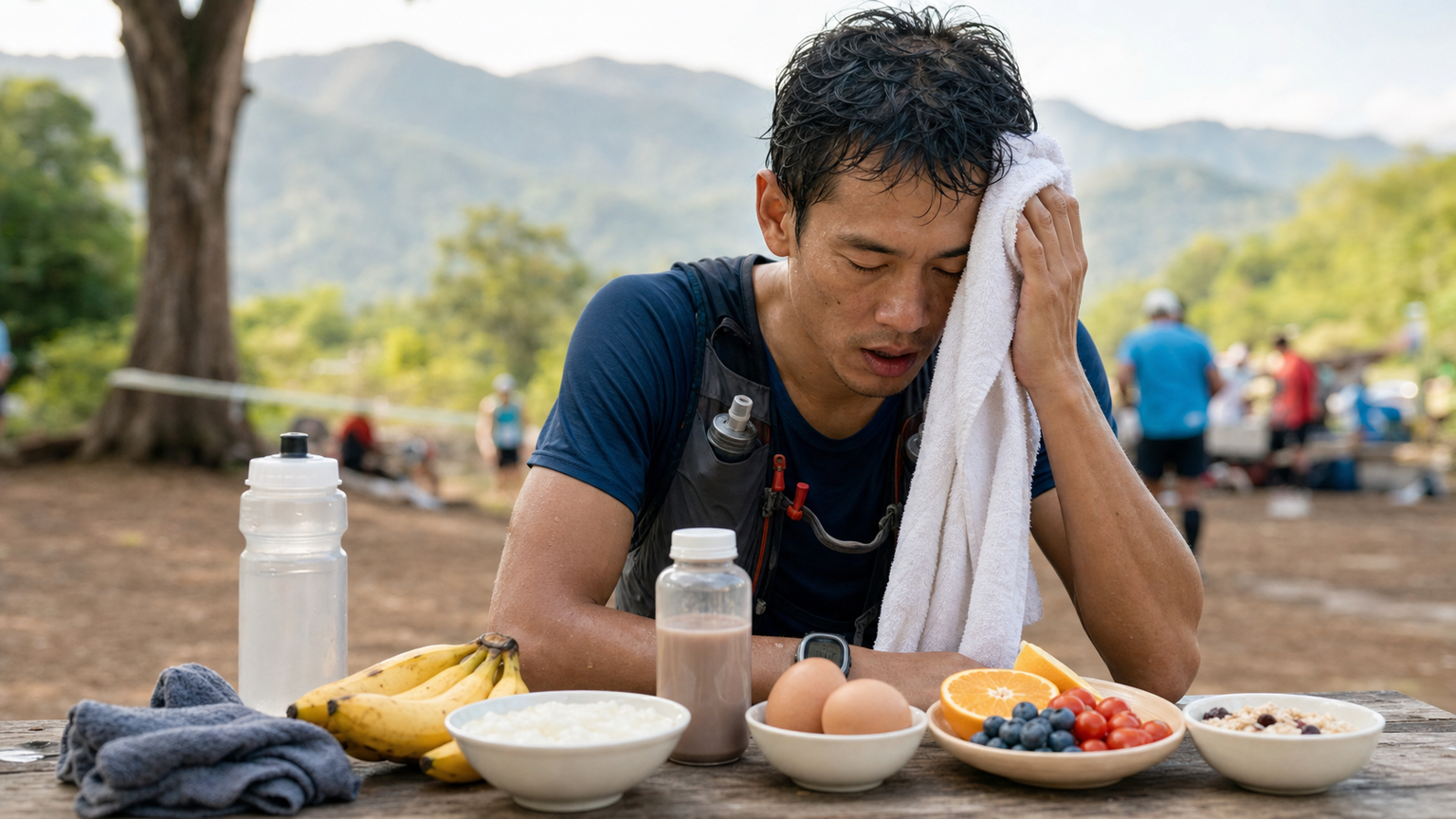
Post-Ultramarathon Recovery Nutrition: A Phased Eating Strategy for the 72 Hours After Finishing
Introduction
The moment you cross the finish line, you think the hardest part is over. But for your body, a 72-hour repair project is just beginning. The damage an ultramarathon inflicts on the body far exceeds that of a regular marathon: extensive muscle fiber breakdown, nearly depleted glycogen stores, temporarily suppressed immune function, impaired gut barrier function, and a full-scale stress response from the hormonal system. Your nutritional strategy during the recovery period will directly determine how many days it takes before you can stand back on the training ground.
1. The Body’s Physiological State After Finishing
By the time you reach the finish line, your body is experiencing:
- Muscle damage markers (CK): Possibly 10–100 times normal values
- Glycogen stores: Nearly depleted (below 15–20% of normal levels)
- Inflammation markers (CRP, IL-6): Significantly elevated
- Immune function: Temporarily suppressed (“open window” period, increased infection risk)
- Intestinal permeability: Increased (leaky gut state)
- Dehydration and electrolyte imbalance: Severity depends on race conditions
2. The Three Phases of 72-Hour Recovery Nutrition
Phase 1: 0–4 Hours After Finishing (Emergency Repair)
Goals: Replenish fluids and electrolytes, promote rapid glycogen recovery, stimulate protein synthesis
| Priority | What to Consume | Target Amount |
|---|---|---|
| 1st | Electrolyte solution (containing sodium and potassium) | 500–1000mL |
| 2nd | Fast-acting carbohydrates (fruit juice, white rice, bananas) | 50–80g |
| 3rd | High-quality protein (whey protein, milk, eggs) | 20–40g |
| 4th | Antioxidant foods (berries, oranges) | Moderate amount |
Note: During this phase, the gastrointestinal tract is still in a stressed state. Prioritize easily digestible foods and avoid high-fat, high-fiber, and spicy foods. If nausea prevents eating, start with liquid nutrition.
Recommended foods after finishing in Taiwan: Congee or plain rice porridge, bananas, sports drinks, egg drop soup
Phase 2: 4–24 Hours After Finishing (Active Repair)
Goals: Continue glycogen replenishment, support muscle repair, control excessive inflammation
Dietary principles:
- Eat every 3–4 hours (even if you have no appetite)
- Carbohydrates: 8–10g per kilogram of body weight per day (aggressive glycogen replenishment)
- Protein: 2.0–2.5g per kilogram of body weight per day
- Fat: Moderate omega-3 intake (salmon, mackerel, walnuts) to help control inflammation
Recommended foods:
- Staples: White rice, noodles (low fiber)
- Protein: Chicken, fish, tofu, eggs
- Fruits and vegetables: Sweet potatoes, bananas, berries (antioxidants)
- Beverages: Milk (contains whey protein + carbohydrates), electrolyte drinks
Example dinner on race day (for a 65kg athlete):
2 bowls of white rice (90g carbohydrates) + 1 serving of steamed salmon (35g protein) + 2 braised eggs (12g protein) + blanched spinach (small amount) + ginger soup (anti-inflammatory)
Phase 3: 24–72 Hours After Finishing (Deep Recovery)
Goals: Complete glycogen replenishment, muscle rebuilding, gut barrier repair, immune function restoration
Special focus points:
- Gut repair: Supplement with probiotics (Lactobacillus, Bifidobacterium strains) to help repair the gut barrier damage caused by the ultramarathon
- Sleep optimization: Growth hormone is secreted during deep sleep; diet supports good sleep—tryptophan (turkey, milk) aids in synthesizing serotonin and melatonin
- Antioxidant support: Dark-colored fruits and vegetables (blueberries, pomegranate, beetroot) provide polyphenolic antioxidants
- Collagen synthesis: Vitamin C paired with collagen precursors (bone broth, fish skin) supports tendon and joint recovery
3. Dietary Behaviors to Avoid During Recovery
- Drinking large amounts of alcohol immediately after finishing (alcohol inhibits glycogen synthesis and protein repair, and its diuretic effect worsens dehydration)
- Prolonged fasting (even without appetite, force yourself to eat small amounts)
- Large quantities of high-fat, high-fiber foods (the gut is fragile at this time; digestive burden should be minimized)
- Neglecting fluid intake (maintain adequate hydration for 48 hours after finishing)
4. Taiwan’s Post-Ultramarathon Food Culture
The finish-line meals at Taiwanese ultramarathon events often feature hot soup, white rice, braised pork, and other Taiwanese-style dishes, which actually align highly with recovery nutrition needs:
- Hot soup: Replenishes fluids, electrolytes, and aids body temperature regulation
- White rice: Fast carbohydrate replenishment, gentle on the stomach
- Braised pork: Protein + a small amount of fat (be careful not to overdo it)
- Tofu: Easily digestible plant protein
After finishing, enjoy this meal properly—it’s what your body needs most at that moment.
Conclusion
Finishing is an endpoint, but also the starting point of recovery. Use the right nutritional strategy to help your body rebuild from the ordeal of the ultramarathon, and 72 hours later you’ll find yourself recovering faster than expected. Preparation for your next ultramarathon begins with these 72 hours of recovery nutrition.
Related Reading
- Physical Recovery After an Ultramarathon: Gradual Return to Training in the Two Weeks Post-Race
- Recovery After an Ultramarathon: The Body’s Repair Timeline After an Extreme Challenge
- The 72-Hour Post-Marathon Recovery Plan: A Complete Strategy for Systematic Recovery
- The Complete Guide to Post-Race Recovery Nutrition: A Nutritional Repair Plan from the Finish Line to Your Next Race
CT暗黑廚房) 車友必備 宇宙無敵鮮蚵湯 幫助訓練恢復 天然食補 好市多 超肥鮮蚵 破PR
7 年前
FTL 與 SYB 車隊專訪 西進武嶺 實用攻略分享! 2小時 如何練?!你不知道的眉角!新手準備武嶺必看 EP1 | 實力派女車友 | 精華版 | 公路車 | CTYeh
4 年前
西進武嶺 免費訓練分析服務 Intervals | 練不夠還是練過頭?你哪一種類型選手?AI模型告訴你! | 備戰神器 | 公路車 訓練 | CT Yeh
4 年前
Live) 備戰2019彰化經典百K 賽前攻略 (已完賽請看新影片
7 年前
靠單車減肥35公斤 心得分享與整理
7 年前
CT 喇低賽) 武嶺牽車 才是王道 西進牽車四小時內秘訣 攝手位置 如何判斷 防抽筋小秘訣
7 年前
摔車後補裝備: 好市多新款單車安全帽& Specialized Romin 北高整路屁股都不痛的坐墊 | 一千元居然有MIPS | CT Yeh | 公路車
4 年前
2016/4/20 - 中社路 夜騎 半年甩肉14KG 後測
10 年前