Taroko International Cycling Mountain Race: Race Strategy and Atmosphere from a Rider's Perspective
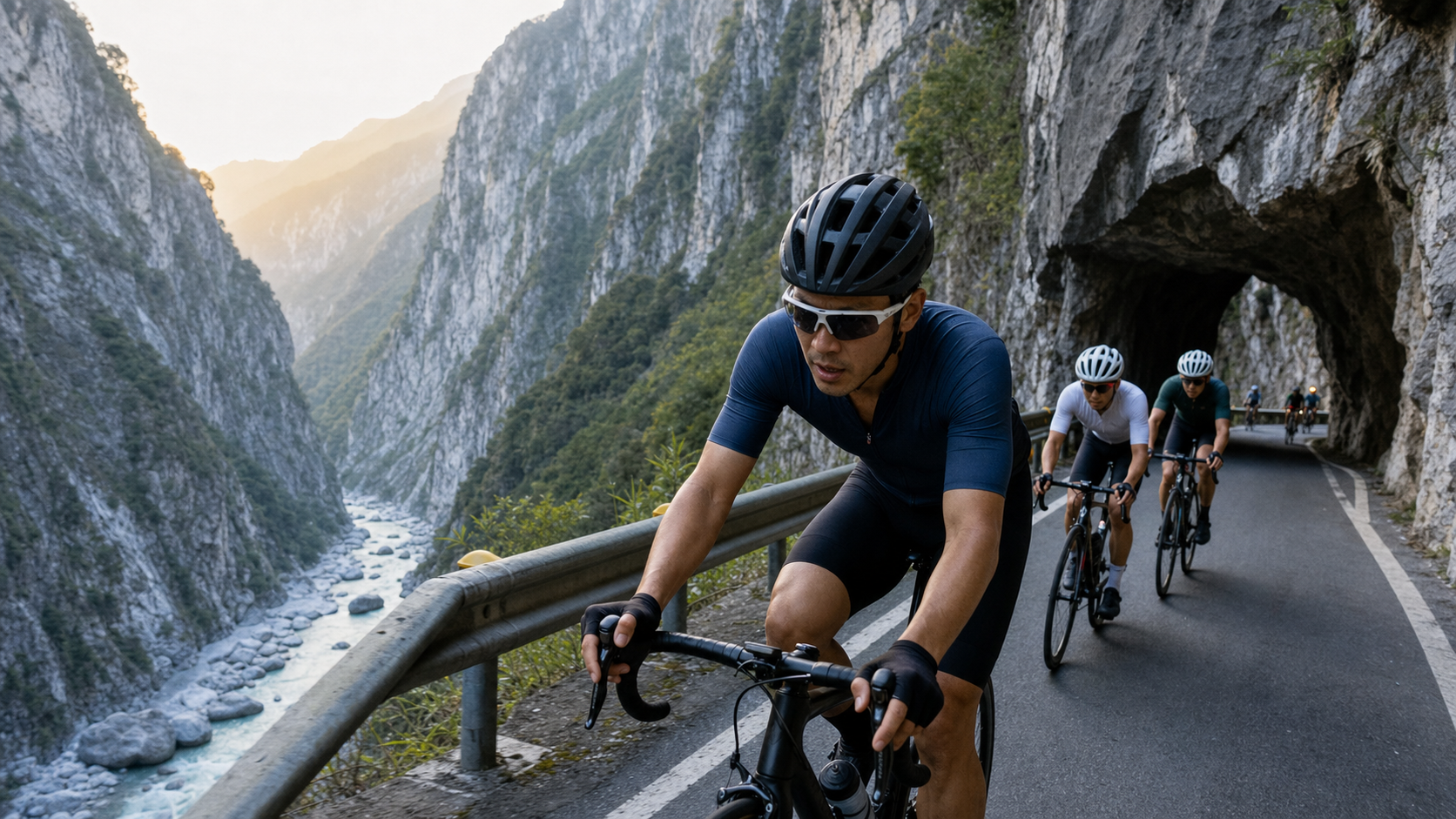
Taroko International Cycling Hill Climb: Race Strategy and Atmosphere from a Rider’s Perspective
Introduction
Some races are so spectacular that photos can never convey even a fraction of the experience. The Taroko International Cycling Hill Climb is exactly that kind of event. When you’re riding on a road flanked by marble canyons, with vertical cliffs above you, the rushing Liwu River beside you, and the wind and wheels echoing through the gorge—it’s an awe that can only be felt by being there.
The race starts from Hualien City and finishes in Tianxiang, covering approximately 38 kilometers with an elevation gain of about 1,300 meters. It is one of Asia’s most renowned road cycling hill climbs. I participated in the general category (non-competitive), but the race was just as serious as an official competition.
Pre-Race Preparation: Understanding Taroko’s Unique Challenges
Taroko is not your typical climbing route. It presents several distinct challenges:
Terrain characteristics:
- The canyon terrain creates unstable wind patterns—sometimes headwinds, sometimes gusts from the side
- Numerous tunnels with significant temperature differences and limited visibility, requiring powerful bike lights
- The road surface occasionally has loose gravel due to the geology, requiring extra caution on descents
- The gradient is relatively gentle in the first half, but noticeably steeper in the second half (after Swallow Grotto)
Suggested pre-race simulation training:
| Training Item | Sessions/Week | Focus |
|---|---|---|
| Long climb practice (>500m elevation gain) | 2 | Pedaling rhythm and power control |
| Tunnel adaptation rides | 1 | Mental adaptation and light testing |
| Interval climbing training | 2 | Anaerobic endurance improvement |
| Long-distance endurance rides | 1 | Nutrition pacing and muscular endurance |
Race Packet Pickup Day: Soaking in the Race Atmosphere
The pre-race packet pickup took place in Hualien City, where riders from various countries gathered, including professional and amateur cyclists from Japan, Korea, and Southeast Asian nations. The venue featured rider exhibition areas, sponsor booths, and displays of high-end equipment that made amateur riders’ eyes light up.
The pre-race briefing was a crucial session, where the organizers detailed:
- Starting order and group rules
- Locations and opening times of each aid station
- Prohibited actions (stopping for photos is strictly forbidden in the canyon; violators are disqualified)
- Emergency evacuation procedures
Race Day: Tactical Choices Across 38 Kilometers
We assembled at 5:30 AM, with the sky just beginning to lighten and the air at the canyon entrance carrying a damp, cool mountain chill. Looking at the dense sea of riders ahead, I took a deep breath and settled my heart rate.
My pacing strategy:
- 0–15km (Hualien City to Taroko entrance): Gentle gradient; follow the group’s rhythm, avoid burning out early, keep heart rate at 75% of max
- 15–28km (Canyon core section): Swallow Grotto, Nine Turns Tunnel, and other famous scenic sections; gradient steepens, shift to personal rhythm, drop one gear
- 28–38km (Approaching Tianxiang): Energy entering the latter half; pick up speed on sections where I felt confident, reserve sprint energy for the final 3 kilometers
The Swallow Grotto section is the turning point of the entire race. The gradient steepens sharply to 8–10%, combined with canyon crosswinds, causing many riders to lose their rhythm here. I chose to drop to a lower gear on this section, preferring to look “slow” while maintaining a reasonable cadence (75–85rpm).
Nutrition and Hydration Management
The aid stations at Taroko are positioned at several key points:
- Before entering the canyon (15km): Load up on water here, as aid stations inside the canyon are limited
- Before Tianxiang (32km): The last solid food station; a final opportunity to refuel
- Throughout the ride: Replenish every 15–20 minutes; don’t wait until you feel thirsty to drink
Important reminders:
- Temperatures inside the canyon are lower than outside, making it easy to underestimate fluid loss; hydrate on a schedule even if you don’t feel thirsty
- Avoid excessive caffeine intake on the mountain sections, as it may exacerbate heart rate fluctuations
The Atmosphere: Unforgettable Details
A few moments that left a deep impression on me:
- Passing through Nine Turns Tunnel, rider numbers and cheering slogans were projected onto the tunnel walls—a heartwarming design by the organizers placed at the most grueling section
- Volunteers along the route cheered in Taiwanese Hokkien, making me, a stranger from afar, suddenly feel a deep sense of warmth
- At the grand archway at the Tianxiang finish line, an elderly woman held up a sign reading “Go Taiwan.” I don’t know how long she had been waiting, but that sight brought tears to my eyes
Practical Tips
- Registration is highly competitive; complete it as soon as it opens, as spots are limited
- Choose accommodation in Hualien City rather than inside Taroko for easier post-race recovery and transport
- Bring a powerful light for the canyon tunnels; a front light exceeding 600 lumens is the basic requirement
- First-timers are advised to choose the general category, then challenge the competitive category once familiar with the course
Conclusion
The Taroko International Cycling Hill Climb is the most beautiful race I have ever ridden—bar none. That road cutting through the heart of the earth, that canyon light breaking through, that version of myself who still couldn’t help lifting my head to admire the scenery even at my most exhausted—this is why we ride. Not just for speed, not just for rankings, but to feel, in a particular place, a freedom that only those in motion can understand.
Related Reading
- Taroko Gorge Marathon Guide: Climbing Strategy and Spectacular Scenery on a Mountain Course
- The Mental Challenge of the Taroko Gorge Marathon: Balancing Canyon Claustrophobia and Scenic Motivation
- Taroko Gorge Road Race: Race Report from the World’s Most Beautiful Course
- Taroko Gorge Marathon: Climbing Strategy and Altitude Adaptation for a Mountain Race
台灣登山王之路 KOM 全程參賽4K臨空錄影 PART1 穿越峽谷地形! #東進武嶺 太魯閣 / 燕子口 / 天祥 / 西寶 PART1 (公路車 / CT Yeh)
3 年前
2023 夏季KOM 參賽實況 / 穿越空拍視角 / 整車都凸台 / 太魯閣峽谷x合歡山絕美大景 / 東進武嶺 / Taiwan KOM Challenge / 公路車 / CT Yeh
3 年前
2024 春季KOM 賽事精華版 / 太魯閣 / 貓捉老鼠精彩追擊 / 錄影剪輯版 / 東進武嶺 / 公路車 (請開啟字幕)
2 年前
#東進武嶺 全程實況錄影 5小時半 #夏季KOM #太魯閣 Taiwan KOM Challenge Reality Video Taroko scenery
7 年前
2025 乘鞍 KOM 登山賽挑戰實錄 / 日本公路最高 ! 賽前探路篇 / 比富士山厲害,無敵絕景!/ 40週年 / 中文YT首發 / 公路車 / CT Yeh #乘鞍ヒルクライム
10 個月前
超激烈!2025 南庄仙山KOM 賽事精華 / 男菁英A x 女菁英A / 公路車 / CT Yeh
9 個月前
微東進 太魯閣 蘇花 單車兩日遊 ! 颱風過後路況超刺激 行程大亂 | 最狂的鹹酥雞訂單 | CT Yeh | 4K 高畫質空拍絕景!
4 年前
太平山單車員工旅遊 | 這樣玩CP值最高!| 公路車
5 年前