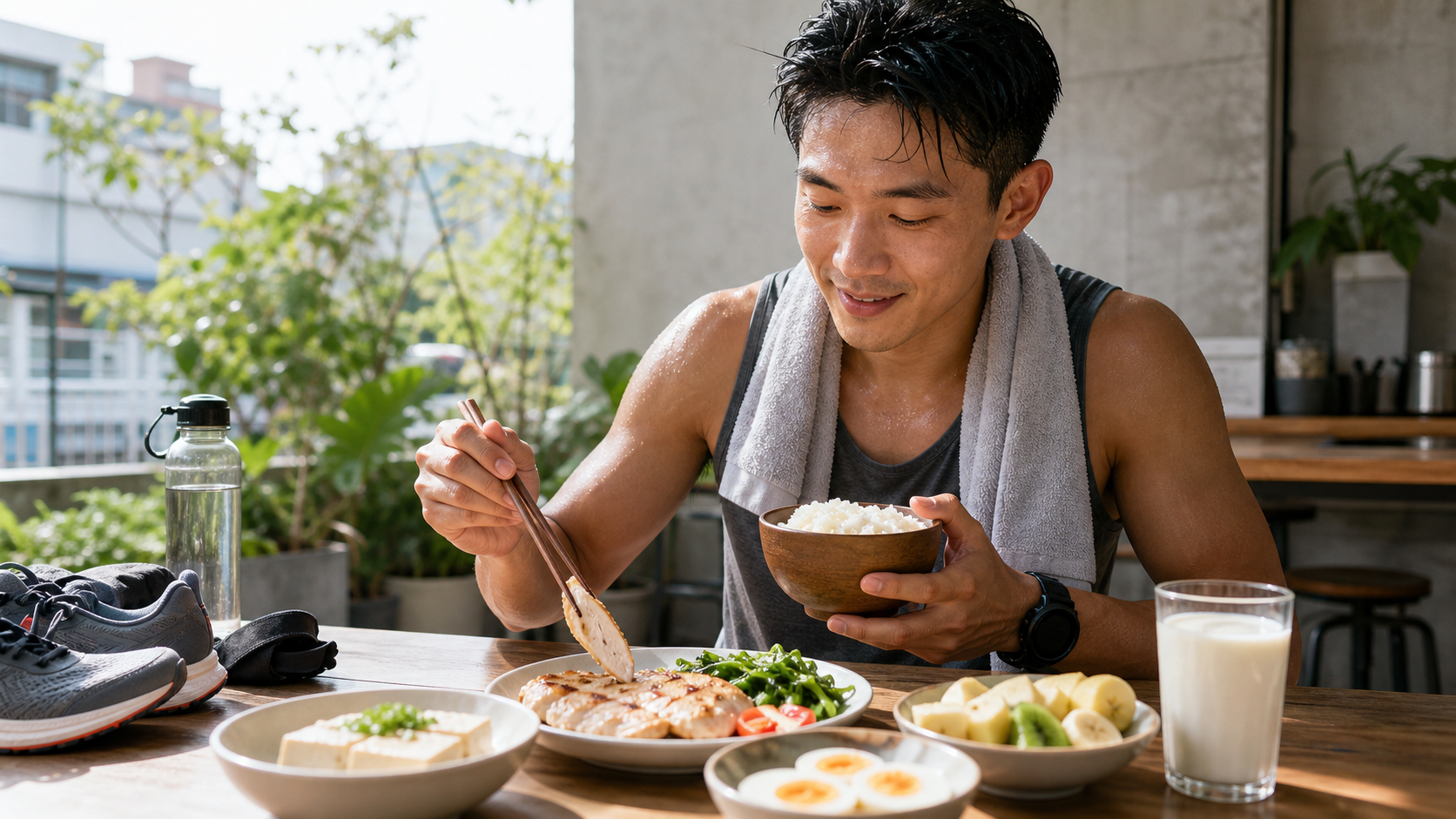
Protein Needs for Runners: Timing and Food Sources for 1.4–1.7 g/kg Intake
Introduction
In discussions about running nutrition, carbohydrates often take center stage, while protein is frequently overlooked. In fact, the importance of protein for runners is no less than that of carbohydrates—it is responsible for repairing muscle micro-damage caused by training, maintaining immune system function, and serving as supplementary fuel when energy is low. This article explains the protein requirements for runners, optimal timing for intake, and common high-quality food sources in Taiwan.
How Much Protein Do Runners Need?
The Recommended Dietary Allowance (RDA) for protein for the average adult is 0.8 grams per kilogram of body weight, but this is merely the minimum standard to avoid deficiency and is far insufficient for regularly training runners.
| Group | Recommended Protein Intake (g/kg body weight) |
|---|---|
| Sedentary adults | 0.8 |
| Amateur runners (weekly mileage < 40 km) | 1.2–1.4 |
| Moderate-to-high intensity training runners | 1.4–1.7 |
| Runners in race prep or fat loss phase | 1.6–2.0 |
| Competitive runners | 1.6–1.8 |
Why Do Runners Need More Protein?
- Muscle Protein Synthesis (MPS): Endurance exercise also stimulates muscle protein synthesis; running particularly consumes leg muscles, requiring protein for repair.
- Muscle Catabolism: During the latter stages of long-distance running (especially beyond 90 minutes), the body breaks down branched-chain amino acids (BCAA) for energy, leading to net loss of muscle protein.
- Immune Support: After high-intensity training, the immune system is under stress; synthesis of immune proteins requires adequate protein raw materials.
- Bone Collagen: Long-distance running impacts bones, stimulating bone remodeling, which requires continuous synthesis of collagen (a protein component).
Timing of Intake: When Is Protein Most Effective?
Research consistently shows that the timing of protein intake (Protein Timing) is crucial for maximizing MPS:
Post-Workout Golden Window
- Within 30–60 minutes after training: Consuming 20–40 grams of high-quality protein can significantly enhance muscle protein synthesis efficiency.
- Only 20–25 grams of protein rich in leucine is needed to achieve maximum MPS stimulation.
- Single doses exceeding 40 grams offer no additional benefit (excess protein is oxidized and broken down).
Even Distribution Across Meals
Consuming 25–40 grams of protein per meal is more beneficial for daily MPS than concentrating large amounts in one meal:
- Breakfast: Soy milk + eggs + tofu
- Lunch: Chicken breast / fish
- Dinner: Legumes / lean meat
- Before bed (optional): Low-fat dairy products (casein, slow-release, supports overnight repair)
Supplementation During Long Runs
During runs exceeding 90 minutes, if replenishment consists only of carbohydrates (e.g., energy gels), consider adding foods containing small amounts of protein (e.g., banana + peanut butter) every 30–45 minutes; studies show this can reduce post-run muscle damage markers.
Common High-Quality Protein Foods in Taiwan
| Food | Portion | Protein Content | Notes |
|---|---|---|---|
| Chicken breast | 100 g | 22–24 g | Low-fat choice, boiled/poached |
| Salmon | 100 g | 20–22 g | Contains Omega-3, anti-inflammatory |
| Tofu (traditional) | 100 g | 8 g | Pair with other protein sources |
| Edamame | 100 g | 11 g | Convenient post-workout snack |
| Greek yogurt | 150 g | 15–18 g | Contains calcium, suitable post-workout |
| Whole egg | 1 (50 g) | 6–7 g | Complete essential amino acids |
| Pork tenderloin | 100 g | 22 g | Easily available in Taiwan, low-fat |
| Canned tuna | 100 g | 24 g | Convenient replenishment |
| Whey protein powder | 30 g | 22–26 g | Quick post-workout replenishment |
Considerations for Plant-Based Protein
For vegetarian runners, intake of plant-based protein requires extra attention:
- Protein Complementation: Combining legumes (low in methionine) + grains (low in lysine) can form a complete profile of essential amino acids.
- Increased Intake Required: The digestibility (PDCAAS) of plant-based protein is slightly lower than animal-based protein; intake targets should be increased by approximately 10–15%.
- High-Leucine Foods: Soy products (tofu, soy milk, miso) are the highest leucine options among plant-based proteins.
Practical Calculation Example
For a 60 kg female runner running 50 km weekly:
- Target protein: 60 kg × 1.6 g = 96 grams/day
- Distributed across three meals + post-workout: Breakfast 20g + Lunch 30g + Post-workout snack 20g + Dinner 26g = 96 grams
Specific foods:
- Breakfast: 2 whole eggs (12g) + 250 mL soy milk (8g) = 20g
- Lunch: 130 g chicken breast (28–30g) = 30g
- Post-workout: 150 g Greek yogurt (17g) + 30 g edamame (3g) = 20g
- Dinner: 120 g salmon (26g) = 26g
Practical Recommendations
- Protein supplements (whey protein powder) are a supplement to food, not a replacement—ensure a balanced diet first.
- For healthy adults with normal kidney function, protein intake of 1.4–2.0 g/kg is safe.
- In hot seasons, after long runs, soy milk or milk are the most convenient options for Taiwanese runners to replenish protein + electrolytes + hydration in one go.
Conclusion
Protein is the “bricks and mortar” of running training—without sufficient bricks and mortar, even running many kilometers cannot build a solid running fitness base. The daily target of 1.4–1.7 g/kg, combined with the golden replenishment window within 30 minutes post-workout, is a scientific strategy to maximize muscle repair after each training session. Choose high-quality protein foods easily available in Taiwan to let your diet truly support your training results.
Related Topics
- Protein Needs for Runners: Food Sources for 1.4–1.7 g/kg per kg Body Weight
- Protein Needs for Road Runners: Daily Intake for Muscle Repair and Synthesis
- Protein Intake Timing and Dosage Before, During, and After Cycling: Latest Sports Nutrition Perspectives
- Protein Synthesis and Muscle Repair: Muscle Growth Guide for Endurance Athletes
CT暗黑廚房) 車友必備 宇宙無敵鮮蚵湯 幫助訓練恢復 天然食補 好市多 超肥鮮蚵 破PR
7 年前
靠單車減肥35公斤 心得分享與整理
7 年前
一日北高/長距離團騎 常見問題補充篇 / 組團或跟團的眉角 / 壯車友容易被瘦車友慢性拉爆 / 原來屁股痛可能是這個原因...? / 風場配速法 / 公路車 / CT Yeh
2 年前
一日北高前的高裝檢 | 北高 360 | 挑戰11小時的裝備 | 一日雙塔 | 補給
6 年前
一日北高常見問題大集合 | 攻略 | 路線 | 訓練 | 補給 | 自行車 單車 | 一日雙城 | 雙塔 | TWB北高360 | 屁股痛
6 年前
FTL 與 SYB 車隊專訪 西進武嶺 實用攻略分享! 2小時 如何練?!你不知道的眉角!新手準備武嶺必看 EP1 | 實力派女車友 | 精華版 | 公路車 | CTYeh
4 年前
16/02/16 - 夜訪中社路 緩慢進步中
10 年前
Live) 備戰2019彰化經典百K 賽前攻略 (已完賽請看新影片
7 年前