Orchid Island Cycling Circumnavigation: The Magnificent Scenery and Local Culture of an Offshore Island Highway
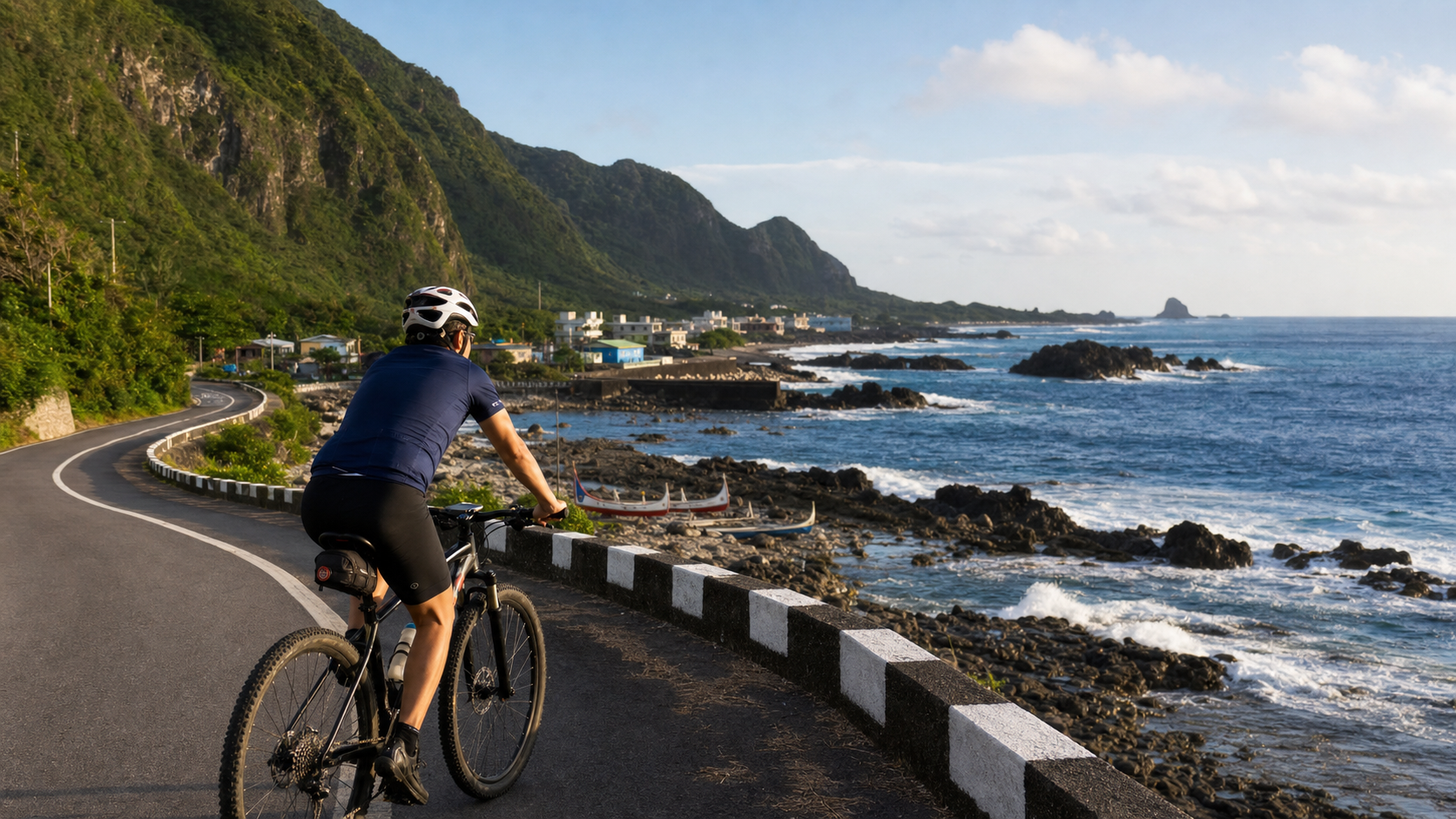
Orchid Island Cycling Circumnavigation: The Magnificent Scenery and Local Culture of an Offshore Island Road
Introduction
The ring road around Orchid Island is 37 kilometers in total length, and for riders of any level, one lap is simply not enough. I stayed on Orchid Island for three days, riding one to two laps each day, and every ride revealed something different—not because the route changed, but because the light, the tides, and my own mood made the same road feel different each time.
Orchid Island is not a place to challenge your physical limits; it is a place to slow down and take in the island with all your senses. Cycling simply provides the perfect way to interact with it.
Basic Cycling Information for Orchid Island
Although the ring road around Orchid Island is only 37 kilometers, the difficulty of riding it should not be underestimated:
Characteristics of the Orchid Island Ring Road:
| Characteristic | Description |
|---|---|
| Terrain | Rolling hills, with the highest climb at approximately 150–200m |
| Road Surface | Some sections have potholes and accumulated sand; caution required |
| Weather | Affected by sea winds year-round, with strong crosswinds on the eastern section |
| Traffic | Light traffic, but roads are narrow; watch out for large vehicles |
| Facilities | Supply points are concentrated in the six main tribes |
Bike rental options: Bicycle rentals on Orchid Island are typically mountain bikes or folding bikes; road bikes are less common. However, for the ring road route, the stability of a mountain bike is actually better suited to certain sections.
Three-Day Riding Log
Day 1: First Exploration Counterclockwise
On the first day, I chose to ride counterclockwise (south to east to north to west), passing through the areas with more tourists first before entering the more primitive sections.
What struck me most was the coastline after the “Little Heavenly Lake” section on the east coast. The road is almost completely exposed to the Pacific sea winds, with cliffs and reefs on the left and an endless view of deep blue ocean on the right. Riding there gave me a strange sense of humility—“the earth is vast, and I am small.”
At Iraralay Village, I stopped to look at the Tao people’s traditional carved boats. Those painted wooden boats resting on the shore are the most important cultural symbol of the Tao people. The eye-shaped patterns, concentric circles, and crescent moon motifs on the boats—every symbol has its story. I gathered the courage to ask a nearby tribesman, and he patiently explained the meaning of the patterns. It was the most meaningful five minutes of my entire trip to Orchid Island.
Day 2: Encounter with Flying Fish Season
If you visit Orchid Island during flying fish season (usually March to June), the most special sight you might encounter while cycling is flying fish laid out to dry along the coast. The Tao people’s flying fish culture is the core of all life on Orchid Island, and the annual Flying Fish Festival is the most important ceremony on the entire island.
At a small bay along the ring road, I saw a family drying flying fish in their courtyard, and the salty, fresh scent of the sea drifted along the entire road. That scene made me realize that cycling on this island is not just about “appreciating the scenery”—it is about “getting close to a way of life.”
Day 3: Searching for Orchid Island’s Quiet
On the third day, I chose to set out at five in the morning, completing a lap before the crowds of tourists gathered. In the early morning on Orchid Island, the sea and the sky were both a deep blue, with no tourists around—only the occasional island resident passing by.
Near the highest point of the ring road, I stopped to watch the sunrise. The sun rose from behind the Taiwan Strait (on the western side of Orchid Island), dyeing the entire sea orange-red, with the silhouettes of coconut trees standing out in stark contrast against the morning light. At that moment, the world consisted only of the sea before me and the dew-covered road beneath my feet.
Tao Culture and Cycling Etiquette
When cycling through indigenous tribes, there are some important cultural etiquette points to observe:
- Do not take photos without permission: Seek consent before photographing residents and traditional architecture (underground houses)
- Taboo regarding carved boats: Women are not allowed to approach the Tao people’s traditional carved boats (per traditional cultural rules)
- Tribe entrances: Some tribe entrances feature traditional totems; do not touch them arbitrarily
- Carry out your trash: Orchid Island has limited waste disposal resources; all trash should be carried back to the main island for disposal
Supplies and Logistics
Supply resources on Orchid Island are far scarcer than on the Taiwan main island, so planning ahead is necessary:
- There are two convenience stores on the island (near Yeyin Village), with prices slightly higher than on the main island
- Each tribe has a general store where basic food and drinks can be purchased
- Fresh food options are primarily seafood dishes; the Tao people’s goat dishes are also a specialty
- It is recommended to bring your own drinking water; the island’s spring water is not recommended for direct consumption
Practical Tips
- The best times to visit are March to May (flying fish season plus moderate weather) or October to November
- Daily Air flies to Orchid Island from Taitung; confirm flight regulations in advance if bringing a bike
- You can also take a ferry—the Orchid Island Star operates regular crossings, but service is suspended in poor weather
- Accommodation is primarily homestays; book at least a month in advance during peak season
- Although the ring road is short, the sense of time on Orchid Island differs from the main island—everything moves at a slower pace
Conclusion
Orchid Island’s 37 kilometers is the shortest yet most meaningful circumnavigation I have ever ridden. It is not a challenge; it is an encounter—with this island, with the Tao people’s culture, with the vastness of the Pacific, and with that part of yourself that occasionally needs to slow down.
Cycling is merely the medium that allows you to have these encounters. What truly matters is how many senses you choose to open during the ride, and how much time you leave for unfamiliar beauty.
Related Reading
- Orchid Island Cycling Circumnavigation: An Encounter with Tao Culture and the Pacific
- Green Island and Orchid Island Cycling Circumnavigation: Riding the Volcanic Rocky Shores of Pacific Islands
- Taiwan Offshore Island Riding: One-Day Route Planning for Penghu, Green Island, and Orchid Island
- Penghu Archipelago Cycling Circumnavigation: A Complete Three-Day, Two-Night Penghu Cycling Travel Plan
金門 ! 我騎過最棒的離島了 / 最後可以騎車上金門大橋的機會!?/ 公路車 / CT Yeh
1 年前
南竿 單車 | 老婆公路車首航 | 偽出國體驗 | 4K 高畫質 | 綠色騎跡低碳輕旅遊 | #公路車
5 年前
半日 小台灣 極限單車路線挑戰實錄
7 年前
日本自助單車旅,茨城絕景路線/ 新手也可以體驗 / 4K空拍絕景 / 機票省錢大法 / 單車友善旅館 / 國家級霞之浦180K自行車道 / feat. 緯緯 / CT Yeh
1 年前
觀霧 變好騎了! | 北高車友爆笑大會師 | 公路車 | 單車旅遊 Taiwan Cycling Route GuanWu
6 年前
里佳部落 阿里山單車深度旅遊! | 竹山/草嶺/來吉/奮起湖 | 無敵銀河絕景 全新路線探索! 驚險狀況百出! | 4K沉浸式畫質 | 公路車 | CT Yeh
3 年前
日本島波海道 EP1 / 五大絕景路線之一! / 私房溫泉 x 豪華單車客棧 / 今治 to 大三島 / 公路車 / CT Yeh
2 年前
台北闊瀨陡坡 騎旅 / 日本單車雜誌編輯車友臨時加入!/ 髮香才是最強的 / feat. 北迴歸線小隊 / 公路車 CT Yeh
6 個月前