Introduction
The prostate gland is located below the bladder, in front of the rectum, and adjacent to the urethra—placing it directly within the zone affected by saddle pressure during cycling. Many male cyclists harbor a vague concern that “cycling harms the prostate,” but the actual scientific evidence is more nuanced: the core issue is not cycling itself, but rather “how you ride, what saddle you use, and how long you ride.”
The Anatomical Relationship Between Cycling and the Prostate
Pressure from a traditional saddle is concentrated mainly on:
- The ischial tuberosities (sit bones, on both sides)
- The perineum (central area)
- The region where the prostate sits lies between the sit bones, moving closer to the middle of the saddle when the rider leans forward
Research shows that prolonged riding may affect the prostate through the following mechanisms:
- Mechanical compression: Direct pressure on the prostate capsule and surrounding tissues
- Ischemia-reperfusion: Repeated compression causing intermittent interruption and restoration of local blood flow, which may trigger a mild inflammatory response
- Nerve stimulation: Compression of the pudendal nerve affecting pelvic floor neural regulation
Cycling and PSA Levels
PSA (Prostate-Specific Antigen) is an important blood marker for prostate health, with a typical normal value of <4 ng/mL, used for prostate cancer screening. However, multiple studies (Mejak et al., 2004; Leibovitch & Mor, 2005) show that:
- Within 24 hours after intense riding, PSA levels can rise by 25–50%
- This elevation is temporary, typically returning to baseline within 48–72 hours
- Key clinical recommendation: PSA screening should not be performed within 48–72 hours after cycling, to avoid false positives
Why Does This Matter?
If blood is drawn immediately after riding without awareness of this effect, a falsely elevated PSA could lead to unnecessary anxiety, additional biopsies (prostate needle biopsy), and increased medical burden and risk.
Chronic Pelvic Pain Syndrome (CP/CPPS)
Chronic pelvic pain syndrome is a condition involving chronic pelvic floor pain without bacterial infection. It is more common among male cyclists than in the general population, with symptoms including:
- Chronic dull pain or pressure in the perineum, testicles, or base of the penis
- Difficulty urinating or frequent urination
- Pain after ejaculation
- Symptoms worsening after cycling
Management Principles
- Temporarily reduce riding distance: Decrease the source of irritation during acute flare-ups
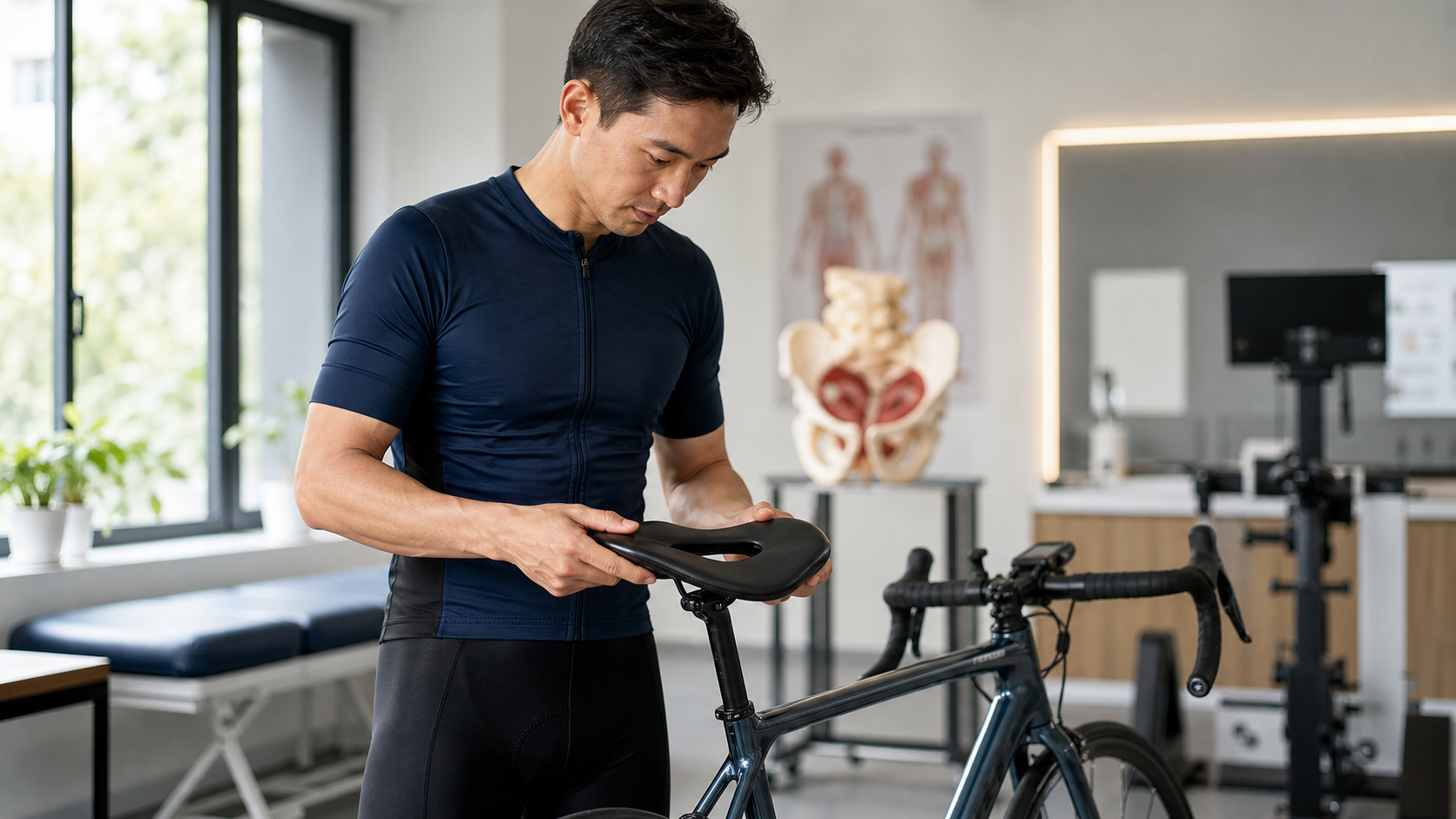
- Saddle adjustment: Switch to a saddle with a central cutout or a noseless design
- Pelvic floor physical therapy: Relax overly tense pelvic floor muscles
- Seek medical evaluation: Have a urologist rule out prostatitis or urinary tract infection
Cycling and Erectile Function
This is the most sensitive topic for male cyclists, but it is genuinely worth discussing. Multiple studies show that prolonged riding on traditional saddles is associated with penile oxygen desaturation:
- After 1 hour of riding on a standard saddle with a nose, penile oxygen saturation can drop below 70% (normal tissue >90%)
- Using a noseless saddle significantly improves this issue
- Long-term (several years or more) heavy use of standard saddles has been linked in some studies to an increased incidence of erectile dysfunction
Practical Prostate Protection Recommendations
| Protective Measure | Description |
|---|---|
| Use a saddle with a central cutout or noseless design | The most direct and effective improvement |
| Stand up and pedal regularly | Stand for 30–60 seconds every 10–15 minutes to restore blood flow |
| High-quality cycling shorts | The pad should support the sit bones, not compress the perineum |
| Stretch the pelvic floor before and after riding | Deep squats, figure-4 stretch lying on the side |
| Stop riding 48–72 hours before a PSA test | Avoid false positive results |
| Annual urology follow-up (age >45) | Proactively monitor prostate health |
When to Seek Medical Attention
- Difficulty urinating, weak or interrupted urine stream after riding, persisting for more than 1 week
- Chronic perineal or testicular pain that persists rather than being brief post-ride discomfort
- Significantly reduced morning erections (for 2 consecutive weeks or more)
- Blood in the urine
Conclusion
Cycling does not inevitably harm the prostate, but prolonged use of poorly designed saddles and improper riding posture are indeed risk factors for prostate discomfort. Through equipment choices and adjustments to riding habits, male cyclists can fully enjoy the pleasure of cycling while protecting their long-term urinary and reproductive health. “Knowing how to ride” and “knowing how to take care of yourself” are equally important.
Related Reading
- Cycling and Prostate Health: Special Health Considerations for Male Cyclists
- Urinary Tract Health in Cycling: Preventing Saddle Compression and Numbness
- Bicycle Saddle Soreness: The Science of Perineal Compression and Saddle Selection
- Road Cycling and Reproductive Health: The Impact of Saddle Compression on Male and Female Health and Prevention
碟煞公路車 銑面器 !? 原來銑完差這麼多! 降低蹭碟機率! | TIME 公路車 保養小記錄 | CT Yeh
3 年前
2016/4/20 - 中社路 夜騎 半年甩肉14KG 後測
10 年前
一日北高常見問題大集合 | 攻略 | 路線 | 訓練 | 補給 | 自行車 單車 | 一日雙城 | 雙塔 | TWB北高360 | 屁股痛
6 年前
如果Pogačar騎西進武嶺可以多快?會破2嗎?各種情況深度推估探討 / 公路車 / CT Yeh
2 年前
一日北高/長距離團騎 常見問題補充篇 / 組團或跟團的眉角 / 壯車友容易被瘦車友慢性拉爆 / 原來屁股痛可能是這個原因...? / 風場配速法 / 公路車 / CT Yeh
2 年前
#公路車 #Fitting 靠人工智慧APP 幫你調整單車
6 年前
洗單車神器 吹水機! 實際洗車用用看 暴力洗鍊條大法 | 公路車 | CT Yeh
4 年前
靠單車減肥35公斤 心得分享與整理
7 年前