Iron Supplementation for Runners: Differences in Absorption Rates Between Plant-Based and Animal-Based Iron and How to Combine Them
Introduction
Iron is one of the most easily overlooked yet most impactful trace minerals for runners. Iron is a core component of hemoglobin and myoglobin, responsible for carrying oxygen to working muscles. Iron deficiency not only stalls your pace but can also trigger chronic fatigue, dizziness, and a racing heart. Taiwanese research shows that iron deficiency (including latent iron deficiency) affects up to 30–50% of female long-distance runners, and about 10–15% of males. This article will help you understand the differences between the two types of iron and solve your iron intake issues using Taiwanese ingredients.
Heme Iron vs. Non-heme Iron
Key Differences Between the Two Types of Iron
| Characteristic | Heme Iron | Non-heme Iron |
|---|---|---|
| Source | Animal foods (meat, fish) | Plant foods, eggs, dairy |
| Absorption rate | 15–35% | 2–20% (heavily influenced by other factors) |
| Dietary influence | Less affected | Enhanced by vitamin C, inhibited by tannins |
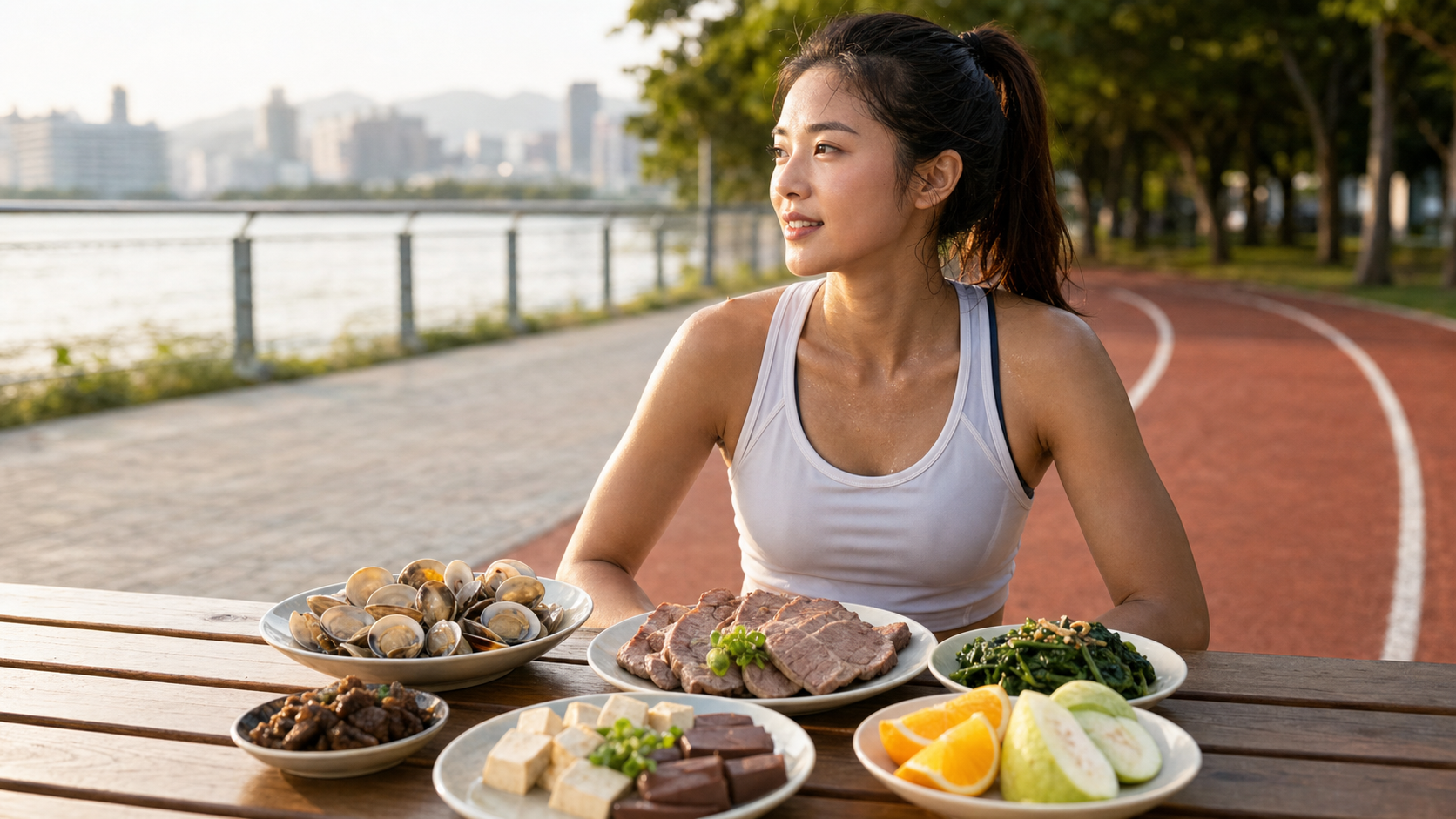
| Representative foods | Pig’s blood cake, beef, clams | Spinach, brown sugar, tofu |
Why Runners Especially Need Iron
- Foot-Strike Hemolysis: Impact from landing destroys red blood cells, increasing iron loss
- Sweat loss: Sweat contains trace amounts of iron; high-sweat runners lose an additional 0.3–0.5mg daily
- Decreased intestinal absorption: High-intensity training alters intestinal permeability, affecting iron absorption
- Elevated Hepcidin: For 3–6 hours after intense exercise, this hormone inhibits iron absorption—this is why you shouldn’t take iron supplements immediately after training
Iron Content in Taiwanese Ingredients
High-Iron Animal Foods
| Ingredient | Iron content (mg/100g) | Heme iron ratio | Notes |
|---|---|---|---|
| Pig’s blood cake | 16mg | High | Traditional Taiwanese delicacy, #1 for iron supplementation |
| Duck blood | 30mg | High | Common in street-side ginger duck and spicy hot pot |
| Beef shank | 3.1mg | High | Readily available for daily use |
| Hard clam | 8mg | High | Common Taiwanese seafood |
| Pork liver | 13mg | High | Highly efficient for iron but also high in cholesterol |
| Chicken leg (skinless) | 1.5mg | Medium | Daily protein source that also provides iron |
High-Iron Plant Foods
| Ingredient | Iron content (mg/100g) | Tips to enhance absorption |
|---|---|---|
| Red amaranth | 12mg | Pair with vitamin C foods |
| Black sesame | 10mg | Better absorption after grinding |
| Pumpkin seeds | 8mg | Eat directly as a snack |
| Tofu (firm) | 1.9mg | Pair with tomatoes |
| Brown sugar | 5mg | Use for cooking and seasoning |
| Red beans | 5.5mg | Cook into red bean soup |
Strategies to Enhance Iron Absorption
Vitamin C Is the Most Powerful Iron Booster
The absorption rate of non-heme iron (plant iron) can be increased 2–4 times by consuming vitamin C in the same meal:
- Red amaranth fried rice + tomato egg drop soup (tomatoes are rich in vitamin C)
- Tofu salad with lemon juice dressing
- Red bean soup with sliced kiwi added after heating (kiwi is high in vitamin C)
Avoid Iron “Inhibitors”
Combinations to avoid in the same meal:
- Tannic acid in tea and coffee: Chelates non-heme iron, reducing absorption by 40–50% (wait 1 hour after meals before drinking tea)
- High-dose calcium (milk, calcium supplements): Competes for the same absorption pathway
- Phytic acid (unfermented whole grains and legumes): Can be reduced by soaking and sprouting
Best Timing for Iron Supplementation
- 3 hours before training: Avoid the Hepcidin spike after high-intensity training that inhibits absorption
- On an empty stomach or between meals: Absorption rate is 40% higher than with meals (but may cause stomach discomfort)
- Iron supplements are best taken with vitamin C juice (if you need to take iron supplements)
Daily Iron Requirements for Runners
| Group | Recommended Daily Allowance (RDA) | Athlete recommendation |
|---|---|---|
| Men (18–50 years) | 10mg | 14–18mg |
| Women (18–50 years, menstruating) | 15mg | 20–25mg |
| Women (post-menopausal) | 10mg | 14mg |
| Vegetarian runners | 1.8 times that of non-vegetarians | Women 35mg+ |
When Should You Get a Blood Test?
Consider getting blood work to check ferritin (an iron storage marker) in the following situations:
- Pace drops instead of improving after increasing training volume
- Persistent fatigue even with adequate sleep
- Dizziness, brittle nails, or getting winded easily
Ideal ferritin targets for runners: Men >30 ng/mL, women >20 ng/mL (athletes are advised to aim higher: >40–50 ng/mL)
Practical Recommendations
- Consume animal-based heme iron at least 2–3 times per week (pig’s blood cake, duck blood, and clams are the most cost-effective choices in Taiwan)
- Don’t drink tea immediately after meals—wait 60 minutes
- Female runners should prioritize iron replenishment after menstruation; discuss with your gynecologist whether supplements are needed
- Vegetarian runners should check ferritin levels every 6 months
Conclusion
Iron management is the trace mineral issue Taiwanese runners—especially female runners—should take most seriously. Traditional Taiwanese foods like pig’s blood cake, duck blood, and clams are actually world-class iron-rich ingredients. As long as you pair them with vitamin C-rich foods and avoid the interference of tea tannins, you can maintain adequate iron levels through your daily diet, allowing your red blood cells to carry oxygen fully and perform at your best on every kilometer.
Related Reading
- Iron Supplementation for Female Runners: Identifying Sports Anemia and Dietary Strategies
- Anemia Risk in Female Runners: Iron Requirements and Dietary Supplementation Strategies
- Iron Supplementation for Road Runners: Dietary Strategies for Anemia Prevention in Female Runners
- Sports Anemia in Runners: The Impact of Long-Distance Running on Iron
CT暗黑廚房) 車友必備 宇宙無敵鮮蚵湯 幫助訓練恢復 天然食補 好市多 超肥鮮蚵 破PR
7 年前
靠單車減肥35公斤 心得分享與整理
7 年前
福隆鐵人團練隨拍
8 年前
2026 車錶排行榜!誰是最多車友正在使用?練家子最愛哪款?🏆 (2萬名車友數據) / 公路車 / CT Yeh
5 個月前
單車 一日北高 ( 雙城 ) 肥宅雙人瘋狂行 紀錄片 REACTO
10 年前
西進武嶺 免費訓練分析服務 Intervals | 練不夠還是練過頭?你哪一種類型選手?AI模型告訴你! | 備戰神器 | 公路車 訓練 | CT Yeh
4 年前
CT 喇低賽) 武嶺牽車 才是王道 西進牽車四小時內秘訣 攝手位置 如何判斷 防抽筋小秘訣
7 年前
高雄綠園道鐵路自行車道 / 外地人能輕鬆駕馭 還是整路崩潰? / 2025 全線開通 春節實地探索一次!(附GPS連結)/ 公路車 / CT Yeh
1 年前