Hydration in Swimming Training: The Challenge of Fluid Replacement in a Chlorinated Water Environment
Introduction
“How can you get dehydrated while swimming in water?” This is the intuitive reaction of many swimmers and the most common hydration myth in the sport. In reality, the amount of fluid a swimmer loses during training is comparable to other aerobic exercises, and can even be more severe during high-intensity training or in outdoor summer pools. However, the aquatic environment masks the perception of sweating, and the unique challenges posed by chlorinated water make hydration a health risk that is easily overlooked for swimmers.
Why Do You Still Get Dehydrated While Swimming?
Fluid loss during swimming occurs primarily through the following pathways:
- Sweat Evaporation: Even in water, the body continues to sweat, but the sweat dissolves directly into the water and goes unnoticed.
- Respiratory Water Loss: High-intensity swimming involves a high breathing frequency, and water vapor is lost with every exhalation.
- In-Water Thermoregulation: When swimming in cold water, the body regulates temperature through vasoconstriction, which also affects body fluid distribution.
- Increased Post-Training Urination: Water pressure promotes venous return, potentially leading to increased urination after training.
Research shows that in a warm pool at 28°C, sweat loss during 1 hour of swimming is approximately 0.4–1.0 liters, and can reach 1.0–1.5 liters during high-intensity interval training.
Unique Challenges of a Chlorinated Water Environment
Swimming pools across Taiwan use chlorinated water for disinfection. Long-term exposure to chlorinated water has the following effects on swimmers:
- Altered Skin Permeability: Chlorinated water disrupts the skin’s protective barrier, which may slightly alter body fluid regulation.
- Chlorine Gas Inhalation: Inhaling chlorine gas while swimming can irritate the respiratory tract, leading to decreased ventilatory efficiency.
- Accelerated Electrolyte Loss: Some studies suggest that contact with chlorinated water and long-term swim training may affect the rate of sodium ion loss in sweat.
- Numbed Thirst Sensation: The aquatic environment makes it difficult for athletes to feel thirsty, making it easy to ignore hydration needs.
Calculating Daily Fluid Requirements
| Training Condition | Estimated Fluid Loss During Training | Recommended Daily Fluid Intake |
|---|---|---|
| Light Training (60 min, non-oxidative) | 0.4–0.6L | 2.0–2.5L |
| Moderate Training (90 min, warm pool) | 0.6–1.0L | 2.5–3.0L |
| High-Intensity Training (120 min, intervals) | 1.0–1.5L | 3.0–3.5L |
| Summer Outdoor Pool | 1.2–2.0L | 3.5–4.0L |
| Double Training (morning and evening) | 1.5–2.5L | 4.0–5.0L |
Hydration Strategy: Before, During, and After Training
A swimmer’s hydration strategy must cover all three phases of training:
Before Training:
- Drink 500ml of water 2 hours before training.
- Drink 200–250ml 30 minutes before training.
- Light yellow (straw-colored) urine is an indicator of adequate hydration.
During Training (Crucial!):
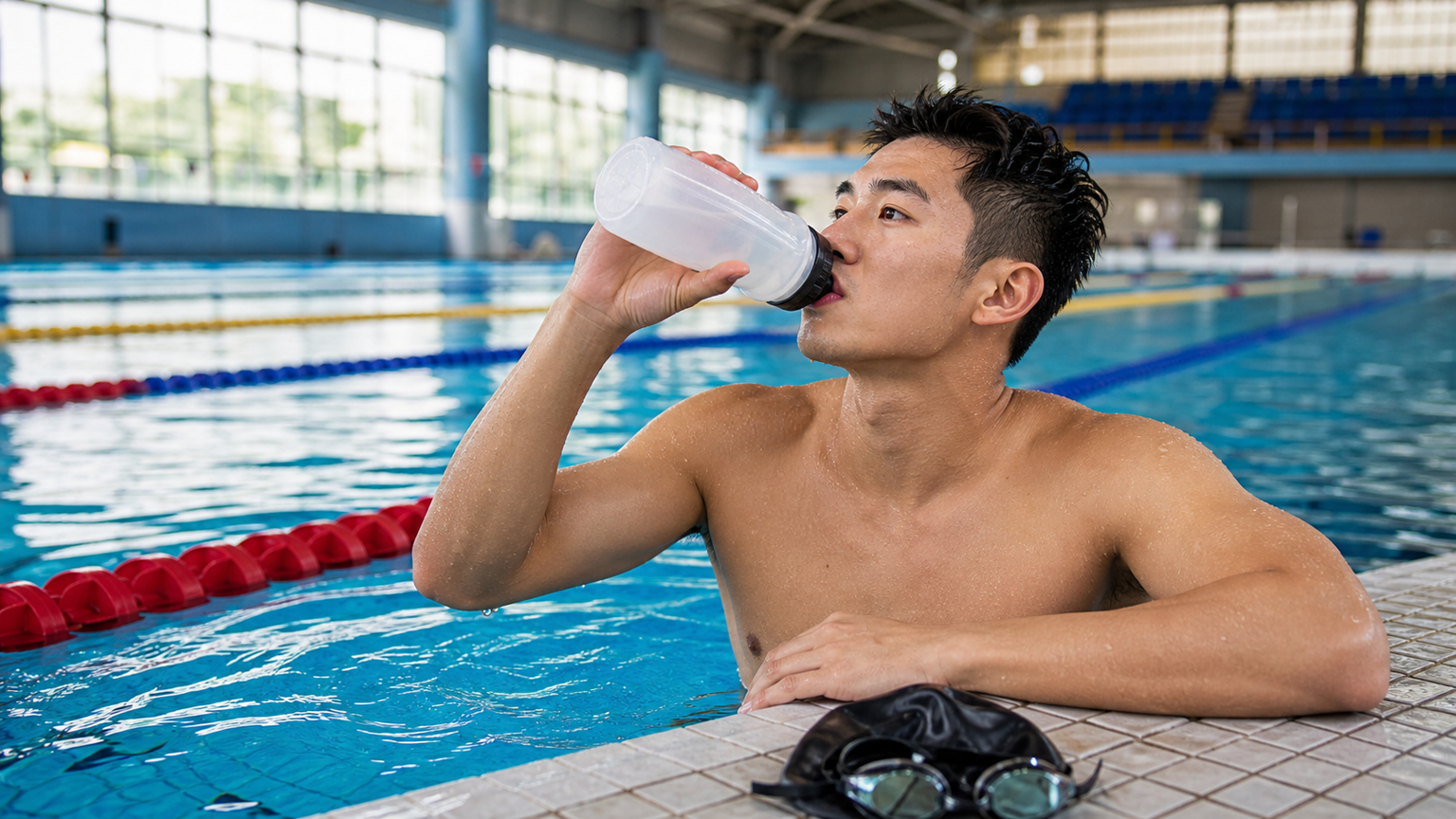
- Replenish 150–200ml of fluids at the poolside every 15–20 minutes.
- Use training intervals (rest between sets) to drink and develop a consistent hydration habit.
- For training sessions longer than 60 minutes, it is recommended to supplement with an electrolyte sports drink (e.g., Supau, Pocari Sweat).
After Training:
- Calculate fluid loss based on weight difference (pre- and post-training weight difference × 1.5 = rehydration volume).
- Do not gulp down a large amount of water at once; replenish gradually in small, divided amounts.
The Importance of Electrolyte Replenishment
Prolonged swim training results in the loss of not only water but also significant amounts of electrolytes, especially Sodium (Na+) and Potassium (K+):
- Each liter of sweat contains approximately 400–1000mg of sodium.
- Replenishing with plain water without electrolytes can lead to hyponatremia (dizziness, nausea, fatigue).
- Common electrolyte replenishment options in Taiwan: sports drinks (Supau/Pocari Sweat), coconut water, salt-containing electrolyte tablets.
Practical Recommendations
- Keep a graduated water bottle in your swim bag to easily track daily fluid intake.
- Set phone reminders to ensure you drink water once an hour (even on non-training days).
- Eat salty foods after training (e.g., tofu with soy sauce, salty soy milk) to help with fluid retention.
- In winter, it’s easier to neglect hydration because you don’t feel hot, so pay special attention.
- Avoid swimming after drinking alcohol; alcohol has a diuretic effect that increases the risk of dehydration.
Conclusion
The unique environment of training in water makes hydration both easily overlooked and requiring a more proactive management strategy for swimmers. Establishing a consistent hydration habit, understanding the specific effects of a chlorinated environment on the body, and replenishing fluids and electrolytes in phases before, during, and after training are fundamental health knowledge every swimmer should master. Under Taiwan’s climate conditions, especially during summer training, a hydration strategy is a critical factor determining training quality and athlete health.
Related Topic Reading
- Hydration Strategies in Swimming: The Hidden Dehydration Risk of Aquatic Exercise
- Fluid Replenishment for Swimmers: A Hydration Plan for Imperceptible Losses During Training
- Fluids and Electrolytes for Swimmers: Replenishment Strategies for Prolonged Swimming
- Swimming Skin Issues: Chlorine Allergy, Dry Skin, and Moisturizing Strategies
洗單車神器 吹水機! 實際洗車用用看 暴力洗鍊條大法 | 公路車 | CT Yeh
4 年前
CT暗黑廚房) 車友必備 宇宙無敵鮮蚵湯 幫助訓練恢復 天然食補 好市多 超肥鮮蚵 破PR
7 年前
2016/05/13 單車 冷水坑下滑
10 年前
一日北高/長距離團騎 常見問題補充篇 / 組團或跟團的眉角 / 壯車友容易被瘦車友慢性拉爆 / 原來屁股痛可能是這個原因...? / 風場配速法 / 公路車 / CT Yeh
2 年前
一日北高常見問題大集合 | 攻略 | 路線 | 訓練 | 補給 | 自行車 單車 | 一日雙城 | 雙塔 | TWB北高360 | 屁股痛
6 年前
西進武嶺 免費訓練分析服務 Intervals | 練不夠還是練過頭?你哪一種類型選手?AI模型告訴你! | 備戰神器 | 公路車 訓練 | CT Yeh
4 年前
一日北高前的高裝檢 | 北高 360 | 挑戰11小時的裝備 | 一日雙塔 | 補給
6 年前
#公路車 #Vo2Max #最大攝氧量 測驗 體驗 | 心肺測試
6 年前