Introduction
You spent six months preparing for this marathon. Every weekend long run, every gasp during interval training, every adjustment after a pacing misstep—all of it pointed toward this one day.
Then you finished. You crossed the finish line, got your medal, drank a cup of hot soup, took photos, and posted them on Instagram.
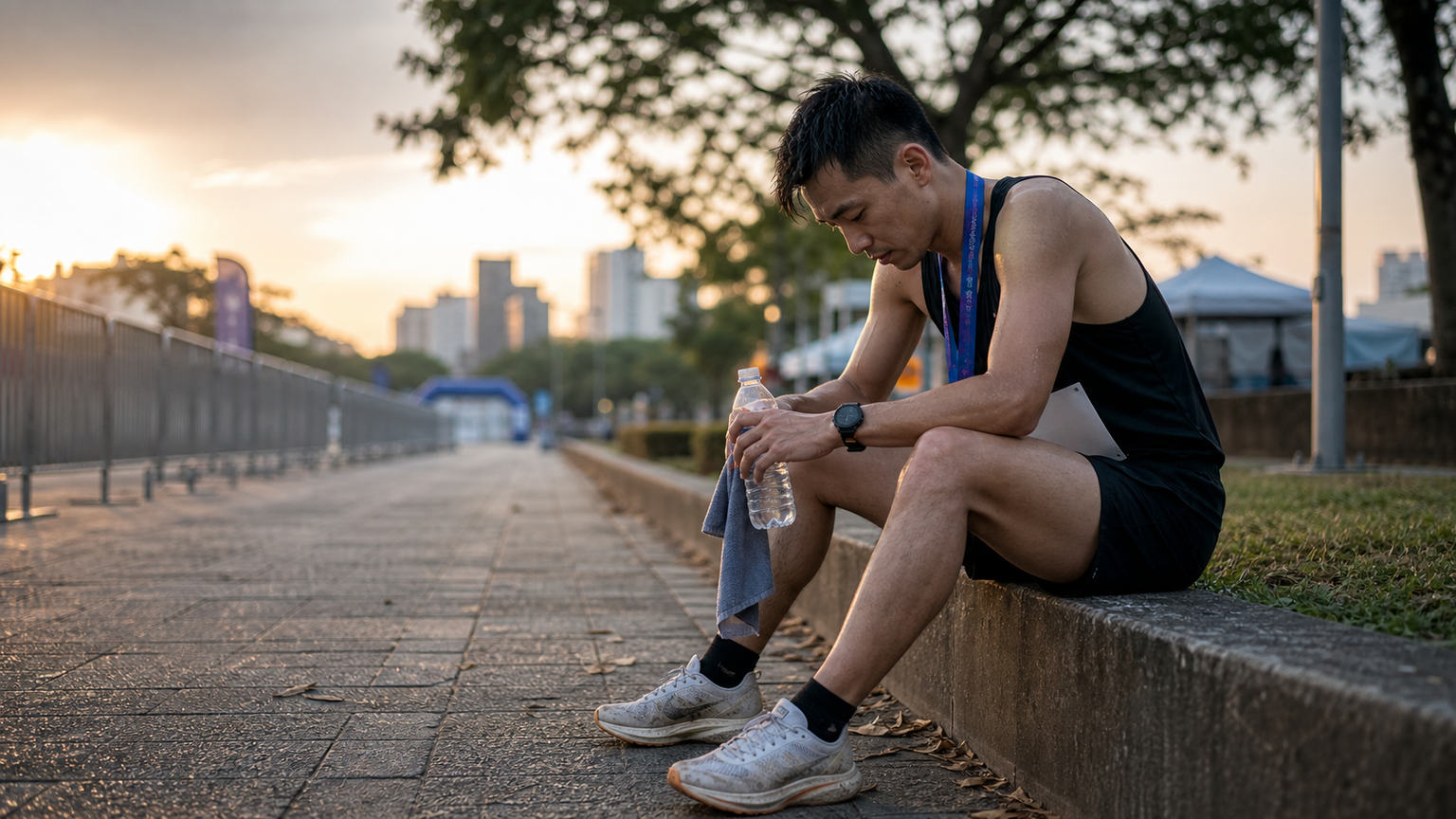
In the days that follow, you find yourself feeling a bit… hollow. The routine structure of training is gone, you don’t know what’s next, and your passion for running seems to have been spent on race day. Your body is recovering, but your mood is unexpectedly low.
This is the “Post-Race Blues,” also known as “Post-Marathon Depression.” Research shows it affects 40–50% of marathon finishers, but because it’s rarely discussed openly, many runners feel confused or even self-critical when they experience it.
Causes of the Post-Race Blues
| Dimension | Mechanism | Explanation |
|---|---|---|
| Physiological | Neurotransmitter fluctuation | Dopamine and serotonin remain elevated during prolonged training and the race, then drop sharply afterward |
| Physiological | Cortisol rebound | The stress hormone from race day drops significantly afterward, potentially causing fatigue and low mood |
| Psychological | Goal vacuum | Six months of focus disappears, and the sense of meaning in daily life temporarily declines |
| Psychological | Identity conflict | The identity of “I am someone training for a marathon” disappears |
| Social | Dissolution of the training community | Training partners each return to their daily lives, and social density drops sharply |
| Cognitive | Temporary loss of meaning | “What now? Was this all six months of preparation was for?” |
Normal Range and Boundaries to Watch For
Normal post-race blues:
- Lasts 1–2 weeks
- Low mood but doesn’t impair daily functioning
- Still has interest in non-running activities
- No intense feelings of hopelessness
Signs you need to seek support:
- Low mood persists beyond 3–4 weeks
- Complete loss of interest in any activity
- Significant changes in sleep and eating
- Intense emptiness affecting work and relationships
If you fit the latter category, this may go beyond a “normal post-race reaction,” and seeking psychological counseling is recommended.
Five Strategies for a Healthy Transition
Strategy One: Design a “Post-Race Plan” Before the Race
The most effective way to prevent post-race blues is to design a plan for the first few weeks after the race before race day. Not by immediately signing up for the next race, but by designing a relaxed “bridge period”:
- Week 1 after the race: Complete rest, allowing your body and mind to recharge
- Weeks 2–3 after the race: Easy short runs (20–30 minutes), no target pace, purely enjoying movement
- Week 4 after the race: Begin exploring new physical activities (strength training, swimming, yoga, hiking)
- Weeks 5–8 after the race: Rebuild your running routine, and naturally form your next goal during this period
Strategy Two: Ritualize the Celebration
Taiwanese culture tends to be understated, and many runners quietly return to daily life after finishing without giving themselves enough of a celebration ritual. A ritualized celebration helps the brain “close” this chapter, making it easier to open the next one.
The celebration doesn’t need to be lavish, but it should be deliberately designed:
- A post-race dinner with training partners
- Buying a commemorative item (not necessarily running gear)
- Writing a letter to the self who started training six months ago
- Formally “closing” this chapter of your training log (whether drawing a line in a physical log or writing a summary post in a digital one)
Strategy Three: Reflect Rather Than Immediately Move Forward
Many runners’ instinctive reaction to post-race blues is to “immediately find the next goal to fill the void.” The risk of this strategy is permanently postponing the emptiness rather than truly processing the meaning of this race.
Suggested reflection questions (to complete within 1–2 weeks after the race):
- Over these six months of training, what was the most unexpected gain?
- During the race, which moment made me most proud? (Not necessarily the fastest moment)
- For my next running goal, what do I want to be different from this one?
- What aspects of my life did six months of training change?
Strategy Four: Explore Different Physical Activities
The post-race recovery period is an excellent time to explore other physical activities. This isn’t “betraying running”—it’s an important strategy for keeping running fresh:
- Try strength training (which can improve your muscular foundation for running)
- Try swimming (aerobic, low-impact, and requires learning entirely new skills)
- Join Taiwan’s thriving hiking culture (giving your desire for physical exploration a new outlet)
- Yoga (improves flexibility while incorporating mindfulness)
Strategy Five: Build a “Meaning Network Beyond Running”
Long-term follow-up shows that the runners who suffer the most from post-race blues are often those for whom running is the only major source of meaning in life. The fundamental preventive measure is building a diverse network of meaning:
- Interpersonal relationships (beyond just the running community)
- Professional fulfillment
- Creative activities
- Acts of service to others
- Family connections
The Right Timing for Setting Your Next Goal
Too early (1–2 weeks after the race): Avoid setting goals while your mood is low—you’re likely to set unrealistic expectations or turn running into a source of stress again.
The right time (4–8 weeks after the race): When you feel the natural urge to run again, rather than the obligation of “I should go run.”
Suggestions for the type of new goal: Consider changing the distance, changing the purpose (speed vs. enjoyment vs. exploration), or setting an “exploratory goal” rather than a competitive one.
Practical Advice
- Tell the people around you that you might feel down for a while, so they can be ready to support you rather than be confused
- Mark a “one-month post-race rest period” on your calendar before the race, treating it as part of your training plan
- Strava’s “training log review” feature can help you see your progress during this period, effectively countering the emptiness
Conclusion
The emptiness after finishing a race is proof that you invested yourself fully. Only those who have truly burned can feel that hollowness after the fire goes out.
Give yourself some time, and let that void slowly fill with new curiosity. There’s no need to rush into finding the next goal—sometimes, it’s in the blank space between goals that you truly hear why you run.
Crossing the finish line isn’t the end—it’s the beginning of rediscovering yourself.
Related Reading
- Post-Race Psychological Adjustment: The Emptiness After Achieving a Major Goal and Setting New Goals
- The Void After Finishing: A Psychological Analysis of Post-Marathon Depression
- The “Lost Goal” Feeling After Finishing: What Is Post-race Blues and How to Get Through It?
- The Emptiness After Finishing: How to Avoid an Exercise Slump After Achieving Your Goal
西進武嶺 免費訓練分析服務 Intervals | 練不夠還是練過頭?你哪一種類型選手?AI模型告訴你! | 備戰神器 | 公路車 訓練 | CT Yeh
4 年前
CT 喇低賽) 單車 比賽總是沒照片? 攝影師的觀點大公開 姿勢就是力量! 請加速1.25倍收看
7 年前
#公路車 #Fitting 靠人工智慧APP 幫你調整單車
6 年前
#公路車 #Vo2Max #最大攝氧量 測驗 體驗 | 心肺測試
6 年前
#雙崎部落 單車挑戰賽 心跳破200 #公路車 Neko's Fun
6 年前
一日北高 11小時 賽後心得分享篇 | TWB北高360 | 一日雙城 | 單車 | 公路車
6 年前
下次拍照前要查清楚啦🤣 #cycling
7 個月前
一日北高/長距離團騎 常見問題補充篇 / 組團或跟團的眉角 / 壯車友容易被瘦車友慢性拉爆 / 原來屁股痛可能是這個原因...? / 風場配速法 / 公路車 / CT Yeh
2 年前