Hydration Strategies for Riding in High Heat: The Complete Guide to Preventing Dehydration and Heat Injury
文章導覽
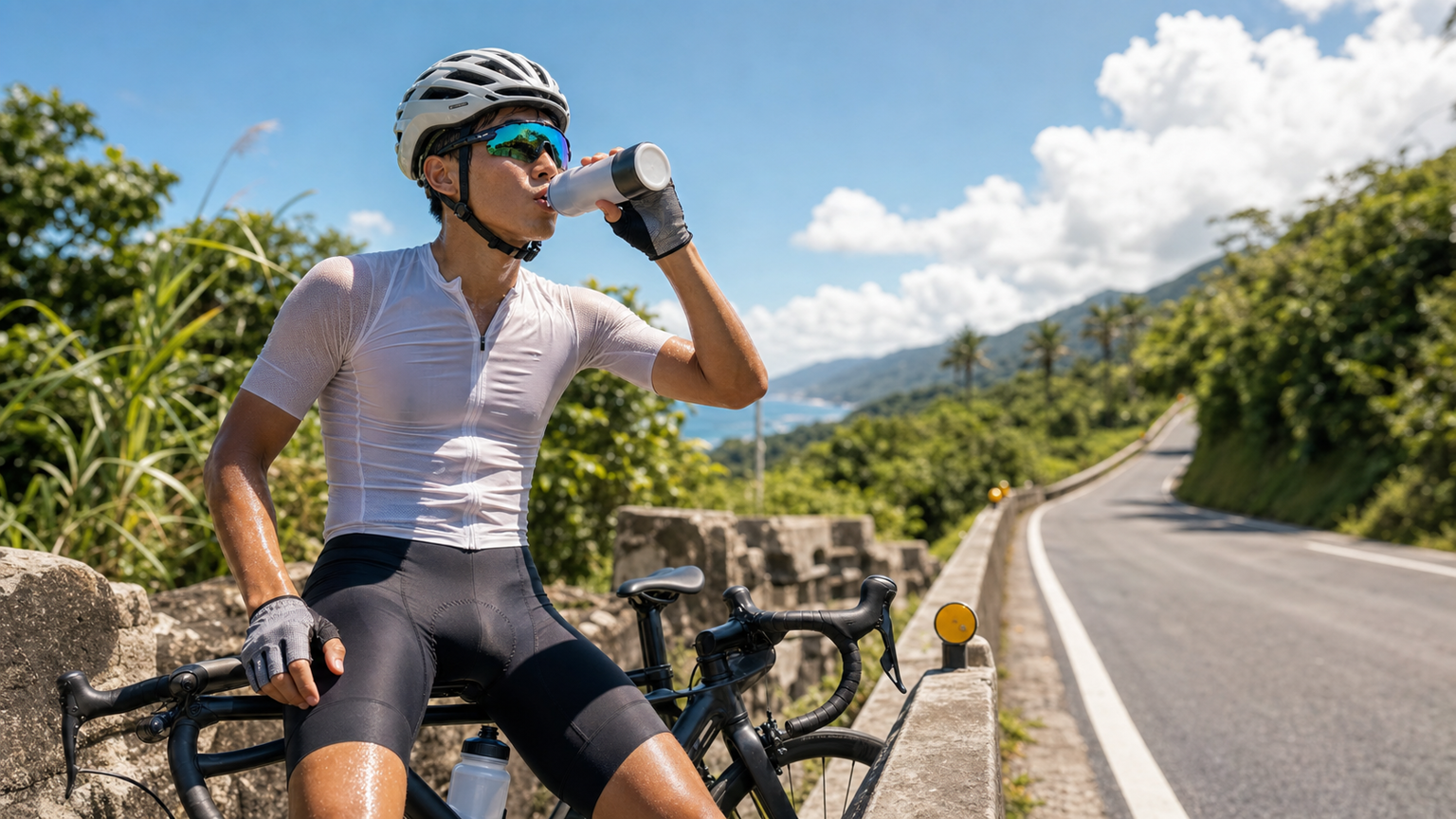
Hydration Strategies for Hot-Weather Riding: The Complete Guide to Preventing Dehydration and Heat Injury
Summer temperatures in Taiwan routinely exceed 35°C, and combined with high humidity, fluid management becomes one of the most critical survival skills for cyclists. Dehydration not only impairs performance but can also be life-threatening. This article provides a complete hydration strategy for riding in the heat.
The Impact of Dehydration on Athletic Performance
The Data Speaks
| Dehydration Level (% Body Weight Lost) | Impact |
|---|---|
| 1% | Thirst sensation appears, heart rate begins to rise |
| 2% | Aerobic endurance drops 10-20%, cognitive function begins to be affected |
| 3% | Muscle strength declines, core body temperature rises faster |
| 4% | Severe performance decline, significantly increased risk of heat cramps |
| 5%+ | Risk of heat exhaustion, potentially life-threatening |
Research shows that in hot environments, just 2% dehydration can reduce power output by 7-10%. This means a rider with an FTP of 280 watts could drop to below 250 watts due to dehydration.
The Physiological Mechanisms of Dehydration
When the body loses fluid:
- Reduced plasma volume → Decreased cardiac stroke volume → Compensatory increase in heart rate
- Reduced cooling capacity → Core body temperature rises faster
- Decreased muscle blood flow → Insufficient oxygen and nutrient supply
- Accumulation of metabolic waste → Accelerated fatigue
Know Your Sweat Rate
How to Measure Your Sweat Rate
This is the first step in developing a personalized hydration strategy:
- Weigh yourself before riding (wearing minimal clothing)
- Record ride duration and fluid intake
- Weigh yourself after riding (dry off sweat)
- Calculation formula:
Sweat rate (ml/hr) = [(Pre-ride weight - Post-ride weight) × 1000 + Fluid intake (ml)] ÷ Ride duration (hours)
Example Calculation
- Pre-ride weight: 70.5 kg
- Post-ride weight: 69.3 kg
- Ride duration: 2 hours
- Fluid intake: 1,200 ml
Sweat rate = [(70.5 - 69.3) × 1000 + 1200] ÷ 2 = 1,200 ml/hr
Typical Sweat Rate Ranges
| Conditions | Sweat Rate |
|---|---|
| Cool weather, low intensity | 400-600 ml/hr |
| Warm weather, moderate intensity | 600-1,000 ml/hr |
| Hot weather, high intensity | 1,000-1,800 ml/hr |
| Extreme heat and humidity | 1,500-2,500 ml/hr |
The Golden Rules of Fluid Replacement
Rule One: Hydrate Early, Don’t Wait Until You’re Thirsty
The thirst mechanism typically only kicks in once the body is already 1-2% dehydrated. For fluid management during exercise, proactive scheduled drinking is far more effective than passively waiting for thirst signals.
It is recommended to drink 150-250 ml every 15-20 minutes.
Rule Two: Don’t Overhydrate
Excessive fluid intake can lead to “hyponatremia,” a dangerous condition where sodium levels in the blood become too low. Symptoms include nausea, headache, confusion, and in severe cases, it can be fatal.
Hydration Goal: Replacing 70-80% of sweat loss is sufficient; there is no need (and it is not advisable) to attempt to fully replace all lost fluids.
Rule Three: Fluids + Electrolytes Are Equally Essential
Plain water cannot fully replace the electrolytes lost in sweat. Sweat contains large amounts of sodium, and smaller amounts of potassium, calcium, and magnesium.
Electrolyte concentration in sweat (per liter):
- Sodium: 500-1,500 mg (most variable)
- Potassium: 150-300 mg
- Calcium: 10-40 mg
- Magnesium: 5-20 mg
Electrolyte Replacement Strategies
Sodium Is Key
Sodium is the electrolyte lost in the greatest quantity in sweat and is the core ion for maintaining plasma volume.
Hourly sodium replacement recommendations:
- Low sweat rate: 300-500 mg
- Moderate sweat rate: 500-700 mg
- High sweat rate / salty sweater: 700-1,000 mg
How to Tell If You’re a “Salty Sweater”
- White salt stains on clothing after exercise
- Sweat stings particularly badly when it runs into your eyes
- Prone to cramping after prolonged exercise
- Sweat tastes especially salty
Electrolyte Product Options
| Product Type | Advantages | Disadvantages |
|---|---|---|
| Electrolyte tablets | Easy to carry, precise dosage | Takes time to dissolve |
| Electrolyte powder | Concentration can be freely adjusted | Difficult to use outdoors |
| Salt tablets | Compact and convenient, high sodium content | Need to be taken with additional water |
| Sports drinks | Provide both carbohydrates and electrolytes | Fixed concentration, may be too sweet |
A Complete Hydration Plan for Hot-Weather Riding
Before the Ride (Pre-hydration)
The night before:
- Ensure urine color is pale yellow
- Eat normally, no need to drink excessively
2-3 hours before the ride:
- Drink 500-600 ml of fluid (water or an electrolyte drink)
15 minutes before the ride:
- Drink another 200-300 ml
- Can include electrolytes to boost initial plasma volume
During the Ride
Basic principles:
- Drink 150-250 ml every 15-20 minutes
- Total fluid intake of approximately 500-800 ml per hour (adjust based on sweat rate)
- Alternate between plain water and electrolyte drinks
- Rides longer than 1 hour should include carbohydrates (30-60 grams per hour)
Bottle setup recommendation (dual bottles):
- Bottle A: Sports drink (carbohydrates + electrolytes)
- Bottle B: Plain water (for drinking, and pouring over your head to cool down)
After the Ride (Recovery Hydration)
- For every 1 kg of body weight lost, replenish with 1.25-1.5 liters of fluid
- Spread intake gradually over 2-4 hours
- Sodium-containing beverages help with fluid retention
- Pairing with sodium from meals (salty foods) is even more effective
Additional Cooling Strategies for Hot Environments
Pre-cooling
Research shows that lowering core body temperature before riding in the heat can delay the time it takes to reach dangerous body temperatures:
- Ice Slurry: More effective than ice water at lowering core body temperature
- Cold shower: 20 minutes before the ride
- Ice vest: Worn during warm-up
Cooling During the Ride
- Pour water from your bottle over your head and neck
- Use ice at aid stations (place it in your jersey’s rear pockets)
- Choose routes with shade
- Take advantage of wind chill on descents
Handling Special Situations
Heat Cramps
Symptoms: Involuntary muscle contractions, severe pain (commonly in the calves and thighs)
Treatment: Stop riding, rest in a shaded area, consume sodium-containing fluids, gently stretch
Heat Exhaustion
Symptoms: Profuse sweating, weakness, dizziness, nausea, pale and clammy skin
Treatment: Stop exercising immediately, move to a shaded area, remove excess clothing, replenish fluids, seek medical attention if symptoms do not improve
Heat Stroke (Emergency)
Symptoms: Cessation of sweating, hot dry and red skin, body temperature exceeding 40°C, confusion
Treatment: Call 119 immediately, cool the body by any means possible (ice water immersion is best), this is a potentially fatal medical emergency
Heat Acclimatization
After training regularly in hot conditions for 10-14 days, the body undergoes the following adaptations:
- Increased sweat rate → Improved cooling capacity
- Lower sodium concentration in sweat → Improved electrolyte retention
- Increased plasma volume → Improved cardiovascular efficiency
- Lowered core temperature threshold → Cooling begins earlier
Recommendation: In the 2 weeks leading up to a major summer event, gradually increase the duration and intensity of training in hot conditions.
Summary
Fluid management for hot-weather riding is not a guessing game; it is a science that can be quantified and planned. Measure your sweat rate, understand your electrolyte needs, and develop a personalized hydration plan. These preparations will allow you to safely enjoy riding in the scorching summer heat while maintaining peak performance. Remember: dehydration is preventable—don’t let fluid intake become the factor that limits your performance.
Related Reading
- Summer Riding Hydration Management: Practical Methods to Avoid Dehydration
- Hot-Weather Cycling Survival Guide: Cooling Strategies and Heat Stroke Prevention for Summer Training
- Preventing Heat Exhaustion While Cycling: Thermoregulation and Hydration Strategies for Summer Rides
- Hydration for Cycling: Sweat Analysis and Electrolyte Replacement Calculations