文章導覽
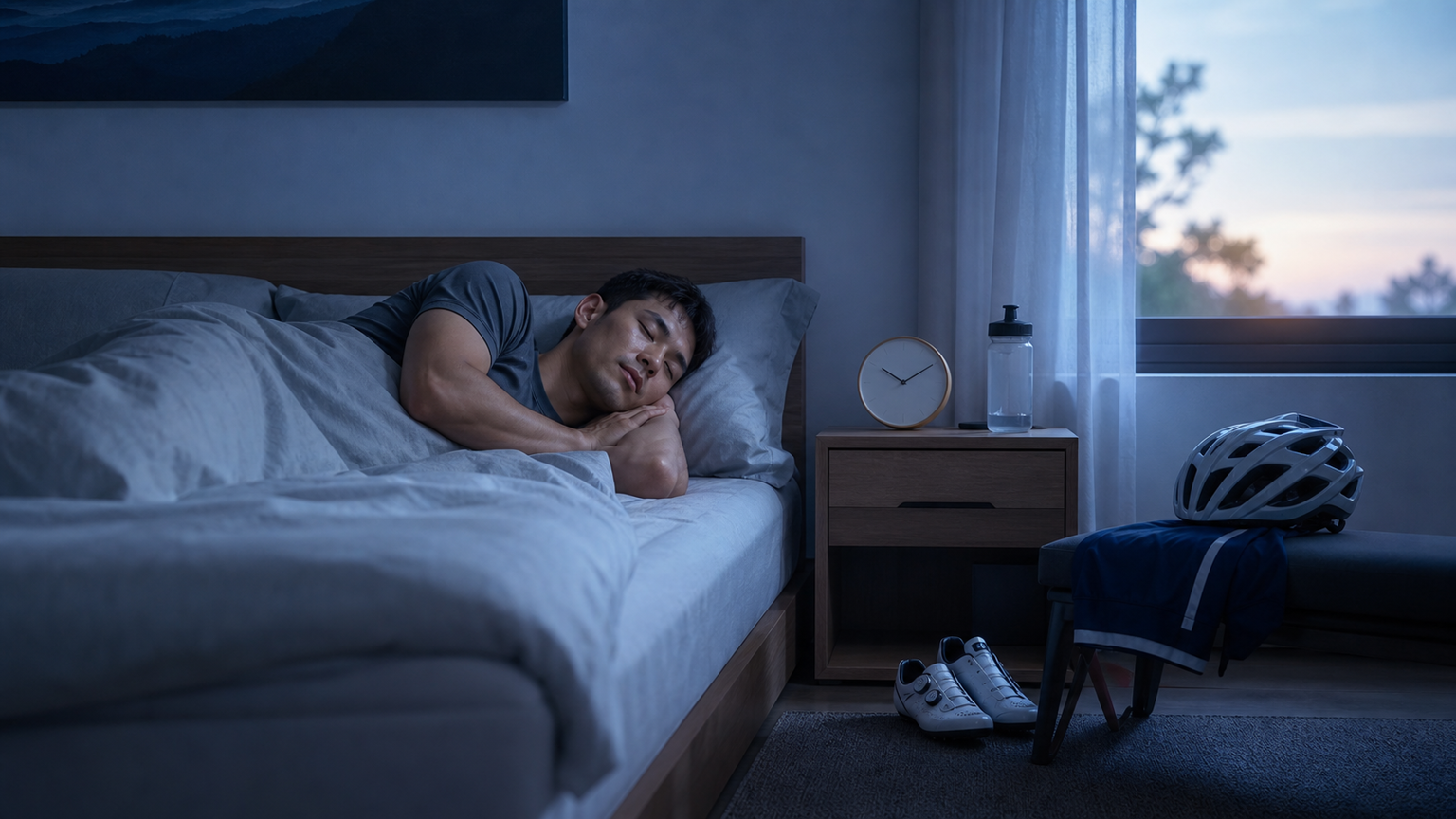
Athlete Sleep Optimization Guide: Using Scientific Methods to Double Recovery Efficiency
Among all recovery methods, sleep is the most underestimated yet most impactful one. You can have the most precise training plan and the highest-quality nutritional supplements, but if your sleep quality is poor, all your efforts will be significantly diminished. Research from Stanford University showed that basketball players who extended their sleep to 10 hours per night improved their sprint speed by 5% and their free-throw accuracy by 9%. For cyclists, sleep quality directly affects muscle repair, hormone secretion, and cognitive function.
How Sleep Affects Athletic Performance
The Peak of Growth Hormone Secretion
Approximately 70% of the body’s growth hormone (HGH) is secreted during deep sleep. Growth hormone is a key hormone for muscle repair and growth; it promotes protein synthesis, accelerates tissue repair, and aids fat metabolism. For cyclists undergoing high-intensity training, the quality of deep sleep directly determines the speed of muscle recovery.
The Mechanism of the Sleep Cycle
A complete sleep cycle lasts about 90 minutes and includes four stages:
| Stage | Name | Duration | Significance for Athletes |
|---|---|---|---|
| N1 | Light Sleep Onset | 5-10 minutes | Transition phase |
| N2 | Light Sleep | 20-30 minutes | Memory consolidation, motor skill integration |
| N3 | Deep Sleep | 20-40 minutes | Muscle repair, growth hormone secretion |
| REM | Rapid Eye Movement | 10-20 minutes | Psychological recovery, emotional regulation |
An ideal night of sleep should include 4-6 complete cycles, totaling 7-9 hours. Research indicates that athletes may need 9-10 hours of sleep during periods of high training load to achieve full recovery.
The Cascading Effects of Sleep Deprivation
Research published in the journal Sleep showed that subjects who slept only 6 hours per night for one consecutive week experienced:
- A decrease in maximal oxygen uptake (VO2max) of approximately 3-5%
- Reaction time prolonged by 15-20%
- Lowered pain threshold, with injury risk increasing by 60%
- Cortisol (stress hormone) elevated by 37%
- Testosterone decreased by 10-15%
These data clearly demonstrate: Sleep deprivation not only affects performance but also directly increases the risk of injury.
Sleep Environment Optimization Strategies
Temperature Control
The ideal sleep environment temperature is 18-20°C. The body’s core temperature needs to drop by about 1-1.5°C to enter deep sleep. The following methods can help with cooling:
- Take a warm (not hot) shower 1-2 hours before bed, using the “body temperature rebound effect” to accelerate core cooling
- Choose breathable bedding materials, such as Tencel or bamboo fiber
- Use a fan combined with air conditioning in summer to maintain a constant room temperature
- Wear lightweight sleepwear to avoid excessive covering
Light Management
Light is the primary factor regulating melatonin:
- Daytime: Within 30 minutes of waking up in the morning, expose yourself to natural light for 15-20 minutes to reset your circadian rhythm
- Evening: Avoid prolonged exposure to bright light after training
- 2 hours before bed: Lower indoor lighting and use warm-toned lights (color temperature below 3000K)
- Bedroom: Use blackout curtains to ensure complete darkness; cover standby lights on electronic devices with tape
Sound Environment
- Use a white noise machine or app to mask sudden noises
- If you live with roommates, earplugs are a simple and effective solution
- Avoid falling asleep with the TV or music on, as this can disrupt the natural transitions of the sleep cycle
Sleep Time Management for Athletes
The Importance of a Consistent Schedule
The body’s circadian rhythm prefers regularity. Research shows that athletes who go to bed and wake up at fixed times each day have 20-30% more deep sleep than those with irregular schedules.
Recommended practices:
- Set a fixed bedtime and wake-up time, and try not to deviate by more than 30 minutes even on weekends
- Work backward from your training time to determine bedtime: if your morning ride departs at 6:00 AM, requiring a 5:15 AM wake-up, then go to bed between 9:15 PM and 9:45 PM
- Use the “bedtime reminder” feature on your alarm clock to prompt you to start winding down 30 minutes before bed
Napping Strategies
Napping is an excellent supplementary recovery tool for athletes, but certain principles should be followed:
- Best window: 1:00 PM - 3:00 PM (aligned with the natural afternoon sleepiness rhythm)
- Ideal duration: 20-30 minutes (Power Nap) or 90 minutes (a complete cycle)
- Avoid: Napping after 4:00 PM, as it can interfere with nighttime sleep onset
- Pre-race application: Adding a nap the day before a race can help “bank” sleep
Scheduling Training and Sleep
High-intensity training raises core body temperature and sympathetic nervous system activity, which is not conducive to falling asleep. Recommendations:
- Complete high-intensity interval training at least 4 hours before bedtime
- Moderate aerobic rides (Zone 1-2) have less impact on sleep and can be done in the evening
- Include a cool-down of at least 15 minutes after training to help the body shift from sympathetic to parasympathetic mode
The Impact of Nutrition and Supplements on Sleep
Sleep-Promoting Nutrients
- Magnesium: 200-400mg daily (glycine magnesium or threonate magnesium recommended), which relaxes muscles and promotes GABA activity
- Tryptophan: A precursor to melatonin, found in turkey, milk, bananas, and nuts
- Tart cherry juice: A natural source of melatonin; research shows it can increase sleep time by approximately 34 minutes
- Glycine: 3g before bed can lower core body temperature and improve sleep onset speed
Substances to Avoid
- Caffeine: Has a half-life of 5-7 hours; avoid intake after 2:00 PM
- Alcohol: Although it speeds up falling asleep, it severely disrupts REM sleep and deep sleep
- High-sugar foods: Consuming them before bed can cause blood sugar fluctuations, leading to nighttime awakenings
Tracking and Quantifying Your Sleep
Subjective Assessment
Each morning, rate your sleep quality (1-10) and record it in your training log. Pay attention to the following indicators:
- Time taken to fall asleep (ideal < 20 minutes)
- Number of nighttime awakenings (ideal ≤ 1 time)
- Mental state upon waking
- Whether you need caffeine to stay alert during the day
Objective Tracking Tools
Wearable devices such as Garmin, Whoop, and Oura Ring can provide:
- Sleep stage distribution
- Heart rate variability (HRV) — a key indicator of recovery status
- Respiratory rate
- Blood oxygen saturation
Practical advice: Cross-analyze HRV trends with training load. When HRV continuously declines and sleep quality scores fall below 6, consider reducing training intensity or adding rest days.
Building Your Sleep Ritual
A fixed pre-sleep ritual can train the brain’s conditioned response to “prepare for sleep”:
- 90 minutes before bed: Stop using screens or put on blue-light-blocking glasses
- 60 minutes before bed: Take a warm shower or soak your feet
- 30 minutes before bed: Do light stretching or breathing exercises (4-7-8 breathing technique)
- 15 minutes before bed: Read a physical book or listen to a guided meditation
- After getting into bed: If you haven’t fallen asleep within 20 minutes, get up and go to another room for a low-stimulation activity, and return to bed only when you feel sleepy
Key Takeaways
Sleep is not passive rest; it is an active process of bodily repair. For cyclists pursuing performance, sleep optimization should be regarded as the third pillar, equally important as training and nutrition. Starting tonight, choose one improvement to implement — whether it’s fixing your bedtime, optimizing your bedroom temperature, or establishing a pre-sleep ritual — and stick with it for two weeks. You will notice a significant improvement in recovery quality.
Related Reading
- The Science of Sleep Optimization for Cyclists: Evidence-Based Methods to Improve Recovery Quality
- Sleep Management for Cyclists: A Complete Guide to Improving Recovery Efficiency
- Sleep Optimization for Cyclists: The Ultimate Weapon for Recovery
- Sleep Cycles and Athletic Recovery: How Deep Sleep Repairs Your Muscles