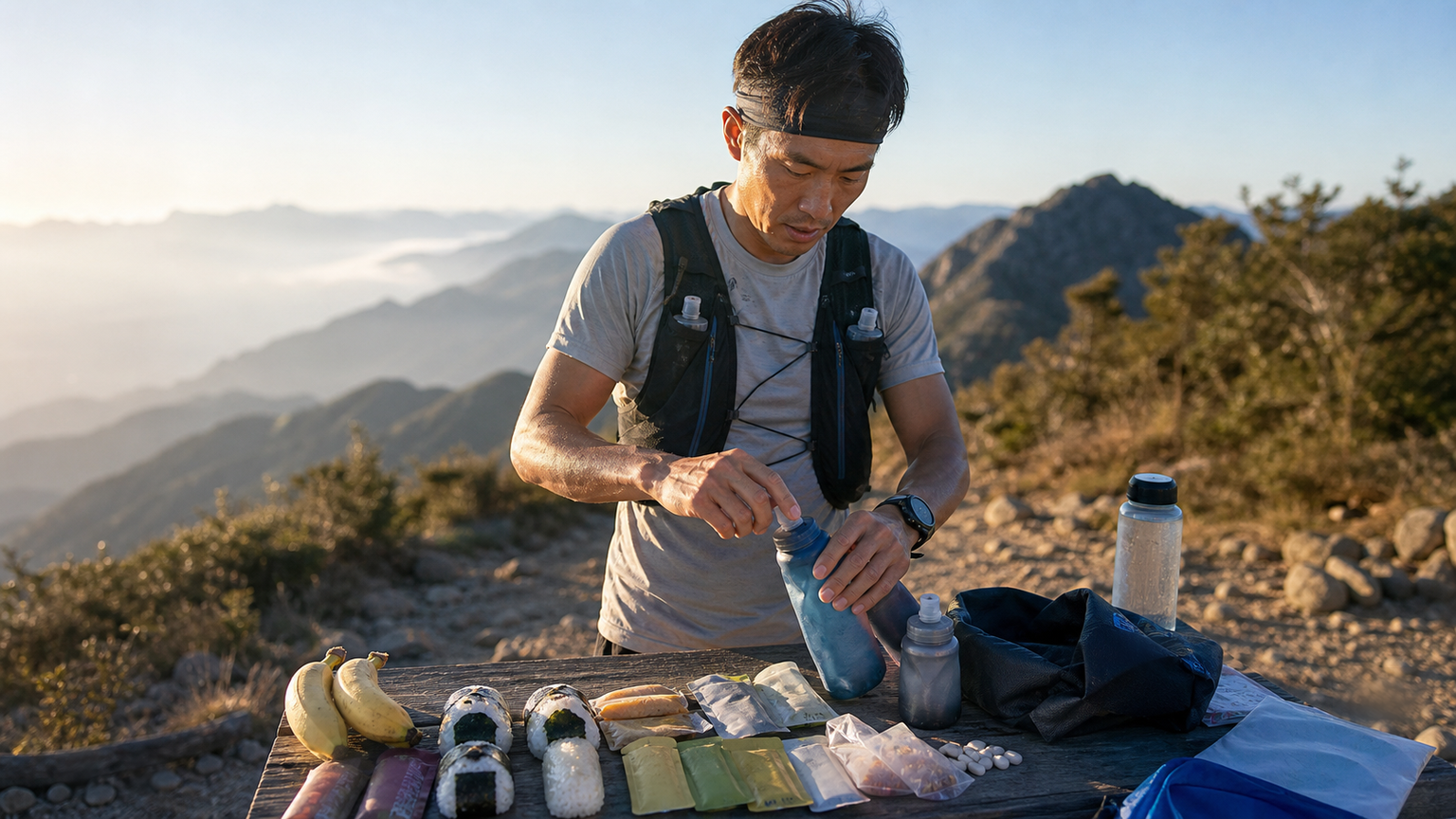
Ultramarathon Nutrition Strategy: A Comprehensive Fueling Plan from Training to Race Day
An ultramarathon (Ultra Marathon) generally refers to any running event longer than 42.195 kilometers, ranging from 50K to 100 miles or even farther. At such distances, physical fitness is no longer the sole determining factor—your nutrition and fueling strategy often dictates whether you can finish, and the quality of that finish. According to research, gastrointestinal issues rank among the top three reasons for DNF (Did Not Finish) in ultramarathons. This article delves into every aspect of ultramarathon nutrition.
The Truth About Ultramarathon Energy Expenditure
Basic Energetics
The average runner expends approximately 1 kcal / kg body weight per kilometer, but ultramarathons involve climbs, varied terrain, and prolonged inefficient running, resulting in higher actual expenditure:
| Race Type | Estimated Total Expenditure (70kg Runner) | Duration |
|---|---|---|
| 50K Road Ultramarathon | 3,500-4,000 kcal | 4-6 hours |
| 100K Trail Ultramarathon | 8,000-10,000 kcal | 10-16 hours |
| 100 Mile Trail Ultramarathon | 12,000-18,000 kcal | 20-36 hours |
The human body stores approximately 1,600-2,000 kcal of glycogen, and even with carb-loading strategies, this can only be maximized to about 2,500 kcal. This means ultramarathon runners must continuously replenish energy during the race, or they will inevitably hit the wall.
The Role of Fat Oxidation
The good news is that trained endurance athletes possess remarkably high fat oxidation capacity at low intensities. Proponents of the MAF (Maximum Aerobic Function) training method advocate training the body to use fat as its primary fuel source, thereby reducing reliance on exogenous carbohydrates.
However, the latest sports nutrition research (including the 2024 ISSN position statement) points out: even athletes who are well fat-adapted still need to continuously supplement carbohydrates during ultramarathon events. The upper limit of fat oxidation rate is approximately 1.0-1.5 g/kg per hour, which cannot fully cover the energy demands of moderate-to-high intensity exercise.
Pre-Race Nutrition Preparation
Carbohydrate Loading
Perform carbohydrate loading 2-3 days before the race, with the goal of maximizing glycogen stores:
Daily Carbohydrate Intake Target: 8-12 g/kg body weight
For a 70kg runner as an example, this means 560-840 grams of carbohydrates per day. This requires deliberate dietary planning:
High-Carbohydrate Food List:
- One bowl of white rice (approx. 200g): approximately 70g carbs
- One serving of pasta (100g dry weight): approximately 75g carbs
- Sweet potato 300g: approximately 60g carbs
- One banana: approximately 27g carbs
- Sports drink 500ml: approximately 30g carbs
Important Notes:
- Avoid high-fiber foods (which can cause gastrointestinal discomfort)
- Reduce fat intake (to free up “stomach space” for carbohydrates)
- Don’t overeat at dinner the night before the race, as it may affect sleep quality
The Final Pre-Race Meal
Eat your last full meal 3-4 hours before the start:
- Carbohydrate-focused: white rice, white toast, congee
- Small amount of protein: boiled eggs, chicken breast
- Avoid: dairy products, high-fiber vegetables, spicy foods, caffeine (save it for during the race)
15-30 minutes before the start, you can take one energy gel or a few sips of sports drink.
In-Race Fueling Strategy
Carbohydrate Intake Targets
This is the most critical number in ultramarathon nutrition. Based on the latest research recommendations:
| Race Duration | Hourly Carbohydrate Target | Notes |
|---|---|---|
| 4-6 hours | 60-80g | Primarily glucose + fructose mixed sources |
| 6-12 hours | 60-90g | Requires solid food supplementation |
| 12+ hours | 50-80g | Digestive capacity declines, requiring more flexible adjustments |
Key Concept: Multiple Transportable Carbohydrates
The small intestine’s absorption rate limit for glucose is approximately 60g per hour (via the SGLT1 transporter). By adding fructose, additional absorption can occur through the GLUT5 transporter, increasing total carbohydrate absorption to 90-120g/hour.
Therefore, choosing products containing glucose (or maltodextrin) + fructose is more efficient than a single carbohydrate source. The optimal ratio is approximately glucose:fructose = 1:0.8.
Fuel Product Selection and Combination
Liquid Fuel (Fast Absorption):
- Sports drinks: 6-8% carbohydrate concentration, easily absorbed
- Energy gels + water: approximately 20-25g carbs per packet, one every 30-45 minutes
- Cola (flat): caffeine + sugar, the “miracle drug” for the latter half of an ultramarathon
Semi-Solid Fuel (Medium Absorption):
- Energy fruit jellies: texture between gel and solid, gentle on the stomach
- Baby food purees: inexpensive, easy to swallow, variety of flavors
Solid Fuel (Slow Absorption, Provides Satiety):
- Rice balls (salted): a classic Taiwanese ultramarathon staple
- Boiled potatoes with salt: common in Western ultramarathons, high GI and contains potassium
- Pretzels: a carbohydrate + sodium combination
- Fruits: bananas, watermelon, oranges
Electrolyte Management
Prolonged sweating causes significant electrolyte loss, particularly sodium. Hyponatremia is one of the most dangerous medical conditions in ultramarathons.
Sodium Supplementation Recommendations:
- 500-1000mg sodium per hour (adjust based on sweat rate and temperature)
- Use electrolyte capsules (such as SaltStick, Precision Hydration)
- Add salt to food: salted rice balls, potato chips, miso soup
Fluid Intake:
- 400-800ml per hour, adjusted according to thirst level
- Do not overhydrate: drinking too much plain water dilutes blood sodium concentration
- Use body weight as a monitoring indicator: a 2-3% weight loss during the race is normal
Caffeine Strategy
Caffeine is a legal performance enhancer, especially important for ultramarathon runners:
- Delay usage: Save caffeine for the latter half of the race (typically after the halfway point)
- Dosage: 3-6mg per kg body weight, taken in divided doses
- Sources: caffeinated energy gels, cola, caffeine tablets
- Caution: If you don’t regularly drink coffee, test caffeine’s effect on your stomach during training first
Gut Adaptation Training
This is the critical training that most runners overlook. Your digestive system needs to be trained just like your legs.
Training Principles
- Practice fueling during long training runs: Every long run is an opportunity to test fueling products
- Gradually increase intake: Start at 40g carbs per hour, increase by 10g every 2-3 weeks
- Simulate race conditions: Test fueling strategies at your target pace and intensity
- Record gastrointestinal responses: Note which foods work and which cause discomfort, building a personal database
Common Gastrointestinal Issues and Solutions
| Symptom | Possible Cause | Solution |
|---|---|---|
| Nausea | Carbohydrate concentration too high | Dilute drinks, switch to low-osmolality products |
| Bloating | Intake rate too fast | Smaller, more frequent intake, avoid carbonated drinks |
| Diarrhea | High fiber or dairy products | Low-residue diet 24 hours before the race |
| Vomiting | Dehydration or excessive intake | Pause solid foods, take small sips |
Post-Race Recovery Nutrition
0-2 Hours After Finishing (Golden Recovery Window)
- Carbohydrate to protein ratio of 3:1 to 4:1
- Target: 1-1.2g/kg carbs + 0.3g/kg protein
- Easily digestible foods: chocolate milk, recovery drinks, white rice with chicken
24-72 Hours After Finishing
- Increase protein intake to 1.6-2.0g/kg per day to promote muscle repair
- Anti-inflammatory foods: deep-sea fish, blueberries, turmeric
- Adequate hydration: until urine returns to a light yellow color
Conclusion
Ultramarathon fueling is not something you start thinking about on race day—it needs to be systematically practiced and tested during training. Remember this famous saying from the ultramarathon world: “Nothing new on race day.” Every food, drink, and fuel product you use during the race should have been repeatedly validated in training. Treat your gut as another muscle that needs training; its performance will directly determine your ultramarathon results.
Related Reading
- Ultramarathon Diet Strategy: Energy Fueling Plan for 24-Hour Races
- Ultramarathon Fueling Strategy: Solid Food vs. Liquid Fuel Ratios for 100km Races
- Ultramarathon Fueling Strategy: Energy and Electrolyte Rhythm from 50K to 100K
- Complete 100K Ultramarathon Fueling Rhythm Plan: The Scientific Formula for Hourly Calories, Sodium, and Solid-Liquid Transitions
靠單車減肥35公斤 心得分享與整理
7 年前
西進武嶺 免費訓練分析服務 Intervals | 練不夠還是練過頭?你哪一種類型選手?AI模型告訴你! | 備戰神器 | 公路車 訓練 | CT Yeh
4 年前
Live) 備戰2019彰化經典百K 賽前攻略 (已完賽請看新影片
7 年前
CT暗黑廚房) 車友必備 宇宙無敵鮮蚵湯 幫助訓練恢復 天然食補 好市多 超肥鮮蚵 破PR
7 年前
2018 田中馬拉松 全程健跑 VR 360 環景錄影 體驗現場狂野加油氣氛! Insta 360
7 年前
半日 小台灣 極限單車路線挑戰實錄
7 年前
一日北高前的高裝檢 | 北高 360 | 挑戰11小時的裝備 | 一日雙塔 | 補給
6 年前
實景訓練台) 彰化經典百K 高強度喵團 90分鐘 跟著一起練功 2019 Indoor workout Changhua Classic 100 Taiwan
7 年前