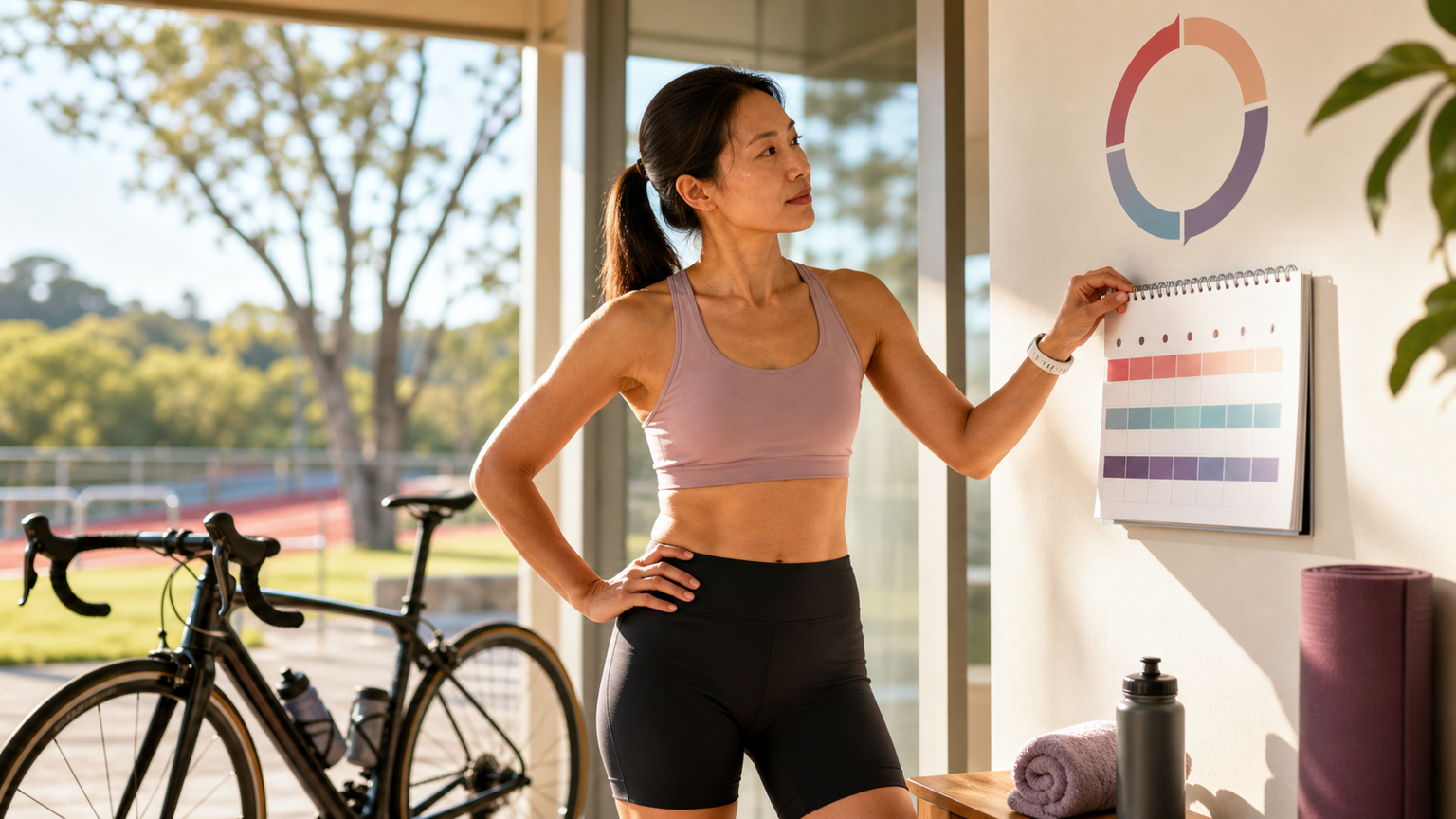
Menstrual Cycle and Training Periodization: A Scientific Training Guide for Female Athletes
For a long time, female athletes’ training plans have largely followed male models, overlooking the profound impact of the menstrual cycle on bodily function. In recent years, sports science research has gradually revealed that cyclic hormonal fluctuations not only affect physical performance but also influence recovery speed, injury risk, and psychological state. Learning to “dance with” the menstrual cycle, rather than fight against it, is a key strategy for female athletes to enhance performance.
Understanding the Four Phases of the Menstrual Cycle
A complete menstrual cycle lasts approximately 28 days (individual variation can range from 21 to 35 days) and can be divided into four main phases:
1. Menstrual Phase (Days 1-5)
During this phase, both estrogen and progesterone are at their lowest points. Many women experience menstrual cramps, fatigue, and low mood. However, research shows that the hormonal environment in this phase is actually closest to that of males—low estrogen means the body can more easily utilize carbohydrates as fuel, and muscle recovery capacity is not compromised.
Training Recommendations:
- If physical condition permits, perform moderate-intensity aerobic training
- Suitable for technical practice and light strength training
- Those with severe menstrual cramps may choose low-impact activities such as yoga or swimming
- Pay attention to hydration and iron intake
2. Follicular Phase (Days 6-13)
Estrogen gradually rises, bringing a series of positive effects: enhanced muscle protein synthesis, increased pain tolerance, and improved mood and motivation. This is the golden period of physical function throughout the entire cycle.
Training Recommendations:
- Schedule high-intensity interval training (HIIT)
- Perform heavy strength training to seize the optimal window for muscle growth
- Attempt to break personal records or challenge new routes
- Higher training volume can be arranged
3. Ovulation Phase (Around Day 14)
Estrogen peaks, and luteinizing hormone (LH) surges to trigger ovulation. Strength and power may reach their peak during this phase, but it is worth noting that high estrogen levels affect collagen metabolism, increasing ligament laxity and relatively raising the risk of ACL (anterior cruciate ligament) injury.
Training Recommendations:
- High-intensity training is possible, but special attention should be paid to warm-ups and dynamic stability exercises
- Avoid high-risk movements under excessive fatigue
- Monitor joint stability, especially the knee joint
4. Luteal Phase (Days 15-28)
Progesterone rises and becomes dominant, raising body temperature by 0.3-0.5°C and increasing basal metabolic rate by approximately 5-10%. The body tends to use fat as fuel, but carbohydrate utilization efficiency during high-intensity exercise declines. Many women experience bloating, fatigue, and mood instability in the latter part of this phase (premenstrual syndrome, PMS).
Training Recommendations:
- Focus on low-to-moderate-intensity endurance training
- Long-distance steady rides or easy runs are particularly suitable
- Increase carbohydrate intake to compensate for metabolic changes
- Pay attention to heat dissipation and hydration, as core body temperature is higher
- The latter part of the luteal phase can be moderately reduced in volume to prepare for the next cycle
Practical Application: Integrating the Cycle into Training Plans
Track Your Cycle
The first step is to consistently record menstrual cycle data for at least three months. You can use mobile apps (such as FitrWoman, Clue, Garmin Women’s Health Tracking) while also logging:
- Cycle start date and length
- Daily perceived exertion rating (1-10)
- Training performance and recovery feelings
- Sleep quality and emotional state
- Basal body temperature (optional)
Through data accumulation, you will gradually discover your own unique patterns—after all, everyone’s hormonal responses are different.
Build a Flexible Periodization Model
Below is a basic example of menstrual cycle training periodization:
| Cycle Phase | Training Focus | Intensity | Training Volume |
|---|---|---|---|
| Menstrual Phase (Days 1-5) | Recovery / Light Training | Low to Moderate | Reduced |
| Follicular Phase (Days 6-13) | High Intensity / Strength Breakthrough | High | Increased |
| Ovulation Phase (Day 14) | Power / Injury Prevention Focus | High | Maintained |
| Early Luteal Phase (Days 15-21) | Endurance Base | Moderate | Maintained |
| Late Luteal Phase (Days 22-28) | Taper and Recovery | Low to Moderate | Reduced |
Important Note: This is a general model; be sure to adjust based on individual sensations. Some women actually feel stronger during the menstrual phase, while others can maintain high intensity during the luteal phase. Listening to your body’s signals is always the top priority.
Race Day and the Menstrual Cycle
If an important race happens to fall in the late luteal phase or menstrual phase, there is no need to panic. Research shows that although the hormonal environment is not optimal, psychological preparation and pre-race strategy adjustments can compensate significantly:
- Increase carbohydrate loading before the race
- Prepare additional cooling strategies (pre-cooling vests, ice towels)
- Ensure adequate iron and electrolyte supplementation
- Use suitable menstrual products (menstrual cups are particularly practical for long-duration exercise)
Considerations for Oral Contraceptive Use
Oral contraceptives suppress natural hormonal fluctuations, creating a relatively stable hormonal environment. This means the logic of periodized training needs adjustment—during the pill-free week (simulating the menstrual phase), hormones drop sharply, which may be a period of lower performance.
Athletes using contraceptives should:
- Understand the specific formulation they are using (the ratio of estrogen to progestin)
- Similarly track perceived sensations to establish personalized training adjustment criteria
- Discuss the most suitable approach with sports medicine professionals
Breaking Taboos, Embracing Science
Menstruation is not the enemy of athletic performance—ignorance is. When we are willing to face and scientifically understand the menstrual cycle, it instead becomes a unique tool in training planning. More and more professional female athletes are openly sharing their periodized training experiences, from marathon runners to professional cyclists, all demonstrating that training in coordination with the hormonal cycle can lead to significant improvements.
Start tracking your cycle, bravely discuss this topic with your coach, and let scientific training help you reach your full potential in endurance sports.
Related Reading
- A Guide to Pairing the Four Menstrual Cycle Phases with Running Training
- Menstrual Cycle Training Adjustments for Female Runners: Intensity Recommendations for Each Phase
- Training Differences for Female Cyclists: How the Hormonal Cycle Affects Athletic Performance
- Hormonal Cycle Training for Female Road Runners: Intensity Recommendations for Each Menstrual Phase
西進武嶺 免費訓練分析服務 Intervals | 練不夠還是練過頭?你哪一種類型選手?AI模型告訴你! | 備戰神器 | 公路車 訓練 | CT Yeh
4 年前
FTL 與 SYB 車隊專訪 西進武嶺 實用攻略分享! 2小時 如何練?!你不知道的眉角!新手準備武嶺必看 EP1 | 實力派女車友 | 精華版 | 公路車 | CTYeh
4 年前
[教學] Premiere 影片 手震 修正 教學 防抖 單眼 影像 GoPro 穩定 Video Stabilization
8 年前
靠單車減肥35公斤 心得分享與整理
7 年前
單車AI教練!全新 ChatGPT4o 幫你分析訓練成果!排武嶺課表,分析騎車姿勢! 太神了! / 公路車 / CT Yeh / feat. 緯緯
2 年前
一日北高/長距離團騎 常見問題補充篇 / 組團或跟團的眉角 / 壯車友容易被瘦車友慢性拉爆 / 原來屁股痛可能是這個原因...? / 風場配速法 / 公路車 / CT Yeh
2 年前
2019 夏季KOM 5小 完賽心得 準備攻略 東進武嶺 夏季登山王之路 Taiwan KOM Challenge
7 年前
一日北高常見問題大集合 | 攻略 | 路線 | 訓練 | 補給 | 自行車 單車 | 一日雙城 | 雙塔 | TWB北高360 | 屁股痛
6 年前