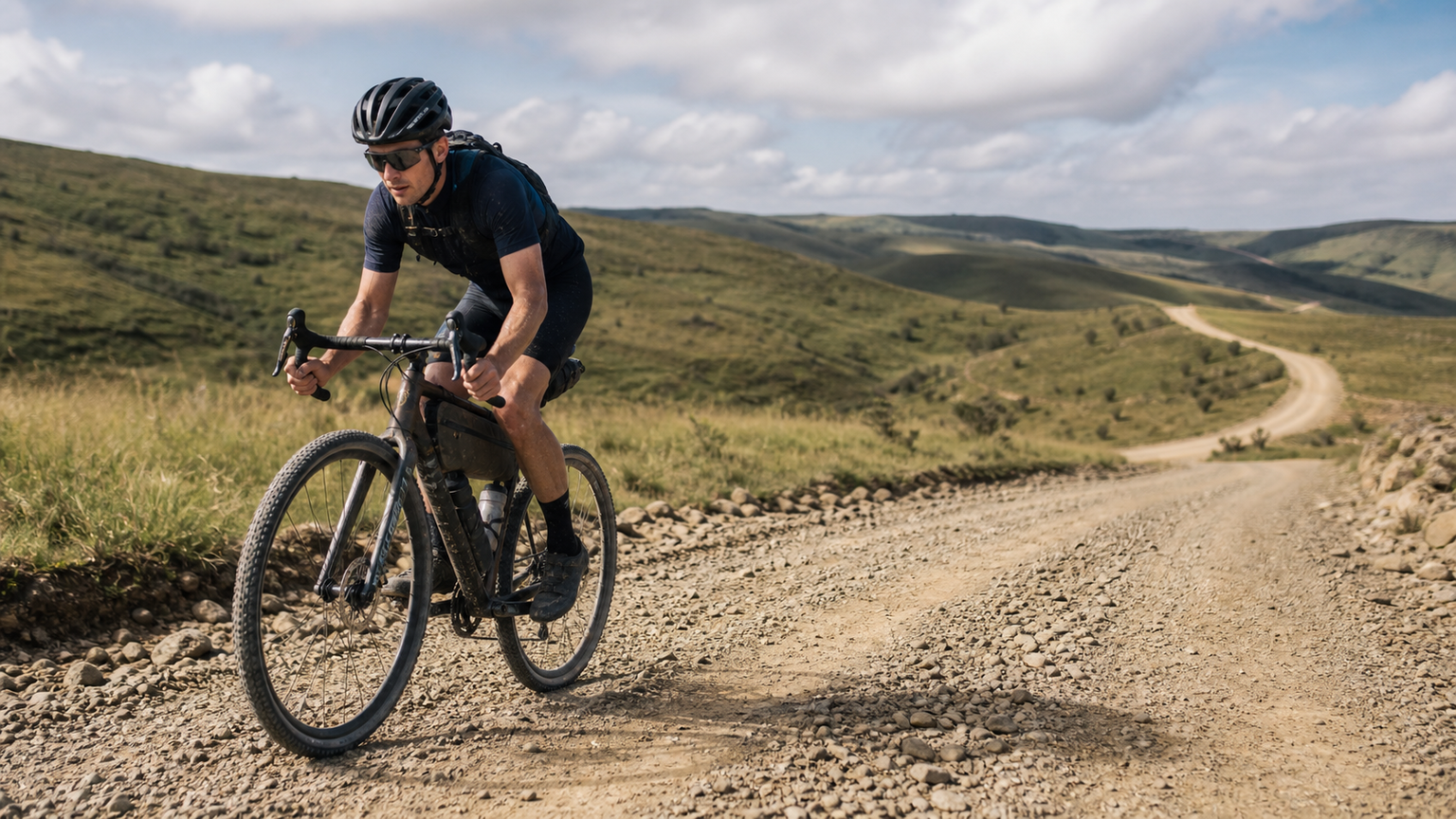
Complete Gravel Race Preparation Guide: From Training Plans to Race-Day Strategy
Gravel racing has sparked a new wave in the global cycling world. From Unbound Gravel in the United States to Grinduro in Europe, and the gradually emerging gravel events in Asia, more and more riders are eager to challenge themselves on unpaved surfaces. However, the preparation strategy for gravel racing differs fundamentally from traditional road racing. This article provides you with a complete preparation guide.
Training Plan: Building Gravel-Specific Fitness
Base Phase (12-8 weeks before race)
The focus of this phase is building an aerobic foundation and adapting to unpaved surfaces.
Weekly training volume: 8-12 hours
- Long rides (weekends): 3-5 hours, incorporating gravel sections whenever possible. The goal is to let your body adapt to the continuous vibration and instability of unpaved surfaces. Riding on gravel consumes 10-15% more energy than on asphalt, and your body needs time to adapt.
- Intensity training (weekdays): 2 sessions, 1-1.5 hours each. Focus on Tempo and Sweet Spot intensity (76-95% of FTP). Can be done on rollers or an indoor trainer.
- Recovery rides (weekdays): 1-2 sessions, 45-60 minutes each. Zone 1-2 intensity, focused on recovery.
- Core training: 2-3 times per week, 20-30 minutes each session. Gravel riding demands far more core stability than road riding—vibration and unstable surfaces require continuous core engagement to stabilize your body.
Build Phase (8-4 weeks before race)
Begin incorporating more race-intensity training.
Weekly training volume: 10-14 hours
- Race simulation rides (weekends): Schedule one long ride covering approximately 60-70% of race distance, preferably on terrain similar to the event. Practice maintaining a steady pace on gravel roads.
- Interval training (weekdays):
- Gravel intervals: Perform 5-8 minute VO2max intervals on gravel, training your ability to output high power on unstable surfaces
- Mixed-terrain intervals: Switch between asphalt and gravel to simulate the frequent surface changes during a race
- Strength training: 2 times per week. Focus on single-leg squats, deadlifts, and glute exercises. Strong legs are especially important on gravel because you need to use your body weight more frequently to stabilize the bike.
Peak Phase (4-1 weeks before race)
Maintain intensity while gradually tapering.
Weekly training volume: Progressively reduce to 50-60% of peak volume by race week
- Maintain intensity: Keep 1-2 high-intensity sessions per week, but shorten their duration
- Complete the final long ride: Do your last long simulation ride 2-3 weeks before the race, then shift focus to recovery
- Taper volume, not intensity: Reduce training volume while maintaining training intensity. Your body will supercompensate during the taper, bringing you to peak condition on race day
Technical Preparation: Gravel Is More Than Just Pedaling
Gravel Descending Technique
Gravel descending is a weakness for many riders with a road cycling background. Key techniques include:
- Shift your center of gravity back: Lift slightly off the saddle and move your weight backward and downward
- Relax your grip: Death-gripping the handlebars only transmits vibration more violently to your body. Keep your fingers curved and arms slightly bent, letting the bike move naturally over rough terrain
- Look ahead: Don’t stare at the road right in front of your front wheel—keep your eyes 5-10 meters ahead and anticipate your line
- Choose your line: Gravel surfaces are uneven; learn to read the road and pick lines with less loose gravel or better-compacted surface
Gravel Climbing Technique
The biggest challenge on gravel climbs is rear-wheel slippage. Techniques include:
- Climb seated whenever possible: Standing and pedaling causes the rear wheel to lose traction. Stay seated as much as possible on gravel, where a steady pedaling rhythm matters more than explosive power
- Use a lower gear: Choose a gear lower than usual and maintain a higher cadence (80-90 rpm) to avoid rear-wheel slip from hard pedaling
- Keep your upper body stable: Avoid rocking side to side; maintain a stable core
- Adjust tire pressure: If you get the chance before a climb, slightly lower rear tire pressure to increase traction
Equipment Preparation: Be Ready for the Unexpected
Essential Repair Gear
Gravel races are typically more remote than road races, making mechanical failures more consequential. Essential gear checklist:
- Tubeless repair tools: Plug tools (such as Dynaplug), spare sealant 60ml
- Spare inner tube: Even if running tubeless, carry a spare tube just in case
- Pump or CO2 inflator: Recommended to carry 2 CO2 cartridges + a mini pump
- Multi-tool: Including Allen keys and a chain tool
- Spare quick links: At least 2
- Electrical tape: The universal temporary repair tool
Nutrition Strategy
Gravel races typically have fewer aid stations than road races, making self-sufficiency critically important.
- Fluids: Carry at least 1.5 liters of water (two large bottles or one bottle + hydration pack)
- Food: You need 60-90g of carbohydrates per hour. Prepare a variety of nutrition options (energy gels, energy bars, salty foods) to avoid flavor fatigue
- Electrolytes: Sweat rates on gravel rides are higher than expected (because your whole body works harder to stabilize the bike), making electrolyte replacement even more important
Race-Day Strategy
The Start: Don’t Go Out Too Fast
The most common mistake in gravel racing is starting too fast. Adrenaline makes you feel like you can stay with the lead group, but gravel races are ultra-long endurance battles—excessive effort in the first 30 minutes will come back to haunt you in the second half.
Recommendation: Keep your effort at 90-95% of your target average power for the first 30 minutes, letting your body gradually settle into race mode.
Pacing: Consistency Is Key
The surface in gravel races is constantly changing, causing power and speed to fluctuate. Don’t chase a fixed speed or power number—instead, aim for a consistent rate of perceived exertion (RPE).
On gravel sections, power at the same RPE will be 15-20% lower than on asphalt—this is normal. Don’t try to maintain asphalt-level power on gravel; doing so will only cause you to blow up early.
Nutrition Rhythm: Scheduled and Measured
Set your watch or bike computer to remind you to fuel every 20 minutes. Eating on gravel is harder than on the road (you need one hand to control the bike), so it’s advisable to eat in advance on smoother sections.
Mental Preparation: Embrace Uncertainty
Gravel races are full of uncertainty—conditions may be worse than expected, weather can change suddenly, and mechanical failures can happen at any time. Rather than resisting this uncertainty, treat it as part of the race.
When you encounter difficulties, remind yourself: “Everyone is facing the same challenges.” Maintaining a positive mindset is one of the most important weapons in gravel racing.
Final Checklist for the Week Before the Race
- [ ] Full bike inspection: brakes, shifting, wheels, chain
- [ ] Confirm tubeless sealant is fresh
- [ ] Spare parts complete
- [ ] Nutrition supplies prepared
- [ ] Race route studied, key sections understood
- [ ] Weather forecast confirmed, appropriate clothing prepared
- [ ] Bike computer/watch charged
- [ ] Emergency contact information ready
Conclusion
The appeal of gravel racing lies in the fact that it tests not just your fitness, but also your technique, strategy, and mental toughness. Compared to road racing, gravel racing is more like a conversation between you and the route, rather than a contest between you and other riders.
Enjoy the preparation process, enjoy every turn and climb during the race, and savor the sense of accomplishment at the finish. In the world of gravel, finishing itself is the best result.
Related Reading
- Gravel Race-Specific Training: Dual Preparation of Fitness and Skills for Mixed Terrain
- Gravel Race Strategy: Pacing and Nutrition Planning for 200km+ Gravel Events
- Gravel Riding Technique Guide: Practical Skills for Climbing and Descending on Loose Surfaces
- Self-Supported Nutrition Strategy for Gravel Races: What to Eat When There Are No Aid Stations
FTL 與 SYB 車隊專訪 西進武嶺 實用攻略分享! 2小時 如何練?!你不知道的眉角!新手準備武嶺必看 EP1 | 實力派女車友 | 精華版 | 公路車 | CTYeh
4 年前
#公路車 #西進武嶺 配速配瓦實驗 坡度分析 四小時內攻略 建大盃 NeverStop #西進武嶺攻略
6 年前
一個測試有沒有認真練車的方法😂 #公路車
10 個月前
西進武嶺 免費訓練分析服務 Intervals | 練不夠還是練過頭?你哪一種類型選手?AI模型告訴你! | 備戰神器 | 公路車 訓練 | CT Yeh
4 年前
CT趣訪 西進武嶺 2小時組 EP2 全村的希望 蔣緯緯! 訓練菜單&技巧公開 |公路車 |CT Yeh
4 年前
單車AI教練!全新 ChatGPT4o 幫你分析訓練成果!排武嶺課表,分析騎車姿勢! 太神了! / 公路車 / CT Yeh / feat. 緯緯
2 年前
西進武嶺 自製新版AI配速表產生器 x 賽前攻略 抱佛腳! 沒有功率計也可以產生配速表嗎?有什麼其他眉角賽前要注意的呢? | 西進武嶺 / 東進武嶺 KOM 攻略 | 公路車 | CT Yeh
4 年前
Live) 備戰2019彰化經典百K 賽前攻略 (已完賽請看新影片
7 年前