文章導覽
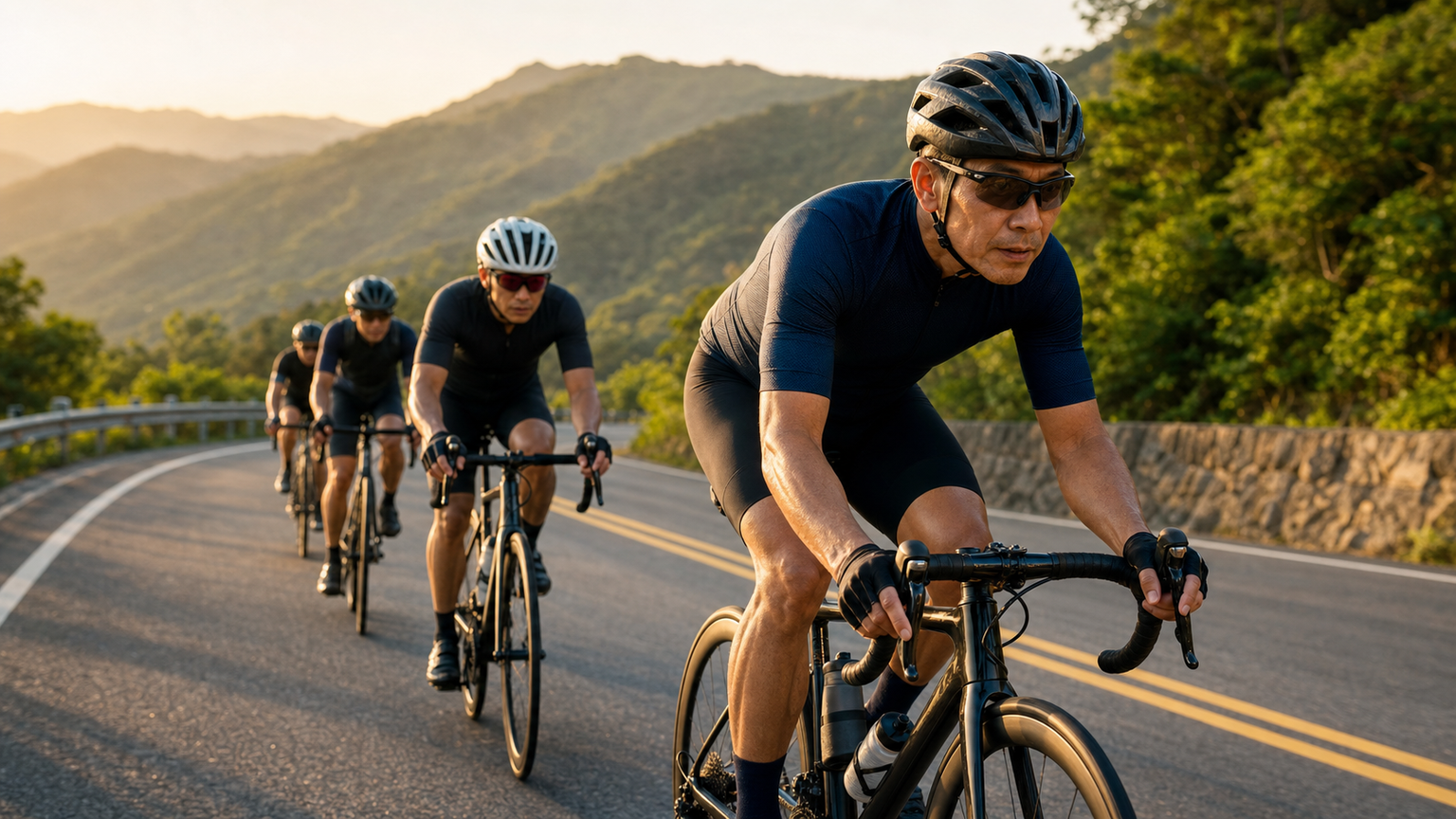
Masters Cycling Race Guide: Racing Wisdom for Middle-Aged Riders
Introduction
If you think bike racing is exclusively for the young, you couldn’t be more wrong. Masters cycling events worldwide are growing at an astonishing rate, with more and more riders in their forties, fifties, and even sixties showcasing impressive performances on the racecourse.
Racing in the Masters category is fundamentally different from racing among younger athletes. It’s not just about physical fitness—it’s about experience, strategy, and a deep understanding of yourself. This article will reveal the keys to success on the Masters racecourse.
Understanding the Masters Race Categorization System
Most international events divide Masters into multiple age groups:
| Category | Age Range | Characteristics |
|---|---|---|
| M35-39 | 35-39 years | Closest to Elite-level performance, extremely fast |
| M40-44 | 40-44 years | Classic entry-level Masters category, highly competitive |
| M45-49 | 45-49 years | Experienced, strong tactical awareness |
| M50-54 | 50-54 years | Excellent endurance, steady pacing |
| M55-59 | 55-59 years | Winning through skill, knowing how to conserve energy |
| M60+ | 60 years and above | Undiminished passion, enjoying the competitive spirit |
Understanding the characteristics of your category is crucial—the race pace in M40 is completely different from M55, and your preparation strategy should be adjusted accordingly.
Pre-Race Preparation: A Twelve-Week Training Plan
Weeks 1-4: Base Phase
The focus of this phase is building a solid aerobic foundation:
- Ride 8-12 hours per week (adjust based on available time)
- Spend 70-80% of the time in Zone 2 (aerobic endurance zone)
- Add 2 strength training sessions per week
- Begin practicing race-specific skills (group riding, cornering, timing of gear changes)
Weeks 5-8: Build Phase
Gradually increase training intensity and simulate race scenarios:
- Introduce structured interval training, 2-3 times per week
- Sweet Spot Training: 88-93% of FTP, 2-3 sets × 15-20 minutes each
- VO2max Intervals: 106-120% of FTP, 6-8 sets × 3-5 minutes each
- Schedule one group ride at race intensity on the weekend
- Shift strength training toward power and explosiveness
Weeks 9-10: Specificity Phase
Tailor training to the terrain and distance of your target event:
- If it’s a climbing race, add climbing intervals
- If it’s a flat criterium, practice group pace-lining and sprinting
- Do 1-2 full race simulations
- Begin reducing strength training to avoid unnecessary fatigue
Weeks 11-12: Taper Phase
Masters riders need a longer taper than younger athletes. Recommendations:
- Reduce training volume by 40-50%
- Maintain some short, high-intensity intervals to keep the legs sharp
- Significantly reduce training volume 3 days before the race
- Take a complete rest day or do only 20-30 minutes of very easy riding the day before the race
Race Day Tactics
Warming Up Matters More Than You Think
Warming up before a race is crucial for Masters riders—allow at least 25-30 minutes:
- First 10 minutes: Very easy riding to lubricate the joints
- Middle 10 minutes: Gradually build to moderate intensity
- Final 5-10 minutes: Do 2-3 high-intensity sprints of 30 seconds
- After finishing, keep pedaling easily until the race starts
Starting Strategy
The first rule of Masters racing: never blow yourself up in the first lap.
Adrenaline surges at the start of a race, making it easy to exceed your limits right away. Remember:
- Find a pace you can sustain
- Be slightly conservative for the first 10-15 minutes
- Position yourself in the front third of the pack, but don’t take pulls
- Observe the condition of other riders and identify who the real threats are
Energy Management in the Middle of the Race
This is where Masters riders have their greatest advantage—energy management born from experience:
- Avoid unnecessary accelerations: Every acceleration comes at a cost; only respond to attacks that matter
- Use the draft: In Masters racing, effective drafting can save 20-30% of your energy
- Plan your nutrition: Consume carbohydrates at regular 20-30 minute intervals; don’t wait until you’re hungry
- Stay hydrated: You need a more deliberate hydration plan than younger riders
Decision-Making at Critical Moments
When the race enters its final third:
- If you’re a sprinter, hold your position in the pack and wait for the final opportunity
- If you’re a climber or time trialist, launch your attack on suitable terrain
- Don’t attack too early: Masters riders typically have less anaerobic capacity than younger riders, and going too hard too soon can leave you with nothing left
- If you have teammates, use team tactics with alternating pulls
Sprint Finish Techniques
If the race comes down to a bunch sprint:
- The final 200 meters are what matter; launching your sprint too early will cause you to fade
- Find a good wheel to follow, ideally in the second or third position in the line
- Keep your upper body stable during the sprint, transferring power from your core
- Choose your line carefully and avoid crossing paths with other riders
Common Mistakes Made by Masters Riders
Mistake One: Overtraining
This is the most widespread problem. Many Masters riders try to maintain the training volume they had in their youth, falling into a vicious cycle of overtraining.
Solution: Monitor HRV (heart rate variability) and resting heart rate. When the data shows fatigue accumulation, decisively reduce volume.
Mistake Two: Neglecting Nutrition
Race-day nutrition strategy differs from everyday eating:
- Increase carbohydrate intake 2-3 days before the race (carb loading)
- Finish breakfast 3 hours before the start on race day
- Consume 60-90 grams of carbohydrates per hour during the race
- Replenish protein and carbohydrates within 30 minutes after the race
Mistake Three: Not Optimizing Equipment
In the Masters category, equipment differences can be the gap between the top three and the top ten:
- Wheels: Race wheels are 1-3 km/h faster than training wheels
- Tire pressure: Set precisely according to body weight and road conditions
- Bike Fitting: Get a professional fitting at least once a year
- Clothing: A well-fitted race suit reduces wind resistance by 5-8% compared to loose cycling apparel
Mistake Four: Not Reconnoitering the Course
Knowing the course in advance is a huge advantage:
- If possible, ride the course at least once before the race
- Mark the key climbs, descents, and corners
- Pay attention to wind direction and road surface conditions
- Plan which sections to conserve energy and which sections to push hard
Mental Preparation
Managing Race Anxiety
Masters riders often place greater weight on race results (perhaps because training time is more precious), which can ironically create pressure. Recommendations:
- Set process-oriented goals rather than focusing only on placement
- Do breathing relaxation exercises the night before the race
- Tell yourself: the worst outcome is still just a great training ride
Enjoy the Process
Last but most important: enjoy the race itself. The beauty of Masters cycling events lies in the fact that they bring together a group of people passionate about cycling. Age is just a number—the love of the sport is what truly connects everyone.
Conclusion
Masters cycling events are a competitive arena filled with wisdom and passion. Age brings not only physical challenges but also rich experience and a composed mindset. Leverage these advantages, combine them with scientific training and sound race strategy, and you are fully capable of shining on the Masters racecourse.
See you at the next race—whether you’re 40 or 60, there will always be a place for you on the course.
Related Reading
- Masters Triathlon Beginner’s Guide: It’s Never Too Late to Start at Forty
- Training Strategies for Riders Over 40: The Golden Rules for Masters Riders
- Taiwan Cycling Event Registration Guide: How to Choose the Right Category
- Masters Swimming (Adult Swim Team) Training Guide: How to Get Faster Scientifically and Stay Injury-Free After 30