Calcium and Vitamin D: The Foundation of Bone Health — A Bone-Bank Guide for Athletes and the General Population
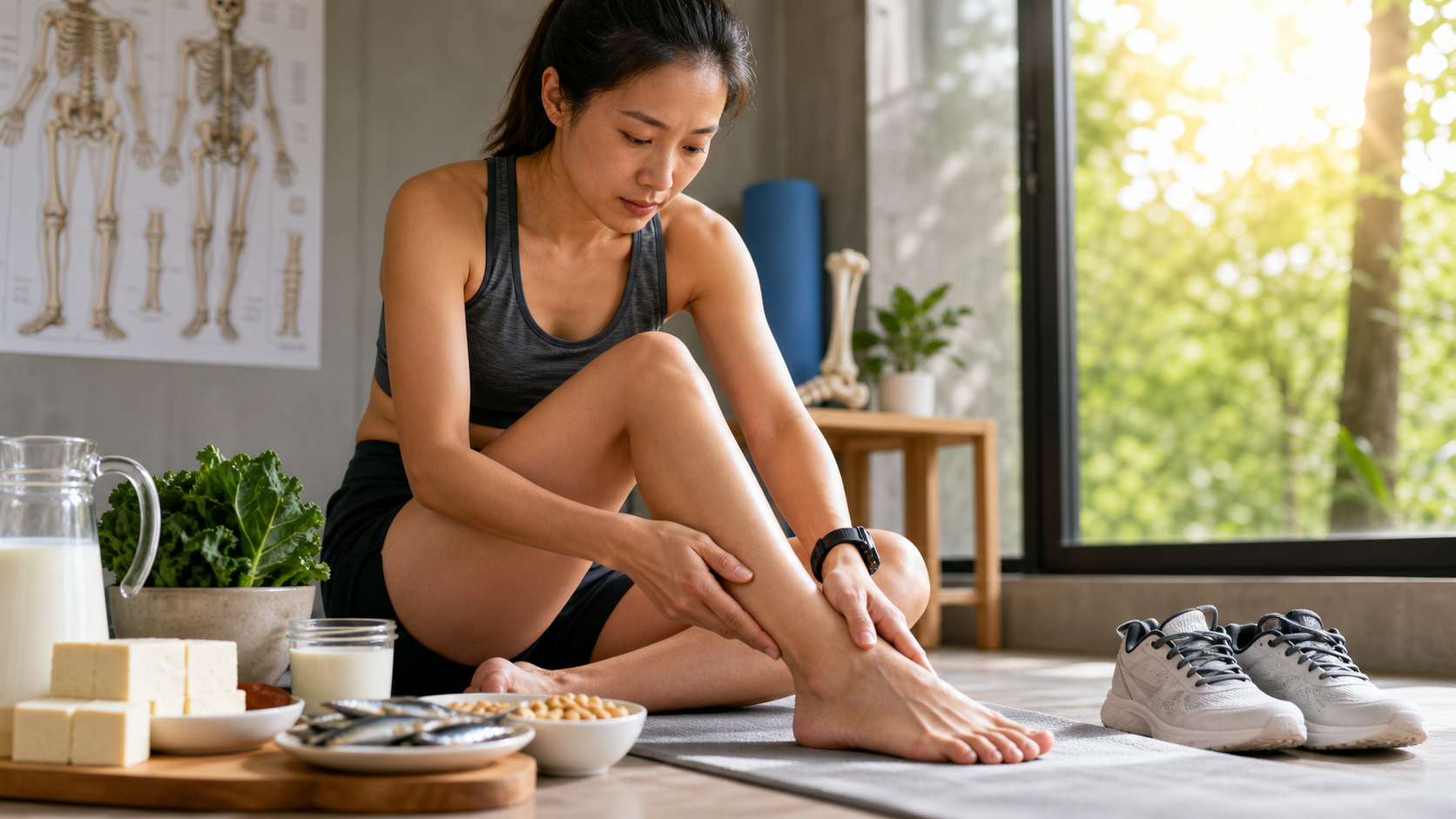
Starting with an Athlete’s Stress Fracture
A few years ago, I coached a very dedicated female trail runner—let’s call her Xiao Ya. She trained hard and had strong willpower, building her weekly mileage up to 80–90 kilometers before the season, yet her diet kept shrinking—she said she wanted to “stay light.” One day after a long training session, she began to feel a dull ache in the middle of her right foot. At first it was just a subtle pain when stepping down, but two weeks later it progressed to the point where even walking hurt. Imaging at the hospital revealed a stress fracture of the third metatarsal. She was forced to stop running for nearly three months, and her season was over.
When I sat down with her for a post-season review, the blood test results laid the answer out plainly: her blood vitamin D was low, her long-term calcium intake was far below recommended levels, and combined with too few calories and the fact that her period had stopped for several months. This wasn’t a single-nutrient problem—it was an entire “bone building-block and environment” system that had gone wrong.
I’ve been in this field for fifteen years and have seen too many cases like Xiao Ya’s. People are willing to spend money on carbon-plated shoes, power meters, and calculating pace to the decimal point, yet very few seriously manage their bone bank. Bone is a silent organ—it doesn’t protest immediately like muscle soreness does. By the time it speaks up, it’s often a fracture, it’s a season lost. In this article, I want to lay out “calcium and vitamin D”—the two cornerstones of bone health—from the science to the practical application, all in one go.
This article will run long, because bone health deserves the time you’ll spend reading it. I’ll write in the tone I use with my athletes, so you can finish reading and start making changes.
Bone Isn’t Dead: Building the Right Concept of Bone First
Bone Is Living Tissue That “Demolishes and Rebuilds” for a Lifetime
Many people assume that once bones finish growing, they’re set for life. That’s not the case. Bone is living tissue undergoing continuous remodeling: osteoclasts are responsible for “demolishing” old, micro-damaged bone, while osteoblasts “rebuild” new bone in its place. The entire skeleton is turned over roughly every few years.
The balance between this “demolition and construction” determines whether your bone density trends upward or downward:
- From youth to roughly age 30: Building outpaces demolition, bone mass accumulates, and you reach your lifetime peak bone mass during this period.
- After age 30: Demolition and construction gradually even out, then bone mass slowly begins to decline.
- The years after menopause in women: Estrogen drops sharply, osteoclasts lose their brake, and bone loss accelerates noticeably.
This has two important implications for athletic populations. First, building a higher peak bone mass when you’re young is like depositing a large bone bank for the next few decades, delaying how long it takes to reach the danger zone. Second, every landing and every load-bearing movement during exercise is a signal to your bones that says “reinforce here”—but only if you give them enough raw material (calcium) and the right environment (vitamin D, hormones, adequate calories). If the raw materials aren’t there, no amount of signaling can build anything.
Calcium: Not Just the Rebar of Bone, but the Body’s Emergency Reserve
About 99% of the calcium in your body is stored in bones and teeth, with the remaining roughly 1% in blood and soft tissues—yet that 1% carries critically important jobs: muscle contraction, nerve transmission, heart rhythm, and blood clotting all depend on keeping blood calcium within a very narrow range.
Here’s the brutal priority order: your body will maintain blood calcium stability at all costs. When your dietary calcium is chronically insufficient, parathyroid hormone rises and directs osteoclasts to “borrow” calcium from bone to top up blood calcium. To your body, keeping the heart beating normally matters far more than maintaining bone density. And so bone becomes an account that’s constantly being withdrawn from but rarely deposited into—hollowed out a little more each time.
That’s why I often tell my athletes: the calcium you eat every day isn’t about some abstract idea of “supplementing bone”—it’s about making sure your body doesn’t have to dismantle your bones.
Vitamin D: Making Calcium Truly Absorbed and Used Where It Belongs
Many people load up on calcium supplements but skip vitamin D, and the results fall far short. Vitamin D’s most central role is promoting calcium absorption in the gut. When vitamin D is deficient, even a high calcium intake won’t absorb well—it’s like money invested that leaks out halfway.
Vitamin D insufficiency also drives parathyroid hormone up, further promoting bone loss. According to reviews in sports medicine literature, chronically low blood vitamin D (25-hydroxyvitamin D, or 25(OH)D) is associated with a higher incidence of stress fractures in athletes; vitamin D plays a key role in calcium and phosphorus regulation, and those deficient in it face a higher risk of low bone mass and bone injuries (including stress fractures). (Sources at the end)
This is also why, when I review an athlete’s blood work, I always look at calcium and vitamin D together—looking at only one is meaningless.
It’s Not Just Calcium and D: Bone Is a Team Effort
I especially want to point out one thing: reducing bone health to “calcium plus vitamin D” is a common oversimplification. Bone is a whole team effort. Calcium and vitamin D are the lead actors, yes, but there’s a cast of supporting roles that matter just as much—
- Protein: Bone isn’t just minerals; it also has a “bone matrix” made of collagen—like the cement mesh around the rebar. Long-term protein deficiency (a problem for many who deliberately diet) means the cement mesh can’t be built, and even with plenty of calcium, there’s nowhere for it to deposit.
- Adequate total calories: This is the most overlooked yet most critical factor. The RED-S mentioned earlier is the result of long-term energy deficiency—I’ll plant that seed here and expand on it later.
- Vitamin K, magnesium, and other micronutrients: Each plays a role in bone metabolism, and a balanced diet usually supplies them—no need for heavy supplementation.
- Mechanical loading: Bone needs the signal of “being used” to reinforce itself. This is why sedentary people and those bedridden lose bone mass, while those who do regular weight-bearing exercise tend to have better bone.
I often use this analogy with my athletes: calcium is the bricks, protein is the cement, vitamin D is the truck delivering bricks to the site, mechanical loading is the whistle that tells the workers to start, and adequate calories are the project budget. Cut any one of these and the building won’t go up. That’s also why I never advise putting all your attention on a single supplement—taking care of bone means looking at the whole picture.
The Reality of Vitamin D in Taiwan: “We Have Sun, So We Can’t Be Deficient” Is Wrong
This section is especially for Taiwanese readers. Many people intuitively assume: Taiwan is so hot and sunny—how could anyone be vitamin D deficient? The reality is the opposite.
According to Taiwanese research, vitamin D insufficiency is actually quite common in Taiwan. One study covering a community cohort in northern Taiwan found that roughly over 20% of people were vitamin D deficient (using blood 25(OH)D below 20 ng/mL as the deficiency threshold). Another large decade-long analysis of voluntary testers found that the insufficiency rate was particularly high among young adults (roughly ages 18–34). (Sources at the end)
Why is this? From coaching my athletes, I’ve summarized several Taiwan-specific reasons:
- Sun protection and fear of tanning culture: Especially among women—covering up completely and applying high-SPF sunscreen means skin actually gets very little effective UV exposure.
- Indoor work and lifestyle patterns: Office workers spend all day inside, leave after dark, and commute through shaded environments.
- Air quality and obstruction: High-rise buildings, arcades, and glass curtain walls in urban areas block the UVB needed for vitamin D synthesis.
- Limited dietary sources to begin with: Not many natural foods are high in vitamin D (mainly fatty fish, egg yolks, and some fortified foods), and typical Taiwanese eating-out habits make it hard to get enough.
So “Taiwan has sun, so we can’t be deficient” is a dangerous myth. In particular, athletes who train in the early morning or evening and don’t get sun exposure during the workday are actually a high-risk group. I recommend that such athletes, if possible, discuss getting a blood test for 25(OH)D with their doctor—numbers are far more reliable than guesses.
Why Athletes Are a High-Risk Group for Bone Issues
In theory, exercise should be good for bone—weight-bearing and impact do stimulate bone formation. But in practice, certain athletic populations are actually more prone to fractures. The key isn’t “whether you exercise” but “whether the raw materials and calories are sufficient.”
Relative Energy Deficiency in Sport (RED-S): The Most Overlooked Culprit
In recent years, sports medicine has placed great emphasis on a concept called Relative Energy Deficiency in Sport (RED-S), the successor to what was known as the “female athlete triad.” The core idea: when your energy intake chronically fails to keep up with training expenditure, the body shifts into energy-saving mode and withdraws resources from “non-essential” functions—including reproductive hormones (manifesting as menstrual irregularities or amenorrhea in women) and bone maintenance.
Low energy availability is the core driver of RED-S. According to sports medicine research, insufficient energy availability combined with vitamin D deficiency jointly raises the risk of bone injuries (including stress fractures); one review study noted that athletes with RED-S have a significantly higher rate of stress fractures than those without it. (Sources at the end)
Xiao Ya was a textbook case: high mileage, deliberate undereating, months without a period, low vitamin D, chronically insufficient calcium—every single factor was on the red line, and a fracture was almost inevitable.
High-Risk Sport Types
I’m especially alert in the following situations:
- Endurance sports (long-distance running, long-distance cycling, triathlon): high training volume, high energy expenditure, and even more dangerous if weight is deliberately controlled.
- Sports emphasizing physique or weight classes (some climbing-oriented cyclists, gymnastics, dance, lightweight sports): prone to long-term energy deficiency.
- Non-weight-bearing sports: Cycling and swimming, for example, provide less impact loading than running, so the stimulus to bone is relatively weak. If diet is also inadequate, bone density may be suboptimal. This is a special note for cyclists: while cycling is very healthy, its “pounding” signal to bone isn’t as strong as running or strength training—don’t assume that riding a lot means your bones are covered.
A Quick Self-Assessment Table for Your Bone Risk
| Risk Factor | Lower Risk | Needs Attention | High Risk (Recommend Medical Consultation) |
|---|---|---|---|
| Calorie intake vs. training volume | Eating enough, stable weight | Often hungry, gradual weight loss | Deliberate severe dieting, rapid weight loss |
| Menstruation (women) | Regular | Cycles lengthening or becoming irregular | No period for several consecutive months |
| Calcium intake | Dairy/deep-green vegetables/soy products daily | Only occasionally | Rarely any dairy, few high-calcium foods |
| Sun exposure | Outdoor time daily | Mostly indoors, frequent sun protection | Almost no sun, only out at dawn/dusk |
| Fracture history | None | Sprains but no fractures | Previous stress fracture |
| Other | No long-term medication | Occasional medication | Long-term use of bone-affecting drugs like corticosteroids |
If you’ve checked two or more items in the “High Risk” column, I strongly urge you not to guess on your own—talk to a family medicine or sports medicine clinic, and get blood work done if needed. Taiwan’s National Health Insurance makes this easy to access, so the barrier is very low. Don’t skip this step.
Practical Methods: How to Actually Get Enough Calcium and Vitamin D
Now that the concepts are covered, let’s get to the most practical part: how much you need per day, how to get it from food, and when supplements are actually needed.
How Much Do You Need Per Day? Reference Intake Table
The following are reference ranges for general adults from common international guidelines (such as the US IOM). Treat the numbers as direction rather than hard rules—individualization still requires professional medical assessment. The vitamin D unit IU stands for international units.
| Population | Calcium (Daily Reference Intake) | Vitamin D (Daily Reference Intake) |
|---|---|---|
| Men and women aged 19–50 | ~1000 mg | ~600 IU |
| Men aged 51–70 | ~1000 mg | ~600 IU |
| Women aged 51–70 | ~1200 mg | ~600 IU |
| Men and women aged 71+ | ~1200 mg | ~800 IU |
In addition, the IOM sets the safe upper limit for adult vitamin D at about 4000 IU per day; a blood 25(OH)D level of about 20 ng/mL (50 nmol/L) is generally considered sufficient for bone health in most people. (Sources at the end)
Those with particularly high training volumes or known low vitamin D may need more than the table above, but that falls under individualized assessment—long-term high-dose self-supplementation is not advised, as overdoing it carries its own risks (more below).
Getting Calcium from Food: High-Calcium Foods Easily Found in Taiwan
I’ve always advocated “food first, supplements to fill the gap.” Here are readily available foods in Taiwan with decent calcium content. Actual values vary by item, brand, and cooking method, so these are rough ranges to help you get a feel and piece together your daily total:
| Food | Serving | Approximate Calcium Content |
|---|---|---|
| Milk / UHT milk | One cup, ~240 ml | ~250–300 mg |
| Unsweetened yogurt / drinkable yogurt | One serving | ~200–300 mg |
| Traditional firm tofu | One block (~half a pack) | ~150–250 mg |
| Small dried tofu squares | Several pieces | ~150–250 mg |
| Deep-green vegetables (Chinese kale, amaranth, sweet potato leaves) | One cooked bowl | ~100–200 mg |
| Dried small fish with bones / whitebait | One small handful | ~200 mg or more |
| Black sesame seeds | One tablespoon | ~100–150 mg |
| Calcium-fortified soy milk / fortified foods | One serving | Per product label, commonly ~200–300 mg |
Here’s how I teach athletes to approach it: a glass of milk or yogurt at breakfast, one serving of soy product or deep-green vegetable at lunch and dinner, plus a bit of dried fish or sesame—many people can get close to 1000 mg a day without much difficulty. For Taiwan’s eating-out crowd, a combination like “one serving of tofu, one plate of blanched greens, one glass of soy milk” is especially easy to find.
A Practical Sample Menu for People Who Eat Out
Many athletes say, “I understand the logic, but I eat out for all three meals—how do I actually make it work?” Let me lay out a sample day. Everything in this menu is available at Taiwanese convenience stores, buffet restaurants, and breakfast shops—no cooking required. The calcium total lands close to the daily recommendation (actual amounts vary by item):
| Meal | Eating-Out Combination | Main Bone Nutrients Covered |
|---|---|---|
| Breakfast | A glass of fresh milk / unsweetened soy milk (calcium-fortified is better) + one egg | Calcium, protein, small amount of vitamin D |
| Lunch | From the buffet: one serving of firm tofu or dried tofu + one serving of deep-green blanched vegetables + one serving of fish | Calcium, protein, vitamin D from oily fish |
| Afternoon | One unsweetened yogurt or a small box of cheese | Calcium, protein |
| Dinner | One serving of meat/soy product + vegetables + a sprinkle of black sesame | Calcium, protein |
| All day | Find opportunities to step outside and get some gentle sun | Vitamin D synthesis |
The spirit of this menu isn’t to calculate to the milligram—it’s to make sure every meal carries at least one calcium source. You’ll find that with conscious choices, eating out can absolutely support your bone bank. The key is whether you put it on your to-do list. I often tell my athletes: bone bank isn’t built by one big meal—it’s built by small accumulations at every meal.
Vitamin D: Hard to Get Enough from Food—Sun and Supplements Are Key
Vitamin D is different from calcium—it’s very hard to get enough from food alone, because the list of naturally high-vitamin-D foods is short (oily fish, egg yolks, some fortified dairy). So there are two main supply lines:
- Sun exposure: Skin synthesizes vitamin D when exposed to UVB. In principle, getting some sunlight on your limbs for short periods, several times a week, helps many people. But Taiwan’s summer midday UV is intense—don’t sacrifice your skin for bone health. Don’t sunburn yourself trying to get vitamin D; that’s not worth it. Avoid the harshest hours, choose relatively gentler times, and manage sunburn risk carefully.
- Supplements: For those who are long-term indoors, heavy sun-protection users, or already confirmed low by blood test, moderate vitamin D supplementation is a reasonable option—but the dose is best assessed by a medical professional based on your blood levels, not by following internet recommendations.
Practical Tips for Calcium Supplementation
- Split the dose—don’t take it all at once: The body absorbs only a limited amount of calcium at a time. If you need a higher dose via supplements, splitting it into two (e.g., morning and evening) absorbs better than one large dose.
- Pair it with vitamin D: The two are partners—calcium absorbs well only when vitamin D is sufficient.
- Food first: Getting calcium from food is generally safer and comes with other nutrients; supplements are for filling the “gap,” not replacing meals.
- Don’t forget overall calories: This is the most important point—even with enough calcium and vitamin D, if you’re chronically energy-deficient and your period has stopped, bone still won’t build. Nutrients are the raw materials; adequate energy and normal hormones are the construction environment.
Common Mistakes and Corrections
Over years of coaching, I’ve found that almost all calcium and vitamin D misconceptions fall into a few categories. Check whether any apply to you.
Mistake 1: Assuming “I Exercise, So My Bones Are Fine”
Many cyclists and swimmers assume that because they train a lot, their bones must be great. But as mentioned earlier, cycling and swimming provide weaker impact signals to bone, and if diet is also inadequate, bone density may not be ideal.
Correction: For those in non-weight-bearing sports, in addition to your main sport, schedule some weight-bearing or resistance training each week (e.g., strength training, hill running, jumping movements) to give bone some “pounding” signals; at the same time, make sure calcium and vitamin D intake is solid.
Mistake 2: Loading Up on Calcium but Ignoring Vitamin D
Taking only calcium pills while completely ignoring vitamin D means absorption efficiency drops—money wasted.
Correction: Treat the two as partners. If in doubt, get a blood test for vitamin D so supplementation has a basis.
Mistake 3: Long-Term Undereating for Physique, Thinking It’s Healthy
This is the most dangerous and most invisible mistake—Xiao Ya is a living example. Long-term energy deficiency harms hormones and bone together, and no amount of calcium can stop it.
Correction: Treat “eating enough to support training” as part of training. If your period becomes irregular or stops, seek medical care—this is an important warning signal from your body, not a “reward for being thin.”
Mistake 4: Treating Supplements as a Panacea—More Is Better
Some athletes, upon hearing that vitamin D is important, buy high doses and swallow them aggressively. Vitamin D is fat-soluble; excess accumulates and can cause problems like high blood calcium. Over-supplementing calcium also has its costs.
Correction: The purpose of supplements is to fill the “gap”—more is not better. Long-term high-dose use must be overseen by a medical professional and adjusted based on blood levels.
Mistake 5: Thinking About Bone Only After Injury
Bone is a silent organ—by the time it hurts, it’s usually already a stress fracture. Remediation after the fact is far harder than prevention.
Correction: Treat bone-bank management as daily routine, not first aid. Building bone mass when young and slowing loss in middle age both come from day-by-day accumulation.
What If a Stress Fracture Actually Happens?
This section is for readers who are already injured. When Xiao Ya was first injured, her most anxious questions were: “Am I done for? How long until I can run?” Here are the principles I’ve used in guiding athletes through this process—but please remember: actual diagnosis, imaging interpretation, and rehabilitation progression must be left to physicians and physical therapists. What I’m discussing here is mindset and general direction, not a self-treatment guide.
Phase One: Accept the Stop First
The worst thing for a stress fracture is “toughing through the pain and keeping training.” Micro-cracks in bone need time to heal. Pushing through can turn a “stress fracture” into a “complete fracture,” and recovery time stretches much longer. I know stopping is painful, but think of it as your body hitting save-and-pause for you—stopping now is so you can run longer later.
Phase Two: Find the Root Cause
Many people, after a fracture, only think about “waiting for it to heal” without asking “why did it break.” That’s the biggest trap for recurrence. The healing period is the golden time to examine root causes:
- Is calorie intake chronically insufficient?
- Are calcium and vitamin D adequate? (Get blood work done if needed)
- Is menstruation normal for women?
- Did training volume spike in a short period?
- Are there issues with shoes, surfaces, or running form?
Working through each of these matters far more than simply waiting for bone to heal.
Phase Three: Progress Back Gradually
Bone healing doesn’t mean you can immediately return to your previous training volume. Returning is always stepwise: from non-impact (swimming, aqua jogging, spinning) gradually to low-impact, then to normal running volume, observing your body’s response at each stage. This pace should be planned by professionals based on your healing status—there’s no rushing it.
The table below summarizes the mindset shift before and after injury—this is the conceptual change I most want to convey:
| Aspect | Common Pre-Injury Mindset | Mindset to Have After Recovery |
|---|---|---|
| Pain | Just tough it out | Pain is a signal—stop when it says stop |
| Nutrition | The thinner, the faster | Eat enough to train well |
| Returning | Want to catch up on lost progress quickly | Progress gradually, don’t chase the schedule |
| Bone | Taken for granted | An asset that needs daily management |
Action Recommendations for Readers at Different Levels
Everyone starts from a different place, so I’ve divided recommendations into three tiers. Find where you fit.
For General Exercise Enthusiasts / Beginners
You don’t need complex calculations—just get the basics right:
- One serving of dairy or yogurt daily as a foundation, then add calcium from soy products, deep-green vegetables, and dried fish.
- Schedule several outdoor activities each week so your skin gets a chance at sunlight (but avoid the harshest hours and don’t sunburn).
- Don’t chronically undereat to be thin, and especially don’t train hard on an empty stomach.
- If you’re long-term indoors, a heavy sun-protection user, or a woman with irregular periods, find time to talk to a doctor and get blood work if needed.
For Intermediate Runners / Cyclists Training Regularly
Your training volume has ramped up, and your bones face greater stress:
- Proactively audit your calcium intake: Spend a few days tracking it to see if you’re close to the recommendation daily; if not, fill the gap with food.
- Take vitamin D seriously: Those who train at dawn or dusk and don’t get sun during the workday are high-risk—recommend a blood test to confirm 25(OH)D.
- Add bone-stimulating work for non-weight-bearing sports: Pure cyclists and pure swimmers should add some strength training or jumping movements weekly.
- Watch energy balance: When training volume increases, calories must increase too—don’t let your body run a long-term deficit.
For Advanced Athletes with High Training Volume / History of Bone Injury
Your margin for error is smallest—any loose link can cost you a season:
- Manage nutrition as seriously as training, ideally with a sports dietitian helping plan energy and micronutrients.
- Track regularly: Discuss with your medical team whether periodic vitamin D checks are needed, and assess bone density if appropriate.
- Stay alert to RED-S signals: A history of stress fractures, menstrual dysfunction, rapid weight loss, or worsening recovery—any one of these warrants stopping to examine whether energy is chronically insufficient.
- Don’t rush back after injury: Stress fractures need adequate healing time, and the root causes (energy deficiency, nutritional deficiency) must be corrected simultaneously, or recurrence is highly likely.
FAQ
Q: I don’t drink milk (lactose intolerant)—does that mean my calcium is definitely insufficient?
A: Not necessarily. Taiwan has many non-dairy high-calcium sources, such as firm tofu, dried tofu, deep-green vegetables, dried fish, black sesame, and calcium-fortified soy milk. Those with lactose intolerance can also try yogurt or lactose-free dairy. The key is hitting your daily total—the sources can be flexible.
Q: Do I need to pay out of pocket for a vitamin D test?
A: Not everyone needs one, but if you’re in a high-risk group (long-term indoors, heavy sun protection, active only at dawn/dusk, previous stress fracture, irregular periods for women), getting a blood test after discussing with your doctor is well worth it—numbers are more reliable than guesses.
Q: Will calcium supplementation cause kidney stones or harm the cardiovascular system?
A: Getting calcium from food is generally safe. Supplements only warrant caution when taken in excess or at high doses long-term without need. This is exactly why I keep emphasizing “food first, supplements fill the gap, dosing overseen by professionals.” Individual situations (especially those with kidney or cardiovascular history) must be discussed with a physician.
Q: I already have osteoporosis—can I still exercise?
A: In most cases, appropriate exercise is actually beneficial, but intensity and exercise selection need to be individualized—some high-impact or large-rotation movements may not be suitable. This must be planned by a physician and physical therapist based on your condition; don’t apply internet workout plans to yourself.
Q: Do carbonated drinks and coffee “wash out” calcium and weaken bones?
A: This is often exaggerated. Small amounts of caffeine have limited impact on bone health. The real key remains whether your overall calcium intake is sufficient and whether energy and hormones are normal. Rather than agonizing over one cup of coffee, first confirm whether you’re hitting your daily calcium total. Of course, if you’re replacing meals with sugary drinks daily and not eating enough at meals, the problem isn’t “calcium washing”—it’s overall dietary imbalance.
Q: I’m vegetarian—is it harder to maintain bone bank?
A: No, it just requires more conscious planning. Taiwan’s vegetarian environment is actually quite friendly for calcium: firm tofu, dried tofu, soy milk (especially calcium-fortified), deep-green vegetables, black sesame, and nuts are all good sources. For vitamin D, vegetarians have even more limited natural sources, so sun exposure or (after assessment) fortified foods/supplements become more important. Also make sure protein intake is adequate so the bone matrix doesn’t lack materials.
Q: I’m young (in my twenties)—is it really necessary to care about bone now?
A: Absolutely necessary—you could even say your twenties are the golden period. Peak bone mass is largely set before age 30. The higher you build it now, the thicker the buffer for the next few decades. Trying to make up for it in middle age is far less effective. Young athletic populations often have poor bone bank due to dieting and low sun exposure—don’t treat youth as capital to squander.
Q: There are so many supplements—should I take one, and which kind?
A: First ask yourself, “Have I gotten enough from food?” For calcium, food first, supplements fill the gap. For vitamin D, because food rarely provides enough, if you’re in a high-risk group, supplementation after medical assessment is reasonable. As for brand and formulation, rather than trusting ads, bring your blood test numbers to a doctor or dietitian and let supplementation have a basis and dosing have oversight.
Conclusion: Your Bone Bank Is Your Most Silent, Most Loyal Asset
Back to Xiao Ya’s story. During those three months off, she was deeply frustrated at first, but she also used the time to correct her diet, energy intake, menstruation, and vitamin D. When she returned, she ran more sustainably and with fewer injuries than before—because she finally understood: bone is not a given; it requires daily deposits.
Calcium and vitamin D are the two most fundamental cornerstones of that deposit. Calcium is the rebar, vitamin D makes the rebar actually usable, and adequate calories with normal hormones are the environment that lets the project proceed. All three are indispensable.
You don’t need to become a nutrition expert overnight. Starting today: add a glass of milk or soy milk at breakfast, add a serving of tofu or deep-green vegetables at meals, find opportunities for gentle sun, and eat more when training ramps up—these tiny, unremarkable daily habits, accumulated over time, are your bone bank for the next few decades. Bone is silent, but it will repay you by “not getting injured and letting you keep running.”
Store up your bone bank well, and your athletic life will go the distance.
This article is educational content and cannot replace individual diagnosis and treatment advice from a physician, physical therapist, or dietitian. If you have osteoporosis, a history of stress fractures, chronic disease, or are taking medications that affect bone, please seek professional individualized assessment and treatment.
References
- Harvard T.H. Chan School of Public Health – The Nutrition Source, Comment on the IOM Vitamin D and Calcium Recommendations: https://nutritionsource.hsph.harvard.edu/2010/12/25/comment-on-the-iom-vitamin-d-and-calcium-recommendations/
- Vitamin D and Stress Fractures in Sport: Preventive and Therapeutic Measures—A Narrative Review (MDPI, Medicina): https://www.mdpi.com/1648-9144/57/3/223
- Impact of Relative Energy Deficiency in Sport (REDs) on Bone Health in Elite Athletes: A Retrospective Analysis (PMC): https://pmc.ncbi.nlm.nih.gov/articles/PMC12485273/
- Vitamin D deficiency in northern Taiwan: a community-based cohort study (BMC Public Health / PMC): https://pmc.ncbi.nlm.nih.gov/articles/PMC6431073/
- Voluntary vitamin D testing: a decade-long study of utilisation patterns and impact on deficiency outcomes in Taiwan (Public Health Nutrition, Cambridge Core): https://www.cambridge.org/core/journals/public-health-nutrition/article/voluntary-vitamin-d-testing-a-decadelong-study-of-utilisation-patterns-and-impact-on-deficiency-outcomes-in-taiwan/FFB05E6FC560283FA44DF045EF5DDB36
Related Reading
- The Complete Bone Nutrition Plan for Athletes: From Energy Availability to Tracking, Building an Injury-Resistant Skeleton
- Calcium and Vitamin D: The Bone Density Defense for Endurance Athletes
- Iron, Vitamin D, and Micronutrition for Endurance Athletes: A Complete Guide to Iron Deficiency Symptoms, Blood Test Interpretation, and Bone Health
- An In-Depth Analysis of Vitamin D and Athletic Performance and Health: Practical Notes from a Sports Science Consultant
摔車後補裝備: 好市多新款單車安全帽& Specialized Romin 北高整路屁股都不痛的坐墊 | 一千元居然有MIPS | CT Yeh | 公路車
4 年前
秘境雪場 日本 八甲田 冰樹探險與滑雪體驗 ft. Q老師 & 運動生活
7 年前
CT暗黑廚房) 車友必備 宇宙無敵鮮蚵湯 幫助訓練恢復 天然食補 好市多 超肥鮮蚵 破PR
7 年前
一日北高/長距離團騎 常見問題補充篇 / 組團或跟團的眉角 / 壯車友容易被瘦車友慢性拉爆 / 原來屁股痛可能是這個原因...? / 風場配速法 / 公路車 / CT Yeh
2 年前
單車 一日北高 ( 雙城 ) 肥宅雙人瘋狂行 紀錄片 REACTO
10 年前
靠單車減肥35公斤 心得分享與整理
7 年前
一日北高常見問題大集合 | 攻略 | 路線 | 訓練 | 補給 | 自行車 單車 | 一日雙城 | 雙塔 | TWB北高360 | 屁股痛
6 年前
西進武嶺 免費訓練分析服務 Intervals | 練不夠還是練過頭?你哪一種類型選手?AI模型告訴你! | 備戰神器 | 公路車 訓練 | CT Yeh
4 年前