What You Consume Is More Than Energy: Athletes' Mental Health, the Gut-Brain Axis, and Nutritional Psychiatry
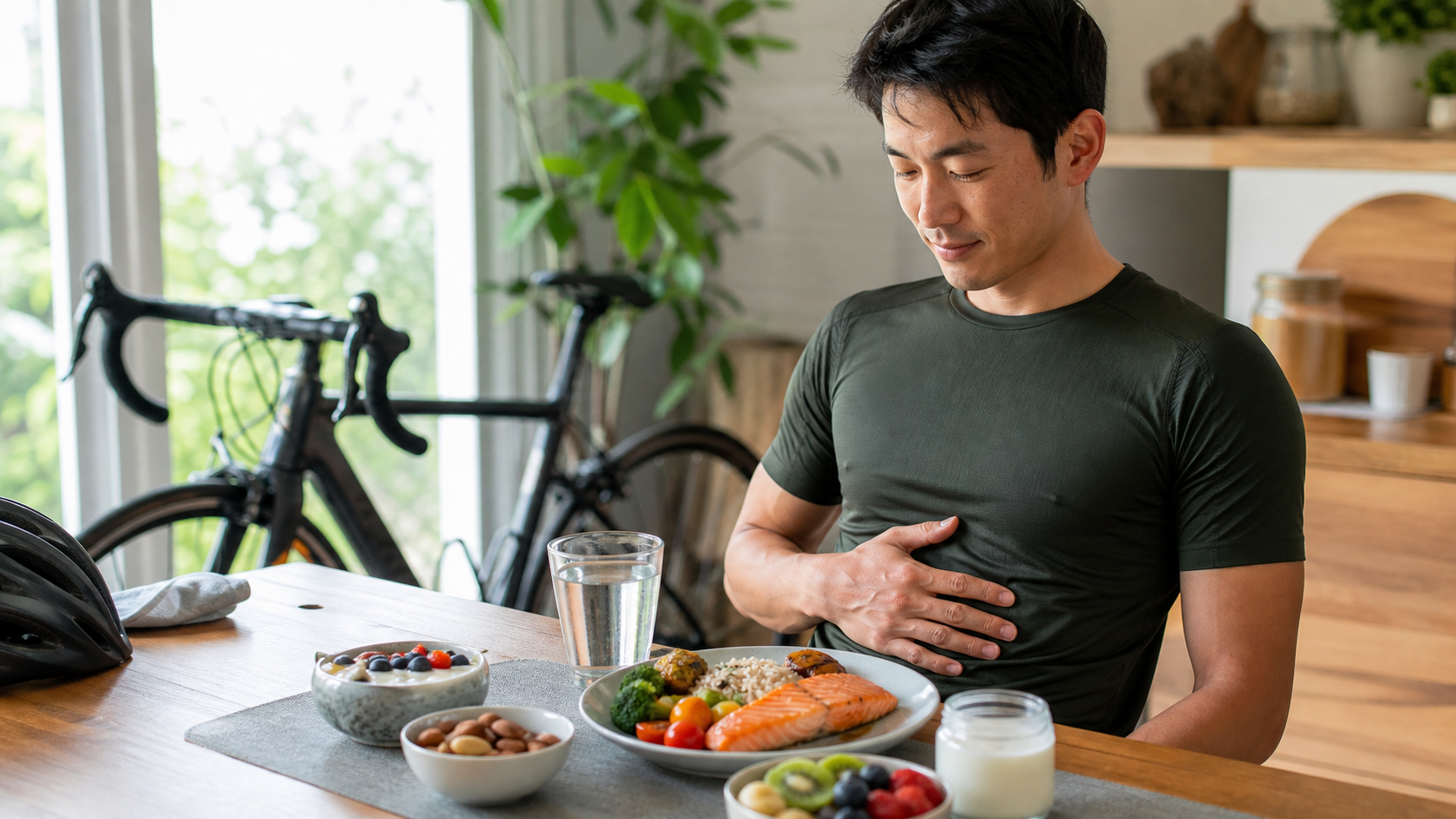
Opening: The Athlete Whose “Numbers Were All Right, but He Fell Apart”
I’ve been coaching athletes and general fitness enthusiasts for about fifteen years. Over that time, what has stuck with me most isn’t the moment someone breaks a PB (personal best), but the cases where “the numbers were all right, yet the person slowly fell apart.”
A few years ago, I worked with an amateur cyclist—let’s call him A-Zhe. His training discipline was admirable: a steady ten hours a week, spot-on power zones, FTP (functional threshold power) climbing from 240 watts to 285 watts, body weight held around 68 kg, and resting heart rate down to 48 bpm. By any metric on the spreadsheet, he was a model athlete.
But about six weeks before an A-priority race, things started going wrong. He kept training, yet the numbers dropped; morning heart rate variability (HRV) readings stayed persistently low; and when he talked to me, his speech slowed down, often with comments like “I don’t know why I can’t muster any drive.” He blamed it on “not trying hard enough,” so he added more volume—and it got worse. Eventually, he couldn’t sleep at night, had no appetite during the day, grabbed a convenience-store rice ball on his way out, and often couldn’t be bothered to eat a proper meal after training.
I asked him to drop the idea of “adding more volume” and sit down to write out, item by item, everything he’d eaten over the past two weeks. When he laid it out, the problem was hiding right there on the plate: to control his weight and save time, he’d been eating out long-term, with very few vegetables and fruit, almost zero Omega-3, protein concentrated mostly at dinner, and daytime fueled by coffee and sugary drinks. He thought he was being “disciplined,” but in reality, he was starving both his body and his brain while pushing them hard.
Let me be clear about one thing up front: A-Zhe’s later slump involved a whole host of factors—training stress, sleep, pre-race anxiety, relationships, and more. Diet was by no means the only cause, nor was it a magic bullet. But diet was one of the few levers he had at that moment that he could adjust immediately, and that would feed back into his mood. This article is my attempt to lay out, clearly, what I’ve seen over the years at the intersection of nutrition and emotion.
Conceptual Foundation: Emotions Don’t Just Happen in the Brain
The Brain Is an “Expensive” and “Picky Eater” Organ
I often use this analogy with my athletes: your brain makes up only about 2% of your body weight, yet it uses roughly 20% of your body’s total energy. It’s one of the most energy-hungry organs in the body, and also one of the pickiest eaters. When you’re chronically under-fueled, deficient in micronutrients, or riding blood-sugar swings, the first things to protest are often not your muscles, but your mood and focus.
Athletes are especially prone to falling into this trap, because our culture has long tied “toughness” to “eating less.” Cutting phases, pre-race weight management, long fasted cardio—these practices aren’t inherently wrong, but if taken too far or maintained too long, they can buy you low mood, irritability, reduced motivation, or even more serious mental health issues. One aspect of “Relative Energy Deficiency in Sport (RED-S)”—which has been widely discussed in sports physiology circles in recent years—that is often overlooked is its impact on psychological state.
What “Nutritional Psychiatry” Is
In recent years, a field has gradually taken shape called “Nutritional Psychiatry.” The core concept isn’t hard to grasp: what you eat affects your mood and mental health, and that effect can be studied and verified.
People used to think “eating a nice meal when you’re feeling down” was just a placebo effect, but more and more research is now using “overall dietary patterns” as an intervention to examine their impact on mood and depressive symptoms. I want to emphasize this very carefully: this does not mean “eat right and you won’t be depressed,” nor is it telling you to replace seeing a doctor with a salad. Rather, it means that diet is one real, actionable, and often underestimated piece of the larger puzzle that is mental health.
One frequently cited clinical trial is the SMILES trial (a randomized controlled trial conducted in Australia). It divided a group of adults with moderate-to-severe depression and poor dietary habits into two groups: one received a Mediterranean-style dietary intervention, and the other received social support, over twelve weeks. The dietary intervention group showed significantly greater improvement in depressive symptoms than the control group. This was one of the first studies to use rigorous randomized controlled methods to suggest that “improving diet quality” itself may help with depression (source listed in the references at the end).
Whenever I cite this study, I always add a caveat: its sample size was modest, the subjects were clinically depressed patients, and the dietary intervention was delivered under professional guidance. What it offers us is a “direction,” not a “guarantee.” Translating that to the athletic population, I turn it into a practical principle: rather than obsessing over one superfood, focus first on raising your overall diet quality.
Why Athletes Are Actually a High-Risk Group
Some people find “athlete mental health” contradictory: isn’t exercise good for body and mind? Shouldn’t people who train be happier? By and large, yes—regular exercise is almost entirely a positive asset for mood, sleep, and stress resilience. But competitive or high-intensity training populations carry a unique set of risk factors that deserve to be laid out and examined.
First, there’s performance anxiety and self-worth tied to results. When someone has long tied their self-worth to performance, weight, or power numbers, the emotional impact of a drop in data, an injury, or a setback hits far harder than it does for the average person. I’ve seen too many athletes who are full of confidence when results are good, then sink completely when injured—dragging their appetite and sleep down with them.
Second, there’s the long-term tug-of-war between energy and emotion. Endurance athletes live perpetually in the tension between “managing weight” and “supporting recovery.” If they lean too far toward the deficit side for too long, the relative energy deficiency issues mentioned earlier slowly accumulate, and their first symptoms are often fatigue, irritability, and reduced motivation—signals that look like “laziness” but are actually the body crying for help.
Third, there’s the difficulty of distinguishing overtraining from low mood. Overtraining syndrome and low mood overlap heavily in symptoms—both can involve fatigue, insomnia, appetite changes, and a lack of drive. That’s why I keep stressing: when your performance declines, don’t rush to “push harder through it.” Instead, stop and examine training, sleep, nutrition, and mood together.
I’ve organized the common risk signals for athletes into a self-check table for easy reference:
| Aspect | Healthy State | Warning Signs to Watch |
|---|---|---|
| Motivation | Looks forward to training, feels accomplished after | Persistently can’t muster drive for training, forcing through |
| Sleep | Falls asleep easily, wakes up feeling recovered | Trouble falling asleep or waking early, tired no matter how much sleep |
| Appetite | Regular, normal interest in food | Markedly worse or binge eating, feeling numb toward food |
| Mood | Fluctuations within a reasonable range | Persistently low, irritable, frequent urge to cry |
| Performance | Fluctuates normally with training cycles | Should be improving but keeps declining, slower recovery |
This table isn’t meant for self-diagnosis; it’s a reminder: if several signals in the right column appear at once and persist for more than a week or two, that’s not “weak willpower”—it’s your body and mind telling you it’s time to adjust, or even time to seek help.
The Gut-Brain Axis: Your Second Brain Lives in Your Belly
The Gut and Brain Are Constantly Talking
If I had to pick one concept I most want athletes to understand, it would be the “gut-brain axis.”
Put simply, your gut contains an entire network of nerves so vast it’s often called the “second brain” (the enteric nervous system). It communicates with the brain in your head bidirectionally and in real time—through the vagus nerve, the immune system, endocrine signals, and the various metabolites produced by gut bacteria. This isn’t mysticism; it’s a concrete physiological pathway.
One fact that’s often cited and resonates with people is that roughly 95% of the body’s serotonin (a substance linked to both mood and gut motility) is produced in the gut, with only about 5% in the brain (source listed at the end). A caveat worth noting: the serotonin made in the gut primarily handles gastrointestinal functions (motility, secretion, pain perception, etc.) and doesn’t simply “travel up to the brain and become happiness”—the blood-brain barrier stands in between. But this number matters because it highlights this: the state of your gut, your gut microbiome, and your overall neurochemical environment are far more deeply connected than we once thought.
The Indirect Relationship Between Gut Microbiota and Emotions
Gut microbiota participate in the metabolism of tryptophan (the precursor to serotonin) and also influence inflammation levels and the production of short-chain fatty acids. These factors can indirectly affect mood and brain function. Exercise itself is actually beneficial for the gut microbiota—people who engage in regular moderate-intensity exercise typically have better gut microbiota diversity than those who are sedentary.
On the flip side: High-intensity heavy training, race-day nervousness, and intestinal ischemia caused by prolonged endurance exercise can all make the gut sensitive and reduce its barrier function. This is why many long-distance runners, triathletes, and ultramarathoners struggle with “stomach cramps mid-run” or “pre-race diarrhea.” When the gut is uncomfortable, it’s hard to feel good emotionally—this is a bidirectional vicious cycle.
What I want to emphasize is: the gut-brain axis is still a field where “evidence is accumulating rapidly, but many details remain unresolved.” Many products on the market hype it up as if swallowing one probiotic capsule can cure anxiety—that’s an exaggeration. My stance has always been conservative: treat the gut as an organ that needs proper care, nourish it with real food and a consistent routine, rather than expecting some capsule to reverse everything.
Practical Approach: From Plate to Mood, Concrete Steps
Now that we’ve covered the concepts, let me talk about how I actually guide my clients in making adjustments. I focus on “overall dietary patterns” and a few key nutrients, rather than obsessing over individual foods.
A Mood-Friendly Dietary Framework
I usually give my clients a very simple framework so they don’t have to memorize a bunch of nutrition jargon:
| Category | Daily Direction | Local Taiwan Execution Tips |
|---|---|---|
| Vegetables | Aim for every meal, varied colors | Grab two or three different colored greens from the buffet, blanched vegetables, tomatoes, cucumbers |
| Quality Protein | Distribute evenly across three meals | Chicken breast, mackerel, salmon, tofu, eggs, unsweetened soy milk |
| Healthy Fats | Consume daily | A small handful of nuts, olive oil, avocado, deep-sea fish |
| Whole Grains & Unprocessed Starches | Replace refined starches | Brown rice, sweet potatoes, oats, whole wheat bread |
| Fermented Foods | A little bit every day | Unsweetened yogurt, kimchi, miso, tempeh, natto |
| Hydration | Adjust based on body weight and sweat loss | Carry an extra water bottle on training days; don’t rely on sugary drinks for hydration |
This framework is actually very close to the “Mediterranean-style diet” used in the SMILES trial mentioned earlier: plenty of vegetables and fruits, good oils, moderate whole grains and protein, and less refined sugar and processed foods. It’s not flashy, but it’s friendly to both mood and training recovery.
Nutrients Particularly Relevant to Mood
Some nutrients are especially frequently discussed in relation to mood and neurological function. I’ve compiled them into a reference table. Again, I want to emphasize: the following are general nutritional reference ranges, not prescriptions. Individual needs should be discussed with a physician or dietitian, especially if you’re on medication or have a chronic condition.
| Nutrient | Why It’s Linked to Mood (General Explanation) | Common Food Sources | Notes |
|---|---|---|---|
| Omega-3 (EPA/DHA) | Involved in brain cell membranes and anti-inflammation; multiple studies explore its supportive role in depressive mood | Mackerel, Pacific saury, salmon, sardines, flaxseed | Eating deep-sea fish two to three times a week is a practical approach |
| Tryptophan | Precursor to serotonin | Eggs, dairy, soy products, nuts, turkey | Pairing with whole grains aids absorption |
| B Vitamins | Involved in neurotransmitter synthesis and energy metabolism | Whole grains, lean meat, eggs, dark green vegetables | Long-term eating out or refined diets can lead to deficiency |
| Vitamin D | Related to mood, immunity, and bone health | Moderate sun exposure, egg yolks, fish | Those who train indoors frequently tend to have low levels |
| Iron | Deficiency causes fatigue and poor concentration; female athletes are at higher risk | Red meat, dark green vegetables, legumes | If deficiency is suspected, get a blood test; don’t self-supplement heavily |
| Magnesium | Related to neuromuscular relaxation and sleep | Nuts, dark green vegetables, whole grains, dark chocolate | Those who sweat heavily have higher needs |
I want to say a bit more about Omega-3 because it’s the most frequently asked about. Regarding research on depressive mood, the overall evidence tends to support that “an EPA-dominant formula at approximately 1 to 2 grams per day” has the potential to provide adjunctive benefits—and it’s not that more is better; beyond a certain dose, the additional benefit isn’t significant (source at the end of the article). But this is “adjunctive,” not a replacement for treatment. My recommendation is always: start with real food like deep-sea fish two to three times a week, use supplements as a means to fill gaps, and consult your physician first if you have a chronic condition or are on medication.
Blood Sugar Stability: The Underrated Mood Regulator
If I had to pick one “easiest to implement, highest cost-performance” mood-related dietary technique, it would be “stabilizing blood sugar.”
Many athletes’ mood swings are actually related to blood sugar roller coasters: getting overly hungry after morning fasted training, binge-eating refined carbs at lunch, then crashing in the afternoon—and mood crashes along with it. Taiwan’s eating-out environment makes it even easier to fall into traps—bubble tea, convenience store bread, fried rice and noodles are all combinations that spike blood sugar quickly and drop it just as fast.
The three blood sugar stabilization principles I give my clients are simple:
- Every meal includes protein and fiber—don’t let a meal consist only of refined carbs.
- Don’t wait until you’re starving to eat, especially don’t delay too long after a big training session.
- Treat sugary drinks as “in-training fuel” rather than “everyday beverages”—for daily thirst, drink water or unsweetened tea.
I want to clarify: the “blood sugar stabilization” discussed here targets “daily life and non-exercise periods.” During exercise, especially prolonged endurance efforts, timely carbohydrate intake (including sugary sports drinks) is actually necessary—that’s about providing energy and avoiding hitting the wall, which is completely different from casually drinking bubble tea in daily life. Don’t confuse the logic of in-training fueling with daily dietary blood sugar management.
A Case Study on “Mood and Blood Sugar”
I once coached a female road-running client—let’s call her Xiao Min. When she came to me, her biggest complaint wasn’t performance but “feeling inexplicably irritable around 3 to 4 PM, impatient with family, and lacking motivation to train.” She initially thought it was work stress or sleep issues.
I asked her to record a week of her diet and mood timeline, and the pattern quickly emerged: her breakfast was almost exclusively a pineapple bun with milk tea, and lunch was a rushed braised pork rice bowl—both meals were “pure refined carbs with almost no protein or fiber.” Her blood sugar spiked and crashed rapidly, and the crash happened right at 3 to 4 PM—exactly when her mood was at its worst.
We didn’t make drastic changes—just three small adjustments: add an egg and a cup of unsweetened soy milk to breakfast, swap part of the white rice for brown rice and add more vegetables at lunch, and prepare a small handful of nuts as an afternoon snack. Two to three weeks later, she reported that her afternoon irritability had noticeably decreased and her training focus had returned. This isn’t some miracle therapy—it just turned her blood sugar from a roller coaster into a gentle slope.
I share this case to help you understand: many emotional issues we attribute to “personality” or “stress” may partly stem from very simple physiological causes—and those causes can often be addressed starting with the plate.
A Practical Sample Schedule: Fitting Nutrition into a Training Day
Many people ask me, “I understand the principles, but how do I actually arrange a day?” Let me demonstrate with a hypothetical weekday training day (purely for illustrative purposes; actual portions vary by individual):
| Time | Content | Mood/Recovery Focus |
|---|---|---|
| Wake up | A glass of water, a small amount of coffee | Don’t chug coffee on an empty stomach; it can cause agitation |
| Breakfast | Oats + unsweetened soy milk + one egg + a small handful of nuts | Protein + healthy fats + whole grains to stabilize the entire morning |
| Pre-training | Banana or sweet potato | Easily digestible carbs; don’t overload the gut |
| Post-training | Protein + carbs (e.g., chicken rice with vegetables) | Seize the recovery window and avoid binge eating later |
| Afternoon | Unsweetened yogurt or fruit | Add some fermented foods and micronutrients |
| Dinner | Deep-sea fish or tofu + brown rice + assorted vegetables | Omega-3 and fiber to support sleep and mood |
| Before bed | Warm milk or unsweetened beverage (optional) | Establish a relaxation ritual; stop scrolling through data on your phone |
The spirit of this table isn’t for you to copy it exactly, but to show you: mood-friendly eating can be naturally woven into your training routine—there’s no need to start a separate “health regimen.”
Common Mistakes and Corrections
Over the years, I’ve seen too many smart and hardworking athletes fall into the same traps with diet and emotions. I’ve listed the most common ones below, along with how I usually correct them.
Mistake One: Taking “Dieting” to the Extreme
Many people go to extremes when cutting fat: extremely low carb, extremely low fat, almost completely eliminating certain food groups. Short-term weight might drop, but mood, sleep, and motivation often collapse along with it.
Correction: I ask my athletes to shorten the “cutting” period, slow down the pace, and retain enough carbohydrates and fat to keep brain function and mood stable. Cutting shouldn’t be a punishment, and it definitely shouldn’t make you irritable and depressed.
Mistake Two: Using Food to Punish or Reward Yourself
“I trained badly today, so I don’t deserve good food” or “I hit a PB, time to binge on a midnight snack” — this mindset of moralizing food is very damaging in the long run. It makes your relationship with food increasingly tense, and can even slide into disordered eating.
Correction: I bring food back to a neutral position of “tool and enjoyment.” Recovery nutrition is not a reward; occasional indulgence is life, not a sin. If you find yourself developing intense guilt around food, uncontrollable binge eating, or extreme restriction, this goes beyond nutritional adjustment — please seek professional help.
Mistake Three: Ignoring How Caffeine and Alcohol Affect Mood
Taiwan’s training culture loves coffee, and post-race drinks are common. Caffeine used correctly is a great tool, but too much or too late in the day disrupts sleep and worsens anxiety; alcohol significantly impacts sleep quality and recovery.
Correction: I usually recommend concentrating caffeine intake in the first half of the day, watching total amounts, and treating alcohol as an occasional thing rather than a daily habit. Once sleep is ruined, both mood and training suffer.
Mistake Four: Making Supplements the Main Event
Many people are willing to spend a lot of money on a pile of supplements, yet eat out every day and barely touch vegetables or fruit. That order is backwards.
Correction: I always put real food first; supplements are for “filling gaps,” not “replacing proper meals.” If you have a chronic condition or are on medication, you should always consult a doctor or pharmacist before taking any supplement to avoid interactions.
Mistake Five: Blaming Diet When Sleep Is the Problem
Sleep, mood, and diet are three interlocking gears. I’ve met plenty of people who desperately adjust their diet and try every supplement, yet their mood doesn’t improve — and when I ask, their sleep has long been a wreck: staying up late chasing data, pre-race anxiety causing light sleep, relying on heavy caffeine to get through the day. No amount of dietary tweaking can patch a sleep deficit.
Correction: I pull “sleep hygiene” back to the basics: a fixed bedtime, staying away from screens and training data an hour before bed, cutting caffeine after the afternoon, and keeping the room dark and cool enough. Once sleep stabilizes, mood and appetite often improve on their own. Diet, sleep, and emotions need to be managed together — don’t expect one factor alone to turn everything around.
Mistake Six: Treating “Asking for Help” as Weakness
This is the myth I most want to bust. Sports culture has a “tough guy narrative” — endure the pain, push through the fatigue, handle things on your own. That mindset has its value in training, but applied to mental health, it can be deadly. Too many people see seeing a psychiatrist as admitting they aren’t strong enough, so they tough it out until things get severe before seeking help.
Correction: I often tell my athletes that asking for help is just as natural as seeing a doctor for an injury. If you sprain your ankle, you see an orthopedist — so why can’t you see a psychiatrist when your emotions are strained? Being willing to ask for help is maturity and courage, not weakness. The earlier you address it, the faster you recover — this holds true for both physical and mental health.
Taiwan-Specific Context: Putting Theory into Practice
I want to write this section specifically for Taiwan’s athletic community, because our environment has its own unique challenges and conveniences.
High Rate of Eating Out: Eating out in Taiwan is convenient and delicious, but it’s also full of refined carbs, heavy oil, heavy salt, and sugary drinks. My practical advice isn’t to tell you to cook every meal at home, but to learn to “choose wisely when eating out” — load up on vegetables and whole-food proteins at buffet restaurants, swap sugary drinks for sugar-free ones, and choose braised or steamed over fried. Small choices, compounded over time, make a real difference.
Humid and Hot Climate: Taiwan’s summers are humid and hot. Long-distance cycling or road running causes massive sweat loss, and electrolytes and fluids deplete quickly, which directly affects how you feel, your focus, and your mood. During summer training, hydration and adequate electrolyte replacement aren’t optional — they’re the foundation of both mental and physical performance.
Easy Access to Healthcare: We have relatively accessible National Health Insurance and medical resources, which is a huge advantage. If you find that low mood lasts more than two weeks, affects your daily life and training, or comes with noticeable changes in sleep or appetite, don’t just try to tough it out with dietary tweaks — seeing a doctor (family medicine or psychiatry both work) is a mature and courageous choice. Seeking help for mental health is just as natural as seeing an orthopedist for an injury.
Common Training Venues: From riverside bike paths, Yangmingshan, and Beiyi Highway to local tracks and gyms, Taiwan’s athletic community trains in diverse settings. No matter where you train, the principles of mood and nutrition stay the same: eat well, sleep well, and ask for help when needed.
A “Smart Swaps” Reference Table for Those Who Eat Out
Many athletes say, “I know I should eat well, but eating out every day makes it really hard.” So I made a swap reference table specifically for Taiwan’s eating-out scenarios, so you can improve meal by meal without cooking at home. The point isn’t perfection — it’s making one better choice at every order:
| Scenario | Common Pitfall Choice | Mood/Recovery-Friendly Swap |
|---|---|---|
| Convenience store breakfast | Pineapple bun + milk tea | Tea egg + unsweetened soy milk + a banana |
| Buffet lunch | White rice + two fried items | Half brown rice + a serving of fish or tofu + two vegetables |
| Noodle shop dinner | Dry noodles + meatball soup | Soup noodles with less oil + blanched vegetables + braised egg or dried tofu |
| Bubble tea shop | Full-sugar pearl milk tea | Unsweetened tea or unsweetened fresh milk tea, less ice |
| Post-training refuel | Fried chicken + sugary soda | Chicken rice or onigiri + unsweetened soy milk |
| Late-night snack | Salt and pepper chicken + beer | Unsweetened yogurt + fruit, or a small bowl of clear soup |
This table isn’t asking you to live like an ascetic — eating salt and pepper chicken occasionally is totally fine. What it’s trying to convey is a mindset: in Taiwan’s eating-out environment, there is always a “slightly better” option available to you, and over the long run, it’s these small choices that take care of your mood and recovery.
Actionable Advice for Readers at Different Levels
Everyone starts from a different place, so I’ve divided the advice into three tiers. Find where you fit.
Beginner: Just Starting to Exercise, Diet Is a Mess
- Start with just “one thing”: swap one sugary drink a day for something sugar-free or water.
- Try adding one serving of vegetables and one serving of whole-food protein to each meal.
- Establish a regular meal rhythm; don’t let yourself get overly hungry.
- The goal isn’t perfection — it’s being “a little better than yesterday.”
Intermediate: Training Regularly, Wanting to Go Further
- Build an emotion-friendly eating framework (see the table above).
- Schedule deep-sea fish two or three times a week, and practice getting Omega-3 from real food.
- Observe the relationship between blood sugar and mood, and adjust your pre- and post-training fueling.
- Start tracking sleep and mood to identify your personal trigger foods and times.
Advanced: Competition-Oriented, High Training Volume
- Take the risk of “relative energy deficiency” seriously; don’t chronically underfuel your body while training hard.
- During cutting phases, pay special attention to changes in mood and motivation, and slow the pace if needed.
- When planning your race season, treat “psychological recovery” with the same importance as “physical recovery.”
- Build your professional team: a coach, a nutritionist, and add psychiatry or sports psychology professionals when necessary.
Turning Diet and Emotional Care into “Sustainable Habits”
Knowing how to eat and actually doing it are separated by a gap called “consistency.” Over the years, the students who successfully maintain their physical and mental well-being long-term don’t rely on sheer willpower—they design good habits to be simple and automatic enough. Here are a few strategies I actually use.
First, reduce friction. Make the good choice the easiest choice. For example, portion out nuts and keep them in your bag, always stock unsweetened soy milk and frozen vegetables at home, and simply don’t buy sugary drinks to bring into the house. You don’t need to fight your cravings head-on every time; let your environment make the decision for you.
Second, start with “addition” rather than “subtraction.” When most people think about improving their diet, they think “can’t eat this, can’t eat that”—that sense of deprivation is hard to sustain. I prefer starting with “adding one good thing”—add one serving of vegetables to each meal, add deep-sea fish twice a week. Add the good stuff first, and the bad will naturally get crowded out a bit, with much less psychological burden.
Third, keep a simple “mood–diet–training” log. No need for a complicated app; a small notebook or a note on your phone works fine. Spend one minute a day jotting down: how you feel today, how you ate, how you slept, how you trained. After two or three weeks, you’ll start to see your own patterns—which foods, which times, which training arrangements make you feel better or worse. This data, unique to you, is more valuable than any generic advice.
Fourth, accept that “imperfection” is the norm. No one can eat perfectly at every meal, and no one needs to. I often tell my students about the “80/20 principle”: as long as you eat reasonably well and keep a stable routine about 80% of the time, and relax and enjoy yourself the remaining 20%, your body and mind will be in good shape over the long run. What truly hurts you isn’t the occasional indulgence—it’s the all-or-nothing mindset of “once I slip, I’ll beat myself up, then just give up entirely.”
I’ve condensed these principles into a small table so you can stick it on your fridge or save it on your phone:
| Principle | One-line mantra | One thing you can do today |
|---|---|---|
| Reduce friction | Make the good choice the easiest | Portion out a week’s worth of nuts and put them in your bag |
| Use addition | Add the good first, don’t rush to quit | Add one extra serving of vegetables to every meal today |
| Keep a log | Find your own patterns | Before bed, write three lines: mood, diet, sleep |
| Allow imperfection | 80/20 principle, no all-or-nothing | Don’t blame yourself after indulging; get back on track at the next meal |
None of these four things sound earth-shattering, but it’s precisely this kind of “unremarkable yet doable every day” approach that truly sustains long-term physical and mental health. An athletic career is a very long race, and what carries you to the finish line is often not a single burst of effort, but these quiet, steady daily routines.
FAQ: The Questions Students Ask Most Often
Q: If I eat healthily, won’t I be depressed?
A: It’s not that simple. Diet is an important piece of the mental health puzzle, but depression is a multifactorial illness involving genetics, stress, sleep, relationships, and physiological state. Diet can help, but it cannot replace necessary medical care.
Q: Do I need to take probiotics to support the gut-brain axis?
A: Current evidence hasn’t reached the point of “everyone should supplement, and it works for everyone.” I’d rather recommend nurturing your gut with real food (vegetables, fruits, fermented foods, adequate fiber) and a regular routine. Supplements vary by individual—discuss with a professional if needed.
Q: What should I do if I’m so nervous before a race that I can’t eat or get diarrhea?
A: This is very common and is exactly the gut-brain axis working in both directions. You can reduce gastrointestinal and psychological tension by simplifying your pre-race diet, avoiding high-fat, high-fiber, and unfamiliar foods, and establishing a fixed pre-race routine. If it’s severe and persistent, it’s worth seeking professional evaluation.
Q: I’m cutting fat and my mood has gotten really bad. Is it a lack of willpower?
A: Most likely it’s not a willpower issue—you may be cutting too fast and too aggressively, with insufficient energy and carbohydrates, and your brain and mood are paying the price. Please slow down your fat-loss pace, make sure your nutrition is adequate, and take this warning sign seriously.
Q: Is there a “mood food” that works instantly?
A: Honestly, no. I’d advise you to be skeptical of any single food or product that claims to “improve your mood immediately.” The relationship between mood and diet is about “overall patterns and long-term accumulation,” not a single pill or superfood. Putting your effort into raising your overall diet quality, sleep, and routine is far more meaningful than chasing some influencer-endorsed food.
Q: I have diabetes/high blood pressure. Do these dietary recommendations apply to me?
A: The general principles (plenty of vegetables and fruits, whole foods, stable blood sugar, less refined sugar) are usually friendly to people with chronic conditions too, but the details must be individualized. Your medications, blood sugar and blood pressure targets, and kidney function all affect exactly how you should eat. Please treat this article as a conceptual reference, and discuss with your doctor or dietitian before actually implementing anything—don’t drastically change your diet or stop your medication on your own.
Q: As a vegetarian athlete, what should I pay attention to for emotional nutrition?
A: A plant-based diet can absolutely be healthy, but there are a few nutrients to watch—such as Omega-3 (can be supplemented from algae oil, flaxseed, walnuts), vitamin B12 (usually requires additional supplementation), and the absorption of iron and zinc. If these are deficient long-term, they can indirectly affect your mental state. I’d recommend vegetarian athletes get regular assessments and supplement under professional guidance when necessary.
Conclusion: Eating Well Is Also a Form of Training
Let’s return to A-Zhe from the beginning. Later on, we didn’t increase his training volume; instead, we first restored his “diet and life”: regular meals, putting vegetables, fruits, and deep-sea fish back on his plate, stabilizing his blood sugar, improving his sleep, and I also encouraged him to talk to a psychiatrist. A few weeks later, his HRV gradually stabilized, his appetite for training returned, and the smile came back to his face. Diet wasn’t the only reason for his recovery, but it was the fulcrum that “gave everything else a chance to improve.”
I often tell my students: eating well is also a form of training. It’s not as exhilarating as intervals, not as satisfying as breaking a PB, but it quietly determines whether you can stay in this sport for the long haul—healthily and happily.
Sport should make our body and mind stronger, not trade our body and mind for a pretty data sheet. Take care of your plate, take care of your gut and your emotions, and seek help bravely when you need it—this is the lesson I’ve most wanted to pass on to every athlete in my fifteen years.
This article is educational content and does not replace individual diagnosis and treatment advice from a physician, physical therapist, or dietitian. If you have a chronic condition (such as diabetes, high blood pressure, heart disease, etc.) or are taking medication, any dietary, supplement, or training adjustments should be discussed with your healthcare team first and based on individualized assessment. If low mood, anxiety, or disordered eating persists or affects your daily life, please seek help from a psychiatrist or relevant professional early.
References
- SMILES trial (randomized controlled trial of Mediterranean diet intervention and depression): https://link.springer.com/article/10.1186/s12916-017-0791-y
- Gut-brain axis and serotonin (approximately 95% of serotonin is produced in the gut): https://onlinelibrary.wiley.com/doi/full/10.1002/fsn3.3826
- Meta-analysis of Omega-3 PUFAs and depression: https://www.nature.com/articles/s41398-019-0515-5
Related Reading
- Emotional Eating Management for Athletes: When Stress Silently Eats Away Your Training Results
- The Science of Satiety for Athletes: Eating Enough Without Overeating
- When “Eating Clean” Becomes a Disease: Eating Disorder Risks and Recognition for Athletes
- Nutritional Time Management for Working Athletes: Too Busy to Eat, Still Fueling Your Training
西進武嶺 免費訓練分析服務 Intervals | 練不夠還是練過頭?你哪一種類型選手?AI模型告訴你! | 備戰神器 | 公路車 訓練 | CT Yeh
4 年前
靠單車減肥35公斤 心得分享與整理
7 年前
16/02/16 - 夜訪中社路 緩慢進步中
10 年前
西進武嶺 自製新版AI配速表產生器 x 賽前攻略 抱佛腳! 沒有功率計也可以產生配速表嗎?有什麼其他眉角賽前要注意的呢? | 西進武嶺 / 東進武嶺 KOM 攻略 | 公路車 | CT Yeh
4 年前
JJSC南台灣單車走春三日行 DAY 1 / 強度 x 美食 x 節慶體驗 / 公路車 CT Yeh
5 個月前
一日北高/長距離團騎 常見問題補充篇 / 組團或跟團的眉角 / 壯車友容易被瘦車友慢性拉爆 / 原來屁股痛可能是這個原因...? / 風場配速法 / 公路車 / CT Yeh
2 年前
約騎爆笑地獄梗 大腸怎麼了🤣 #公路車 #cycling
3 年前
如果Pogačar騎西進武嶺可以多快?會破2嗎?各種情況深度推估探討 / 公路車 / CT Yeh
2 年前