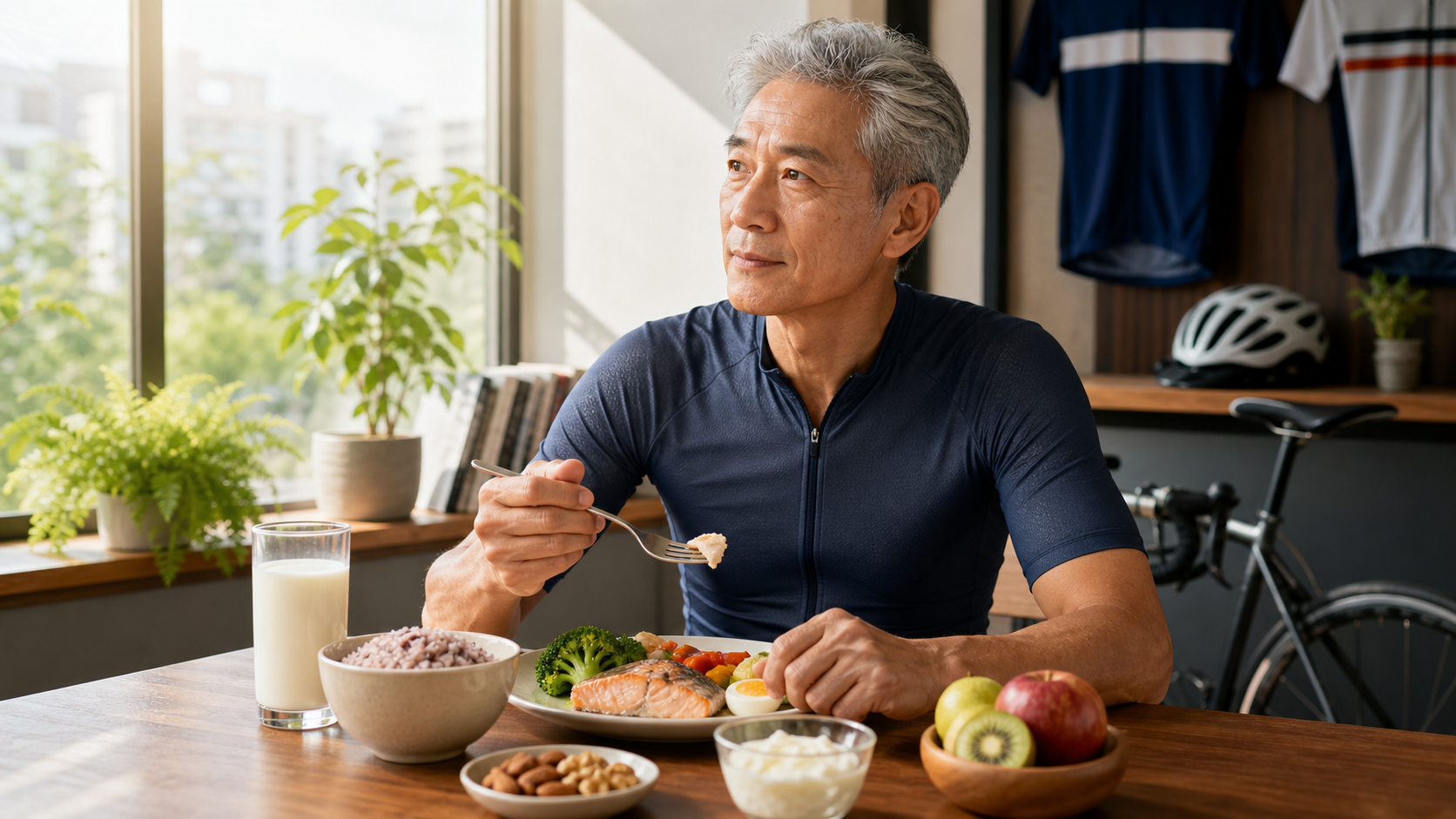
Opening: Mr. Chen, Who Kept Getting Weaker
Let me start with a case that left a deep impression on me. Mr. Chen is 67 years old. Before retirement, he was an engineer. After retiring, he became obsessed with cycling—on weekends he would often ride from Taipei to Tamsui or Jinshan, and he’d even tackled Yangmingshan a few times. His stamina was above average for his age, but over the past year or two, whenever he came to see me, his brow was furrowed. He said, “Coach, I’m riding more often than before, so why are my legs getting weaker? Slopes I used to climb out of the saddle with ease, I now have to grind through sitting down.”
I had him step on the body composition analyzer, and the numbers told the whole story. His body weight hadn’t dropped much, but his skeletal muscle mass had decreased by nearly three kilograms in two years, while his body fat percentage had crept up. This is the classic picture of sarcopenia in a middle-aged athlete—it’s not simply about gaining or losing weight; it’s about muscle being lost and fat filling in the gap. To make matters worse, Mr. Chen’s eating habits were still stuck in his forties: a vegetable bun with soy milk for breakfast, a takeout lunch box with lots of rice and vegetables but little meat, and a very light dinner because he worried about high blood lipids. His total daily protein often came to less than 50 grams.
In all my years working with middle-aged and older athletes, I’ve seen too many cases of “serious training, but nutrition holding them back.” This article is my attempt to organize the concepts I usually discuss with older clients in my consultation room. The focus will be on three things: why protein needs increase with age, what role vitamin D plays in muscle, and what we can do when appetite naturally declines. These three issues are interconnected—if any one of them is neglected, sarcopenia will slowly eat away at your physical capacity.
Let me be clear upfront: this article is written for middle-aged and older friends who are still exercising and want to keep doing so, as well as for family members caring for elderly loved ones. The content is educational—concepts and methods, not a personalized medical prescription.
Foundational Concepts: What Sarcopenia Really Is, and Why Athletes Can’t Escape It Either
Muscle Isn’t Simply “Use It or Lose It”
Many people assume, “Since I exercise, I won’t lose muscle”—this is one of the biggest misconceptions among older athletes. Sarcopenia refers to the age-related decline in skeletal muscle mass, strength, and function occurring simultaneously. Research generally suggests that muscle mass begins a gradual decline after age 30, and the rate accelerates noticeably after 60, with fast-twitch muscle fibers (the ones responsible for explosive power) being lost the fastest. This is why Mr. Chen lost his power out of the saddle—explosive movements are the first to be affected.
Exercise certainly helps—it’s arguably the most effective weapon. But the key point is this: exercise merely sends the signal for muscle to “grow back”; the actual bricks used to build it are protein. If the signal is there but the bricks are insufficient, the house still won’t get built. Older athletes often train enough but chronically fall short on the “raw material supply” end, and the result is that the harder they train, the less capacity they have.
“Anabolic Resistance”: The Most Critical Hurdle of Aging
Here I want to explain a very important concept that few people take the time to clarify for older adults: anabolic resistance. In plain terms: when you eat the same amount of protein, a young person’s muscles can efficiently use it to synthesize new muscle, but an older person’s muscles have become “desensitized” to that stimulus. You have to provide more protein, and in more concentrated doses, to achieve the same synthetic effect as when you were younger.
This explains why “protein recommendations for older adults are higher than for the general adult population.” For healthy adults, the general protein recommendation is roughly 0.8 to 1.0 grams per kilogram of body weight. But for older adults, the PROT-AGE study group—composed of experts affiliated with the European Union Geriatric Medicine Society—recommends that healthy older individuals consume 1.0 to 1.2 grams of protein per kilogram of body weight per day; for those with acute or chronic illness, the recommendation rises to 1.2 to 1.5 grams; and for those with severe malnutrition or critical illness, it may even reach 2.0 grams. This guidance also emphasizes that age-related muscle loss can be countered with exercise training combined with adequate protein intake.
For Mr. Chen, at 65 kilograms, simply maintaining muscle would require about 65 to 78 grams of protein per day. But given that he was doing strength training and long-distance riding, I actually estimated he needed around 78 to 90 grams. He was getting less than 50 grams a day—the gap was obvious.
Distribution Matters More Than Total Intake
This is what I consider the most practical—and most easily overlooked—point. If you eat 80 grams of protein in a day, “10 grams at breakfast, 20 grams at lunch, 50 grams at dinner” produces very different results from “25 to 30 grams at each of three meals.” That’s because muscle synthesis requires a per-meal threshold to be effectively triggered. PROT-AGE recommends that healthy older adults consume about 25 grams of protein per meal, including approximately 2.5 to 2.8 grams of leucine (an amino acid particularly effective at stimulating muscle synthesis). Loading up on meat at dinner while eating almost no protein at breakfast means your “synthesis engine” doesn’t fire for two meals of the day—what a waste.
So when I talk to older clients, my first piece of advice is often not “eat more protein,” but “distribute your protein evenly across three meals.” This small change alone has helped many people see improvements in grip strength and stair-climbing ability just from adjusting their eating pattern.
Let me add one more practically important concept: the “quality” of protein also matters. Even among proteins, different sources stimulate muscle synthesis to different degrees—the key lies in the leucine content mentioned earlier. Dairy (milk, yogurt), eggs, lean meat, and fish have high leucine density and are the priority choices for older athletes; soy products are somewhat lower, but with sufficient quantity and variety, they can still meet the target. I don’t want older adults to turn eating into a nitpicking math problem. Just remember one big principle: every meal should have one “obvious protein” centerpiece—whether it’s an egg, a piece of tofu, a slice of fish, or a portion of meat.
Vitamin D: The Overlooked Piece of the Puzzle
It Doesn’t Just Support Bones—It Supports Muscle Too
When people hear “vitamin D,” most immediately think of osteoporosis and bone health. True, but for older athletes, vitamin D’s relationship with muscle function is just as important. Muscle cells have vitamin D receptors; it participates in calcium and phosphorus metabolism, promotes muscle protein synthesis, and influences muscle cell proliferation and differentiation. Clinically, severe vitamin D deficiency is accompanied by noticeable muscle weakness, and low blood levels of vitamin D are also considered a risk factor for sarcopenia in older adults.
Deficiency Is Actually Common in Taiwan
When older clients hear this, they often say, “I go out cycling in the sun every day—how could I be deficient?” This is an interesting phenomenon in Taiwan. Despite our abundant sunshine, the rate of vitamin D insufficiency is actually not low. Reasons include:
- Fear of tanning or sunburn—covering up completely, wearing sunscreen and arm sleeves, which drastically reduces skin synthesis
- Cycling and running often happen in the early morning or evening, when UVB rays are weaker
- As we age, the skin’s ability to synthesize vitamin D naturally declines
- Inadequate dietary intake of vitamin D sources (oily fish, egg yolks, fortified foods)
According to the literature, most studies show that a daily supplement of 800 to 1,000 IU of vitamin D is an effective range for improving muscle performance and reducing falls in older adults; doses too low typically have no effect, while doses far above this range may actually increase fall risk. Older adults with low blood 25(OH)D levels (e.g., below 40 nmol/L) are the most likely to benefit from supplementation.
Coach’s Advice: Test First, Then Supplement—Don’t Supplement Blindly
I always remind people: Vitamin D is not a case of “the more, the better.” It’s a fat-soluble vitamin, so excess accumulates in the body. Since blood tests are very convenient through Taiwan’s National Health Insurance and clinics, I usually recommend that older adults visit a family medicine or metabolism department to get a blood test for 25(OH)D levels first. This tells you whether you’re severely deficient, mildly deficient, or normal, and then the doctor can decide on the appropriate dosage and follow-up plan. This is far safer than buying high-dose supplements off the shelf at a pharmacy on your own.
The table below is a reference framework I often use to explain vitamin D to older adults (actual dosages should be based on your doctor’s advice and blood test results):
| Blood 25(OH)D Status | Typical Corresponding Range | Meaning for Muscles | Recommended Action |
|---|---|---|---|
| Clearly Deficient | Low | Muscle weakness, increased fall risk | Seek medical care; doctor plans supplementation and monitoring |
| Mildly Deficient | Low-to-Moderate | Synthesis efficiency may be compromised | 800–1,000 IU/day plus dietary intake; re-test after a few months |
| Sufficient | Moderate-to-High | Supports normal muscle function | Maintain sun exposure and diet; monitor regularly |
| Too High | High | No added benefit, potentially harmful | Reduce or stop supplementation, follow doctor’s orders |
Practical Approach: Turning Concepts into a Daily Menu
Now that the concepts are covered, here’s where most people get stuck—“I understand the logic, but what exactly should I eat for each meal?” I’ve converted common Taiwanese foods into protein equivalents and made a quick-reference comparison table. This is the “pocket card” I give to every senior athlete client.
Common Foods Protein Content Comparison
| Food (Typical Serving) | Approximate Protein (grams) | Notes for the Taiwan Context |
|---|---|---|
| 1 egg | 6–7 | The easiest protein source for breakfast |
| 1 cup unsweetened soy milk (approx. 350 ml) | 10–12 | Available at breakfast shops and convenience stores |
| Half a block of traditional firm tofu | 8–10 | A great friend for vegetarian seniors |
| A palm-sized piece of chicken breast (approx. 100 g) | 22–25 | Available at buffet restaurants and as ready-to-eat chicken at convenience stores |
| One slice of mackerel/salmon | 18–22 | Also provides healthy fats and vitamin D |
| One serving of lean pork/beef (approx. 100 g) | 20–24 | A common bento main dish |
| One cup of unsweetened yogurt | 8–10 | Good as a snack to fill the gap between meals |
| 1 cup of milk (approx. 240 ml) | 7–8 | A glass before bed works well too |
| One bowl of plain rice from a typical bento | 4–5 | Reminder: rice has very little protein |
Many seniors have an “aha” moment when they see that last row—they realize that eating a big bowl of rice with just a little meat doesn’t provide nearly enough protein. Taiwan’s eating-out pattern of “lots of rice, lots of vegetables, little meat” is the hidden culprit behind protein deficiency in senior athletes.
Sample One-Day Menu: For a 65 kg Senior with Regular Exercise
The goal is about 80 grams of protein per day, roughly 25 grams per main meal. This is a real plan I designed for Mr. Chen (adjust portions based on individual appetite and medical advice):
| Meal | Content | Estimated Protein |
|---|---|---|
| Breakfast | Egg pancake (2 eggs) + 1 cup unsweetened soy milk | Approx. 24–28 g |
| Morning snack (post-workout) | 1 cup unsweetened yogurt + a small handful of nuts | Approx. 10 g |
| Lunch | Bento: chicken leg or mackerel + two vegetables + half to one bowl of rice | Approx. 25–30 g |
| Dinner | Firm tofu + stir-fried lean meat with vegetables + one bowl of brown rice | Approx. 25 g |
| Before bed (optional) | 1 cup of milk or unsweetened soy milk | Approx. 8 g |
This adds up naturally to around 80 grams per day, and every meal crosses the muscle protein synthesis threshold. After three months on this plan, Mr. Chen came back for a follow-up test—his skeletal muscle mass had stopped declining and increased by over a kilogram. What he noticed most himself was, “I can stand up and sprint again on that section of Yangmingshan.”
Timing: Exercise and Protein Intake
For senior athletes, I especially emphasize the meal or shake after exercise. After resistance training or a long ride, muscle protein utilization efficiency increases. Getting 20 to 25 grams of protein in at that time (e.g., a cup of unsweetened soy milk with an egg, or a whey protein shake) is a worthwhile investment. You don’t need to obsess over the “30-minute golden window,” but getting it in within a few hours after exercise, on the same day, is a sensible principle.
And I’ll say it again about resistance training: Just eating protein without doing strength training will greatly diminish the results. Protein is the bricks, but resistance training is the work order that says “we’re building a house.” Even just using resistance bands, doing sit-to-stand exercises from a chair, or lifting water bottles two to three times a week is far better than not training at all.
Second Case Study: Aunt Lin, Who’s Afraid of Getting Fat
Mr. Chen’s issue was “not knowing he needed to eat enough.” Aunt Lin is a trickier type—“she knows she should eat, but she’s afraid of getting fat.” Aunt Lin is 62 and a regular member of a community running group. She runs three to four times a week and can go up to 10 kilometers. She’s in great shape, even on the slim side. The problem is she’s been dieting her whole life, firmly believing that “meat makes you fat, carbs make you fat.” Her daily protein intake often hovers around just over 40 grams, and dinner is almost always just boiled vegetables and a little fruit.
She came to me because over the past six months her knees had started bothering her, her thighs were especially sore the day after runs, and her recovery was slowing down. A body composition test confirmed it: her weight wasn’t high, but her muscle mass was low, and her body fat percentage wasn’t actually that low. This is the early stage of what’s called “sarcopenic obesity”—looking slim on the outside, but with low muscle and relatively high fat on the inside.
Communicating with Aunt Lin took much more effort than with Mr. Chen, because I first had to break her fear that “eating meat makes you fat.” I used an analogy: “The more you starve your body’s engine (muscle), the smaller it gets, while the fuel tank (fat) gets fuller from saving. That makes running harder and more injury-prone.” We gradually increased her protein from 40 grams to 70 grams, and added a serving of steamed fish or tofu back to dinner. Her total calorie intake didn’t increase much—we just swapped “empty calories” for “calories with building materials.” Three months later, her knee discomfort had improved significantly, and her post-run recovery was faster. She laughed and said, “So it wasn’t that I was too old to run—I was too hungry to run.”
These two cases highlight a key point: The nutritional issues facing senior athletes differ by gender, body type, and mindset, but the core question is always whether protein intake is sufficient and appropriate.
Don’t Forget the Supporting Cast: Omega-3, Calcium, Hydration, and Overall Quality
Protein and vitamin D are the stars, but a good show needs a strong supporting cast. Let me briefly cover a few practical points that senior athletes often overlook.
Omega-3 Healthy Fats
Omega-3s from deep-sea fish (mackerel, Pacific saury, salmon) offer dual benefits for older adults: on one hand, they help combat low-grade inflammation and support joint and cardiovascular health; on the other, some research suggests they may improve the muscle’s response to protein stimulation in older people. In practice, I don’t tell seniors to pop fish oil capsules like candy. Instead, I encourage eating deep-sea fish two to three times a week, which also provides vitamin D and quality protein—a win-win. Mackerel and Pacific saury are easy to find and affordable at Taiwan’s markets and supermarkets, so this is a local strategy I highly recommend.
Calcium and Bone Health
Muscle and bone go hand in hand. Muscle loss often accompanies bone loss, and when both decline together, the risk of falls and fractures increases significantly. Senior athletes need to watch their calcium intake from sources like milk, yogurt, cheese, firm tofu, dark leafy greens, and dried baby anchovies. Vitamin D also happens to aid calcium absorption, so “vitamin D + calcium + protein + resistance training” is the golden combination for protecting both muscle and bone.
Hydration: The Most Overlooked Aspect for Older Adults
As we age, the sensation of thirst becomes duller. Many seniors aren’t refusing to drink water; they simply “don’t feel thirsty at all.” Taiwan’s summers are hot and humid, and sweating heavily during cycling or running can lead to dehydration, which not only impacts performance but can also cause dizziness, increasing the risk of heatstroke and falls. My advice is simple: Don’t wait until you’re thirsty to drink. Actively hydrate before, during, and after exercise. During prolonged exercise in hot weather, consider supplementing with electrolyte drinks. For seniors with heart or kidney conditions requiring fluid restriction, always follow your doctor’s advice and don’t just increase fluid intake indiscriminately.
The table below summarizes the key nutrients for “protecting muscle and bone”:
| Nutrient | Role for the Aging Athlete | Common Taiwanese Sources | Reminder |
|---|---|---|---|
| Protein | Building blocks for muscle synthesis | Eggs, soy products, fish, lean meat, dairy | Distributing evenly across three meals is most important |
| Vitamin D | Muscle and bone function, aids calcium absorption | Sunlight, fatty fish, egg yolks, fortified dairy | Get a blood test before deciding on supplementation dosage |
| Calcium | Bone strength, neuromuscular transmission | Dairy, firm tofu, dark leafy greens, dried small fish | Absorption is better when paired with Vitamin D |
| Omega-3 | Anti-inflammatory, cardiovascular & joint health | Mackerel, Pacific saury, salmon | Eat fatty fish 2–3 times a week |
| Water | Performance, temperature regulation, fall prevention | Plain water, electrolyte drinks | Don’t wait for thirst; hydrate proactively |
Adjusting Nutrition by Training Type: A Reference Chart for Aging Athletes
Many seniors ask me: “Should I eat the same on rest days as on high-volume training days?” The answer is that there’s some flexibility. The principle is—Protein needs to be a priority every day, while carbohydrates should follow your training load. On high-volume days, your body needs more carbs for fuel; on rest days, you can moderately reduce starches, but protein intake should not drop.
| Day Type | Protein | Carbohydrates | Key Reminder |
|---|---|---|---|
| Complete Rest Day | Maintain (approx. 1.2g per kg) | Moderate, focus on whole-food starches | Don’t skip protein just because you didn’t exercise |
| General Training Day (ride/jog under 1 hour) | Maintain | Moderate, include a staple at each meal | Have a serving of protein after exercise |
| High-Volume Day (long distance, climbing, racing) | Maintain or slightly increase | Increase; replenish before, during, and after exercise | Replenish carbs and fluids during prolonged exercise |
| Recovery Period / Post-Illness | Slightly increase (for repair) | Based on appetite, prioritize eating enough | Use liquid protein supplements if appetite is poor |
I want to specifically highlight a common issue among Taiwanese seniors: Many older adults with blood sugar concerns are afraid of carbohydrates and won’t even eat rice on exercise days. This is actually risky—low blood sugar during exercise can cause dizziness, weakness, and even falls. The correct approach isn’t to “avoid carbs completely,” but to choose whole-food, minimally refined starches (brown rice, sweet potatoes, oats) and discuss your blood sugar and dietary plan for exercise days with your doctor. Managing diabetes requires individualized care and professional intervention. This article provides general principles, not a prescription.
Decreased Appetite: The Toughest Challenge in Senior Nutrition
If protein distribution is a technical issue, then decreased appetite is the most difficult and patience-testing challenge in senior nutrition. Many seniors aren’t unwilling to eat; they genuinely “can’t eat, have no appetite, or feel full after a few bites.” The reasons behind this are numerous: diminished taste and smell, poor dental health, slowed digestion, reluctance to cook when living alone, medications for chronic conditions affecting appetite, and even low mood.
I want to be very honest here: if a senior experiences significant and persistent loss of appetite, or unintentional weight loss, this cannot be solved with nutritional tips alone. They must see a doctor, as it could be a warning sign of other health issues. The strategies below are for daily improvement when “appetite is low but there’s no acute illness.”
Practical Strategies for Decreased Appetite
- Eat smaller, more frequent meals: Instead of forcing a large meal, split protein intake into four to five smaller portions throughout the day. It’s less psychologically daunting and easier to reach your target.
- Eat protein first: At the table, eat meat, eggs, or tofu first. Don’t let rice fill up the stomach before you get to the protein.
- Enhance flavor and aroma: Use natural ingredients like scallions, ginger, garlic, mushrooms, and tomatoes to boost flavor. Seniors with diminished taste are more receptive to “flavorful” dishes (the key is natural seasoning, not excessive salt).
- Consider dental health: Cut meat into smaller pieces, stew it until tender, or prepare dishes like steamed eggs, fish, or minced meat. Don’t let “can’t chew it” become a reason not to eat. If there are dental issues, see a dentist.
- Liquid protein rescue: When it’s truly difficult to eat solid food, a glass of unsweetened soy milk, milk, yogurt, or a nutritional supplement drink is an excellent stopgap.
- Eat together: This point is often underestimated. When seniors living alone eat with others, their food intake and willingness to eat often increase significantly, and their mood improves too.
When Should You Consider Protein Supplements?
I don’t immediately recommend whey protein or nutritional supplements to seniors. Whole foods should always be the first choice. However, supplements become a reasonable and practical option in the following situations:
- Food intake is genuinely very small, and you can’t reach your protein target no matter how you adjust your meals.
- Dental or swallowing issues make consuming solid protein difficult.
- Recovering from an illness, hospitalization, or surgery, where appetite hasn’t returned but the body urgently needs building blocks for repair.
In these cases, choosing unsweetened or low-sugar whey or soy protein with simple ingredients, providing 20 to 25 grams per serving, is a good bridge. However, if the senior has kidney disease, protein intake must be individually assessed by a physician and dietitian. They must absolutely not increase their intake on their own. I always emphasize this point.
Common Mistakes and Corrections: Six Pitfalls I Correct Most Often
Having worked with aging athletes for so long, I’ve noticed some mistakes almost everyone makes. Here are the six most common ones, along with the correct approach:
| Common Mistake | Why It’s a Pitfall | Corrective Action |
|---|---|---|
| Concentrating protein intake at dinner | Breakfast and lunch don’t cross the muscle synthesis threshold, wasting the stimulus | Aim for ~25g of protein at each of three meals, distributed evenly |
| Eating too lightly out of fear of the “three highs” (hypertension, hyperglycemia, hyperlipidemia), barely eating meat | Long-term protein deficiency worsens sarcopenia | Choose lean meat, fish, and soy products; ensure good quality and sufficient quantity |
| Only doing cardio, no strength training | You have the raw materials but no “construction order,” so muscle doesn’t grow | Do resistance training 2–3 times a week |
| Randomly taking high doses of Vitamin D | Fat-soluble vitamins can accumulate and be harmful in excess | Get a blood test first, then supplement under medical supervision |
| Using “weight hasn’t dropped” to judge muscle health | Muscle loss is masked by fat gain; weight can be deceiving | Look at body composition, grip strength, and ability to climb stairs |
| Eating less when appetite is poor, leading to a downward spiral | Gets trapped in a vicious cycle of muscle loss | Eat smaller, frequent meals; eat protein first; see a doctor if necessary |
I especially want to re-emphasize the “weight hasn’t dropped” trap. Mr. Chen initially thought his stable weight meant he was fine, not realizing his muscle was being quietly replaced by fat. That’s why I often say, instead of weighing yourself daily, aging athletes should regularly check grip strength, test if you can stand on one leg steadily, and see if you get winded climbing stairs. These functional indicators are far more honest than body weight.
Actionable Advice for Readers at Different Levels
Everyone starts from a different point, so I’ve divided my advice into three scenarios. Find the one that fits you.
If You’re an Aging Athlete Who’s “Still Robust and Wants to Keep Improving”
- Set your daily protein target at approximately 1.2 grams per kilogram of body weight, distributed evenly across three meals.
- Schedule 2–3 resistance training sessions per week; don’t just do cardio.
- Find an opportunity to get your Vitamin D levels checked via blood test, and if deficient, supplement appropriately under your doctor’s guidance.
- Remember to consume adequate protein in your post-exercise meal.
- Measure your body composition or grip strength every 3 to 6 months to track trends with data.
If You’re a Senior Who’s “Starting to Notice a Decline and Feeling a Bit Concerned”
- Start by changing the easiest meal, usually breakfast—adding an egg or a glass of unsweetened soy milk makes a noticeable difference.
- When eating out, eat the main dish and vegetables first, and reduce the rice by half.
- Begin with the most basic resistance exercises: sit-to-stand from a chair, wall squats, and resistance bands.
- If you have a chronic condition (diabetes, hypertension, heart disease, kidney disease, etc.), discuss any dietary or exercise changes with your doctor and dietitian first. Individualization is paramount.
If You’re a “Family Member Caring for a Senior”
- Don’t just watch their weight; pay attention to weakening grip strength, slower walking pace, getting winded climbing stairs, and clothes fitting more loosely.
- Try to eat meals with the senior. The positive impact on their appetite is more significant than you might imagine.
- Prepare protein foods in forms that are easy to chew, swallow, and eat.
- If you notice persistent loss of appetite or unintentional weight loss, be sure to take them to see a doctor. Don’t try to guess the cause yourself.
Frequently Asked Questions from Older Athletes
These are the questions I get asked over and over in consultations and in clubs. Here they are, all in one place.
Q1: I’m in my seventies. Is it too late to start strength training?
Not at all. This is the myth I most want to debunk. Muscle is tissue that responds to training at any age. People in their eighties and nineties can still improve their strength and function through appropriate resistance training. The key is progressing gradually, using correct form, and having proper guidance. Rather than worrying about it being too late, worry about never starting. Begin with the safest movements, like sitting-to-standing from a chair or wall squats.
Q2: Will eating a lot of protein damage my kidneys?
For healthy older adults with normal kidney function, consuming 1.0 to 1.2 grams of protein per kilogram of body weight is safe and recommended. But if you already have kidney disease, that’s a completely different situation—your protein intake must be individually set by your physician and dietitian based on your kidney function. You can’t just add more on your own. So my standard answer is: Confirm your kidney function first, then talk about how much to eat. If you’re unsure, a simple blood test will tell you.
Q3: How can older adults on a plant-based diet (vegetarians) get enough protein?
It’s possible, but it requires more effort. The quality and amino acid profile of plant proteins are generally less concentrated than animal proteins, so vegetarian older athletes need to pay more attention to total intake and greater variety: tofu, soy milk, tempeh, edamame, chickpeas, quinoa, and nuts should all rotate onto the table so different sources complement each other. Supplementing with soy protein isolate when needed is also reasonable. Vegetarian older adults are also more prone to vitamin D and B12 deficiencies, so regular check-ups are recommended.
Q4: Should I buy all those “senior-specific” nutritional supplement drinks on the market?
It depends. If you can eat enough across three meals and have a normal appetite, you probably don’t need to spend the extra money—whole foods are great. But in situations where you genuinely can’t reach your intake targets due to small appetite, poor dentition, or recovery periods, these complete, easy-to-consume supplement drinks are indeed practical helpers. When choosing, look at two things: whether the protein content is sufficient and whether the sugar content is too high. Don’t treat them as a miracle supplement; think of them as a “gap-filling tool.”
Q5: My blood sugar is a bit high. Does that mean I can’t eat fruit or rice?
That’s something to leave to your physician and dietitian—there’s no one-size-fits-all answer. But the general rule is: It’s not about avoiding them entirely; it’s about choosing the right types, controlling portions, and combining them properly. Exercising without any carbohydrates at all is actually dangerous. Diabetes nutrition is a highly individualized specialty—please seek professional help. This article cannot replace that.
Q6: How do I know if I already have sarcopenia?
There are several signs you can observe at home: weakening grip strength (struggling to open jars or wring out towels), slower walking speed, needing to push off with your hands to get up from a chair, getting unusually winded climbing stairs, and thinning calves. If you notice these warning signs, I recommend getting a proper evaluation at a hospital’s geriatrics, rehabilitation, or family medicine department, where professional measurement tools can confirm the diagnosis. Early detection and early intervention—muscle can be recovered. Taiwan’s healthcare is highly accessible, so don’t use “that’s just what getting old is like” as an excuse to put it off.
Conclusion: Muscle Is Your Best Savings for Later Life
Back to Mr. Chen. Six months later, he messaged me saying he’d completed another climb up Yangmingshan, and “this time I ground my way up seated and could still stand to sprint at the finish.” I loved his last line: “Turns out what I was missing wasn’t willpower—it was those few pieces of meat I wasn’t eating enough of.”
I often tell older adults, muscle is the most important savings you’ll make for your later years. It determines whether you can walk on your own, use the toilet on your own, carry your groceries, and ride your bike to see the scenery. When you’re young, you can afford to be extravagant; as you age, every bit must be saved carefully. And when it comes to building muscle, exercise is the PIN code for the ATM, but protein, vitamin D, and adequate food intake are the actual principal in the account.
Fighting sarcopenia has never been some esoteric secret—it’s about doing three things right and doing them consistently: getting enough protein distributed evenly throughout the day, getting your vitamin D topped up, and finding ways to make sure you eat well. You don’t need to be perfect all at once. Starting with your next meal—picking up that egg, that piece of tofu, that slice of fish—is the best first step. To every older friend still riding and running out there, may you steadily bank that muscle savings well into old age.
This article is for educational purposes and cannot replace individual diagnosis and treatment advice from a physician, physical therapist, or dietitian. If you have diabetes, hypertension, heart disease, kidney disease, or other chronic conditions, or if you experience persistent loss of appetite or unintentional weight loss, please seek medical attention and receive individualized assessment.
References
- Protein intake and exercise for optimal muscle function with aging: recommendations from the ESPEN Expert Group (PROT-AGE related recommendations): https://pubmed.ncbi.nlm.nih.gov/24814383/
- ESPEN Expert Group full-text PDF: https://www.espen.org/files/PIIS0261561414001113.pdf
- Protein Requirements for Older Adults: What Are the Current Recommendations for Intake?: https://www.caringfortheages.com/article/S1526-4114(23)00136-1/fulltext
- Vitamin D and muscle function (Bess Dawson-Hughes): https://pubmed.ncbi.nlm.nih.gov/28341251/
- Vitamin D and Sarcopenia in the Elderly: A Review of Mechanisms and Considerations: https://www.dovepress.com/vitamin-d-and-sarcopenia-in-the-senior-people-a-review-of-mechanisms-a-peer-reviewed-fulltext-article-TCRM
Related Reading
- Exercise and Sarcopenia: A Complete Coach’s Guide to Combating Muscle Loss
- The Loss That Riding Can’t Stop: Why Older Endurance Athletes Must Lift Weights—A Complete Guide to Sarcopenia Prevention
- Strength Training for Older (50+) Endurance Athletes: Preventing Sarcopenia
- Strength Training for Older Cyclists: A Twice-Weekly Program to Prevent Sarcopenia
CT暗黑廚房) 車友必備 宇宙無敵鮮蚵湯 幫助訓練恢復 天然食補 好市多 超肥鮮蚵 破PR
7 年前
一日北高/長距離團騎 常見問題補充篇 / 組團或跟團的眉角 / 壯車友容易被瘦車友慢性拉爆 / 原來屁股痛可能是這個原因...? / 風場配速法 / 公路車 / CT Yeh
2 年前
一日北高常見問題大集合 | 攻略 | 路線 | 訓練 | 補給 | 自行車 單車 | 一日雙城 | 雙塔 | TWB北高360 | 屁股痛
6 年前
靠單車減肥35公斤 心得分享與整理
7 年前
單車 一日北高 ( 雙城 ) 肥宅雙人瘋狂行 紀錄片 REACTO
10 年前
一個測試有沒有認真練車的方法😂 #公路車
10 個月前
2021 96聯賽 桃園市長盃 4K多視角實況 當天選手瓦數/推力比/均速/時間 即時數據分析 | 公路車 | CT Yeh
5 年前
4K 東眼山 x 水蜜桃冰沙 百人單車約騎! 操完再吃冰 多爽快
7 年前