Athlete Vitamin D Supplementation Strategies: A Complete Guide to Prevalence of Deficiency, Dosage Management, and Seasonal Adjustments
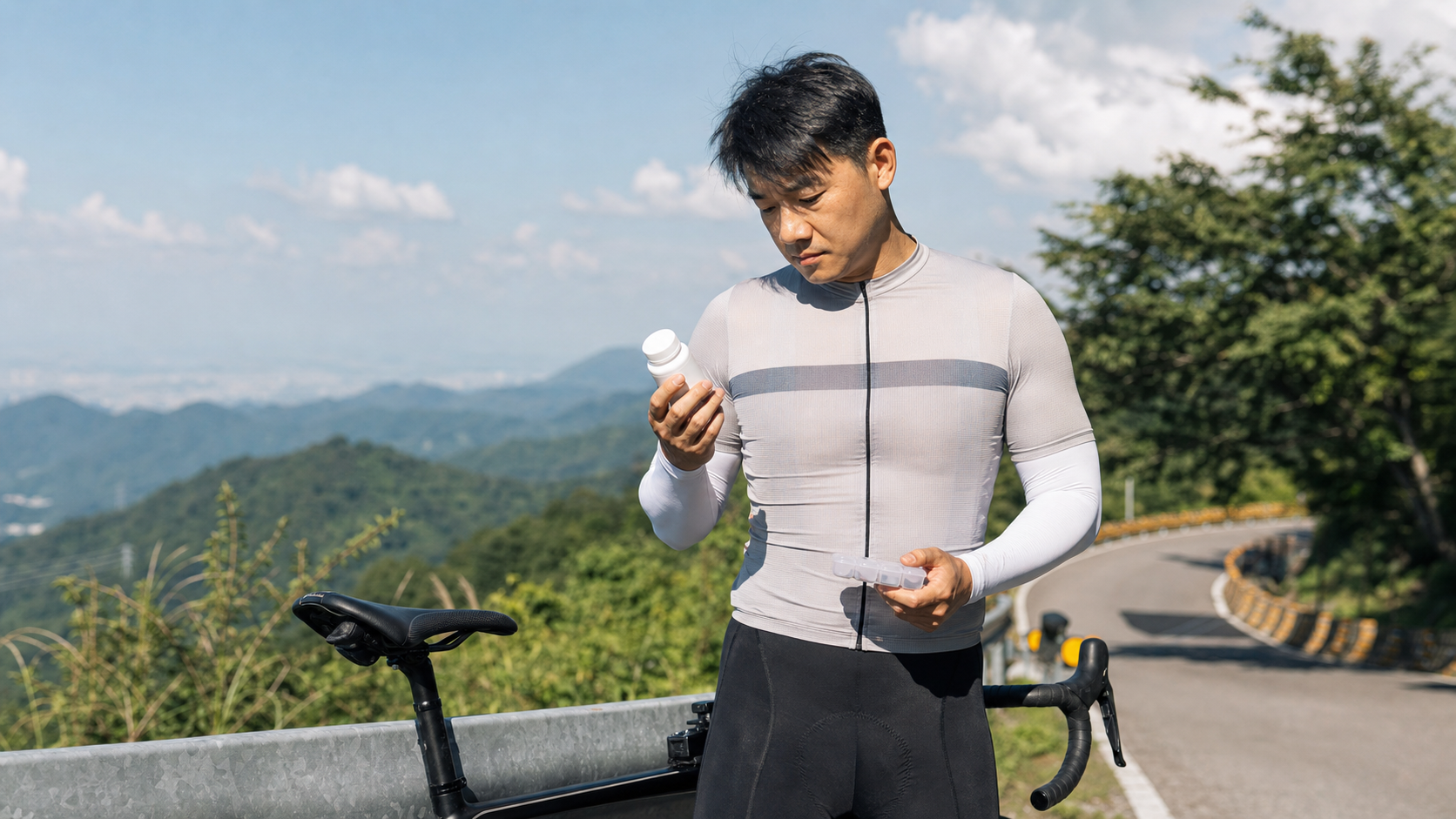
A Sunny Day, Yet a “Vitamin D Deficiency” Result
A few years ago, I coached a 27-year-old mountain biker—let’s call him A-Zhe. He trained roughly 250 to 300 kilometers a week, weighed about 68 kilograms, and had a functional threshold power (FTP) close to 300 watts. He looked like the kind of person who was tanned and outdoors all day. That year, within the same season, he first suffered a stress fracture in the metatarsal of his right foot. Not long after recovering, his left tibia started acting up. The rehabilitation physician recommended a more comprehensive blood test, one item of which was drawing blood to check “25-hydroxyvitamin D” (25(OH)D).
When the report came back, I still remember A-Zhe’s expression. His level was only 18 ng/mL—falling into the “deficient” range. His first words were: “Coach, I ride in the sun every day. How could I possibly be deficient in vitamin D?”
I’ve been asked this question dozens of times over the years. And the answer often surprises people: In sunny Taiwan, vitamin D deficiency among athletes is the norm, not the exception. In this long-form article, I want to use my practical experience coaching athletes to explain vitamin D from start to finish: why deficiency happens, what it does, what to test, how to dose it, how to adjust between winter and summer, and the most common pitfalls people fall into. It’s on the longer side, but if you train seriously and want to reduce your risk of injury, I suggest you read it through slowly.
A note upfront: This article is educational content to help you build understanding and “speak the same language” as your physician and nutritionist, but it cannot replace professional, individualized diagnosis and treatment. I’ll emphasize this again at the end.
Why Can You Still Be Deficient Even When You Get Sun?
Vitamin D is actually more like a “hormone precursor” than a simple vitamin. About 80 to 90 percent of the body’s vitamin D comes from synthesis in the skin under ultraviolet B (UVB) exposure, with food sources accounting for only a small portion. Given that, Taiwan’s subtropical climate should mean no deficiency—but the reality is the opposite, for several layered reasons:
1. Modern Life and Training Patterns “Filter Out” the Sun
Many serious athletes concentrate their training in the early morning or evening—to avoid the intense midday heat of Taiwan’s summers. The problem is that the hours when UVB is strongest and most capable of stimulating skin vitamin D synthesis are precisely the hours around noon. Heading out at 5 or 6 a.m., the sun’s angle is low, and UVB barely reaches the skin. You might “soak up sun” for a long time, but synthesis efficiency is very poor.
2. Sunscreen, Long Sleeves, and Arm Warmers Block UVB Too
This is a genuine dilemma. Sunscreen is crucial for reducing skin cancer risk and photoaging, and I fully support it. But sunscreen, long-sleeved jerseys, arm warmers, and face covers also significantly reduce the amount of UVB reaching the skin. Many Taiwanese cyclists “wrap up tight” in summer, doing a very thorough job of sun protection—and vitamin D synthesis gets suppressed as a result.
3. A Rising Share of Indoor Training
In recent years, smart trainers (such as various indoor cycling platforms) have become widespread, and with gym strength training and pool swimming, a considerable portion of many athletes’ training time happens indoors. Glass blocks out most UVB, so riding a trainer by a window essentially provides no vitamin D.
4. Individual Differences: Darker Skin, Body Fat, Age
People with darker skin have more melanin, which reduces vitamin D synthesis efficiency; those with higher body fat tend to have vitamin D “absorbed” by adipose tissue, lowering the amount available in the blood; and as we age, the skin’s synthetic capacity declines. These are all individual variations.
Add these factors together, and you’ll understand why research shows: The prevalence of vitamin D deficiency among professional athletes can be as high as 60 to 80 percent, and among general recreational athletes, the rate of insufficiency can exceed 70 percent. Interestingly, even in summer, a substantial proportion of indoor-sport athletes remain vitamin D deficient (references 1, 2). This is why I often tell my athletes: don’t conclude based on “feeling like you’re often in the sun”—the only thing that truly settles it is that blood test report.
What Does Vitamin D Actually Do for Athletes?
Many people think vitamin D is only about bones, but its role is far broader. Below, I’ll walk you through several aspects that matter especially to athletes, in plain language.
Bone Health and Stress Fractures
This is the most classic area. Vitamin D helps the gut absorb calcium, maintaining blood calcium stability and bone mineralization. When vitamin D is chronically deficient, bone strength tends to decline, and for athletes who run, jump, or do long-term high-impact training, the risk of stress fractures rises. Looking back at A-Zhe’s case—two stress fractures within a year and a vitamin D level of only 18 ng/mL—it’s hard to say there’s no connection.
Muscle Function and Recovery
Vitamin D is linked to muscle cell function, and research generally suggests that deficiency may be associated with reduced strength, muscle weakness, and slower recovery after exercise (references 1, 3). For endurance athletes, “slow recovery” is often a hidden driver of chronic fatigue and declining form.
Immune Function
Vitamin D has a regulatory effect on the immune system. Clinically, when vitamin D is low, the risk of upper respiratory tract infections and similar conditions may rise. For athletes with high training loads, whose immunity is already easily suppressed, this is especially important—all the training volume you’ve painstakingly built can be set back several days by a single cold.
To Be Honest Here
I need to be clear: vitamin D is not a miracle supplement where “taking it makes you stronger.” The evidence that holds up best points in this direction: correcting “deficiency” back to “sufficiency” protects bone, muscle, and immunity, reducing the risk of injury and illness; but if you’re already sufficient, pushing levels even higher has no reliable evidence showing it will make you ride faster or run farther. This boundary matters, and I’ll return to it when we discuss dosing.
Reading Your Blood Test Report: What the Numbers Mean
To discuss supplementation strategy, you first need to understand the numbers. The marker athletes should know best is blood 25(OH)D, commonly measured in ng/mL (some reports use nmol/L; the conversion is roughly ng/mL multiplied by 2.5).
Below is a common clinical reference range for classification. I want to emphasize: different guidelines and laboratories have slightly different cutoffs; this table is to help you build a conceptual framework—for actual interpretation, defer to your report and your physician’s explanation.
| 25(OH)D Level (ng/mL) | General Classification | Meaning for Athletes (Conceptual) |
|---|---|---|
| Below 20 | Deficiency | Higher risk to bone, muscle, and immunity; usually requires active intervention |
| 20 to <30 | Insufficiency | Not yet sufficient; athletes are generally advised to raise it |
| 30 to 50 | Sufficiency | The generally accepted sufficient range |
| 40 to 50 | Athlete ideal zone (some recommendations) | Some sports medicine guidelines suggest athletes aim for this slightly higher range |
| Clearly above 50 and continuing to climb | Caution warranted | Excess provides no benefit, and chronically high levels carry risk; revisit your dosage |
There are two key points worth expanding on here.
First, about the “cutoffs.” Research commonly treats below 20 ng/mL as deficiency and below 30 ng/mL as insufficiency; the sufficiency threshold for the general adult population is roughly 30 ng/mL or above (references 2, 4).
Second, about “whether athletes should aim higher.” Some sports medicine perspectives argue that because athletes face greater training loads and higher demands on bone and muscle, the ideal target can be set slightly above the general population’s level—for example, around 40 ng/mL, or even in the 40 to 50 ng/mL band—rather than just barely hitting 30 (references 2, 4). This is a “reasonable but still debated” direction, not a hard rule. When I work with my own athletes, I tend to set the goal as “solidly above 30, and if there’s room, lean toward 40,” rather than blindly chasing higher numbers.
Please remember: higher does not mean better. Vitamin D is fat-soluble and accumulates in the body; excessive supplementation can cause problems such as hypercalcemia. Chasing higher levels offers no extra benefit but adds risk—it’s not worth it.
Practical Supplementation Strategy: How to Determine the Dosage?
This is what everyone wants to know most. Let me state the conclusion clearly first: The ideal approach is “test blood first, adjust based on results, then re-test to confirm,” rather than arbitrarily picking a dosage and sticking with it. However, I also understand that in reality, not everyone can get a blood draw immediately, so I’ll discuss this in two scenarios.
Scenario A: You’ve Already Had Blood Work Done and Know Your Numbers
This is the most ideal situation. Based on your values, the general approach is as follows (the dosages below are “conceptual ranges” commonly found in research and guidelines; units are in IU, international units):
| Your Status | Common Supplementation Approach (Conceptual Range) | Notes |
|---|---|---|
| Deficient (below 20) | Requires more aggressive supplementation, e.g., a higher daily dose, or a short-term higher-dose course arranged by a physician followed by maintenance | When deficiency is severe, it is strongly recommended to have a plan devised by a physician/nutritionist and to schedule a follow-up blood test |
| Insufficient (20 to below 30) | Approximately 1,500 to 2,000 IU daily for maintenance supplementation to push levels into the sufficient range | Research indicates that insufficient individuals often need at least this dosage to maintain levels within the sufficient range (Reference 1) |
| Sufficient (30 to 50) | Depending on season and diet, maintain around 1,000 to 2,000 IU/day or sustain via food + sunlight | The goal is to “hold the line,” not to push higher |
| Elevated | Reduce dosage or pause, then re-evaluate | Don’t keep stacking higher |
Regarding the treatment of deficiency, one common strategy in research and clinical practice is to first use a short-term course of a higher dose to bring levels up, then transition to a daily maintenance dose (References 1, 3). The common range for effective daily supplementation in the literature generally falls between 1,000 IU and 5,000 IU, with variations depending on the individual and their starting level (Reference 1). I want to emphasize again: For higher-dose courses, especially when deficiency is severe, please leave the planning to a physician or nutritionist. Don’t just grab a “mega-dose” from the internet and start popping pills.
Scenario B: You Haven’t Had Blood Work Done, But Want to Take Some Reasonable Steps First
If you can’t get a blood draw in the short term, but you’re concerned you might be in a high-risk group (training early morning/evening, heavy sunscreen use, lots of indoor training, low fish intake in your diet), then adopting a conservative general supplementation approach is usually relatively safe: for most healthy adults, a daily 1,000 to 2,000 IU of Vitamin D3 as a general supplement falls within a relatively safe range. But this is only a “temporary conservative measure” and cannot replace a blood test. When you get the chance, you should still get tested to know where you actually stand.
D2 or D3? On an Empty Stomach or With a Meal?
Common supplements include Vitamin D2 and D3. It is generally believed that D3 is more efficient at raising blood concentrations, and most athletes in the market choose D3. Vitamin D is fat-soluble, so it’s recommended to take it with a meal containing fats for better absorption—for example, if your Taiwanese breakfast includes eggs, nuts, or a meal with oils, that’s a good time to take it.
Don’t Forget the Two Other Pillars: Food and Sunlight
Supplements aren’t the only path. Natural foods rich in Vitamin D aren’t hard to find in Taiwan: oily fish like salmon, Pacific saury, and sardines, egg yolks, and some dairy products or soy milk that are fortified with Vitamin D. Moderate midday sun exposure (briefly exposing your limbs to sunlight, while respecting sun protection and skin safety) also helps. My stance is: walk on all three legs—sunlight, diet, and supplements—letting supplements play the role of “filling the gap,” rather than relying on them entirely.
Seasonal Adjustments: Taiwan’s Winter-Summer Gap Can’t Be Ignored
Many people think Taiwan is summer all year round and there’s no need to worry about seasons. That’s a misconception. Taiwan’s winters (especially in the central and northern regions) often bring overcast skies and rain, with significantly reduced sunshine hours. Plus, in winter, people bundle up more and spend less time outdoors at midday, so Vitamin D synthesis drops noticeably. Research generally observes seasonal fluctuations in 25(OH)D, with lower levels in winter/spring and higher in summer/autumn (Reference 2).
This has very practical implications for training planning. When I work with athletes, I typically arrange a seasonal rhythm like this:
| Period | Taiwan Context | Supplementation/Monitoring Strategy (Conceptual) |
|---|---|---|
| Summer (approx. June to September) | Strong sunlight, more outdoor training but often early morning/evening + heavy sun protection | If diet and sunlight are sufficient, maintenance dose can be slightly lower; still, don’t assume “it’s definitely enough” |
| Autumn (approx. October to November) | Sunlight begins to decrease | Maintain consistent supplementation, prepare for winter |
| Winter (approx. December to February) | Central/northern regions are damp, cold, with little sun; people bundle up; indoor training increases | Usually the season requiring the most aggressive supplementation, and a good time for a follow-up blood test |
| Spring (approx. March to May) | Levels are often near their annual low point | Consider scheduling a blood draw to confirm your status after winter |
One practical suggestion: If you only test once a year, do it in late winter/early spring (around February to March), as this typically captures your annual low point. Because if your levels are still within the sufficient range even at your lowest point, you generally don’t need to worry much for the rest of the year. If you have the means, getting another test in late summer for comparison would make it even more complete.
Common Mistakes and Corrections: I’ve Seen These Pitfalls Too Many Times
Over the years of coaching athletes, I’ve seen all sorts of mistakes regarding Vitamin D. The following are the most common and most worth checking to see if you fall into any of them.
Mistake 1: “I Get Plenty of Sun, So I Can’t Be Deficient”
This is the most widespread misconception. As explained earlier: training at dawn/dusk, heavy sunscreen use, and indoor training all mean that “being in the sun” and “synthesizing Vitamin D” are two different things. Correction: Don’t judge by feeling; judge by a blood test.
Mistake 2: Taking Mega-Doses Without a Blood Test
Some people hear that athletes are prone to deficiency, so they go buy high-dose products and start popping them, thinking “more must be better.” Vitamin D is fat-soluble and accumulates, and long-term excessive intake can lead to problems like hypercalcemia (high blood calcium). Correction: A conservative general supplement (1,000 to 2,000 IU daily) is fine, but if you need a “high-dose course” to correct a deficiency, please get a blood test first and let a physician plan it.
Mistake 3: Supplementing and Never Testing Again
Supplementation isn’t a “set it and forget it” deal. Everyone’s absorption, metabolism, sunlight exposure, and diet differ. With the same dose, some people’s levels rise, while others’ barely budge. Correction: After supplementing for a period (commonly a few weeks to a few months), get a follow-up blood test to confirm you’ve actually reached the sufficient range, then fine-tune based on the results.
Mistake 4: Treating Vitamin D as a “Performance-Enhancing” Supplement
I understand the feeling—if there’s even a small chance of getting stronger, you want to try it. But as mentioned earlier, the currently reliable direction is that “correcting a deficiency” provides protection, not that “supplementing to excess” provides a boost. Correction: Position it as foundational work for “health and injury prevention,” not as a PB (personal best) miracle tool.
Mistake 5: Focusing Only on Vitamin D, Forgetting Calcium and Overall Nutrition
Vitamin D helps with calcium absorption, but if your calcium intake itself is insufficient, your bone health will still suffer. This is especially true for those in weight-controlled or highly restrictive diet programs (e.g., endurance athletes needing to manage weight, or populations with imbalanced diets), who are prone to multiple deficiencies simultaneously. Correction: Put Vitamin D back into the “overall nutrition” framework—eat a balanced diet, ensure adequate calcium, and if necessary, consult a sports nutritionist for a comprehensive assessment.
Mistake 6: Overlooking the Specific Needs of High-Risk Groups
Certain groups are at particularly high risk and deserve extra attention: female athletes with menopause/menstrual irregularities, athletes in jumping or impact sports with a history of stress fractures, indoor sport athletes needing to control weight, and those with busy schedules who rarely get midday sun exposure (Reference 3). If you fall into any of these categories, lower your threshold for concern and be more proactive about getting blood tests.
Actionable Advice for Readers at Different Levels
After all that, let me distill it into a few actionable recommendations you can follow directly, based on your situation.
If You’re a Beginner, Exercising Two or Three Times a Week
You don’t need to stress yourself out. Start with three things: (1) Try to get some safe midday sun exposure a few times a week; (2) Consciously include oily fish, egg yolks, and fortified dairy products in your diet; (3) If you happen to be getting a health check-up anyway, add a 25(OH)D test to get a baseline. Only consider supplementation if there’s a clear deficiency; typically, a general daily dose around 1,000 IU is a very gentle starting point.
If You’re an Advanced Athlete with Regular Training and Goal Races
You owe it to yourself to take this seriously. Recommendations: (1) Get your 25(OH)D tested at least once a year, ideally in late winter or early spring; (2) Adjust supplementation based on results, aiming to stay solidly above 30 ng/mL, with room to push toward 40; (3) During winter (especially the humid, cold season in central and northern Taiwan), proactively increase supplementation and monitoring; (4) If you fall into the high-risk groups mentioned earlier, increase testing frequency to twice a year.
If You’re a Competitive Athlete with High Training Volume and Performance Goals
For you, vitamin D is fundamental injury prevention and health management, worth systematic attention. Recommendations: (1) Work with your sports medicine/nutrition team to include 25(OH)D in routine blood panels; (2) If deficient, follow the complete protocol of “physician-planned treatment → daily maintenance → follow-up testing to confirm”; (3) Adjust dosage dynamically by season—don’t take the same dose all year; (4) Consider it within the broader framework of overall nutrition (including calcium, iron, and energy availability), rather than treating it in isolation.
Practical Notes on Medical Visits and Testing in Taiwan
In Taiwan, 25(OH)D blood tests are available at many hospitals’ family medicine, endocrinology/metabolism, and rehabilitation departments, as well as at many health check-up centers. Some are self-pay items, and costs and inclusion in health check packages vary by institution—it’s best to call ahead and ask. If you already have stress fractures, recurrent injuries, or noticeable muscle weakness, please seek professional medical evaluation rather than just self-supplementing and pushing through.
A special note for those with chronic conditions (e.g., diabetes, hypertension, heart disease, kidney disease, etc.): In these situations, vitamin D and calcium supplementation needs to be more cautious and individualized, as it may involve interactions with other medications and metabolic considerations. Please discuss with your primary care physician before supplementing—nothing in this article can replace your doctor’s judgment about your specific situation.
Self-Risk Screening: Are You in a High-Risk Group?
Before spending money on a blood test, you can do a simple self-risk assessment. I often give my athletes a checklist like this to help them get a baseline. Each item you check adds another layer of risk:
| Risk Factor | Description | Check if Applicable |
|---|---|---|
| Training mostly in early morning/evening | Avoids midday heat, but also misses peak UVB hours | ☐ |
| Very diligent with sun protection | Full regimen of sunscreen, long-sleeve jerseys, arm sleeves, face masks | ☐ |
| High proportion of indoor training | Trainer, gym, or pool makes up a significant share of training volume | ☐ |
| Diet low in oily fish | Rarely eats salmon, Pacific saury, sardines, etc. in a week | ☐ |
| Darker skin tone | Skin synthesizes vitamin D less efficiently | ☐ |
| Higher body fat percentage | Vitamin D tends to be “diluted” in adipose tissue | ☐ |
| History of stress fractures | Bones have had issues before | ☐ |
| Female with menstrual irregularities | Hormonal and energy availability issues often accompany bone risk | ☐ |
| Regularly eats out, rarely cooks at home | Hard for Taiwan’s eating-out population to get enough from diet | ☐ |
My rule of thumb: If you check 3 or more items, I strongly recommend getting a blood test; if you check 5 or more, you can almost expect to fall into insufficiency or deficiency. This isn’t meant to scare you—it’s to simplify the decision of “should I spend the money on this test.” Taiwan’s eating-out culture means almost everyone hits that last item—breakfast shops, bento boxes, noodle stands—these meals contain very limited vitamin D.
Local Taiwanese Diet: Getting Some Back from the Table
Although food only accounts for a small portion of vitamin D sources, small amounts add up, especially for those who “don’t really want to take supplements.” Diet is a worthwhile avenue to cultivate. Below are categories of foods that are easy to find in Taiwan with relatively good content. I’ve deliberately not given exact numbers, because ingredients, origin, and cooking methods vary widely—this is just to give you an idea:
| Food Category | Common Ways to Get It in Taiwan | Coach’s Tip |
|---|---|---|
| Oily fish | Salmon, Pacific saury, sardines, mackerel (supermarkets, traditional markets, bento shops) | Aim for 2–3 times a week—the most practical natural source |
| Egg yolks | Available at PX Mart, convenience stores, breakfast shops | Don’t just eat the whites—the yolk is where it’s at |
| Dairy/soy milk fortified with vitamin D | Some commercial milk, yogurt, and soy milk are fortified | Check the nutrition label before buying |
| Some mushrooms (sun-dried) | Dried shiitake and others at traditional markets, supermarkets | Content varies widely—treat as a bonus, not a staple |
I usually tell my athletes who eat out regularly: You don’t need to overhaul your entire diet for vitamin D. Just “consciously” choose fish-containing meals a few more times within your existing eating-out options, and keep the yolk when you have breakfast eggs—over a year, that adds up to a real difference. This approach of “fine-tuning rather than revolution” is what actually lasts.
Choosing a Supplement: What to Look for on the Label
Walk into a pharmacy or open a shopping site, and vitamin D products are everywhere. How do you choose? Here are some practical principles:
- Prioritize D3 (cholecalciferol): D3 is generally considered more effective at raising blood levels than D2, and most athletes choose D3.
- Check the unit and per-serving dose clearly: Labels commonly use IU (international units), some use micrograms (μg). The conversion is roughly 1 μg = 40 IU. Before buying, confirm “how much is in one pill” to avoid accidentally taking too much or too little.
- Take it with a meal containing fat: Vitamin D is fat-soluble, so absorption is better when taken with a meal that includes fat.
- Don’t get swept away by “ultra-high-dose combo” products: Some products on the market tout “one pill covers a week.” These aren’t unusable, but they’re better suited for physician-directed treatment of deficiency, not for long-term daily self-supplementation.
- Watch for double-dosing: If you’re already taking a multivitamin, calcium complex, or certain functional foods, they may already contain vitamin D—make sure the total doesn’t exceed the limit.
Here’s a common question I’ll address: “Should vitamin D be taken with K2 and magnesium?” My stance is—for the vast majority of people, getting 25(OH)D from deficient to sufficient is the most important thing in itself. Master that fundamental first. The necessity and evidence strength for various advanced combinations vary. If you’re interested or have special circumstances, I recommend discussing with a nutritionist individually rather than blindly following some “golden combination” from the internet.
Frequently Asked Questions (FAQ)
These are the questions I get asked most often about vitamin D from my athletes. Here they are, all in one place.
Q1: I get 30 minutes of sun every day. Do I still need to supplement?
It depends on the time of day, what you’re wearing, and how much skin is exposed. Sun exposure around midday with limbs uncovered and without heavy sun protection is far more effective than being bundled up in the early morning. But whether you “need to supplement” ultimately comes down to blood test numbers—you can’t just infer it from how long you spend in the sun.
Q2: How long until supplementation shows up in blood levels?
It typically takes weeks to months of consistent supplementation for blood 25(OH)D to steadily climb to a new level. So don’t retest too soon after starting—generally wait a while (e.g., a few months) before testing again to see the real change. This is also why “supplement and never retest” is wrong—you’d have no idea where you actually stand.
Q3: Can I completely stop supplementing in summer?
Not necessarily. If you genuinely get enough midday sun in summer and your diet is on point, you might be able to lower your maintenance dose or even pause it. But if you’re still training at dawn/dusk, using heavy sun protection, and training mostly indoors in summer, you could still be deficient even then. Don’t let seasonal intuition replace judgment about your individual situation.
Q4: What happens if I take too much vitamin D?
Vitamin D is fat-soluble and accumulates in the body. Long-term excess can cause problems like hypercalcemia (high blood calcium). This is why I keep emphasizing “don’t chase high levels, don’t self-prescribe large doses.” Maintenance doses within the normal range are safe—problems usually arise from “never testing blood while taking ultra-high doses long-term.”
Q5: I have a chronic condition (e.g., diabetes, hypertension). Can I supplement on my own?
Please discuss with your primary care physician before supplementing. Supplementation for those with chronic conditions needs to be more individualized and cautious, as it may involve other medications and metabolic considerations. This article provides general concepts and cannot replace your physician’s judgment about your specific situation.
Q6: Do children or adolescent athletes also need to pay attention?
Bone health during the growth period is extremely important, and adolescent athletes can also be deficient. However, the dosage and assessment for children and adolescents require even more professional oversight. Please have a pediatrician or relevant specialist evaluate this—do not simply apply adult protocols.
A Four-Week Starter Plan You Can Follow Directly
Many students say after hearing this: “I understand the concept, but what exactly should I do this week?” So I’ve turned it into a very concrete four-week starting rhythm you can copy directly:
| Week | Specific Actions |
|---|---|
| Week 1 | Complete the risk screening above; call nearby hospitals/health check centers to ask about the 25(OH)D test and cost; start consciously including fish in 2 to 3 meals per week |
| Week 2 | Schedule the blood draw (if feasible); within safe limits, get some midday sun exposure on your limbs a few times a week |
| Week 3 | After receiving the report, discuss with your doctor/nutritionist; decide whether to supplement and the dosage based on results; take supplements with a meal containing fats/oils |
| Week 4 | Make supplementation a fixed habit (e.g., consistently after breakfast); mark a “re-test in a few months” reminder on your calendar |
The point of this rhythm isn’t speed—it’s about making every step practical and executable. I’ve seen too many people who are “moved after listening, but forget everything three days later,” so breaking it down into one small step per week makes it much more likely you’ll actually follow through.
Back to A-Zhe: What Happened Later?
Returning to A-Zhe from the beginning. At the time, based on his deficiency level, the rehabilitation physician arranged a more aggressive supplementation course, which later transitioned to a daily maintenance dose, with a re-test after a few months. At the same time, we adjusted his training and lifestyle together: moving some key training sessions to times with better sunlight (within the bounds of sun protection and safety), regularly including fatty fish in his diet, and increasing supplementation and monitoring during winter.
A few months later, his 25(OH)D went from 18 ng/mL back to the sufficient range of over 30 ng/mL. Of course, I won’t exaggerate and say “he never got injured again after supplementing vitamin D”—injuries are multifactorial, involving training load, recovery, strength, and biomechanics. But correcting a clear deficiency back to sufficiency is like solidifying a foundation that was previously loose. That season, A-Zhe’s stress fractures did not recur, and his condition stabilized. For me, that’s the most tangible value of vitamin D management: it won’t turn you into a superhero, but it can help you avoid one injury that could have been prevented.
Summary: Treat Vitamin D as Your “Invisible Foundation Work”
If I had to condense this entire article into a few sentences, I’d put it this way:
- Deficiency is common: Even in sun-rich Taiwan, vitamin D insufficiency among athletes is the norm—don’t judge by how you feel.
- A blood test is the most reliable: Get to know the 25(OH)D number—deficient below 20, insufficient below 30, sufficient at 30 and above; athletes may consider aiming toward 40, but higher doesn’t mean better.
- Dosage follows the numbers: Test first, supplement based on results, then re-test; those who are insufficient often need about 1,500 to 2,000 IU daily, and treatment courses for deficiency should be left to your doctor.
- Adjust by season: Late winter to early spring is usually the annual low point, and the most important time to monitor and step up.
- Don’t chase high levels, don’t isolate it: Fit it into your overall nutrition and health management, combining calcium, diet, and sunlight—walk on all three legs together.
Vitamin D isn’t the star of the show; it’s more like the lighting technician backstage quietly holding the entire performance together. You don’t usually notice it, but once it’s absent, the whole show falls apart. Put a little effort into this foundation work, and your bones, muscles, and immune system will repay you with “fewer injuries and a more stable condition.”
This article is educational content and cannot replace individual diagnosis and treatment advice from a physician, physical therapist, or nutritionist. If you have a chronic condition, are taking medication, or are already experiencing injury or discomfort, please seek medical attention first and have a professional provide assessment and recommendations based on your personal situation.
References
- Vitamin D and the Athlete: Current Perspectives and New Challenges — https://pmc.ncbi.nlm.nih.gov/articles/PMC5790847/
- The Effect of Abnormal Vitamin D Levels in Athletes — https://pmc.ncbi.nlm.nih.gov/articles/PMC6045510/
- Role of Vitamin D in Athletes and Their Performance: Current Concepts and New Trends — https://pmc.ncbi.nlm.nih.gov/articles/PMC7071499/
- Vitamin D deficiency in athletes: Laboratory, clinical and field integration — https://www.sciencedirect.com/science/article/pii/S2214687322000152
Related Reading
- Vitamin D and Athletic Performance, Health: An In-Depth Analysis from a Sports Science Consultant’s Field Notes
- Vitamin D for Athletes: The Relationship Between Sunlight, Supplements, and Athletic Performance
- Vitamin D and Endurance Performance: Why Taiwanese Cyclists Can Be Deficient Even in Summer
- Vitamin D and Endurance: How the Sunshine Hormone Affects Bone, Muscle, and Immunity
一日北高/長距離團騎 常見問題補充篇 / 組團或跟團的眉角 / 壯車友容易被瘦車友慢性拉爆 / 原來屁股痛可能是這個原因...? / 風場配速法 / 公路車 / CT Yeh
2 年前
CT 喇低賽) 單車 比賽總是沒照片? 攝影師的觀點大公開 姿勢就是力量! 請加速1.25倍收看
7 年前
CT暗黑廚房) 車友必備 宇宙無敵鮮蚵湯 幫助訓練恢復 天然食補 好市多 超肥鮮蚵 破PR
7 年前
一個測試有沒有認真練車的方法😂 #公路車
10 個月前
西進武嶺 免費訓練分析服務 Intervals | 練不夠還是練過頭?你哪一種類型選手?AI模型告訴你! | 備戰神器 | 公路車 訓練 | CT Yeh
4 年前
靠單車減肥35公斤 心得分享與整理
7 年前
單車 一日北高 ( 雙城 ) 肥宅雙人瘋狂行 紀錄片 REACTO
10 年前
#Canyon Aeroad 公路車 三年騎乘 #心得 | 出保方式 | 購買價格計算 | 同場加映累積三年大保養慘況
6 年前