Athlete Energy Density Management: Using "Same Meal, Different Volume" for Precise Weight Gain and Loss
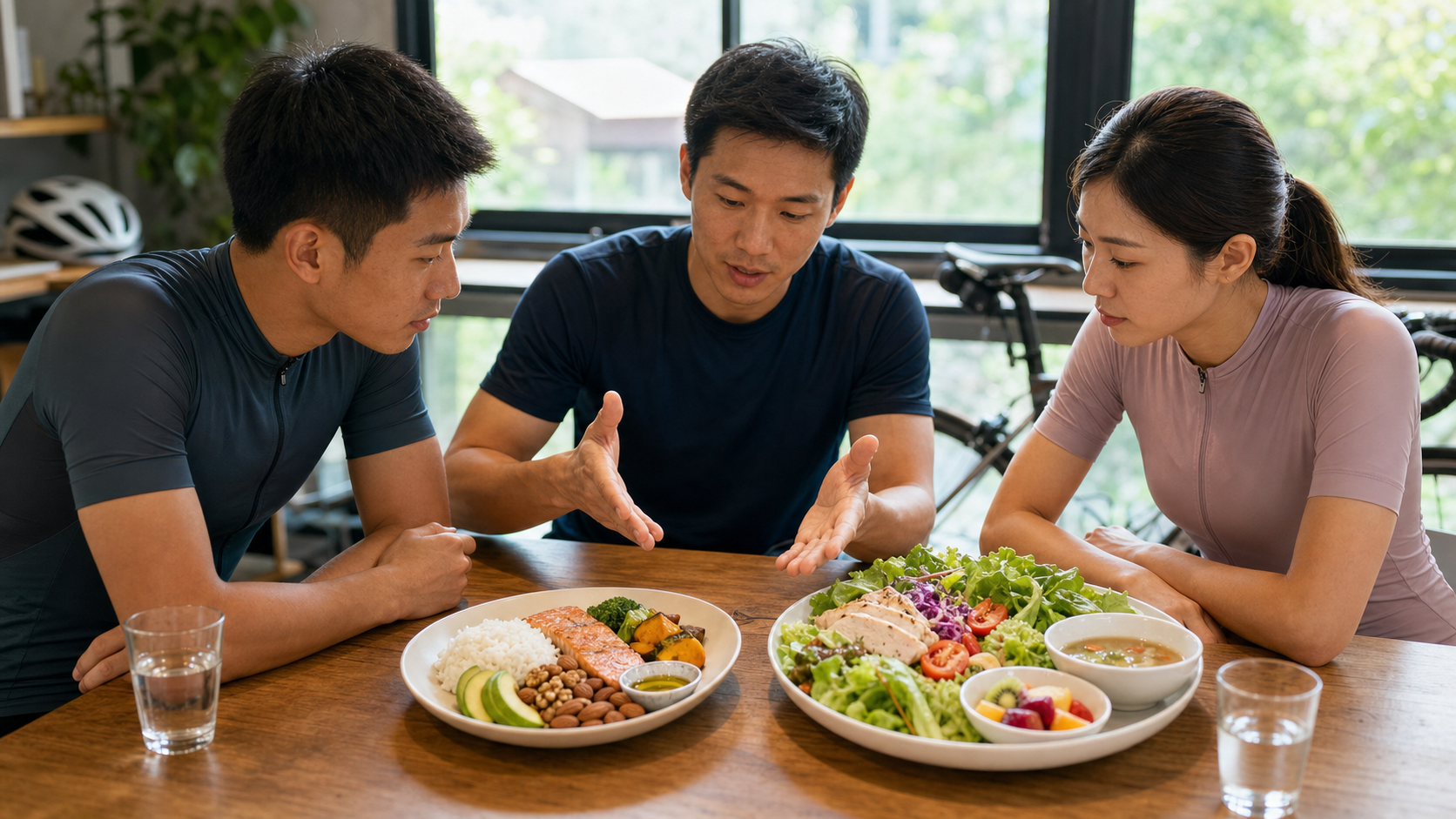
Opening: Two Athletes, the Same Calorie Goal, Yet Two Completely Opposite Problems
In my fifteen years of coaching, the two types of people I most often encounter in nutrition consultations sit before me with the same look of confusion on their faces.
The first is A-Zhe, one of my mountain biking students. He’s 178 cm tall and weighs only 62 kg. During his preparation period, I set his daily calorie target at 3,400 kcal. He smiled wryly and said, “Coach, I really can’t eat that much. In the morning, a bowl of sweet potato porridge with blanched greens, at noon a bento box that I can’t even finish half of, and by evening I have no appetite at all. My weight has been stuck at 62 kg for three months without budging.”
The second is Yi-Jun, a road cyclist in the citizen category. Before the season, she wanted to drop from 58 kg to 55 kg so she could carry three fewer kilograms on long climbs like Wuling. Her problem was the exact opposite: “Coach, I calculate my calories very precisely—1,600 kcal a day—but I’m hungry all the time. By 3 PM I start wanting to bite the desk, and then by evening I fall off the wagon.”
Many people think this is a “willpower” issue—A-Zhe needs to force himself to eat more, and Yi-Jun needs to endure more. But I tell them: these two problems are actually the same tool not being used properly, and that tool is called energy density. A-Zhe’s food energy density was too low, the volume too large, so his stomach filled up before he reached his calorie target; Yi-Jun’s food energy density was too high, so she used up her allowance with a tiny volume, her stomach was never filled, and her brain naturally kept signaling hunger.
Once they understood energy density and learned to deliberately adjust it, A-Zhe gained up to 66 kg over the next three months, and Yi-Jun successfully slimmed down to 55.5 kg without going hungry. This article is the complete write-up of what I explained to them back then.
What Is Energy Density? Let’s Define It Clearly First
Energy density is the number of calories contained in each gram of food, measured in kcal/g (kilocalories per gram). It’s a very simple concept, but its power is astonishing.
A food’s energy density is essentially determined by its composition. Based on the energy values of macronutrients:
| Component | Calories per gram | Effect on Energy Density |
|---|---|---|
| Water | 0 kcal/g | Significantly lowers (strongest diluter) |
| Dietary fiber | About 2 kcal/g (and partially not absorbed) | Lowers, increases satiety |
| Carbohydrates | 4 kcal/g | Moderate |
| Protein | 4 kcal/g | Moderate |
| Alcohol | 7 kcal/g | Relatively high (and no nutritional value) |
| Fat | 9 kcal/g | Highest (strongest concentrator) |
So a food’s energy density generally falls within the range of 0 to 9 kcal/g. The more water and fiber a food contains, and the less fat, the lower its energy density; conversely, the more fat and the less water (e.g., fried foods, dried foods, nuts, cookies), the higher its energy density.
Here’s a key physiological fact that lies at the core of this entire approach: People feel full because of the “volume and weight of food consumed,” not because of “how many calories they’ve consumed.” Research consistently shows that within a meal, the signals that stop you from eating come primarily from the physical stretching of the stomach and the weight of the food, not the calories themselves. This means—if you eat the same weight of food, the lower-energy-density option will give you fewer calories while providing the same feeling of fullness.
This is why low-energy-density diets are widely listed as one of the core strategies for weight management: you can eat “a larger portion with more satisfaction” while consuming fewer calories (see the British Nutrition Foundation and US CDC references at the end of this article).
An Intuitive Comparison: Same 200 Calories, How Much Difference in Volume?
This is my favorite example to shock students in class. Both are 200 kcal:
| Food | Amount needed to reach 200 kcal | Energy Density Concept |
|---|---|---|
| Peanuts (or mixed nuts) | About a small handful (30-35 g) | High (about 5.5-6 kcal/g) |
| White rice | About 130-150 g (a bit over half a bowl) | Medium (about 1.3-1.5 kcal/g) |
| Guava | About 500-550 g (a bit over one large fruit) | Low (about 0.4 kcal/g) |
| Cucumber | About 1,300 g or more (almost impossible to finish) | Extremely low (about 0.15 kcal/g) |
See that? With the same calories, a small handful of nuts is gone in three bites, and your stomach hasn’t been filled at all; switch to guava and you have to gnaw through a whole large fruit, and your stomach is already stuffed. This is the power of the energy density lever—it decouples “volume” from “calories,” and you get to choose which direction to adjust.
The Scientific Foundation: Why Energy Density Matters Especially for Athletes
When most people talk about energy density, they only think of weight loss. But for athletes, it’s a “two-way” lever, useful for weight gain, weight loss, and race-day fueling alike.
The Physiological Mechanism of Satiety
The body’s feeling of fullness comes from several levels: the degree of stretching sensed by mechanoreceptors in the stomach, satiety hormones released by the gut (such as GLP-1, PYY, etc.), and feedback from blood sugar and energy status. Among these, physical stomach filling is the most immediate and strongest short-term satiety signal. Water and fiber take up volume but contribute almost no calories, so low-energy-density foods can maximize this mechanical satiety signal “without adding calories.”
This also explains Yi-Jun’s predicament: her 1,600 kcal all came from high-energy-density foods (bread, sugary drinks, pan-fried meat), with a total weight of maybe only 700-800 g. Her stomach was never stretched open, satiety hormones weren’t fully triggered, and her brain kept sending out hunger signals.
Three Applications for Athletes
- Weight loss / fat loss phase: Lower overall energy density so athletes can feel full while in a calorie deficit, without compromising training quality.
- Weight gain / muscle gain phase: Deliberately increase energy density so athletes with limited appetites can pack more calories into the same volume.
- Race day and high training volume days: Before and during competition, you actually need “high energy density, low volume, easily digestible” foods to avoid gastrointestinal burden—at these times, large amounts of low-energy-density vegetables are actually a disadvantage.
The same concept needs to be adjusted in opposite directions depending on the training phase—this is the biggest difference between the athlete version and the general weight-loss version.
Don’t Confuse “Energy Density” with “Nutrient Density”
This is a concept I always clarify. Energy density refers to “how many kcal per gram,” while nutrient density refers to “how many vitamins, minerals, protein, and other beneficial nutrients per calorie.” They’re different, and they often even point in opposite directions.
- Potato chips: high energy density, low nutrient density (high calories, empty nutrition).
- Dark leafy greens: low energy density, high nutrient density (low calories, packed with nutrition).
- Nuts: high energy density, and also high nutrient density (good fats, rich in minerals).
So “high energy density” doesn’t equal “unhealthy,” and “low energy density” doesn’t equal “nutritious.” The ideal approach is: during weight loss, prioritize “low energy density + high nutrient density” foods (vegetables, fruits, lean protein); during weight gain, prioritize “high energy density + high nutrient density” foods (nuts, avocado, full-fat dairy, olive oil); in both cases, try to avoid “high energy density + low nutrient density” empty calories (sugary drinks, fried snacks, refined desserts). When you look at these two dimensions separately, your food choices become much more precise.
Practical Method One: Weight Loss / Fat Loss Phase—Adjust Energy Density Down
Let’s start with the needs of people like Yi-Jun. The goal is a calorie deficit, but with satiety, no loss of training quality, and no emotional meltdowns. The core strategy is “use low-energy-density foods to fill volume, and treat high-energy-density foods as precise allowances.”
Food Grading Table (by Energy Density)
I like to roughly divide foods into four levels so students can understand at a glance:
| Level | Energy Density Range | Representative Foods | Weight Loss Strategy |
|---|---|---|---|
| Extremely low (eat freely) | < 0.6 kcal/g | Leafy greens, large cucumber, daikon radish, tomato, mushrooms, seaweed, clear soup | Eat these first at every meal, until somewhat full |
| Low (eat generously) | 0.6-1.5 kcal/g | Guava, apple, sweet potato, potato, brown rice, tofu, boiled egg, chicken breast | Main staples and protein sources |
| Medium (watch portions) | 1.5-4 kcal/g | White toast, pasta, lean meat, cheese, most bento main dishes | Weigh and control portions |
| High (small garnish) | > 4 kcal/g | Nuts, oil, butter, cookies, potato chips, fried foods, sugary drinks | Use as seasoning and allowance, not as the main event |
A Realistic Weight Loss Daily Menu (about 1,600 kcal)
This is one of the days I actually planned for Yi-Jun. The key is pushing total food weight above 1.2 kg so she feels full all day:
| Meal | Content | Key Point |
|---|---|---|
| Breakfast | Oatmeal (40 g dry oats cooked into a large bowl) + 2 boiled eggs + half a guava | Oats absorb water and expand in volume; protein boosts satiety |
| Lunch | 150 g brown rice + 120 g blanched chicken breast + a large plate of blanched vegetables (with a little sauce) | Eat vegetables first, then rice and meat |
| Snack | 150 g unsweetened yogurt + a small handful of blueberries | Replaces the usual bread |
| Dinner | Oden: daikon radish, seaweed, konjac, tofu, egg + a small amount of fish cake, with clear broth | Available at any Taiwanese convenience store; large volume, low calories |
The key to this menu isn’t “eating some magical food,” but filling the stomach first at every meal with extremely low and low energy density foods, saving the limited calorie allowance for protein. Taiwan’s eating-out environment is actually very well suited to this approach: oden, blanched vegetables from buffet restaurants, unsweetened soy milk, and fruits like guava and tomato are all readily available low-energy-density weapons.
A Low-Energy-Density Strategy for Eating Out in Taiwan
- Buffet restaurants (自助餐): First pick two or three servings of blanched vegetables or braised cabbage and gourds. Halve the white rice and switch to brown rice if available. Choose steamed, braised, or roasted main dishes; avoid three-cup, sweet-and-sour, and fried preparations.
- Bento shops: Tell the owner “less rice, more vegetables”—most are happy to oblige. Swap fried pork chops for skinless braised chicken legs.
- Convenience stores: Oden (avoid high-fat items like tempura fish cakes and meatballs), tea eggs, unsweetened soy milk, salad (dressing on the side), sweet potatoes.
- Hot pot: This is a low-energy-density paradise—plenty of vegetable platters, mushrooms, tofu, and seafood. But satay sauce and processed dumplings are energy density traps. Make your own dipping sauce with scallions, ginger, garlic, soy sauce, and vinegar.
A “Smart Swaps” Comparison Table—Use It Directly
During weight loss, the most effective approach is often not “cutting things out” but “swapping”—replacing a high-density option with one that’s much lower in energy density but provides a similar level of satisfaction. I give this table to every weight-loss student:
| Original Food (High Density) | Swap To (Low Density) | Approximate Savings | Why It Works |
|---|---|---|---|
| One full-sugar hand-shaken drink (about 250 kcal) | Unsweetened tea or sparkling water | About 250 kcal | Liquid sugar provides almost zero satiety |
| One bag of potato chips (about 300 kcal) | A large box of cherry tomatoes or guava | About 200 kcal | More volume, lasts longer |
| One large bowl of white rice (about 280 kcal) | Half a bowl of white rice + a large plate of blanched vegetables | About 120 kcal | Vegetables make up for the lost volume |
| Breakfast shop milk tea + burger (about 600 kcal) | Unsweetened soy milk + vegetable egg crepe (low oil) | About 200-250 kcal | Higher protein, lower oil and sugar |
| Fried chicken cutlet (about 500 kcal) | Skinless braised chicken leg (about 200 kcal) | About 300 kcal | Removes the high-density fried coating |
I often remind students: Weight loss isn’t about punishing yourself; it’s about swapping the “calorie efficiency” of every bite. The same bite, the same chewing, the same satisfaction—but a much smaller total bill. That’s what’s sustainable. Yi-Jun relied on this table to replace her daily afternoon full-sugar bubble tea, and that single change alone saved nearly 1,750 kcal per week—the calorie equivalent of about half a kilogram of fat.
Yi-Jun’s Three-Month Tracking Data
Many people ask me, “Does this really work? Isn’t it slow?” So here are Yi-Jun’s tracking numbers (she agreed to share them; this is a pseudonym):
| Week | Body Weight | Subjective Hunger (10 = hungriest) | Training Status |
|---|---|---|---|
| Week 0 | 58.0 kg | Often 8-9 in the afternoon | Often distracted by hunger |
| Week 4 | 57.1 kg | Down to 5-6 | Stable |
| Week 8 | 56.2 kg | Mostly 3-4 | Climbing power maintained |
| Week 12 | 55.5 kg | Barely any deliberate restraint needed | Feels lighter |
The key isn’t just the weight loss—it’s that hunger dropped from 8-9 to 3-4. She didn’t get through it with stronger willpower; she switched tools, and after that, she didn’t have to endure as much. That’s the real value of the energy density strategy: making the right behavior less painful so you can sustain it long-term. As for the rate of weight loss, 0.5-0.7 kg per week is what I consider the safest range for athletes. Anything faster risks losing muscle along with fat and compromising training quality.
Practical Method Two: Weight Gain / Muscle Gain Phase—Adjust Energy Density Up
Now let’s switch to athletes like A-Zhe, the “I can’t gain weight no matter what I eat” type. Their stomach capacity and appetite are the ceiling. Forcing large amounts of low-energy-density food down their throats only makes them full faster and more miserable. The strategy needs to be completely reversed: use high-energy-density foods to pack more calories into the same volume, and reduce the proportion of bulky, calorie-free vegetables and soups at main meals.
Energy Density Boosting Techniques for the Weight Gain Phase
| Technique | Specific Approach | Approximate Calorie Increase |
|---|---|---|
| Add oils and nut butters | Stir peanut butter into oatmeal, drizzle olive oil on salad, mix a spoonful of fried shallot oil into rice | One spoonful of oil is about 100-120 kcal, with almost no change in volume |
| Replace low-fat with full-fat | Full-fat milk and yogurt instead of skim | About 60-80 kcal more per cup |
| Liquid calorie supplementation | Homemade high-calorie smoothie (milk + banana + peanut butter + oats + whey protein) | Easily 500-700 kcal per cup, tasty and easy to drink |
| Reduce “water loading” at meals | Move soup and large salads to between meals; don’t fill the stomach first | Reserve stomach capacity for high-calorie foods |
| Increase meal frequency | 5-6 meals a day, plus two high-density snacks | Spread out the stomach load |
A Realistic Weight Gain Daily Concept (Target about 3,400 kcal)
A-Zhe’s most effective trick was liquid calories. He couldn’t eat solid food, but he could drink smoothies. The supplemental smoothie I designed for him: 300 ml full-fat milk + one banana + one spoonful of peanut butter + 40 g instant oats + one serving of whey protein. One cup comes to about 600-700 kcal, and having one after training and one before bed adds up to 1,200-1,400 kcal—an amount he simply couldn’t fit into solid meals.
The secret to weight gain isn’t forcing yourself to eat until you’re sick; it’s increasing the energy density of every bite and making good use of liquids. A-Zhe’s later reflection was: “So I don’t actually have a small appetite—I was just filling my stomach with vegetables and soup before.”
A-Zhe’s Three-Month Weight Gain Data
Here are A-Zhe’s tracking numbers as well (pseudonym, shared with consent). His key changes were: no longer loading up on vegetables and soup before main meals, adding two smoothies a day, and switching breakfast from porridge (high water content, low density) to oatmeal with peanut butter (high density):
| Month | Body Weight | Approximate Daily Calories | Key Change |
|---|---|---|---|
| Month 0 | 62.0 kg | About 2,600 kcal (couldn’t reach target) | Water loading at meals, porridge as base |
| Month 1 | 63.5 kg | About 3,000 kcal | Added bedtime smoothie |
| Month 2 | 64.8 kg | About 3,300 kcal | Breakfast switched to high density, post-training smoothie |
| Month 3 | 66.0 kg | About 3,400 kcal (reached target and could eat it) | Consistent execution |
Four kilograms gained in three months, with no obvious spike in body fat, and climbing power (in watts) actually increased thanks to the added muscle mass. Weight gain isn’t getting fat; it’s giving the body enough raw materials to build muscle within what you can actually eat. For weight gain rate, I generally target 1-1.5 kg per month; anything faster tends to accumulate fat.
Race Day and High Training Volume Days: The Third Use of Energy Density
This is a section many people overlook, but it’s very important. For the pre-race meal, in-race fueling, and days of very high training volume, what you want is “high energy density, low volume, easily digestible, low fiber, low fat” foods.
The reason is simple: during exercise, blood flow is heavily diverted to the muscles, reducing blood supply to the gastrointestinal tract and impairing digestion. If you stuff yourself with a large plate of high-fiber vegetables before a race, or eat solid foods that require a lot of chewing and digestion during the race, you’re likely to experience gastrointestinal discomfort, bloating, or even diarrhea. At these times, low-energy-density foods are a disadvantage.
| Situation | Appropriate Energy Density Strategy | Specific Foods |
|---|---|---|
| 2-3 hours before race | Medium-high density, low fiber, easily digestible carbs | White toast with jam, white rice, bananas, bread |
| During race (long distance) | High density, liquid or semi-liquid | Energy gels, sports drinks, bananas, small bread rolls |
| 30-60 minutes after race | High density, easily absorbed carbs + protein | Chocolate milk, rice balls, convenience store onigiri |
| Regular training recovery days | Return to low density, control total calories | The weight-loss menu described earlier |
The same athlete can use completely opposite energy density strategies on race day versus recovery days—this is precisely the meaning of “deliberate management” rather than “one diet for everything.”
Common Mistakes and Corrections
Over years of coaching, I’ve seen people fall into the same traps with energy density over and over. Here’s a summary table:
| Common Mistake | Why It’s a Problem | Correction |
|---|---|---|
| Counting only calories during weight loss, ignoring volume | Calories are right but you’re always hungry, eventually leading to loss of control and binge eating | Increase the proportion of low-energy-density foods to fill the stomach |
| Treating “healthy high-density foods” as a free pass to eat unlimited amounts | Nuts, avocado, olive oil, and peanut butter are healthy, but at 4-9 kcal/g, they easily blow past your allowance during weight loss | Healthy ≠ low calorie; weigh them during weight loss too |
| Force-feeding vegetables and soup during weight gain | Fills stomach capacity with no calories, making it harder to eat more | Reserve main meals for high-density foods; move vegetables and soup to between meals |
| Eating a large plate of high-fiber vegetables before a race “to be healthy” | Reduced GI blood flow during exercise can cause bloating and diarrhea | Switch to low-fiber, high-density, easily digestible carbs before races |
| Using sugary drinks to “add calories” | Liquid sugar is high density but nutritionally empty and causes sharp blood sugar swings | For weight gain, use smoothies (with protein and fat), not hand-shaken drinks |
| Completely avoiding oil for fear of fat | Fat is an essential nutrient; over-restricting it affects hormones and absorption | Weight loss doesn’t mean zero oil; it means using oil as a precise allowance |
Special Note: People with Chronic Conditions Need Individualized Approaches
If you have diabetes, high blood pressure, heart disease, or kidney disease, adjustments to energy density must be more cautious and more individualized. For example, using large amounts of fruit to lower energy density is a good strategy for most people, but it may not be suitable for those who need to control blood sugar or blood potassium. Similarly, aggressively adding oils and nuts during weight gain should be reconsidered for those who need to manage blood lipids or have cardiovascular risk.
In these situations, please consult your physician and dietitian first. In Taiwan, nutrition consultation clinics under the National Health Insurance system (available at many hospitals) are a resource well worth using. Don’t just grab a menu from the internet and start executing it on your own.
Actionable Advice for Readers at Different Levels
If You’re a Beginner
Don’t calculate too precisely at first. Just do one thing: at every meal, ask yourself, “Which energy density level does this food roughly belong to?” For weight loss, lean toward the two lower-density levels; for weight gain, lean toward the higher ones. Simply building this intuition can change a lot. Start with one small change—like swapping your daily hand-shaken drink for unsweetened tea, or eating vegetables first at meals—and keep it up for two weeks to see how your body responds. Don’t try to overhaul your entire diet at the start; that usually doesn’t last a week. Pick the one change that’s easiest for you and has the most impact (for many Taiwanese people, that’s “giving up that daily sugary drink”), turn it into a habit first, then add the next one. Behavior change stacks up; it doesn’t happen all at once.
If You’re an Experienced Advanced Athlete
You can start doing phase-based energy density planning:
- Fat loss phase: Lean the overall diet toward lower energy density, increase protein to preserve muscle, and keep the total calorie deficit in a moderate range of about 300-500 kcal per day.
- Muscle gain / weight gain phase: Lean toward higher energy density, make good use of liquid calories, and keep the calorie surplus moderate (about 200-400 kcal per day) to avoid rapid fat accumulation.
- Race phase: Switch to a high-density, low-fiber, easily digestible fueling strategy.
Remember to weigh yourself and take body circumference measurements every two to three weeks, and record training performance. Adjust based on data feedback, not feelings. Here’s a practical self-check: if your training power drops noticeably during weight loss, or you’re constantly hungry and tired, your deficit is too deep or your protein is insufficient—reduce the deficit and add more low-energy-density foods and protein. If your body fat is rising too fast during weight gain and your belly is getting noticeably soft, your surplus is too large or you’re relying on too many empty calories—check whether you’re gaining weight from sugary drinks rather than quality high-density foods. Energy density is the steering wheel; body weight and training performance are the dashboard. You need to watch both together.
If You’re Preparing for a Specific Race
Incorporate energy density into your periodized nutrition plan: use higher energy density during high-volume weeks to ensure adequate energy, return to lower energy density during recovery weeks to control weight, and in the week before the race, specifically rehearse your race-day fueling foods (never try anything new before a race). Taiwan’s summers are hot and humid, and long-distance events cause heavy sweating. Liquid, high-density fueling during the race (sports drinks, energy gels) is especially important—don’t just focus on solid food.
Taiwan-Specific Context: Energy Density Considerations in a Hot, Humid Climate
Taiwan’s summers are hot and humid, which has several practical implications for energy density strategies that deserve their own section.
First, heat and humidity suppress appetite. Many athletes in the weight-gain phase find it especially hard to eat in summer. At this time, forcing large amounts of low-energy-density food is even more miserable. Summer weight gain should rely even more on high-energy-density, cool, easy-to-consume options—iced high-calorie smoothies, iced soy milk with oats, yogurt with nut butter—which are far easier to get down than a large plate of stir-fry.
Second, sweat loss is high, and hydration and electrolyte replacement can’t rely on plain water alone. During long rides or runs, losing more than a liter of sweat per hour is common. At these times, sports drinks—“liquids with energy density”—are actually necessary: they simultaneously replenish water, sugar, and electrolytes. On long summer rides in Taiwan, stop insisting on plain water only; you risk hypoglycemia and cramps.
Third, summer is actually easier for weight loss. Because appetite is naturally suppressed, and Taiwan’s summer fruits are abundant (watermelon, guava, cherry tomatoes are all extremely low energy density), it’s a smooth time to lower overall energy density and increase water intake. Watermelon is about 0.3 kcal/g—a large chilled plate is both refreshing and barely counts against your calorie allowance, making it a great friend for summer weight loss (though those with blood sugar concerns should still watch portions).
FAQ
Here are the questions students ask most often, answered all at once:
Q1: Won’t a low-energy-density diet lack nutrition?
No, as long as you’re getting enough protein. The low-energy-density strategy is “use vegetables and fruits to fill volume,” not “eat only vegetables and fruits.” Protein (chicken breast, tofu, eggs, fish) must be present at every meal—that way you get both satiety and muscle preservation.
Q2: If I keep adding oil and nuts during weight gain, will my blood lipids get worse?
For most healthy young athletes, moderate amounts of good fats (olive oil, nuts, avocado) are fine. But if you already have high blood lipids, a family history of cardiovascular disease, or abnormal health check results, discuss the sources and total amount of fat with your doctor. Don’t blindly add more.
Q3: Can I rely only on energy density without counting calories?
For beginners, yes. Many people naturally lose weight just by “eating vegetables first, cutting sugary drinks, and having soup before main meals” without precise calculations. But if you’re preparing for a race with precision or targeting a specific body weight, I recommend pairing it with basic calorie and protein tracking—data is more reliable.
Q4: What if I’m still hungry during weight loss?
Check three things first: Is your protein sufficient (at least a palm-sized portion per meal)? Are you eating low-density foods first to fill volume? Are you sleep-deprived (lack of sleep raises hunger hormones)? Most cases of “always hungry” come down to these three factors, not willpower.
Q5: Can I eat ultra-high-density foods like energy gels in daily life?
Energy gels are designed for “rapid sugar replenishment during exercise”—they’re high density, easily absorbed, and don’t take up much stomach space. But their nutrition is one-dimensional (almost pure sugar), so eating them when you’re not exercising is just consuming empty calories. Save them for training and racing; that’s where they work best.
A Summary: The Two-Way Operation of Energy Density
| Goal | Energy Density Direction | Core Actions | Local Execution in Taiwan |
|---|---|---|---|
| Weight loss / fat loss | Adjust down | Vegetables and fruits as the base, protein as the mainstay, oils as allowances | Oden, blanched vegetables from buffet restaurants, guava, hot pot |
| Weight gain / muscle gain | Adjust up | Add oils and nut butters, full-fat dairy, liquid calories, less water loading | Homemade smoothies, peanut butter toast, full-fat soy milk |
| Race fueling | Adjust up but low fiber and easily digestible | White rice, white toast, bananas, energy gels, onigiri | Convenience store rice balls, sports drinks, bread |
Conclusion: The “Volume” of Food Is the Most Underrated Tool in Your Hands
Let’s return to A-Zhe and Yi-Jun from the opening. Their problem was never willpower—it was that no one had taught them that the same calorie target can be packaged in completely different volumes. A-Zhe learned to increase energy density and use smoothies, gaining 4 kg in three months while maintaining training quality; Yi-Jun learned to fill her stomach with low-energy-density foods, losing weight without hunger and keeping her afternoons under control.
Energy density isn’t advanced nutrition science. It’s as simple as “how many kcal per gram.” But once you learn to deliberately adjust it up or down according to your training phase, you transform from “someone fighting their appetite” into “someone who harnesses their appetite.” This lever is worth the time to master.
Next time you sit down at the table, ask yourself one question: Is this food’s energy density pointing in the same direction as my current goal?
This article is educational content and cannot replace individualized diagnosis and treatment advice from a physician, physical therapist, or dietitian. If you have chronic conditions such as diabetes, high blood pressure, heart disease, or kidney disease, or if you are undergoing significant weight changes, please consult a professional medical and nutrition team for individualized assessment.
References
- Energy density|British Nutrition Foundation:https://www.nutrition.org.uk/creating-a-healthy-diet/energy-density/
- Low-Energy-Dense Foods and Weight Management(CDC資料,K-State轉載):https://www.k-state.edu/fns/assets/course_3/dont_lost_your_balance/appendices/APPENDIX 3- CDC Article Low Energy Dense Foods.pdf
- The relationship between dietary energy density and energy intake|PMC:https://pmc.ncbi.nlm.nih.gov/articles/PMC4182946/
- Weight loss: Feel full on fewer calories|Mayo Clinic:https://www.mayoclinic.org/healthy-lifestyle/weight-loss/in-depth/weight-loss/art-20044318
Related Reading
- Weight Loss and Body Composition Management: Scientific Fat Loss for Athletes—Energy Deficit, Muscle Preservation, and Timing
- Athlete Energy Requirements: Calculate How Much You Should Eat (Complete Practical Guide to TDEE and Energy Availability)
- The Science of Satiety for Athletes: Feeling Full Without Overeating
- The Truth About Exercise and Weight Management: Can Exercise Actually Help You Lose Weight? A Coach Clarifies the Division of Labor Between Exercise and Diet
CT暗黑廚房) 車友必備 宇宙無敵鮮蚵湯 幫助訓練恢復 天然食補 好市多 超肥鮮蚵 破PR
7 年前
西進武嶺 免費訓練分析服務 Intervals | 練不夠還是練過頭?你哪一種類型選手?AI模型告訴你! | 備戰神器 | 公路車 訓練 | CT Yeh
4 年前
靠單車減肥35公斤 心得分享與整理
7 年前
#公路車 #Vo2Max #最大攝氧量 測驗 體驗 | 心肺測試
6 年前
16/02/16 - 夜訪中社路 緩慢進步中
10 年前
2016/4/20 - 中社路 夜騎 半年甩肉14KG 後測
10 年前
單車AI教練!全新 ChatGPT4o 幫你分析訓練成果!排武嶺課表,分析騎車姿勢! 太神了! / 公路車 / CT Yeh / feat. 緯緯
2 年前
一日北高/長距離團騎 常見問題補充篇 / 組團或跟團的眉角 / 壯車友容易被瘦車友慢性拉爆 / 原來屁股痛可能是這個原因...? / 風場配速法 / 公路車 / CT Yeh
2 年前