Children's Sports and Healthy Development: A Coach's Guide to Benefits, Age-Appropriate Activities, and Avoiding Early Specialization
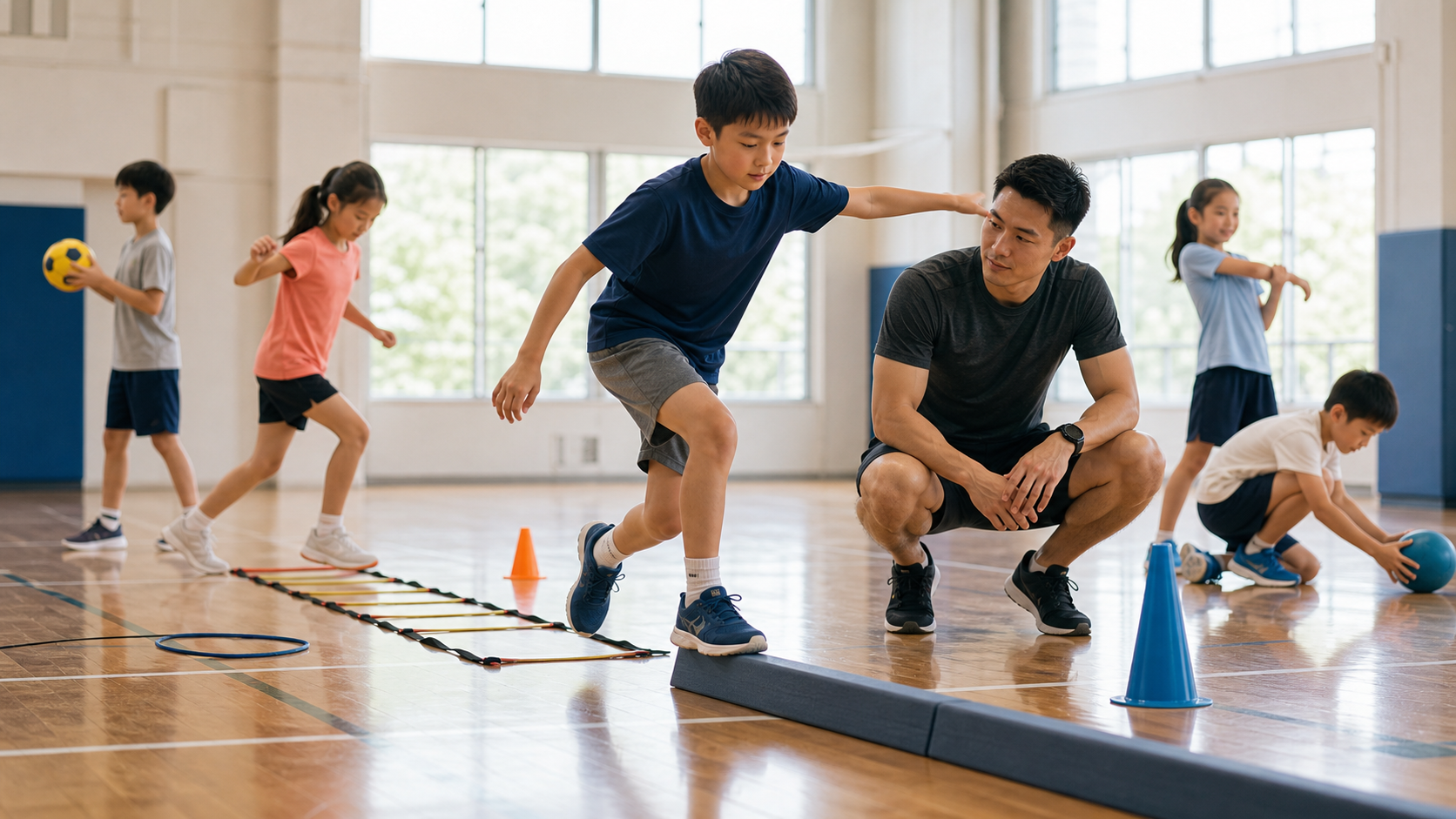
Starting with a Twelve-Year-Old’s Knee
I still remember that Wednesday evening when a mother brought her twelve-year-old, Xiao-Yu, to see me. Xiao-Yu had been “seriously” training in one sport since age eight—six days a week, two hours a day, plus weekend competitions. That year, he’d had pain in the front of his knee for nearly three months. He’d seen a clinic, gotten painkillers, and after two days of rest, the pain would ease and he’d go right back to training. His mother asked me, “Coach, is he just not working hard enough? Why else would it keep hurting?”
Hearing that, I felt terrible inside. Because in my fifteen years of coaching athletes at every level, this kind of pain is almost never about “not working hard enough”—it’s about “too much, too early, too narrow.” A body still developing was being pushed like an adult athlete. In this article, I want to lay out clearly the ideas I’ve accumulated over the years from the sidelines, from beside the clinic, and from countless anxious looks in parents’ eyes: What are the real benefits of children’s sports? What’s appropriate at what age? And why do I almost always urge parents not to let kids specialize in a single sport too early?
Let me give the conclusion first, then unpack it: for children, the primary goal of sports is not winning medals, but building a body and brain that will want to move—and be able to move—for a lifetime. Rankings are a byproduct; health and passion are the principal. Once the principal is spent, the byproduct won’t last either. When that order gets reversed, it’s often the beginning of injury and burnout—the most common and most heartbreaking regret I’ve seen on the sidelines all these years.
This article is educational content and will remind you when to seek medical care where appropriate, but it cannot replace individual diagnosis and treatment advice from a physician, physical therapist, or nutritionist. If your child has persistent pain, developmental concerns, or health issues, please seek professional evaluation.
Concepts and Scientific Foundations: Children Are Not Miniature Adults
I’ve said this line over a hundred times at parent seminars, because it’s the starting point for everything. Children’s bones, cardiorespiratory systems, nervous systems, and psychological maturity are fundamentally different from adults’, so training logic can’t simply be copied.
Growth Plates and Bones: A House Still Under Construction
At the ends of children’s and adolescents’ long bones are growth plates (epiphyseal plates)—cartilage tissue responsible for height gain and a relatively fragile structure. In adult bones, repetitive strain might cause tendonitis; but the same force applied to a child often shifts the injury site to the growth plate or the bone-tendon junction. That’s why many teenagers’ “knee pain” or “heel pain” is actually traction inflammation near the growth plate, not simply a muscle problem.
This leads to an important training principle: a child’s training load should be based on “developmental stage,” not just the number on a birth certificate, and certainly not a scaled-down adult program.
Cardiorespiratory and Metabolic Systems: Endurance Foundations Are Built in Childhood
A child’s maximal oxygen uptake (aerobic capacity) naturally improves during growth, and regular moderate-to-vigorous activity can build that foundation even better. The international consensus is: children and adolescents aged 5 to 17 should accumulate at least 60 minutes of moderate-to-vigorous physical activity per day on average, primarily aerobic, with muscle- and bone-strengthening activities included at least 3 days per week. (See references at the end.)
Two points here are easy to overlook:
- “60 minutes” is a weekly average, not a daily quota that must be met no matter what—so parents don’t need to panic just because it rained one day and the kids didn’t get out.
- “Bone-strengthening” activities refer to impact, jumping, and change-of-direction movements (jump rope, running and hopping, ball sports), which are especially important for building bone density in children—and childhood is the golden window for banking that bone capital.
Neuromuscular Development and Motor Learning: The Golden Window
From childhood to just before puberty is the stage when motor skills and coordination are learned most efficiently. Exposing kids to a wide variety of movement patterns—running, jumping, throwing, catching, balancing, changing direction, tumbling—builds a broad foundation for any future sport. This is also one of the scientific bases for my strong advocacy of “diversified sampling” over “single-sport specialization”: a wide foundation is what allows you to build tall.
Psychology and Emotions: Passion Can Be Burned Out
I’ve seen too many talented kids become completely burned out on sports—even disgusted by them—by age thirteen or fourteen. The reason is rarely “their body couldn’t handle it”; it’s usually being given adult-level competitive pressure too early, turning “play” into “work.” If children’s sports can preserve playfulness, exploration, and a sense of achievement, kids will internalize movement as a habit. This is the hardest asset to quantify, yet the most critical long-term one.
Chronological Age ≠ Biological Age: Same Age, Different Stages
Here’s another insight that took years of coaching to fully appreciate: among kids who are all 12, developmental levels can differ by two to three years. Some have already hit their growth spurt and shot up in height; others are still small. This has very practical training implications—
- Kids in a growth spurt have longer limbs, and their center of gravity and coordination temporarily “short-circuit.” Movements that were once smooth suddenly become clumsy. That’s normal—don’t push, don’t scold; give them time to recalibrate.
- Early-maturing kids often have a size advantage in age-group competition and can be mistaken for “talented,” leading to overtraining; late-maturing kids are often underestimated and written off, even though their potential window just opens later.
- That’s why I strongly dislike using a single age cutoff to determine training volume. What matters is the child’s current developmental and maturational signals—more than any reference chart.
This again echoes the core point: children’s training should follow developmental stage, not the number on an ID card.
The Concrete Benefits of Children’s Sports: More Than Just Physical
Breaking the benefits down makes it clearer why this investment is worth it.
| Dimension | Benefits of Regular Childhood Exercise | Practical Observations |
|---|---|---|
| Skeletal | Impact activities help accumulate bone density, banking a lifetime of bone capital | Kids with jumping and ball-sport experience usually have better body control after the adolescent growth spurt |
| Cardiorespiratory/Metabolic | Improves aerobic capacity; supports long-term healthy weight, blood sugar, and blood lipids | Regularly active kids naturally have less sedentary time |
| Motor Skills | Coordination, balance, and agility are learned most efficiently in childhood | Multi-sport kids pick up new activities faster and get injured less |
| Brain and Learning | Exercise is positively associated with focus, emotional regulation, and sleep quality | Kids who are active in the afternoon tend to fall asleep more easily and concentrate better in class the next day |
| Psychosocial | Teamwork, frustration tolerance, self-efficacy | Through sports, kids learn to lose, to wait, and to cover for teammates |
| Habit Formation | Positive childhood experiences are the strongest predictor of lifelong physical activity | Kids who were forced until they hated it often stop moving entirely as adults |
I often tell parents: if you can only remember one sentence, remember this—what you’re banking for your child isn’t trophies; it’s bone capital, brainpower, and a lifelong willingness to move.
Here I want to add one observation especially useful for Taiwanese families. Our kids face heavy academic pressure, long periods of sitting, and screens are nearly everywhere. In that environment, the value of exercise is actually amplified: it’s not just “something tested in PE class,” but a practical tool that compresses sedentary time, supports focus and emotional regulation, and improves sleep quality. I’ve seen plenty of kids who couldn’t sit still and were sluggish in the afternoon—after adding regular exercise, they slept better at night and concentrated more in class. These changes won’t show up on a report card’s PE column, but they genuinely make kids’ lives better. The payoff of sports for children has never been limited to the court or the track; it seeps into the quality of their everyday life.
Practical Approach: What to Do at Different Ages
This is the part parents most want to know. Below is the developmentally appropriate framework I actually use. Please note this is a general guideline—every child matures differently, so adjust flexibly.
Age-Based Activity Focus Comparison Table
| Age Stage | Primary Goal | Recommended Content | Things to Avoid |
|---|---|---|---|
| Preschool (approx. 3–6 years) | Play, exploration, fundamental movement | Free play, running and jumping in parks, chasing games, basic ball handling, water adaptation | Structured schedules, timing and scoring, repetitive training in a single sport |
| Early Childhood (approx. 7–9 years) | Diverse movement, fun | Multiple ball sports, gymnastics elements, swimming, cycling, jump rope—broad exposure over depth | Training only one sport all week, making rankings the primary goal |
| Late Childhood (approx. 10–12 years) | Skill refinement while maintaining variety | May focus on 1–2 preferred sports, but continue exposure to other activities | Year-round single-sport training, training hours exceeding the child’s age |
| Early Adolescence (approx. 13–15 years) | Gradual focus on a main sport | Begin specializing in one sport while retaining cross-training and off-season periods | Training year-round without breaks, ignoring growing pains and fatigue signals |
| Mid-to-Late Adolescence (approx. 15–16 and above) | Appropriate time for true specialization | Systematic sport-specific training, strength work, and periodization | Skipping foundational development, rigidly applying adult training programs |
The consensus in international sports medicine is roughly this: true specialization is better placed in mid-to-late adolescence (around age 15–16 and above), and young athletes should participate in a variety of sports as much as possible to support overall physical development and reduce injury risk. (See references at the end of this article)
Three Safety Lines for Training Volume
These are three principles I believe every parent should post on their refrigerator, drawn from integrated recommendations in international sports medicine (see references at the end):
- Weekly training hours should not exceed the child’s age in years. For example, a 12-year-old should not exceed roughly 12 hours per week of structured training in a single sport.
- Total weekly training volume should not exceed 16 hours. Research shows that the higher the training exposure, the higher the injury risk, with a marked increase beyond roughly 16 hours.
- Do not train the same sport for more than 8 months per year, leaving room for the body and passion to recover, and allowing other movement patterns to develop.
These three rules are not shackles I invented—they are guardrails meant to protect children. When a child’s weekly training hours exceed their age, the risk of overuse injury roughly doubles—this is the most powerful statement I use to talk down many “driven parents.”
Strength Training for Children: Yes, But Done Right
Many parents worry that “weight training will stunt growth or damage growth plates.” Based on current consensus, resistance training for children and adolescents is safe and beneficial when performed under qualified supervision, with proper technique, and appropriate loads—it improves movement control and reduces injury rates. The key is not “heavy,” but “correct.”
| Item | Recommendations for Children’s Strength Training |
|---|---|
| Starting Focus | Begin with bodyweight movements (squats, push-ups, planks, jump-landing control) |
| Loading Principle | Focus on performing multiple clean, controlled repetitions rather than chasing maximal heavy loads |
| Frequency | 2–3 times per week, on alternating days, with adequate recovery |
| Supervision | Qualified coaching is needed for proper technique, especially for landing and cutting/change-of-direction deceleration |
| Goal | Movement quality, joint stability, injury prevention—not adult-style maximal strength |
Sample Weekly Activity Plan: Example for a 10-Year-Old
Many parents still ask after hearing the principles: “So how should a week actually be arranged?” Here is a sample template, with the emphasis that it is a flexible reference, not a rigid schedule to copy exactly. The core philosophy is: variety, play-based, with recovery, and not over-packed.
| Day | Main Arrangement | Intensity & Duration | Notes |
|---|---|---|---|
| Monday | School PE + running and jumping at the park after school | Moderate intensity, accumulating about 60 minutes | Play-based, no timing |
| Tuesday | Preferred ball sport (e.g., basketball, badminton) | Moderate-to-high intensity, about 60 minutes | Skill + fun |
| Wednesday | Riverside cycling or swimming | Moderate intensity, about 45–60 minutes | Different movement pattern, low impact |
| Thursday | Foundational strength + movement control | Moderate intensity, about 30–40 minutes | Bodyweight focus, emphasizing movement quality |
| Friday | Free activity or another ball sport | Moderate intensity, about 60 minutes | Let the child choose |
| Saturday | Family activity day (mountain trails, cycling) | Moderate intensity, flexible duration | Family together, building positive connections |
| Sunday | Full rest or light walking/play | Low intensity | Recovery day, very important |
Note that this table does not include a single day of high-intensity grinding in the same sport, and it deliberately preserves one full recovery day. This is what childhood sports should look like: rich, joyful, and not overloaded.
Why Is Cycling Especially Suitable for Children?
Since this article sits in the context of cycling health, I want to specifically address the unique role of cycling in children’s sports—it is actually one of the options I most often recommend to parents as an entry point and cross-training activity.
- Low impact and growth-plate friendly: Cycling is a seated activity without repeated landing impacts, making it relatively gentle on developing knee and ankle joints. It works well as a “change of pace” cross-training option alongside running and jumping sports, distributing load away from a single area.
- Builds both aerobic base and lower-limb endurance: Regular riding steadily accumulates aerobic capacity while also training lower-limb muscular endurance—an excellent foundation for any future endurance sport.
- Naturally diverse and exploratory: Cycling lets children see different scenery and explore routes, which inherently contains an element of play, making it easier to sustain enthusiasm than repetitive drills in one spot. Taiwan’s riverside cycling path system is relatively safe and complete, making it an ideal family setting.
- Safety first is non-negotiable: Always wear a certified helmet, choose dedicated paths or closed areas with low traffic, and ensure the bike fits properly (feet can touch the ground steadily, posture is comfortable). Safety gear and environment are bottom lines that cannot be compromised.
I often advise families who “don’t know where to start”: start with a family ride along the riverside. It simultaneously satisfies exercise volume, variety, family bonding, and positive experiences—with a low barrier to entry and easy to maintain.
Recovery and Sleep: The Underrated Component of Training
After discussing so much about “how to train,” I need to dedicate a section to “how to recover,” because this is the area parents most often overlook, yet it is absolutely critical for growing children.
A child’s progress does not happen during training—it happens during adequate sleep and rest. Growth and repair rely heavily on sleep. Children who are chronically sleep-deprived not only see performance decline, but also face increased injury and illness risk, and their mood and learning suffer as well. In my practical observation, many children who “train hard but don’t improve and keep hurting” have problems that stem not from too little training, but from too little sleep, poor recovery, and over-packed schedules.
Several actionable principles:
- Sleep takes priority over extra training: If forced to choose between “one more hour of sleep” and “one more hour of training,” growing children should almost always choose the former.
- Schedule true rest days: At least one day per week of low intensity or complete rest—don’t fill the schedule to the brim.
- Watch for overtraining signals: Persistent fatigue, irritability, declining performance, poor sleep, and recurring minor injuries or illnesses are all signs the body is saying “too much.” When you see these signals, cut back volume and catch up on sleep first—don’t add more.
Treat recovery as part of training, and children will be able to train for the long haul and grow well.
Taiwan-Specific Context: Climate, Eating Out, and Facilities
Principles only become useful when applied to the realities of daily life in Taiwan.
Hydration and Heatstroke Prevention in Hot, Humid Weather
Taiwan’s summers are hot and humid. Children’s thermoregulation is less mature than adults’—they dissipate heat less efficiently and are less likely to proactively say “I’m close to heatstroke.” My practical approach:
- Avoid midday hours: Schedule outdoor training in the early morning or evening, avoiding the high-heat window from 10 a.m. to 4 p.m.
- Hydrate proactively rather than waiting for thirst: Remind children to take a few sips of water every 15–20 minutes during exercise. In hot weather or during longer sessions, drinks with a small amount of electrolytes can be added.
- Stop at warning signs: Unusually flushed or pale face, dizziness, nausea, hot skin without sweating, or becoming agitated or dazed—immediately move to a shaded area, cool down, and rehydrate. If the condition is severe (altered consciousness, extremely high body temperature), seek medical attention promptly. Do not push through.
Eating Out on Training Days for Kids
Taiwanese families often eat out, and this can actually be done well if you follow a few principles: 1–2 hours before exercise, give easily digestible carbs (rice balls, toast, bananas); after exercise, add some protein plus carbs (unsweetened soy milk with a rice ball, milk with a steamed bun) to aid recovery. The nutritional focus for children is “balanced, sufficient, and regular,” not counting grams, and adult-style supplements are unnecessary. Before giving any supplement to a child, please consult a physician or dietitian first.
Common Venues and the NHI Healthcare Environment
School playgrounds, community parks, riverside bike paths, and national sports centers in Taiwan are all excellent venues for diverse physical activity. Riverside areas and parks are great for cycling, running, jumping, and ball sports; sports centers offer safe swimming and beginner strength training. In terms of healthcare, the high accessibility of National Health Insurance (NHI) is our advantage—if a child experiences localized pain lasting more than two to three weeks, night pain that wakes them, obvious limping, or joint swelling, do not just rely on painkillers to mask it. Seek early evaluation from a pediatrician or an orthopedic/rehabilitation specialist. Many adolescent growth-plate-related issues have good outcomes if addressed early.
When Should You Take Your Child to the Doctor? A Warning Signs Reference Table
Parents often struggle with “Is this serious enough to see a doctor?” I’ve put together a practical decision-making table. This is a reference to help you decide whether to seek professional evaluation, not a self-diagnosis tool; when in doubt, it’s better to see a doctor first.
| Observed Condition | General Course of Action |
|---|---|
| Muscle soreness after exercise, relieved by the next day | Usually a normal training response; rest and hydration should suffice |
| Localized pain lasting more than two to three weeks | Recommend medical evaluation; don’t just rely on painkillers and keep training |
| Pain severe enough to wake at night, or pain at rest | Recommend seeking medical attention promptly; this “rest pain” needs attention |
| Obvious limping, joint swelling, or warmth | Recommend seeking medical evaluation promptly |
| A “pop” sound at the moment of injury, swelling, inability to bear weight | Stop activity immediately, apply ice, elevate, and seek medical attention promptly |
| Chest tightness, unusual breathlessness, fainting, or highly irregular heartbeat during exercise | Stop immediately and seek medical attention as soon as possible; do not take lightly |
Special reminder: If a child has heart disease, asthma, diabetes, or other chronic conditions, be sure to discuss an individualized activity plan and precautions with their primary physician before exercise. Do not simply apply general advice. Medication, intensity limits, and warning sign recognition in such cases all require professional individual assessment.
Common Mistakes and Corrections
This is the section I most wanted to write, because these mistakes are incredibly common and the cost is too high.
Mistake 1: Specializing in One Sport Too Early (Early Specialization)
This is the number one landmine. Research consistently shows that highly specialized adolescents have significantly higher rates of overuse injuries than children who participate in multiple sports; and about half of adolescent sports injuries are overuse-related.
- Correction: During childhood, “play many sports, play broadly,” and delay focusing on a primary sport until mid-to-late adolescence. Even if a child clearly favors one sport, maintain cross-training and an off-season.
Mistake 2: Scaling Down an Adult Training Plan for a Child
“My program works great; I’ll just cut it in half for my kid”—this is the classic mindset of treating a child as a miniature adult, ignoring growth plates and recovery differences.
- Correction: Prioritize age-appropriateness, emphasize movement quality and fun, and err on the side of conservative loads.
Mistake 3: Ignoring Pain and Treating “Toughing It Out” as a Virtue
Xiao Yu’s knee hurt for three months and he kept training—that’s this mistake. In growing children, persistent localized pain is almost always the body crying for help, not a matter of willpower.
- Correction: Teach children to distinguish between “fatigue” and “pain.” Muscle soreness is a normal training response; localized joint or bone pain, pain that worsens with movement, or night pain all require rest and evaluation.
Mistake 4: Training Year-Round with No Off-Season
Both the body and passion need cycles. Training year-round often results in injury and burnout.
- Correction: Schedule clear off-seasons and deload weeks, with at least 1–3 months of reduced load or a change of focus for the primary sport each year.
Mistake 5: Using Rankings as the Only Measure of Success
Defining a child by wins and losses is the fastest way to destroy intrinsic motivation.
- Correction: Focus on progress, effort, enjoyment, and relationships, letting a sense of achievement come from growth itself.
Common Mistakes and Corrections at a Glance
| Common Mistake | Potential Consequences | Coach’s Suggested Correction |
|---|---|---|
| Specializing too early | Overuse injuries, burnout | Diversify in childhood, delay focus |
| Scaling down adult plans | Inappropriate load, growth plate risk | Age-appropriate, emphasize movement quality |
| Training through pain | Worsening injury, chronicity | Distinguish fatigue from pain, rest and evaluate early |
| No off-season | Injury, mental burnout | Schedule off-seasons and deload weeks |
| Only valuing rankings | Collapse of intrinsic motivation | Measure progress and fun |
Actionable Advice for Different Readers
For Children Who Don’t Exercise Much and Their Parents (Get Moving First)
The goal is to make exercise fun and habitual first, don’t rush into structure.
- Start with “playing together”: accompany them on bike rides, chase games in the park, jump rope contests—build up toward roughly 60 minutes of activity per day over a week (a weekly average is fine).
- Reduce sedentary time: swap some screen time for outdoor time, take family walks after meals, or ride along the riverside.
- Build positive associations: let the child choose activities they enjoy, and prioritize successful experiences over technical demands.
For Children Who Already Exercise Regularly and Want to Improve (Train Smart)
- Hold the three safety lines: weekly hours should not exceed age, total volume should not exceed 16 hours per week, and a single sport should not exceed 8 months per year.
- Keep at least one cross-training activity to maintain movement diversity.
- Add 2–3 sessions per week of foundational strength focused on movement quality, with emphasis on shock absorption and control during landings and changes of direction.
- Track sleep and fatigue: poor sleep, mood changes, or declining performance in a child are often early signals of excessive load.
For Competitive Adolescents and Coaches (Build a Thick Foundation Before Pushing Hard)
- Delay true specialization until mid-to-late adolescence; before that, sample as many activities as possible.
- Use periodized planning: clear preparation, competition, and off-seasons—don’t keep children at full load year-round.
- Treat injury prevention as part of training, not something to fix after an injury occurs.
- Always remember: you are developing an athlete who can last, not a prodigy used up by age thirteen.
Case Studies: Two Children, Two Paths
To make the principles above more tangible, I’d like to share two contrasting cases (details have been adjusted to protect privacy, but they reflect typical situations I’ve genuinely seen).
Case A: The “Little Star” Who Was Early-Maturing and Overtrained
A-Zhe was taller and stronger than his classmates in late elementary school, with an advantage in speed and power on the court. He was quickly labeled “talented.” Coaches and parents naturally ramped things up—training six days a week, year-round, traveling to other cities for competitions on weekends. In seventh grade, his heel started hurting, then his knee. His performance plateaued, and his mood became irritable.
When I later worked with him, the first thing I did wasn’t “more training” but hitting the brakes: first, medical treatment for the traction inflammation near the growth plate, then significantly reducing the frequency of his single-sport training, adding swimming and cycling as cross-training, and strictly scheduling an off-season. The hardest part wasn’t physical—it was convincing the adults—“Rest isn’t regression; it’s what allows him to keep playing.” Six months later, his injuries healed, and more importantly, he rediscovered the joy of playing. A-Zhe’s story is a classic example of the most dangerous path: “early maturation misjudged plus overuse.”
Case B: The Late-Maturing Child Who Was Well Protected (“Slow Bloomer”)
Another child, Xiao En, was the opposite—smaller than peers, often at a disadvantage in competitions, and at one point written off as “probably not going to develop much.” But his parents did several things right: they didn’t push him to grind one sport just because he lost; instead, they let him play broadly—swimming, cycling, track and field, and ball sports. His weekly training hours stayed below his age, and he had complete off-seasons.
By high school, Xiao En’s developmental window opened and he shot up in height. Because he had built a broad movement foundation in childhood, he actually surged ahead—picking up his specialized sport quickly with few injuries. Xiao En has repeatedly confirmed one thing for me: the focus of childhood is never “winning now,” but “nurturing the foundation and passion so that when the season comes, it blooms naturally.”
Seeing these two children side by side, you’ll understand better why I’m so wary of “too early, too narrow, too overloaded.”
Parent FAQ
Q1: If a child is very talented, wouldn’t specializing early make it easier to achieve results?
In the short term, rankings may improve, but early specialization is associated with a higher risk of overuse injuries and burnout, and the connection between childhood rankings and adult achievement is actually far weaker than most people think. Diversified sampling and delaying specialization are more likely to lead to long-term success. Don’t trade away the possibilities of adolescence for a burst of childhood success.
Q2: Will weight training stunt a child’s growth?
Provided there is qualified supervision, correct form, and reasonable loads, resistance training for children and adolescents is considered safe and beneficial. The key is movement quality, not heavy weights. What actually harms a developing body is poor technique, excessive loads, or year-round overuse. If in doubt, consult a professional for assessment.
Q3: How much exercise per week is actually enough?
According to international consensus, children aged 5–17 should average at least 60 minutes of moderate-to-vigorous activity per day, averaged over the week, and engage in muscle- and bone-strengthening activities at least 3 days per week. You don’t need to hit the target every single day—the key is regularity, variety, and enjoyment.
Q4: My child says something hurts, but he can still run and jump. Do I need to take it seriously?
Yes, you do. Localized pain in a growing child—especially if persistent or occurring at night—is often an early sign of overuse. Have him rest and observe first. If it lasts more than two to three weeks, or if there is nighttime pain, swelling, or limping, seek medical evaluation. Treating “toughing it out” as a virtue is the one thing I’d most urge you not to do.
Q5: It’s too hot in summer—should we just skip outdoor exercise?
There’s no need to stop altogether; just plan smartly: avoid the midday heat, hydrate proactively, and watch for warning signs of heat illness. Move outdoor sessions to early morning or evening, or switch to swimming or indoor sports centers. Moving is better than not moving, and moving safely is even better.
Q6: My child just doesn’t like to exercise and only wants to look at screens. What should I do?
Don’t rush into “training”—first create positive exercise experiences: find activities he’s interested in, play together as a family, and put fun and success ahead of technical demands. A positive childhood attitude toward sports is the strongest predictor of whether someone stays active in adulthood. A dislike forced into a child is often harder to reverse than inactivity itself.
A Quick Self-Check for Parents
If you have a clear answer to the questions below, your child’s athletic path is probably on a healthy track:
- Has your child been exposed to more than one sport this year?
- Does his weekly structured training hours exceed his age?
- Has he had a clear off-season or deload period this year?
- When he says something hurts, do I listen to him first, or tell him to tough it out?
- Does he enjoy sports, or is he afraid of them?
The last question matters most. A ten-year-old who loves to move has a far better chance of long-term health than a ten-year-old who wins championships but hates training—because passion will carry him through the years, while a forced dislike often comes to a complete stop in adulthood.
Conclusion: Put Time on Your Child’s Side
Back to Xiao-Yu. He stopped the high-frequency single-sport training, first addressed the pain and rebuilt his movement patterns, and at the same time started cycling, swimming, and playing ball—broadening his foundation again. Six months later, his knee pain was gone, and more importantly—he found exercise fun again. He didn’t become a prodigy athlete, but he became a healthy, active kid again, and that’s exactly what I want to protect for every child.
When it comes to children’s sports, there’s no rushing it. Age-appropriate development, avoiding premature specialization, keeping training volume within safe limits, and listening to your child’s body and passion—these things may look slow, but they are actually the fastest and most reliable path. Put time on your child’s side, and both health and passion will stay.
If you’re a parent anxious that “other people’s kids are already ahead,” I want to offer you some reassurance: childhood is not a sprint that needs an early finish line, but a long road that lays the foundation for a lifetime. Every bit of health you protect for your child now, every joyful exercise experience, and every developmental window well guarded will repay him in more lasting ways in the future. A little less obsession with rankings and a little more appreciation for the process—your child will be healthier, happier, and far more likely to go the distance. That is what is most precious about children’s sports.
This article is for educational purposes and cannot replace individual diagnosis and treatment advice from a physician, physical therapist, or nutritionist. All age and training volume principles mentioned are general references. Children vary greatly in maturity, health status, and pre-existing conditions (such as heart disease, asthma, diabetes, etc.). Before starting or adjusting an exercise program, please seek professional individualized assessment and guidance; if your child has persistent pain or health concerns, seek medical attention promptly.
References
- WHO Guidelines on Physical Activity and Sedentary Behaviour (World Health Organization physical activity guidelines, including the recommendation of an average of 60 minutes of moderate-to-vigorous activity per day for ages 5–17): https://www.ncbi.nlm.nih.gov/books/NBK566046/
- World Health Organization 2020 guidelines on physical activity and sedentary behaviour (Summary of the 2020 WHO guidelines): https://pmc.ncbi.nlm.nih.gov/articles/PMC7719906/
- Sports Specialization in Young Athletes: Evidence-Based Recommendations (Evidence-based recommendations on youth sport specialization, including training volume and timing of specialization): https://pmc.ncbi.nlm.nih.gov/articles/PMC3658407/
- Health Consequences of Youth Sport Specialization (Health impacts of youth sport specialization and overuse injuries): https://pmc.ncbi.nlm.nih.gov/articles/PMC6805065/
Related Reading
- Youth Sports and Health: A Coach’s Complete Practical Guide from Physical and Mental Benefits, Safety, to Motivation
- Multi-Sport Participation in Youth: The Long-Term Benefits of Early Specialization vs. Diversified Development
- Multi-Sport Development in Youth: Why Early Specialization Should Be Avoided
- The Risks of Early Specialization: Why Focusing on a Single Sport Too Early May Shorten an Athletic Career
滑雪新手們慘摔學習全紀錄(請開字幕),滑雪好好玩 | Snowboard + Ski | 岩原 スキー場 | 滑雪APP使用 | GoPro Max
6 年前
一日北高常見問題大集合 | 攻略 | 路線 | 訓練 | 補給 | 自行車 單車 | 一日雙城 | 雙塔 | TWB北高360 | 屁股痛
6 年前
一日北高/長距離團騎 常見問題補充篇 / 組團或跟團的眉角 / 壯車友容易被瘦車友慢性拉爆 / 原來屁股痛可能是這個原因...? / 風場配速法 / 公路車 / CT Yeh
2 年前
靠單車減肥35公斤 心得分享與整理
7 年前
#PUSHBIKE 原來這麼好玩! 小朋友 滑步車 初體驗 超可愛
6 年前
西進武嶺 免費訓練分析服務 Intervals | 練不夠還是練過頭?你哪一種類型選手?AI模型告訴你! | 備戰神器 | 公路車 訓練 | CT Yeh
4 年前
CT 喇低賽) 武嶺牽車 才是王道 西進牽車四小時內秘訣 攝手位置 如何判斷 防抽筋小秘訣
7 年前
CT趣訪 西進武嶺 2小時組 EP2 全村的希望 蔣緯緯! 訓練菜單&技巧公開 |公路車 |CT Yeh
4 年前