When Exercise Becomes a Prison: On the Road to Eating Disorder Recovery, Is Exercise the Cure or the Poison?
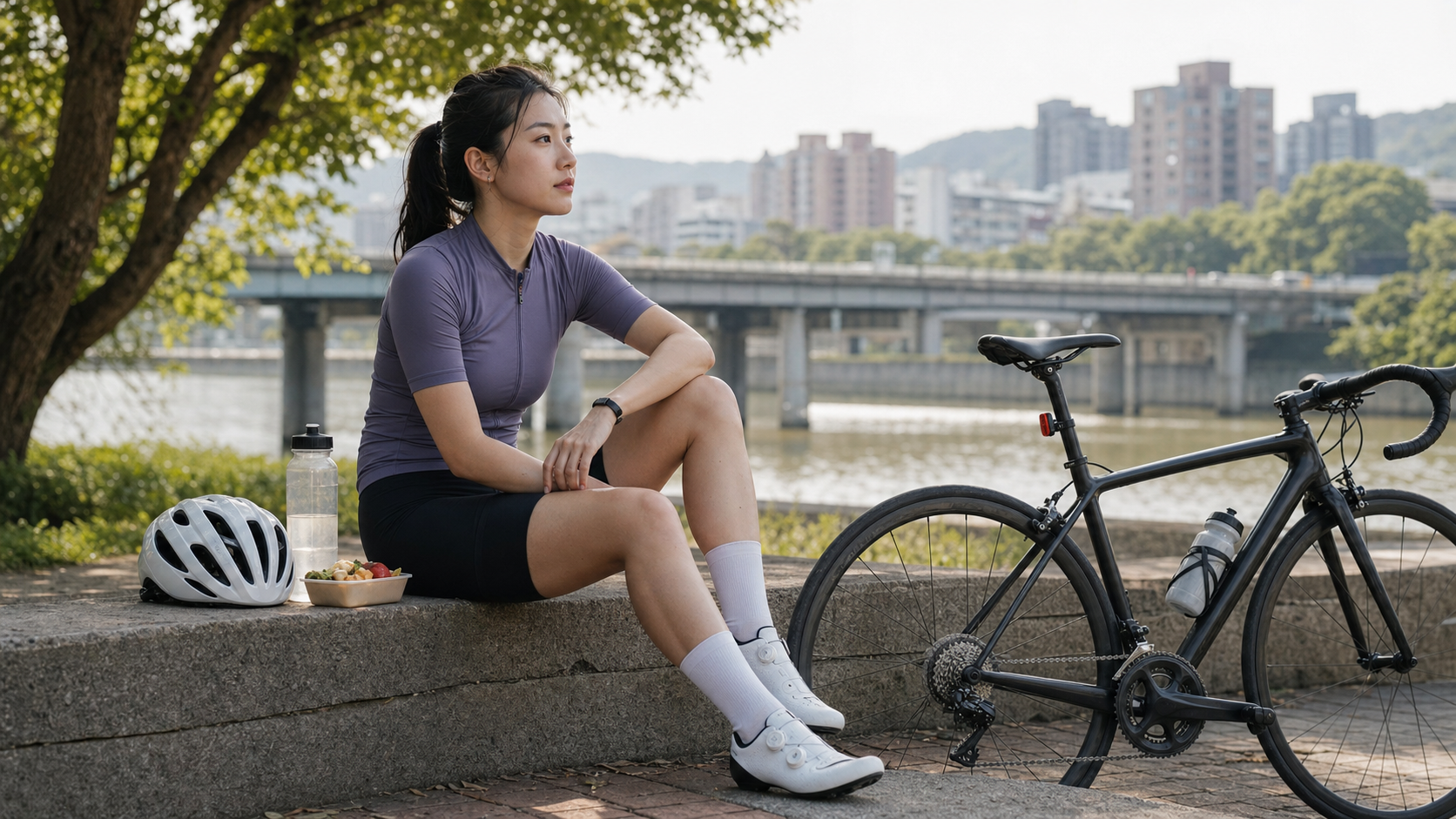
Opening: The Woman Who Rode a Hundred Kilometers Every Day
I’ve worked with athletes and everyday exercisers for fifteen years and met all kinds of people. But there’s one type of client I will never forget.
A few years ago, a woman in her twenties came to me, saying she wanted to “improve her climbing.” She told me she rode every day, rain or shine, seven days a week, often logging over a hundred kilometers on a single day. On the surface, she was any coach’s dream client—disciplined, hardworking, never absent. But I quickly noticed something was off: her weight was clearly too low, her face was pale, and during our conversations she repeatedly mentioned that she “hadn’t yet burned off the calories from breakfast.” She carried a cycling computer with her everywhere, not to check her power output, but to confirm whether she had “hit the target”—and that target wasn’t about getting stronger, it was about atonement.
She wasn’t training; she was serving a sentence. For her, exercise wasn’t an ability—it was a prison.
That experience completely changed how I view “exercise.” In the world of eating disorders (ED), exercise can be both a helping hand on the road to recovery and the last straw that pushes someone off a cliff. In this article, I want to talk about this honestly—without glorifying exercise, and without demonizing it, but helping you see clearly: under what circumstances is exercise a cure, and under what circumstances is it poison?
If you’re on the road to recovery, or if someone close to you is, please read this patiently. It may be an important perspective you need.
To be clear upfront: I am a coach and sports science consultant, not a physician, psychologist, or dietitian. Eating disorders are illnesses that require intervention from a professional medical team. This article can give you concepts and direction, but it cannot replace individual diagnosis and treatment.
Conceptual Foundation: Why Is Exercise So Dangerous in Eating Disorders?
The Entangled Relationship Between Exercise and Eating Disorders
Research consistently shows that compulsive exercise, also known as driven exercise, is very common among people with eating disorders, especially anorexia nervosa and bulimia nervosa. It is often one of the earliest symptoms to appear and the last to be let go of.
The key lies in “motivation.” In healthy exercise, the motivation is addition—getting stronger, faster, more energetic, enjoying the process. In disordered exercise, the motivation is cancellation and control—canceling out what was eaten, controlling weight, calming anxiety. Two people can both ride sixty kilometers, yet their inner worlds may be poles apart.
What makes it trickier is that compulsive exercise often forms a self-reinforcing cycle: anxiety rises → exercise temporarily suppresses the anxiety → brief relief follows → the brain learns “only exercise makes me feel better” → dependence on exercise deepens → once you don’t exercise, anxiety rebounds even harder. This psychological mechanism is very similar to many addictive behaviors. That’s why you’ll see that the more you tell someone with compulsive exercise to “move less,” the more anxious and resistant they become—because you’re essentially taking away the only emotional regulation tool they have. This is also why relying on willpower alone rarely works; professional help is needed to dismantle this cycle together and build other healthy ways of regulating emotions.
Compulsive exercise typically has several characteristics:
- Rigidity: It feels mandatory; time, routes, and mileage follow strict rules, and any disruption causes extreme anxiety
- Compensatory: Exercise is used as a tool of atonement—“if I eat, I must pay it back”
- Overrides everything: Illness, injury, bad weather, or social invitations cannot stop it
- Brings no pleasure: The feeling afterward isn’t satisfaction, but the next round of anxiety after brief relief
- Driven by guilt: Not exercising triggers intense guilt and a sense of losing control
To help you distinguish more clearly, I’ve put “healthy exercise” and “disordered exercise” side by side for comparison. In the same ride, the difference often isn’t in the mileage, but in these internal qualities:
| Aspect | Healthy Exercise | Disordered Exercise |
|---|---|---|
| Motivation | To get stronger, for joy, for connection | To cancel out food, control weight, calm anxiety |
| Flexibility | Can adjust for weather, fatigue, life | Rigid, mandatory, cannot be changed |
| Rest | Can rest without guilt, sees rest as part of training | Rest brings anxiety and guilt |
| Relationship with food | Refuels properly after exercise without guilt | Exercise is used to “earn” permission to eat |
| Illness and injury | Stops to let the body recover | Pushes through illness and injury |
| Feeling after completion | Satisfaction, relaxation, a sense of accomplishment | Brief relief followed by another round of anxiety |
| Social aspect | Often an activity that connects people | Often solitary and secretive |
If you find yourself mostly in the right column, this isn’t meant to make you feel ashamed, but to serve as a gentle reminder: your relationship with exercise may need some care.
Low Energy Availability (LEA) and RED-S: The Body Is Quietly Breaking Down
This is the most important scientific concept in this entire article, so please make sure you understand it.
Energy Availability (EA) refers to: after subtracting the energy expended through exercise from the energy you consume, how much energy is left to support the body’s basic functions (heartbeat, repair, hormones, immunity, bone metabolism, etc.). It’s calculated by taking “calories consumed minus exercise expenditure” and dividing it by “fat-free mass (FFM).”
According to international research on female athletes, when energy availability drops below approximately 30 kcal per kilogram of fat-free mass, it enters the danger zone of Low Energy Availability (LEA); the threshold for males is less clearly defined but also exists. (Sources are listed in the references at the end of the article.)
When LEA persists over time, it develops into RED-S (Relative Energy Deficiency in Sport). This concept was introduced by the International Olympic Committee (IOC) in 2014, replacing the older “Female Athlete Triad” which only targeted women. The impact of RED-S is systemic—it’s not just about menstruation or bone density:
| Affected System | Possible Manifestations |
|---|---|
| Endocrine / Reproductive | Menstrual irregularities or amenorrhea in women; decreased sex hormones and libido in men |
| Skeletal | Decreased bone mineral density, increased risk of stress fractures |
| Cardiovascular | Bradycardia, low blood pressure, orthostatic hypotension, heart rhythm issues |
| Gastrointestinal | Slowed digestion, bloating, constipation |
| Immune | Frequent colds, slower wound healing |
| Metabolic | Lowered basal metabolic rate, impaired temperature regulation (always feeling cold) |
| Psychological and Performance | Low mood, poor concentration, endurance and strength declining rather than improving |
Here’s a cruel paradox: many people think “the harder you train and the less you eat, the stronger you’ll get,” but when the body is energy-deficient, it activates energy-saving mode—performance doesn’t rise, it falls, all while silently eroding your bones, hormones, and heart. What you see is “more effort”; what the body experiences is “chronic starvation.”
A Simple Energy Availability Formula (To Help You Understand the Concept)
Many people find 30 kcal/kg FFM abstract, so I’ll use a hypothetical illustrative example to make it concrete. Please note this is only a conceptual demonstration; actual assessment should be left to a dietitian, and the numbers are only rough ranges.
Assume a rider with a fat-free mass of about 45 kg burns roughly 600 kcal on a day of riding, while consuming only about 1,500 kcal for the entire day. The energy available for basic bodily functions would then be:
(1,500 − 600) ÷ 45 ≈ about 20 kcal per kg of fat-free mass
This figure is clearly below the reference threshold of about 30 kcal/kg FFM, meaning her body is chronically in a state of “insufficient energy.” In contrast, if she increases her intake to about 2,000 kcal with the same exercise load:
(2,000 − 600) ÷ 45 ≈ about 31 kcal per kg of fat-free mass
That brings her back into a relatively safe range. You’ll notice the key often isn’t “move less,” but “eat enough.” This is also why, in the context of recovery, we often address “eating” first before discussing “moving.”
Practical Approach: How Should Exercise Be Handled on the Road to Recovery?
Step 1: First Ask, “Can You Actually Move Right Now?”
During the acute phase of an eating disorder, the answer is often to completely stop structured exercise first. This sounds counterintuitive, but when someone’s medical values are unstable, their weight is too low, and they are still using exercise to offset food intake, any exercise is like pouring water into a hole.
Internationally, there is a set of guidelines widely adopted in clinical practice called the SEES (Safe Exercise at Every Stage) guidelines, developed jointly by experts in eating disorders, sports nutrition, and psychology to help clinicians determine what patients can do at different stages of treatment. The core principle is simple: the resumption of exercise must follow medical and psychological stability, not the patient’s wishes.
Below is a checklist of “prerequisites for resuming exercise,” compiled from integrated clinical principles. Please note these are general principles; the actual decision must always be made by your medical team:
| Aspect | General Conditions for Resuming Exercise |
|---|---|
| Medical stability | Vital signs (heart rate, blood pressure, temperature) are stable, blood test values are within safe range |
| Nutrition | Can regularly complete meals and snacks, weight is steadily increasing toward the goal |
| Behavior | No compensatory behaviors of exercising to lose weight or change body shape |
| Psychological | Rigid rules around exercise have loosened, able to accept flexibility and rest days |
| Team consensus | Physician, psychologist, dietitian, and coach have a consistent plan and red lines |
Step 2: A Phased, Gradual Return-to-Exercise Schedule
Once the medical team assesses that reintroducing activity is appropriate, the direction is always “quality before quantity”—first build a healthy motivation and relationship, then talk about intensity and mileage.
The table below is an example of a phased return framework that I use with clients in recovery, discussed with the medical team. Please understand: this is an educational framework illustration, not a prescription for you to copy and follow on your own. Progressing through each stage must be evaluated and approved by professionals.
| Stage | Focus | Activity Examples | Observation Points for Advancing to the Next Stage |
|---|---|---|---|
| Stage 0: Complete Rest | Medical and nutritional priority | Lifestyle walking, stretching, breathing exercises | Medical stability, regular eating |
| Stage 1: Gentle Movement | Reconnect with the “joy of moving” | 10–20 minutes of walking daily, light yoga | No compensatory behaviors, able to accept rest days |
| Stage 2: Low-Intensity Aerobic | Build flexibility, don’t look at numbers | Easy 20–30 minute flat rides, brisk walking | Emotional stability, eating unaffected by exercise |
| Stage 3: Structured but Conservative | Small amounts, training with rest days | 3 times per week, no more than 45 minutes each | Weight and values remain stable, good psychological flexibility |
| Stage 4: Gradual Return | Progressively approach normal training | Increase volume according to individualized plan | Overall stability, healthy exercise motivation |
A few ironclad rules that apply across all stages:
- Eat before you move, and eat after you move: Exercise must never be done in a “fasted” state, and refueling after exercise is mandatory. Exercise is not a deduction item; it’s a behavior that needs to be fueled.
- Remove the numbers: In early recovery, I strongly recommend putting away the bike computer and turning off mileage and calorie-tracking apps. For people easily controlled by numbers, these tools directly feed obsessive thinking.
- Set clear rest days, and actually rest: Rest days are not punishment; they are part of training. Being able to get through a rest day without anxiety is itself an important marker of recovery.
- Choose “play” over “grind”: Choose activities that feel like play, connection, and exploration—like a slow ride along the riverside with friends or a walk around the lake—rather than solitary, consumption-driven training.
Step 3: Shift Attention from “Expenditure” to “Capability”
This is where I think coaches can help the most. Eating disorders narrow the meaning of exercise down to “how many calories burned.” A major part of recovery is redefining the meaning of exercise.
I deliberately guide clients to pay attention to these indicators instead of mileage and calories:
- After today’s ride, do you feel better or more anxious?
- Did you notice the wind, the trees, the light along the riverside?
- Do your legs feel a bit stronger than last week?
- Can you chat and laugh with your companions halfway up the climb?
When someone can start answering “I had a great ride today” instead of “I burned 800 kcal today,” recovery has truly taken a big step forward.
Step 4: Turn “Eat Enough for Exercise” into Concrete Fueling Habits
Many people in recovery don’t struggle with “knowing they should eat,” but with “knowing they should eat, yet being even more afraid to eat once they exercise.” In this case, turning fueling into a clear, no-hesitation routine is very helpful. The table below is a general fueling principle illustration that I often remind clients of together with dietitians. Portions should always follow the dietitian’s individualized recommendations; I’m only providing concepts here, not precise calculations.
| Time Point | General Fueling Principle | Purpose |
|---|---|---|
| Before exercise (about 1–2 hours) | A meal or snack based on easily digestible carbohydrates | Provide fuel, avoid exercising on an empty stomach |
| During exercise (over about 60–90 minutes) | Moderate carbohydrate and fluid intake | Maintain blood sugar and performance, avoid excessive depletion |
| After exercise (within about 30–60 minutes) | A meal or snack with carbohydrates and protein | Replenish energy, support recovery |
| Throughout the day | A regular rhythm of three meals plus snacks | Stabilize energy supply, avoid compensatory restriction |
The point here isn’t “how precise your eating is,” but rather building an automatic link where “exercise is always accompanied by fueling,” replacing the pathological logic of “I moved, so I should eat less” with the healthy logic of “I moved, so I need to eat well.”
Step 5: Set Clear “Pause and Step Back” Signals
Recovery is not a straight line; there will be ups and downs, and that’s normal. Rather than waiting until things fall apart, it’s better to agree with your medical team in advance on “what signs mean we hit the brakes.” Here are common pause signals:
| Warning Category | Specific Manifestations | Recommended Action |
|---|---|---|
| Dietary regression | Starting to reduce food intake or skip meals due to exercise | Pause exercise, report to the team |
| Rigidity returning | Exercise rules becoming strict again, must-hit targets | Reduce volume and examine motivation |
| Increased body-checking behaviors | Repeatedly weighing, mirror-checking, pinching body | Notify the psychologist |
| Medical instability | Abnormal heart rate, blood pressure, dizziness, increasing fatigue | Stop immediately and seek medical attention |
| Emotional deterioration | Anxiety, low mood, guilt noticeably rising | Pause and seek support |
When you see these signs, stepping back is not failure; it’s smart. I often tell my clients: “Being willing to hit the brakes at the right time is a harder and more admirable ability than racking up mileage.”
Another Case: The Guy Whose Numbers Looked Great but Who Got Weaker
I want to share another often-overlooked situation—men can have these problems too. Eating disorders and RED-S are not exclusive to women.
A few years ago, a male amateur cyclist in his early thirties came to see me. His main complaint was, “No matter how I train, my power won’t go up—it’s actually going backwards.” He didn’t think he had an eating problem because he “ate very healthily”—but when I dug deeper, his “healthy” eating was extremely restrictive, avoiding almost anything he considered “unclean,” while his training volume was very high. He was chronically fatigued, sleeping poorly, catching colds easily, and even mentioned a noticeable drop in libido.
His situation was closer to long-term low energy availability combined with an excessive fixation on “clean eating” (sometimes referred to as orthorexia tendencies). I referred him to a medical and nutritional team for evaluation. Here’s the key point: when he increased his intake and reduced his training volume, his power started to come back. This is exactly the paradox I mentioned earlier—it wasn’t that he wasn’t training enough; it was that he wasn’t eating enough and wasn’t resting enough.
I want to emphasize this case because men often delay seeking help due to the myth that “eating disorders are a women’s issue.” If you are male and experiencing chronic fatigue, declining performance, low mood, decreased libido, or excessive fixation on food, these all deserve to be taken seriously.
Common Mistakes and Corrections
Having worked in this field for so many years, I’ve seen countless well-intentioned approaches that ended up doing more harm than good. Here are the most common ones and how to correct them.
Mistake 1: “Exercise is good for health, so more is always better”
This is the most widespread and most dangerous myth. For someone with an eating disorder, “more exercise” at the wrong time is equivalent to self-harm.
Correction: Healthy exercise has prerequisites—adequate fuel, a flexible mindset, and the ability to rest. When these prerequisites don’t exist, the healthiest choice is “not exercising.”
Mistake 2: Family or coaches use encouragement to push them to “train normally”
“Look at your determination, keep it up!”—this kind of encouragement is like pouring fuel on the fire for someone with compulsive exercise. It’s praising the disease itself.
Correction: Don’t praise “how hard he trains.” Instead, affirm “he chose to rest today” or “he had a proper meal today.” Shift the direction of praise from “more” toward “flexibility and self-care.”
Mistake 3: Secretly exercising or hiding training volume
If someone in recovery starts secretly adding extra training or hiding mileage, that’s a clear warning sign that exercise has slipped back onto a “out-of-control” track.
Correction: Exercise must be transparent. Discuss the exercise plan openly with the medical team and family. Transparency itself is a form of treatment.
Mistake 4: Rushing back to pre-illness training volume as soon as there’s progress
Many people, as soon as their numbers stabilize, want to immediately return to riding 100 kilometers a day. This is a high-risk moment for relapse.
Correction: Returning is a staircase, not an elevator. Better slow than fast. Each step needs enough time for the body and mind to adapt.
Mistake 5: Turning “not exercising” into another compulsion
Some people overcorrect and become extremely fearful of any physical activity. This is equally unhealthy.
Correction: The goal is not to “quit exercise” but to “regain a free relationship with exercise”—being able to move, or not move, without anxiety.
The Local Context in Taiwan: Climate, Eating Out, and Seeking Medical Care
Taiwan’s Climate and Terrain
Taiwan’s summers are hot and humid, and winters in the north are cold and damp. For someone in recovery, the weather is a great “flexibility exercise.” Previously, she would ride regardless of wind or rain. Now I deliberately encourage: “It’s pouring today, so we rest—that’s perfectly normal.” Normalizing “not training because of the weather” is itself a way of dismantling rigidity.
Riverside bike paths, Daan Forest Park, and lakeside loop trails have the advantage of being highly social, making it easier to turn exercise from a solitary drain into an activity that connects you with others. Finding friends to ride slowly together is far more helpful for recovery than riding alone, head down, chasing mileage.
Taiwan’s Eating-Out Culture
Eating out is convenient in Taiwan, but it’s a double-edged sword for someone rebuilding their eating routine. The upside is that food is easy to access; the downside is the trap of “obsessively counting calories,” especially the clearly labeled calorie numbers on convenience store packaged foods, which can be an additional trigger for people easily controlled by numbers. I leave this entirely to the dietitians, but from the coaching side, I emphasize one principle: post-exercise refueling should come without guilt. Eating a hot bowl of noodles after a ride is what your body deserves—it’s not “breaking the rules.”
I also often remind my athletes that Taiwan’s hot, humid weather combined with long rides means significant sweat and electrolyte loss, so refueling cannot be skimped on. After a summer riverside ride, a glass of cold soy milk, a rice ball, and replenishing fluids and electrolytes are all normal bodily needs—not “overeating.” Making “eating well and hydrating well after exercise” something natural and something to look forward to, rather than something that requires bargaining or penance—this shift in mindset is itself part of recovery.
Taiwan’s Healthcare Environment
This is very important. Taiwan has National Health Insurance (NHI), which makes access to care for eating disorders relatively approachable. Eating disorders are conditions that require a multidisciplinary team, typically involving psychiatry, dietitians, and when necessary, cardiology, endocrinology, and other specialties. Please make full use of NHI resources and seek medical help early.
As a coach, I always stand downstream of the medical team—I don’t diagnose, I don’t lead treatment. I only help design and accompany exercise after they’ve assessed it as safe. This boundary of roles is something I hope every coach working with such athletes will maintain.
The Hidden Pressure of Taiwan’s Cycling Culture
There’s another aspect unique to Taiwan that’s rarely discussed: the pressure of community culture. Cycling is hugely popular in Taiwan, and social media is full of posts about “beating PRs,” “climbing Wuling,” and “century rides in a day.” Cycling groups often compete over mileage and power. For most people, this is motivation, but for someone in recovery—or someone naturally prone to being controlled by numbers—it can be a hidden landmine.
I advise athletes in recovery to temporarily distance themselves from social media content and groups that trigger comparison and anxiety during this phase. This isn’t avoidance; it’s protecting your recovery space. Once your relationship with exercise is stable, you can return to the community and look at those numbers with a completely different, more relaxed perspective.
Additionally, Taiwan’s mountain climbing, island-wide tours, and long-distance challenge events are very popular. These events are wonderful in themselves, but for someone in recovery, don’t rush to use “completing a big challenge” as proof that you’re better. True recovery is often reflected in your ability to “comfortably not challenge yourself, comfortably rest,” rather than pushing your body to its limits once again.
Actionable Advice for Readers at Different Stages
If You Are in the Acute Phase of an Eating Disorder
- Seeking medical care is the top priority, not exercise. Contact a psychiatrist or a medical team experienced with eating disorders.
- Temporarily stop all structured training completely. Put away the bike computer and tracking apps.
- Allow yourself to rest. Rest is not failure; it is treatment.
- Tell someone you trust about your situation. Don’t face it alone.
- If “not exercising” causes you unbearable anxiety, tell the medical team about that too—this is precisely one of the core issues they can help you address. It doesn’t mean you’re “not strong enough.”
- Temporarily stay away from social media content and mileage rankings that trigger comparison. Give yourself a quiet space to recover.
If You Are in Mid-Recovery and the Medical Team Has Allowed Light Activity
- Strictly adhere to the boundaries set by the team. Do not increase volume on your own.
- Start with gentle, social activities (walking, easy riding, yoga).
- Practice getting through rest days and observe your emotional responses.
- Focus on “feelings” rather than “numbers.”
- Exercise must always be done on a foundation of adequate food intake.
If You Are a Coach or Fitness Professional
- Be alert to athletes who are “overly disciplined,” “ride regardless of weather,” or “get anxious when they stop.” These may be warning signs, not virtues.
- If you suspect an athlete has an eating disorder, referring them to medical care is your responsibility. Don’t try to handle it alone.
- Adjust your language: praise less “effort and output,” affirm more “flexibility and rest.”
- Acknowledge your role boundary: you are a companion, not a therapist.
If You Are a Family Member or Friend of Someone Affected
- Don’t encourage their exercise with “you’re so great, you work so hard.”
- Don’t join them in criticizing calories or weight.
- Accompany them to the doctor, share a proper meal with them, and help them get through rest days.
- Your steadiness and non-judgment are the most important support they need.
Frequently Asked Questions (FAQ)
These are the questions I’m most often asked when coaching clients and giving talks, compiled here.
Q: Can I really not exercise at all during recovery? I’m afraid of losing muscle.
A: It’s not “never again,” it’s “not right now, at this stage.” Complete rest during the acute phase is about preserving your life and stabilizing your condition. Once the medical team assesses that it’s safe, exercise will be gradually reintroduced in stages. As for muscle, focus on keeping yourself alive and healthy first—muscle can always be rebuilt later. But if your bone density, hormones, or heart are damaged under energy deficiency, the cost could be far greater. Order matters: First live well, then train strong.
Q: I’ve never been diagnosed with an eating disorder, but I do use exercise to offset what I eat. Does that count?
A: Diagnosis is the medical team’s job—I won’t and shouldn’t make that call for you. But “using exercise to offset food intake” and “feeling intense guilt when not exercising” are themselves signals worth paying attention to. You don’t need to wait until it’s “serious enough” to address it. Early awareness and early help-seeking are usually much easier.
Q: Can I use heart rate or power as a “safe ceiling” for exercise?
A: In early recovery, I generally don’t recommend relying on any numerical tools, because for people who tend to get fixated on numbers, setting a “ceiling” can easily become a new obsession and a new set of rules to follow. The direction is to first step away from numbers and rebuild bodily awareness; once your relationship with exercise is healthy, numerical tools can return as purely training aids.
Q: After recovery, can I still pursue performance and compete in races?
A: Many people, after recovery, are able to re-enjoy competition in a healthy way, and some even perform better than when they were sick (because they’re finally eating and resting enough). The key is “motivation” and “flexibility”—are you pursuing performance out of passion and challenge, or out of fear of weight and food? This boundary is best confirmed continuously with your medical team.
Q: Where can I seek help in Taiwan?
A: You can start with a psychiatry/psychosomatic medicine outpatient clinic—many hospitals have relevant resources. Dietitians and clinical psychologists also play important roles. Making good use of National Health Insurance and seeking help early is a major advantage in Taiwan. If the situation is urgent, with risk of self-harm or life-threatening danger, please call emergency services or go to the emergency room immediately. Seeking help is not weakness—it’s the most important step in taking care of yourself. The earlier you start, the more stable your recovery path tends to be.
A Simple “Exercise Relationship Health” Self-Check
If you’re unsure whether your relationship with exercise is healthy, honestly ask yourself the following questions. This is not a diagnostic tool—just a starting point for self-awareness.
| Question | Answer That Warrants Concern |
|---|---|
| Do I feel intense guilt when I don’t exercise? | Yes |
| Do I use exercise to offset the food I’ve eaten? | Yes |
| Do I force myself to exercise even when sick or injured? | Yes |
| Do I sacrifice socializing, sleep, or work for exercise? | Yes |
| Do I become very anxious when my exercise routine is disrupted? | Yes |
| After exercise, do I feel satisfaction, or the next round of anxiety? | Anxiety |
If several of your answers fall into the concerning category, this doesn’t mean you “have a disorder,” but it is a signal worth taking seriously and seeking professional evaluation for.
Conclusion: Putting Exercise Back in Its Place
Let’s return to the woman at the beginning of this article who rode 100 kilometers every day. After a fairly lengthy period of intervention by her medical team, plus a redesign of exercise’s role in her life, she was eventually able to ride just two or three times a week, to get through rest days without anxiety, and to laugh and chat with friends while climbing hills. Her mileage was nowhere near what it used to be—but her life came back.
Exercise itself is not wrong. What’s wrong is when it transforms from “an ability, a joy, a connection” into “an atonement, a control, a prison.” In some ways, recovering from an eating disorder is a long project of turning exercise from a prison back into a playground.
If you’re walking this path, please remember: going slow is okay; rest is not failure; seeking help is the bravest thing you can do. Exercise will wait for you—wait until you’re ready to return to it in a healthy, free, and properly fueled way.
Finally, I want to say this to the coaches and partners accompanying clients like this: our greatest value is often not helping them “train more,” but being the person who allows them to rest, affirms their eating, and walks alongside them as they slow down. In a sports culture that constantly preaches “faster, stronger, farther,” being able to say gently but firmly, “Today we rest, and that’s good,” is itself a precious form of professionalism. May we all hold this line, and give this beautiful thing called exercise back, properly, to everyone who needs it.
This article is educational content and does not replace individual diagnosis and treatment advice from physicians, physical therapists, or dietitians. Eating disorders are serious and potentially life-threatening illnesses. If you or someone around you is struggling, please seek help early from psychiatry/psychosomatic medicine, nutrition, and related professionals.
References
- Safe return to exercise in eating disorder recovery — National Alliance for Eating Disorders: https://www.allianceforeatingdisorders.com/safe-to-exercise-recovery/
- Relative energy deficiency in sport (RED-S) — Wikipedia (including IOC 2014 concept and low energy availability 30 kcal/kg FFM threshold summary): https://en.wikipedia.org/wiki/Relative_energy_deficiency_in_sport
- Low Energy Availability in Athletes 2020: An Updated Narrative Review — PMC: https://www.ncbi.nlm.nih.gov/pmc/articles/PMC7146210/
- An Expert’s Guide to Exercise in Eating Disorder Recovery — Eating Recovery Center: https://www.eatingrecoverycenter.com/resources/exercise-after-eating-disorder-treatment/
Related Reading
- When “Eating Clean” Becomes a Disease: Eating Disorder Risks and Recognition in Athletes
- When Passion Becomes Hostage: Identifying Exercise Addiction and Compulsive Exercise, the Entanglement with Eating Disorders, and a Practical Guide to Finding Balance
- Exercise Addiction: The Dark Side of a Good Habit—When Self-Discipline Becomes Shackles, How to Recognize and Untie Them
- Long-Term Management of Exercise and Obesity: A Coach’s Sustainable, Injury-Free Weight Loss Strategy
靠單車減肥35公斤 心得分享與整理
7 年前
16/02/16 - 夜訪中社路 緩慢進步中
10 年前
一個測試有沒有認真練車的方法😂 #公路車
10 個月前
一日北高常見問題大集合 | 攻略 | 路線 | 訓練 | 補給 | 自行車 單車 | 一日雙城 | 雙塔 | TWB北高360 | 屁股痛
6 年前
CT暗黑廚房) 車友必備 宇宙無敵鮮蚵湯 幫助訓練恢復 天然食補 好市多 超肥鮮蚵 破PR
7 年前
4K 東眼山 x 水蜜桃冰沙 百人單車約騎! 操完再吃冰 多爽快
7 年前
#公路車 #Fitting 靠人工智慧APP 幫你調整單車
6 年前
水金九不厭五分 10度寒流冷到不願停!feat. 卡卡 / 公路車 / CT Yeh
6 個月前