The Lileng Creek Deep in Guguan: A Forest-Road Journey into an Atayal Tribe and the Memories of the Dajia River
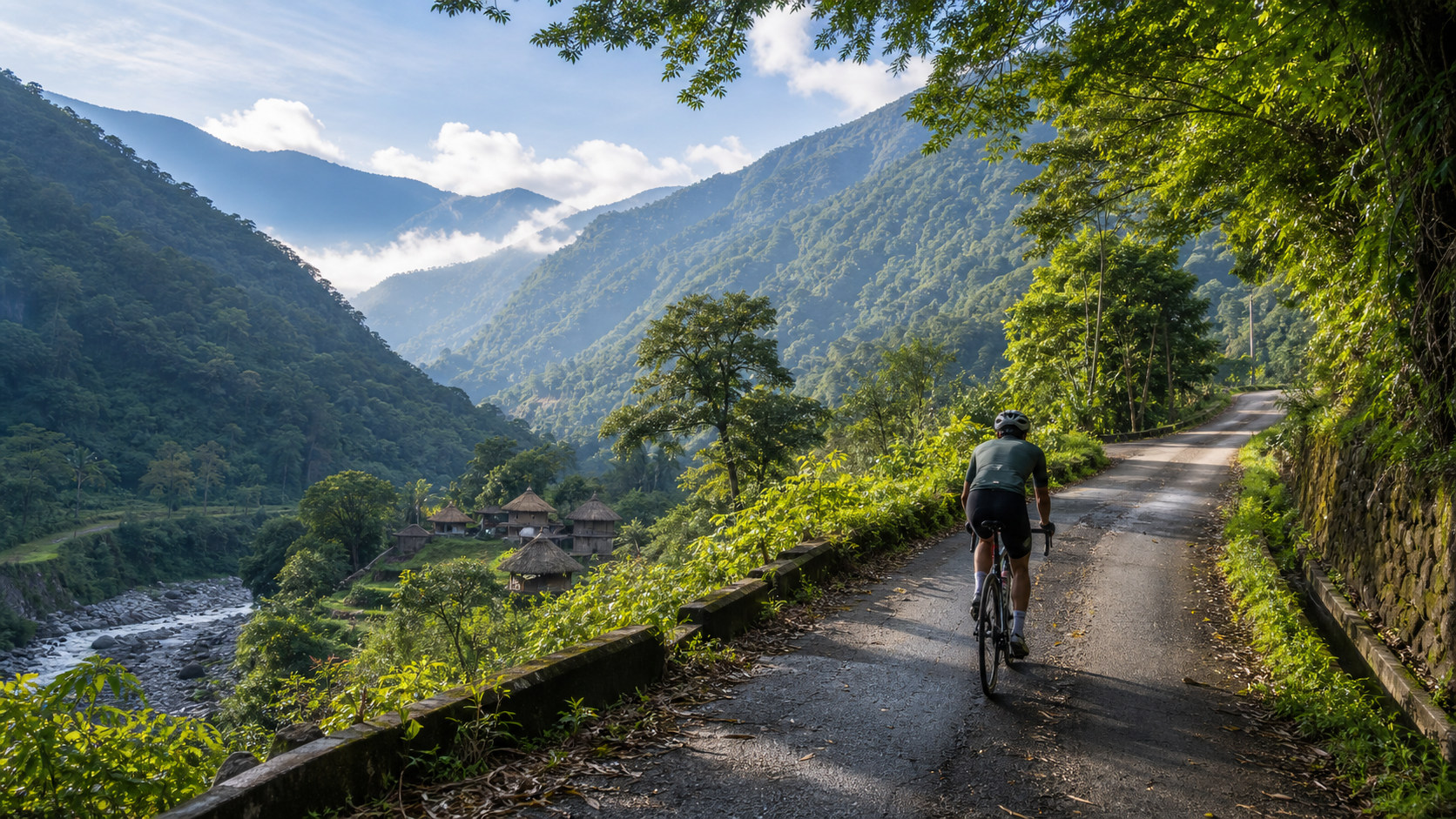
Some routes speak through numbers, others through scenery. Lileng Creek Forest Road offers both—4.57 kilometers and 378 meters of climbing form its skeleton, but what truly lingers in the memory is the majestic landscape of the Dajia River valley along the way, and the Lileng Tribe hidden deep in the mountain hollow.
The Mountain-and-River Memory Carved by the Dajia River: The Geographic Identity of Guguan and Lileng
To understand Lileng Creek Forest Road, one must first understand the mountains and rivers it inhabits. The Dajia River is one of the most important rivers in central Taiwan, originating in the high mountain zone where the Central Mountain Range meets the Snow Mountain Range, cutting westward through layers of mountainous terrain to form a deep river valley, eventually emptying into the Taiwan Strait on the coast of Taichung. Guguan is a mountain town settlement along the middle reaches of the Dajia River, famous for its hot springs, while the Lileng Tribe sits further upstream from Guguan, on a river terrace near the confluence of the Dajia River and Lileng Creek.
The Lileng Tribe, part of Bo’ai Village in Heping District, Taichung City, is an Atayal settlement with a modest population that has relied on mountain farming for generations. Citrus, pears, and peaches rotate with the seasons—a wisdom accumulated over centuries of coexistence between the residents and this land. With mountains at its back and the river in front, the Lileng Tribe enjoys a relatively comfortable climate, fostering a vegetation-rich and ecologically diverse environment—Taiwan red pine, five-needle pine, and fragrant nanmu grow in交错 along both sides of the forest road, a typical forest scene of Taiwan’s mid-elevation mountains.
Development in the Lileng area came relatively late, preserving much of its pristine natural ecology. The locally renowned Qichongtian Waterfall, composed of seven cascading tiers in different forms, showcases the extraordinary craftsmanship of this mountain water system; the Four Warriors Five-Needle Pine Trail and the Lileng forest road network connect deeper exploration paths into these mountains. Together, these landscape elements form the “greater context” of Lileng Creek Forest Road—it is not an isolated climb but a journey embedded within the broader mountain-and-human landscape of the upper Dajia River.
Riding the Lileng Creek Forest Road is, in a sense, riding into a slice of Taiwan’s mountain development history. When the Central Cross-Island Highway traversed this mountain region, the Lileng Tribe sat at approximately the 26-kilometer mark, still about 10 kilometers from Guguan—meaning the Lileng Creek Forest Road occupies a transitional zone between the bustle of the Guguan hot spring area and the tranquility of the deeper Basianshan forest district, with one foot in the daily rhythm of tribal life and the other in the pristine stillness of the deep forest.
Setting Out from Guguan: Morning Light and Departure from a Hot Spring Town
Most riders tackling the Lileng Creek Forest Road choose Guguan as their assembly and resupply point. In the early morning, Guguan still carries the moist air of hot spring steam rising gently, and temperatures in the valley always run a few degrees cooler than the city—this slightly crisp air is exactly the departure temperature riders love most: not cold enough to require layers, not hot enough to be drenched in sweat before the climbing even begins.
As a renowned hot spring destination in Taichung, Guguan has long attracted travelers seeking to escape the urban hustle for relaxation and soaking. For cyclists, Guguan functions more like a “mission base”: it offers supply stops, shops, and space to rest—the last chance to check equipment and provisions before heading deeper into the mountain forest roads. Riding slowly from Guguan along the road beside the Dajia River, one quickly senses the terrain gradually rising and the valley narrowing—a signal of the prelude to the Lileng Creek Forest Road.
The scenery along the way is almost a living geology textbook: the Dajia River rushes along the valley floor, flanked by steep, verdant cliffs, with occasional glimpses of industrial roads or tribal settlements half-hidden on the opposite mountainside. This visual experience of “riding on the valley’s edge, looking down at the rushing water” is a thrill that flatland riding can never replicate—every time you look up at the layered ridgelines of distant mountains, you’re reminded anew that you are deep within Taiwan’s most rugged and magnificent geological formations.
Pedaling into the Lileng Tribe: Atayal Life Rhythms and the Forest Road Entrance
Approaching the Lileng Tribe, the riding atmosphere shifts subtly. This is not a tourist-packed landmark but an Atayal settlement that still maintains its everyday pace of life. Most residents remain engaged in farming, with orchards layered up the slopes, bearing citrus, pears, and peaches in seasonal rotation—an industry shaped by natural rhythms that, compared to the highly commercialized agritourism farms of the lowlands, carries an unpolished authenticity.
The religious life of the Lileng Tribe is also distinctive, with the True Jesus Church having deep roots here, its chapel often serving as a prominent landmark in the settlement. As you ride through the tribe, it’s worth slowing down to absorb a pace of life utterly different from the city—no traffic, only the occasional dog bark, distant sounds of farm work, and the rustle of mountain wind through the treetops.
Where the forest road entrance branches off from the edge of the tribe, the terrain begins to climb noticeably. The psychological shift here is fascinating: one moment you’re immersed in the leisurely atmosphere of tribal life, the next your legs must switch into combat mode, facing a sustained 8.3% average gradient. This stark contrast in rhythm is, in some ways, the most captivating aspect of the Lileng Creek Forest Road—it’s not a gentle slope that lets you ride while daydreaming, but a route that demands total focus and a head-on duel with the terrain.
The Forest’s Soliloquy Deep in the Road: Four Kilometers of Dialogue with the Mountains
Once into the core section of the forest road, the clamor vanishes completely, replaced by a near-meditative focus. Breathing, the whir of the chain, the crunch of tires over gravel—these form the only soundtrack of this stretch. Dense forest lines both sides, with Taiwan red pines and fragrant nanmu layering to partially block the sky, sunlight filtering through gaps in the foliage to cast dappled, shifting patterns on the road—an effect that changes constantly with speed and angle, a visual feast unique to mountain forest roads.
The woodlands around Lileng retain a relatively pristine ecological character, and along the ride you’ll occasionally hear birds calling back and forth; with luck, you might even spot endemic Taiwanese species flitting through the trees. This close encounter with nature is something urban riding or riverside paths can never provide—you feel not merely that you’re “passing through” this forest, but that you’ve briefly become part of this ecosystem.
Of course, as the gradient continues to bite, these poetic sensations are repeatedly interrupted by physical fatigue. An 8.3% average grade means your legs get almost no respite; sweat quickly soaks through the jersey and breathing grows labored. Yet it is precisely this tension between “beautiful scenery, exhausted body” that constitutes the truest face of mountain riding—not a postcard-perfect image, but a genuine experience of gasping, sweating, and aching muscles.
The Seven Heroes of Guguan and Basianshan: Imagining a Larger Mountain Landscape
Cyclists or hikers familiar with the Guguan mountains have likely heard of the “Seven Heroes of Guguan”—referring to seven outlying peaks surrounding the area, of which Basianshan is the most renowned. The Lileng forest road system lies geographically close to the Basianshan Forest Recreation Area, and many riders who enjoy longer, higher-intensity outings treat the Lileng Creek Forest Road as one piece of a larger puzzle connecting the mountain landscape around Guguan.
The Basianshan National Forest Recreation Area is famous for its magnificent cypress forests and was a major logging ground during the Japanese colonial era, ranking alongside Alishan and Taipingshan as one of Taiwan’s three great forest districts. This historical backdrop means the mountains from Guguan through Lileng to Songhe carry not only ecological value but also layered memories of Taiwan’s forestry development history. If you take a little time to understand this mountain’s past while riding the Lileng Creek Forest Road, you’ll find that this seemingly simple climb is actually linked to an entire complex historical narrative of indigenous life, Japanese-era logging, and postwar hot spring tourism development.
For riders planning longer itineraries, the Lileng Creek Forest Road can also serve as one segment of a “Guguan deep-dive day trip”—tackling the forest road climb in the morning, returning to Guguan for local food and a brief rest at noon, then deciding in the afternoon based on energy levels whether to extend the ride to visit the Songhe Tribe or attractions around Basianshan. This approach of combining riding with in-depth local exploration elevates the entire trip beyond mere physical training, transforming it into a journey of truly understanding the land and its people.
Suggested Side Trip: Guguan Hot Springs and Local Products
After completing the Lengleng Creek Forest Road challenge, Guguan Hot Springs is almost the most natural way to wrap up the ride. The terrain of the Dajia River valley combined with geothermal resources has made Guguan famous for its hot springs since the Japanese colonial era. For riders who have just finished high-intensity climbing with sore muscles, soaking in the hot springs to relieve tight muscles and fascia is the perfect way to conclude the ride.
As for local products, the seasonal fruits produced in the Lengleng Tribe and the surrounding mountain areas are worth paying attention to—depending on the season, citrus, pears, and peaches rotate through their harvest periods. If you come across roadside farmers selling their produce during the ride, consider supporting the local small-farm economy—it also adds a touch of warmth and local connection to this mountain journey. The Guguan streets also have a scattering of local eateries and shops, suitable for refueling and dining before and after the ride. However, riders are advised to confirm business hours before setting out, especially since the difference in foot traffic between weekdays and holidays can be significant, and mountain-area shops may also have more flexible opening hours.
If time and energy permit, combining a cultural experience with the Lengleng Tribe (such as a tribal tour activity to learn about traditional cultural elements like the Atayal jaw harp) can elevate the entire Lengleng Creek Forest Road trip from a purely physical challenge into a complete journey that combines cultural depth with a natural immersion.
The Gentle Return: Glimpses of Guguan on the Descent
After conquering the climb of the Lengleng Creek Forest Road, the descent on the way back is actually a completely different kind of riding experience. On the way up, you’re so focused on your pedaling rhythm and breathing control that it’s hard to spare any attention to appreciate the scenery around you. But on the descent, although the speed is fast, your field of vision can capture the landscape along the way more completely—the layered mountain ridges of the Dajia River valley flash past before your eyes, the wind roars past your ears, and the soreness accumulated during the climb gradually gets diluted by this sense of release.
When passing through the Lengleng Tribe on the way back, the afternoon tribe often presents an atmosphere completely different from the early morning. If it’s a holiday, you might occasionally see tribal residents busy in their courtyards or orchards; if it happens to be the harvest season for agricultural products, the sight of roadside stalls selling seasonal fruits adds a touch of human warmth to this forest road journey. This shift in rhythm—“focused challenge on the way out, leisurely appreciation on the way back”—is, to some extent, a life philosophy that mountain riding teaches us: some scenery only truly comes into view after you slow down and let your guard down.
Back on Guguan’s main street, the distinctive sulfur scent and rising steam of the hot spring area once again envelop you, as if completing a full cycle that started from the hot spring town, ventured deep into the mountain tribe, and returned to the hot spring town. This geographical narrative structure, where the beginning and end echo each other, makes the Lengleng Creek Forest Road trip more than just a simple physical challenge—it feels like a journey with a complete arc of introduction, development, turning point, and conclusion.
A Conversation with Local Atayal Elders: The Lengleng Creek in Tribal Memory
If you have the chance to briefly converse with residents of the Lengleng Tribe during your ride, you’ll often hear many deeper fragments of memory about this land. Most of the tribal elders have experienced the industrial transformation from traditional slash-and-burn mountain farming to modern fruit-tree cash crops; many residents also still remember the early days when the Lengleng Creek had abundant water flow and plentiful fish. With climate change and upstream development, these ecological memories are gradually becoming a form of oral history that needs to be recorded and passed down.
The Atayal culture of the Lengleng Tribe maintains a certain foundation of cultural inheritance in aspects such as the jaw harp, traditional weaving, and mountain hunting knowledge. Tribal tour activities occasionally arrange jaw harp performances and cultural experience sessions, giving outside visitors and riders the opportunity to come into close contact with these increasingly rare yet precious cultural elements. For riders who simply treat the Lengleng Creek Forest Road as a climbing training ground, taking a bit more time to understand these cultural contexts will make the meaning of the entire ride much richer and more multidimensional—every inch of forest road you pedal over is actually layered with the life memories of generations of residents on this land.
For the traditional way of life of the Atayal people, the river systems of the Dajia River and Lengleng Creek have never been merely geographical names—they are important sites for tribal migration, fishing and hunting, and ritual activities. Although modern industrial roads and forest road systems follow a completely different logic from traditional hunting trails and mountain paths, the cultural weight carried by these mountains does not disappear simply because the form of the roads has changed. When riding the Lengleng Creek Forest Road, carrying this awareness will elevate the journey from mere geographical movement into a tribute to the land and the history of its people.
Lengleng Through the Turning Seasons: A Forest Road with More Than One Face
The mountains surrounding the Lengleng Creek Forest Road display completely different expressions as the seasons change. In spring, mountain temperatures warm up, new leaves begin to sprout, and the entire forest takes on a tender shade of green, while the fruit trees in the orchards begin their seasonal cycle of flowering and fruiting. Summer is the hottest, most humid, and most lush season of the year—afternoon thunderstorms bring nourishment to the mountains and fill the forest with that distinctive fresh post-rain scent, but it is also the season when you need to be most wary of sudden weather changes.
Autumn is the season many riders consider the best time to visit the Lengleng Creek Forest Road—temperatures cool down, the chance of rain relatively decreases, and some vegetation begins its seasonal color transformation, adding more layers to the visual experience during the climb. Although winter brings lower mountain temperatures and shorter daylight hours, clear winter days often offer the best visibility of the year for mountain views. Standing at the higher points of the forest road and looking back at the Dajia River valley, the ridgelines of distant mountains appear exceptionally clear and sharp in the crisp air.
The fruit industry of the Lengleng Tribe also presents different outputs as the seasons turn—citrus, pears, and peaches ripen in sequence across different seasons. This industrial rhythm of “following the solar terms” echoes, to some extent, the physical logic of riding this route, where the body rises and falls with the gradient and breathing rhythm. Land and body, within this cycle of seasons, produce a subtle yet profound resonance.
A Rider’s Early Morning Monologue: Self-Dialogue Deep in the Forest Road
I remember that early morning setting out from Guguan, the moisture from the hot spring area had not yet fully dissipated, and the air carried a faint sulfur scent interwoven with the distinctive dampness of the mountain forest. Riding slowly along the bank of the Dajia River, the morning light had not yet fully penetrated the valley, and the mountain walls on both sides were still shrouded in a thin layer of blue-gray tones. Only the sound of the babbling creek reminded me that this valley had never truly fallen asleep.
After turning onto the fork toward the Lengleng Tribe, the road gradually shifted from gentle to rolling, and in the distance I could see wisps of cooking smoke rising from the rooftops of several tribal households—mountain residents already beginning to prepare for a day of farm work. Passing through the tribe, I deliberately slowed my pace, watching the fruit-laden trees in the orchards sway gently in the breeze, and an indescribable sense of tranquility welled up inside me. This tranquility is completely different from an urban morning—no honking horns, no hurried footsteps, only mountain wind, birdsong, and the occasional distant crow of a rooster.
Once I truly set foot on the core section of the forest road, the pressure of the gradient began to gradually assert itself. My breathing grew heavier, sweat began to trickle down from my temples, but strangely, the fatigue in my body and the focus in my mind managed to coexist in perfect harmony. Every pedal stroke felt like a silent conversation with this mountain forest—the forest tests the endurance of your legs with its gradients, and your legs respond to the forest’s invitation with a continuous pedaling rhythm. This near-meditative state of focus is perhaps the deeper reason so many riders are willing to return to mountain forest roads like this again and again: here, the distractions of the outside world disappear completely, leaving only the purest bodily sensation and a dialogue with the forest before your eyes.
Reaching the section near the turnaround point, I paused briefly and looked back at the slopes I had just conquered, only then truly realizing how much elevation I had gained. The valley gradually shrank beneath my feet, and the outlines of the distant layered mountain ridges grew increasingly clear in the morning light. In that moment, the sense of accomplishment and awe intertwined—an experience that no flat-road ride could ever provide.
Advice for Riders Planning to Visit the Lengleng Creek Forest Road
If this is your first time planning to visit the Lengleng Creek Forest Road, here are a few suggestions from those who have been there before. First, don’t treat this route simply as a checklist for “checking in and setting PRs”—instead, set aside enough time to truly slow down and experience the cultural and natural atmosphere of the Lengleng Tribe and the surrounding mountains. The value of this route has never been just its physical training benefits; it also encompasses the entire human landscape of the upper Dajia River that it connects to.
Second, it’s recommended to visit on a weekday or outside consecutive holidays, avoiding the most crowded periods at the Guguan Hot Spring area, which will allow the pace of the entire trip to be more relaxed and leisurely. Third, if time and energy permit, consider planning a one-day itinerary that combines the Lengleng Creek Forest Road with other attractions around Guguan, making the meaning of this ride even richer—after all, this mountain forest deserves to be understood more fully, not just hurriedly passed through.
Finally, and most importantly: visit the Lengleng Tribe with respect. This is the ancestral home of Atayal residents, not a backdrop that exists for tourism. Maintaining basic courtesy and respect when riding through is an attitude every visitor should keep in mind.
Conclusion: What This Route Taught Me
After riding the Lileng Creek Forest Road, what lingers most in my mind is often not the soreness from the 8.3% average gradient, but the dappled light and shadow deep in the forest road, the unpolished sense of daily life in the Lileng tribe, the ceaseless sound of the Dajia River rushing by, and that feeling of smallness and awe when standing at the high point and looking back at the valley, surrounded by the magnificent landscape.
In less than 5 kilometers, the Lileng Creek Forest Road condenses the finest natural and cultural scenery of the Taichung mountain area. It reminds every rider who takes this road: the routes truly worth revisiting are never just about the challenge of gradient numbers, but also the layered stories along the way—about the land, about the people, about history. The next time you visit Guguan, consider adding the Lileng Creek Forest Road to your itinerary—measure this landscape with your legs, and feel the warmth of this land with your heart.
Related Reading
- The Sound of Water in Lileng Tribe and Baileng Ice Pops: A Cycling Memory in the Arms of the Dajia River
- Taichung Dajia River Basin Routes: The Complete Guide to Natural Scenic Valley Cycling Routes
- Lileng Creek Forest Road Battle Guide: A Tough 4.57 km, 378 m Climb with 8.3% Average Gradient in the Guguan Mountains
- The Mountain Route from Guguan to Lishan in Taichung: A Cycling Journey on the Central Cross-Island Highway
一定要騎一次!阿里山最深處:里佳部落!單車旅行 | 2800m爬升 | 深度部落體驗:嗨翻晚會、螢火蟲、銀河 | feat. JJSC & 廢物伙伴 | 公路車 CT Yeh
9 個月前
藤枝二集團 單車行 Day1 | 南部小武嶺 | 爬坡爬到罵罵叫 | JJSC | 公路車 | CT Yeh
3 年前
嘉義大埔、阿婆灣挑戰賽,美到以為在日本!ft. 環騎5 Cool 西拉雅188 / 公路車 / CT Yeh
7 個月前
里佳部落 阿里山單車深度旅遊! | 竹山/草嶺/來吉/奮起湖 | 無敵銀河絕景 全新路線探索! 驚險狀況百出! | 4K沉浸式畫質 | 公路車 | CT Yeh
3 年前
秘境雪場 日本 八甲田 冰樹探險與滑雪體驗 ft. Q老師 & 運動生活
7 年前
台北闊瀨陡坡 騎旅 / 日本單車雜誌編輯車友臨時加入!/ 髮香才是最強的 / feat. 北迴歸線小隊 / 公路車 CT Yeh
6 個月前
爬坡ITT實境)台中 魔王 松鼠坡 首航 6:12 大肚山 大三元 科福路
8 年前
新竹羅平 x 天湖部落 大禹嶺級變態陡坡! 4K超高畫質 空拍 | 公路車
5 年前