Riding into the Hidden Gems of the East Rift Valley: Guangfu Bihe Pond and the Land Memory of the Amis Tribe
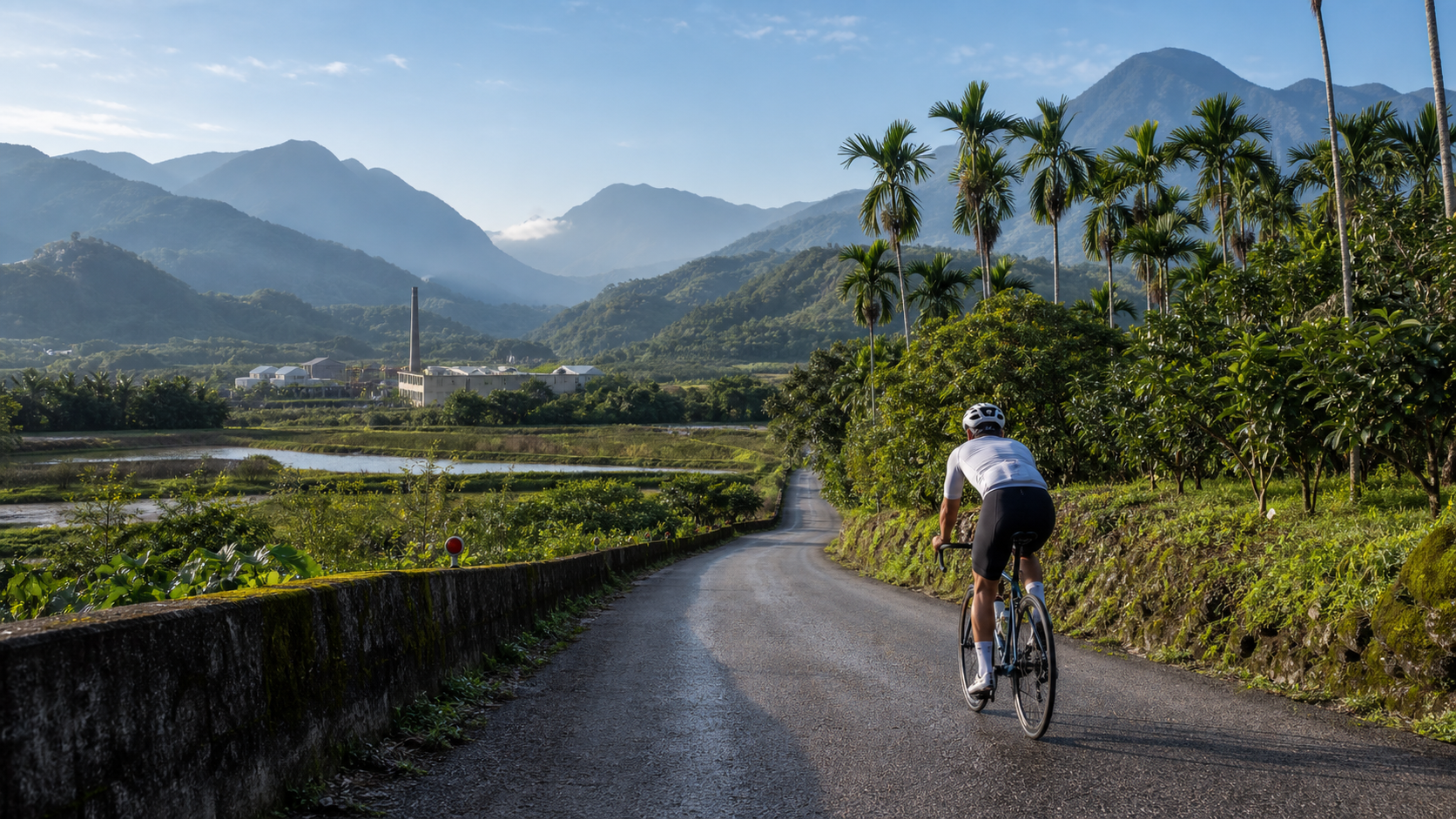
A Hidden Pond Deep in the Rift Valley
Many people’s impression of the beauty of the East Rift Valley stops at gazing at the Central Mountain Range and the Coastal Mountain Range from Provincial Highway 9, without knowing that at the foot of the mountains in Guangfu Township, there lies a small climbing road leading to Bihe Pond. When I first heard the name “Bihe Pond,” I assumed it was another overly commercialized spot packed with tour buses. It wasn’t until I rode up myself that I discovered the charm of this road lies precisely in its low-key, pristine nature.
Guangfu Township, called “Fataan” in the Amis language, is one of the cultural hubs of the Amis people in the East Rift Valley. The Tafalong and Matai’an tribes within its borders still preserve rich ceremonial culture and traditional knowledge. Guangfu Sugar Factory was once an important stronghold of Taiwan’s sugar industry, now transformed into a tourism and recreation park. But what truly makes locals proud is the vast Matai’an Wetland surrounding the sugar factory—the Amis’ traditional “Palakaw” ecological fishing method is still passed down here to this day. The wetland teems with life, where egrets, pheasant-tailed jacanas, and various native fish species thrive, making it the best window into understanding the Amis people’s wisdom of coexisting with nature.
Setting out from downtown Guangfu and following the small road toward the mountains, the asphalt gradually shifts from flat to undulating, and the scenery on both sides transitions from street-side buildings to rows of orchards and betel nut plantations. This stretch is not long—just 4.39 kilometers—yet it feels like a rite of passage from the bustle of everyday life into the tranquility of the mountains.
The reason the East Rift Valley can nurture a route with both challenge and cultural depth is, to some extent, thanks to the unique geographic structure of this land, sandwiched between two mountain ranges. The Central Mountain Range and the Coastal Mountain Range act like two natural barriers, gently cradling the valley plain, which also gives the area a relatively stable climate with distinct seasons. For riders accustomed to the western plains, stepping into the East Rift Valley for the first time is often captivated by the visual shock of “mountains embracing on all sides, with the sky feeling especially vast”—even if it’s just a short 4.39-kilometer climb, the sense of smallness when surrounded by nature’s grand scale is enough to make one rethink the relationship between people and the land.
First Person: Sensory Experience on the Climb
It was a clear early morning when I set off, the valley air still carrying the dampness of night dew. Riding out of downtown Guangfu, I soon felt the road begin to tilt—the entrance to the Bihe Pond climb wastes no time, greeting me with a somewhat steep grade right from the start. My breathing was still relaxed in the early section, my legs gradually warming into rhythm, and from the corner of my eye I could glimpse citrus trees heavy with fruit and betel nut palms in the roadside orchards. Occasionally a farm utility vehicle would pass slowly, the driver rolling down the window to nod in greeting—this is the unique warmth of the East Rift Valley, where even strangers offer a friendly glance to passing cyclists.
Reaching the middle section, the grade noticeably steepened, sweat beginning to drip from my forehead in beads, my jersey already soaked through and clinging to my back. The vegetation around me also began to change—orchards gradually thinned out, replaced by slopes where native forest and mixed woodlands intermingled. Cicadas chirped in waves, mingling with the sound of water murmuring from a distant creek—that was probably a tributary of the Matai’an Creek, echoing the water-related origins behind the name Bihe Pond.
Nearing the top of the climb, the view suddenly opened up. Looking back, the entire East Rift Valley plain spread out before me, the distant Coastal Mountain Range tinged with a soft blue-purple hue in the morning light, while the downtown Guangfu area and the red-brick buildings of the sugar factory sat in pleasing arrangement nearby. In that moment, all the fatigue of the climb seemed diluted by the scenery—this is precisely what makes the climbing routes of the East Rift Valley so enchanting: even if the grade isn’t long, the openness and layered depth of the valley terrain always deliver visual rewards far exceeding what the route’s distance would suggest.
Guangfu Sugar Factory: From Industrial Relic to Recreation Landmark
To understand Guangfu Township, where Bihe Pond is located, one cannot overlook the century-old landmark of Guangfu Sugar Factory, a witness to the rise and fall of Taiwan’s sugar industry. During the Japanese colonial period, the East Rift Valley’s climate and soil conditions were well suited for sugarcane cultivation, and the sugar industry was once one of the most important economic lifelines of this land. Since its construction, Guangfu Sugar Factory has weathered decades of industrial change. Though the sugar production lines no longer operate at their former scale, the Japanese-style wooden buildings, vintage sugar-making equipment, and expansive lawns preserved within the factory grounds have been transformed into a park combining historical memory with recreational functions, also serving as a regular gathering and rest stop for many cyclists.
Riding past the sugar factory, the weathered red-brick walls and railway remnants always make one slow down for a second look—these traces quietly tell the century-long story of the East Rift Valley, from agricultural reclamation and industrial prosperity to tourism transformation. For riders who enjoy absorbing local historical texture along the way, Guangfu Sugar Factory is well worth at least a half-hour stop to savor the unique atmosphere of old and new intermingling within the park.
The Deep Connection Between Tribal Culture and the Land
The Tafalong and Matai’an tribes in Guangfu Township are among the two most important Amis settlements in the East Rift Valley, rich in distinctive traditional crafts, ceremonial culture, and life wisdom. The Tafalong tribe is renowned for its grand ancestral house architecture and exquisite woodcarving and embroidery crafts. The creation myths and ancestral spirit beliefs passed down within the tribe still profoundly influence the族人’s way of life and values. The Matai’an tribe, adjacent to the wetland ecological park of the same name, is famous for its traditional ecological fishing wisdom known as “Palakaw”—a type of ecological fish house built from stacked bamboo, ferns, and stones, demonstrating the Amis people’s deep wisdom of coexisting with the natural environment, and one of the few traditional fishing methods in Taiwan that remains fully preserved and continuously passed down.
If you take extra time to understand the depth of tribal culture while riding through this land, you’ll discover that the climbing route to Bihe Pond connects not merely to geographic coordinates, but to an entire cultural soil carrying centuries of Amis life wisdom and land memory. This understanding adds a layer of respect and human depth to every pedal stroke, elevating the East Rift Valley riding experience beyond mere sport into a profound journey across time and culture.
The Legend of Bihe Pond and Local Memory
Regarding the origin of the name “Bihe Pond,” local elders pass down several different accounts, most related to the natural appearance of the mountain pond—the water takes on a jade-green hue under specific lighting angles, hence the name. Place names of this kind, tied to natural colors and topographical features, are quite common in eastern Taiwan, where indigenous and Han reclamation histories intertwine, often carrying the most direct and down-to-earth observations and naming logic of early settlers. For the exact etymology and related legend details, riders interested in deeper understanding are advised to consult local cultural historians or tribal elders in Guangfu Township for first-hand accounts closer to the true context.
Riding through this mountain area, it’s easy to recall the historical background of the East Rift Valley as a traditional Amis territory for generations. The tribes within Guangfu Township still maintain rich seasonal ceremonies, including the annual summer Harvest Festival (Ilisin), one of the most important rituals of the Amis year. Tribe members don traditional attire, chant ancient melodies, and hold grand song-and-dance ceremonies to thank ancestral spirits for their blessings and to unite the community. If your riding schedule happens to coincide with the Harvest Festival period, consider slowing down and learning about the local culture with respect—this will add a deeper cultural dimension to your entire East Rift Valley journey, rather than merely accumulating distance numbers.
Local Cuisine and Suggested Side Trips
After completing the solid climb to Bihe Pond, nothing is more healing than returning to downtown Guangfu for local food. The popsicles around Guangfu Sugar Factory are a classic summer treat in the hearts of many food lovers and cyclists, offering a variety of traditional flavors at affordable prices—an excellent option for replenishing sugar and electrolytes after a ride (please refer to on-site information for current vendors and updates, as businesses around the sugar factory may adjust with seasons or operations).
Beyond the sugar factory’s ice treats, Guangfu Township and the neighboring Fenglin and Ruisui areas also offer plenty of local snacks worth sampling, such as indigenous-style meals common in the East Rift Valley, freshwater river delicacies, and seasonal produce stalls. If time permits, consider scheduling the Bihe Pond climb in the first half of a half-day trip, then heading to the Matai’an Wetland Ecological Park for an easy flat ride or walking tour to experience the Amis “Palakaw” ecological fishing wisdom firsthand, and finally wrapping up with ice treats at Guangfu Sugar Factory—a complete East Taiwan mini-trip combining sport, ecology, and cultural experience.
Seasonal Scenery of the Rift Valley
The scenery around Bihe Pond takes on completely different appearances with the changing seasons. Spring (March–April) is the most comfortable and pleasant season in the East Rift Valley, with lush green mountain vegetation and moderate temperatures, ideal for longer riding itineraries. Summer (June–September) is hot, but it’s also the season when rice paddies turn golden and prepare for harvest—if your route passes through the valley plains, you can enjoy layered waves of rice fields. Autumn (October–November) brings dry, crisp weather with excellent visibility, making it the perfect time for photographing the layered mountain ranges of the valley. Winter (December–February) occasionally brings rain to eastern Taiwan from the northeast monsoon, but there are also rare stretches of clear, fine weather—just be mindful of lower temperatures and dress warmly for early morning or evening rides.
Worth noting: Liushishan and Chike Mountain (near Yuli) around Guangfu Township are Hualien’s famous daylily-producing areas. During the daylily season from August to September each year, the hillsides blanketed in orange-yellow blooms attract throngs of visitors and photography enthusiasts. While Bihe Pond itself isn’t a daylily viewing spot, if your East Rift Valley riding itinerary falls during the daylily season, consider pairing Bihe Pond with nearby Chike Mountain in the same trip, satisfying both climbing challenges and flower-viewing enjoyment in one go.
Ecological Observation in the Mountains
Beyond cultural history, the natural ecology along the Bihe Pond climbing route is equally worth savoring. The East Rift Valley sits in a transitional zone between the Central Mountain Range and the Coastal Mountain Range, with vegetation comprising a distinctive mix of low-elevation broadleaf forest interspersed with cultivated orchards and betel nut plantations. If you slow down and observe carefully during the ride, you’ll often spot flocks of Taiwan blue magpies sweeping across the treetops—their vivid blue wings and long tail feathers make them one of the most recognizable endemic bird species in Taiwan. Around dawn and dusk, you may also occasionally hear the calls of Formosan macaques echoing from the forest, reminding riders that this hillside is not merely an industrial road for human activity, but also an important ecological corridor where wildlife lives and moves.
The moisture around the creek valleys nurtures a rich array of ferns and mosses. Especially after rain, the air is filled with the damp scent of vegetation, mixed with the fresh aroma unique to soil and plants—a sensory experience rarely encountered by urban riders. If you’re in the habit of snapping photos along the way, the ecological diversity around Bihe Pond will surely add plenty of surprises to your album—from raptors spreading their wings to wild ginger flowers quietly blooming by the roadside. This seemingly ordinary industrial road actually hides many natural details worth stopping to observe.
A Comparative Experience with Other Rift Valley Climbs
If you’ve already ridden other well-known climbing routes around the East Rift Valley—such as Chike Mountain or Liushishan near Yuli, or the farther Wuhé Terrace—you’ll find that Bihe Pond has a distinctly different riding character. Chike Mountain and Liushishan are known for their continuous, wide-open sloping terrain, where you can enjoy the valley’s grand vistas almost throughout the entire ride. In contrast, Bihe Pond feels more like a private climbing experience “hidden among the vegetation”—the orchards and mixed woodlands along both sides of the road block distant views for most of the route, opening up only near the summit. This spatial narrative rhythm of “restraint first, release later” makes the final vista all the more moving.
This comparison also reminds every rider who loves exploring the East Rift Valley: each climbing route on this land has its own personality and narrative logic. There’s no absolute “most beautiful” or “most worthwhile”—only what suits the mood and physical condition of the moment. Sometimes you need the wide-open expansiveness of Liushishan; other times you crave the introverted experience of Bihe Pond, where rewards build gradually and arrive as a final surprise.
What This Route Means to Riders
To me, Bihe Pond represents the “small but beautiful” type of route—it won’t appear in the route books of any classic cycling race, nor will it be visited and checked in by countless riders like Wuling or Taroko. But precisely because of that, it retains a rare sense of purity. Riding on this road, you won’t be overtaken by endless pelotons, nor will your thoughts be interrupted by tourist noise. There’s only your own breathing, the sound of gears turning, and the rustling of valley winds passing through rice paddies and orchards.
Such a route reminds every rider who spends long hours cycling in the city, bound by training data and Strava segment rankings: the essence of cycling can actually be very simple—a climb, a view, and the sense of accomplishment after working up a sweat are enough to constitute a complete riding experience. Bihe Pond may never appear on any official list of classic route recommendations, but for riders who truly love exploring the corners of the East Rift Valley, it will be a hidden gem worth returning to again and again, with new details to discover each time.
A Different View on the Descent
Climbing is certainly the core challenge of this route, but the descent back down is equally worth savoring. Unlike the climb, where you focus on pacing, heart rate, and breathing rhythm, the descent allows you to relax your mind a bit and let your gaze wander freely across the surroundings—details you couldn’t spare attention for while gasping for breath on the way up can now be taken in one by one: the gnarled, twisting posture of an old banyan tree, wild grass swaying by the field ridges, and farmhouses with wisps of cooking smoke rising in the distance.
On the descent, be sure to control your speed carefully. Especially on industrial-road-grade sections, where pavement markings and protective measures may not be as complete as on major highways, brake early before corners and stay alert for farm vehicles or pedestrians that might emerge from field paths. Safety is always the first priority of any riding experience—no scenery is worth the price of a crash and injury.
Back on flat ground, the breeze blowing across my sweat-soaked jersey brought waves of refreshing coolness. At this point, it’s nice to ease off the pace and ride back to downtown Guangfu at a leisurely tempo, letting the body gradually transition from the somewhat tense climbing state back into a relaxed cruising rhythm—this alternating tension and release is precisely what makes the short climbing routes of the East Rift Valley so captivating.
Extended Itinerary: Fitting Bihe Pond into an East Rift Valley Mini-Trip
If you’re planning to travel specifically to Hualien to ride Bihe Pond, I’d suggest not treating it as a single-day round trip, but rather incorporating it into a more complete East Rift Valley mini-trip. Guangfu Township is centrally located—to the north you can arrange flat rides around Shoufeng and Liyu Lake, while to the south you can connect to Ruisui and Yuli’s Chike Mountain and Liushishan, the famous climbing and flower-viewing spots. If time allows, consider planning a 2–3 day itinerary, spreading the climbing challenges, ecological tours, and local cultural experiences across different days, so you don’t miss the truly captivating details of the East Rift Valley by rushing—those stories of scenery and human warmth hidden around the corners of industrial roads, within tribal settlements, and in wetland ecosystems, which can only be truly appreciated at a slower pace.
For accommodation, Guangfu Township and neighboring Fenglin and Ruisui all offer homestays and hotels. It’s advisable to plan and book in advance, especially during major local events like the daylily season or Harvest Festival, when lodging may be in shorter supply. For transportation, Guangfu Railway Station is an important transit hub—many riders choose to bring their bikes on the train, arriving at Guangfu before starting their ride, combining transportation convenience with a complete riding experience.
In Closing: Scenery Only Visible When You Slow Down
Every time I recall the Bihe Pond route, what comes to mind isn’t the grade percentage or completion time, but those fragmentary sensory memories—morning light filtering through orchard leaves onto the asphalt, the warm moment of a farmer waving in greeting, the layered mountain ridges veiled in light mist when looking back over the valley from the summit, and that solid feeling mixing fatigue and satisfaction when enjoying a popsicle at the sugar factory after the ride.
What Bihe Pond has taught me, perhaps, is this cycling philosophy of “being complete without needing to be seen”—it doesn’t aspire to become a check-in hotspot, doesn’t need social media exposure to prove its worth, simply existing quietly on the hillside of Guangfu Township, day after day welcoming every rider willing to take on its challenge. This is perhaps the most precious value of “non-mainstream” routes like those in the East Rift Valley—they aren’t over-commercialized or packaged, don’t need to conform to any tourism marketing narrative, simply existing quietly within the fabric of the land and tribal life, waiting for riders willing to slow down and feel deeply to come explore. If you’ve already ridden all of Taiwan’s famous classic climbs yet still feel something is missing, find a clear weekend day, add Bihe Pond to your East Rift Valley mini-trip, and experience for yourself this route’s unique tranquility and depth, belonging to the East Rift Valley.
Perhaps next time you’ll visit with a different mindset—maybe challenging it with a few friends, laughing and joking your way to the top; maybe riding solo, quietly feeling the rhythm of breath and cadence in the early morning mist; or perhaps bringing family, experiencing the most primal vitality of this East Rift Valley land at a more leisurely, slower pace. However you choose to visit, Bihe Pond will respond in its own unique way to every traveler willing to approach it with two wheels and sweat.
Related Reading
- Guangfu Bihe Pond Climbing Guide: A 4.4 km, 5.8% Average Grade High-Intensity Test in the East Rift Valley
- Hualien Guangfu to Matai’an Wetland Route: Riding Through Indigenous Culture and Wetland Ecology
- East Rift Valley Bikeway: Taiwan’s Most Beautiful Flat Riding Experience
- Hualien Guangfu to Yuli Plain Route: Long-Distance Flat Riding in the Southern East Rift Valley
嘉義大埔、阿婆灣挑戰賽,美到以為在日本!ft. 環騎5 Cool 西拉雅188 / 公路車 / CT Yeh
7 個月前
台北闊瀨陡坡 騎旅 / 日本單車雜誌編輯車友臨時加入!/ 髮香才是最強的 / feat. 北迴歸線小隊 / 公路車 CT Yeh
6 個月前
2022 環花東挑戰賽 Day2 搭到特快車 高速真空吸引! 台東一路逆風殺回花蓮! 總排 ??| Feiyu Pocket 2s | 公路車 | CT Yeh
4 年前
#北橫 + #北進武嶺 最硬的員工旅遊 EP1 | #公路車 #拉拉山 | 明池 | 武嶺 | 武陵農場 | 雲海 | Taiwan Cycling Route Wulin
6 年前
花東縱谷單車遊 feat. Doris 景點五分鐘快速掃瞄 / 公路車 / CT Yeh
2 年前
一定要騎一次!阿里山最深處:里佳部落!單車旅行 | 2800m爬升 | 深度部落體驗:嗨翻晚會、螢火蟲、銀河 | feat. JJSC & 廢物伙伴 | 公路車 CT Yeh
10 個月前
虎豹潭!日本老師來台一日約騎 台灣車友熱情招待私房路線 / CT Yeh
21 天前
新竹羅平 x 天湖部落 大禹嶺級變態陡坡! 4K超高畫質 空拍 | 公路車
5 年前