Riding into Atayal Hunting Grounds: Memories of Mountain Cycling on Luchang's Steep Slopes and at the Fairy Valley Waterfall
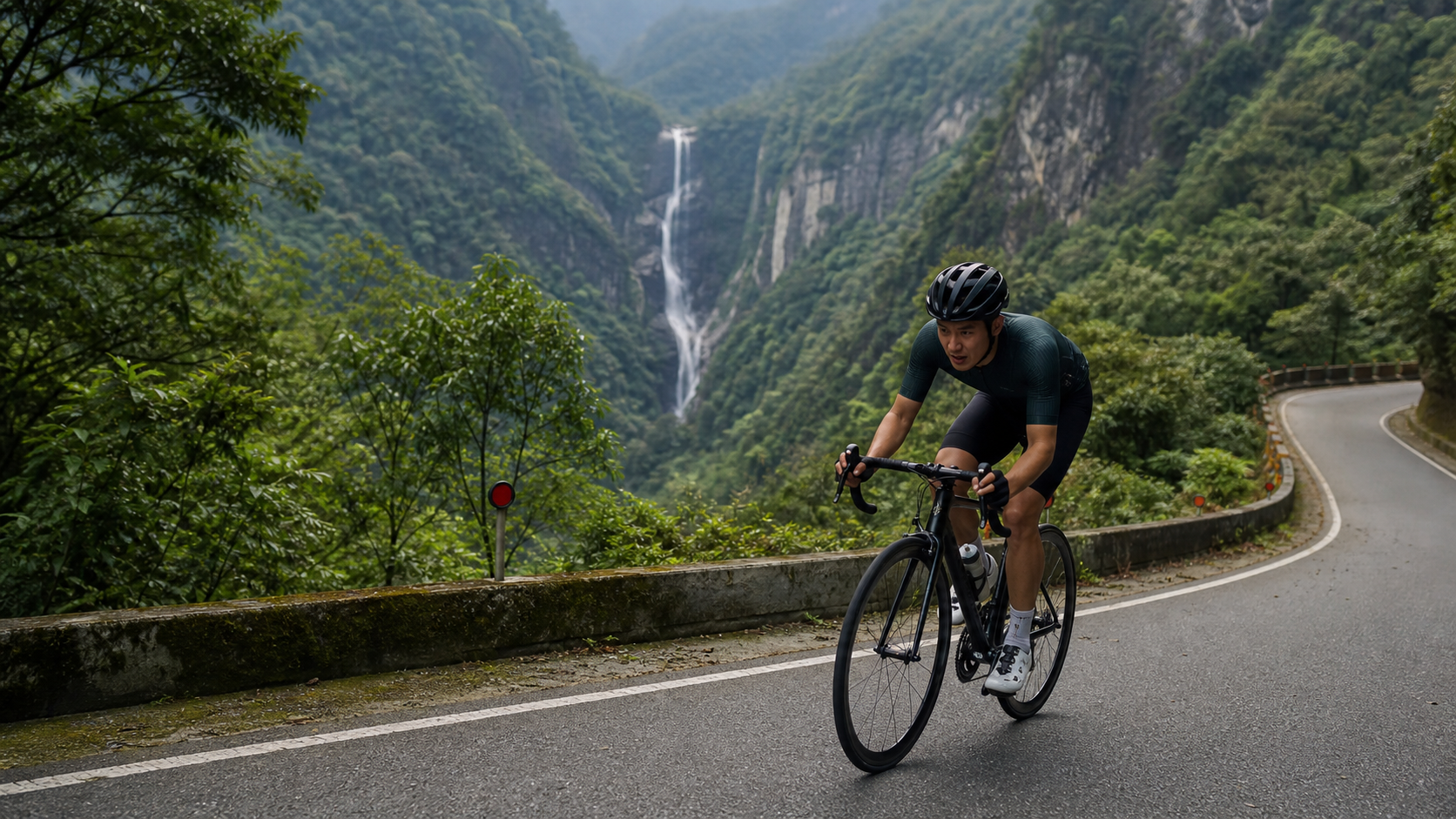
Luchang Village: The Atayal People’s Wisdom of Coexisting with the Mountains
The name Luchang itself is rich with imagery—as the name suggests, this was once a habitat where wild deer roamed, and for the Atayal people who have lived here for generations, this mountain forest has been their ancestral territory passed down through the ages. The Atayal are one of the most widely distributed and relatively populous indigenous groups in Taiwan, primarily residing in the mountainous regions of north-central Taiwan. The Nanzhuang area of Miaoli is one of the important traditional living territories of the Atayal people. The traditional culture of the Atayal is deeply and inseparably connected to the mountains and forests—their ways of life, including hunting, gathering, and swidden agriculture, are all built upon long-term observation of and respect for the mountain ecosystem. This wisdom of coexisting and thriving with nature is an extremely precious core value of Atayal culture.
Regarding the more specific historical development, traditional rituals, and tribal organizational details of Luchang Village, the detailed content should still be based on the oral accounts of tribal elders and official historical and cultural records. After all, the cultural heritage of indigenous peoples follows a rigorous context and interpretive authority. As visiting cyclists from outside, we should adopt a humble and learning-oriented attitude rather than casually interpreting things based on impressions. What can be confirmed, however, is that traditional Atayal culture has a refined set of ethical norms regarding mountain resources—such as the demarcation and rotation of hunting territories, restraint in the taking of game, and the assignment of sacred or taboo meanings to specific natural landscapes. These traditional wisdoms align remarkably well with the core spirit of modern ecological conservation. Every time I ride through the mountains of Luchang, gazing at the dense vegetation and undulating terrain on both sides, I try to imagine that before this land became a route for cycling enthusiasts to challenge steep climbs, it was a living space where Atayal hunters moved through and conversed with the mountains. This awareness makes the meaning of riding far more multidimensional and enriching.
The social organization of the Atayal people centers on the traditional normative concept of “gaga,” which emphasizes a communal ethic of jointly observing ancestral teachings and sharing collective responsibility. This value system profoundly influences how the Atayal interact with the land and with one another. Although as visiting cyclists, it is difficult to fully comprehend this profound cultural system through a brief passing experience, merely knowing that this mountain forest carries such meticulous and complete ethical wisdom is enough to make us approach our brief encounter with this land with greater caution and respect. In recent years, Taiwan’s indigenous cultures have gradually received more attention from mainstream society—from language revitalization and the demarcation of traditional territories to culturally oriented tourism models developed autonomously by tribes—all of which are concrete manifestations of this cultural wisdom seeking continuity and interpretive space in contemporary society. As visitors passing through this land on two wheels, doing a bit of homework before the trip to understand the basic contours of Atayal culture will make the journey far more meaningful and represents the most fundamental gesture of respect toward this land and its generations of inhabitants.
In recent years, as Taiwanese society’s appreciation for indigenous cultures has grown, many indigenous tribes have begun developing tribal tourism models that combine traditional culture with ecotourism. Luchang Village is also working toward this direction, offering outside visitors and cyclists the opportunity to gain a deeper understanding of Atayal culture through appropriate channels. If you have the chance to visit Luchang, beyond the physical challenge of the steep climb itself, taking the time to further understand the cultural context of this land through tribal guided tours or introductions by local cultural historians would be a far more complete and meaningful way to experience the journey—much more profound than simply treating this place as a “challenge route with impressive difficulty statistics.”
Shenxiangu Waterfall Group: A Hidden Gem Deep in the Mountains
The reason the Luchang steep climb attracts cyclists to tirelessly take on this industrial road with an average gradient of nearly 10% is not only the challenge of the slope itself—a large part of it is that this road serves as the main access route to the Shenxiangu Waterfall Group. Shenxiangu—just hearing the name sparks the imagination. This waterfall group nestled deep in the Nanzhuang mountains is one of Miaoli’s renowned natural scenic secrets. The rushing stream cascades down the cliff faces in layers, forming waterfalls of various sizes and crystal-clear pools. Under the sunlight, the interplay of spray and mist creates dreamlike light effects—no wonder it has been given the ethereal name “Shenxiangu” (Immortal Valley).
Every time I finish the Luchang steep climb and arrive breathless near the village, the anticipation of soon witnessing the magnificent scenery of the Shenxiangu Waterfall effectively transforms the fatigue of the climb into a sweet expectation. Of course, reaching the waterfall itself usually requires additional walking—the trail conditions and exact opening status vary with seasons, weather, and trail maintenance. Before actually visiting, it’s advisable to check the latest official or local information to ensure the trail is safe before heading out. But simply knowing that you’re riding along a road leading to a hidden scenic wonder adds a touch of adventurous romance to the entire challenge.
The water source of Shenxiangu originates from the region’s abundant rainfall and groundwater systems. The ecological environment of this watershed is relatively pristine and rich, with well-preserved vegetation along both banks that nurtures a diverse stream ecosystem. This relatively undeveloped natural appearance can, to some extent, be attributed to the long-standing reverence and protective attitude the Atayal people have held toward this mountain forest—within the context of traditional hunting territory culture, the use of natural resources is accompanied by restraint and sustainability-minded thinking. This cultural foundation may well be one of the key reasons the Shenxiangu Waterfall Group has retained such a pristine appearance to this day.
The mountainous regions of north-central Taiwan are actually scattered with numerous stream-valley waterfall secrets similar to Shenxiangu, but most remain little known to the outside world due to their remote locations and inconvenient access, requiring guidance from local residents or relatively deep hiking routes to fully appreciate. The fact that Shenxiangu can maintain such a pristine and pure natural appearance while being relatively accessible reflects, to some degree, the historical trajectory of this mountain forest having been properly cared for over a long period. The layered waterfalls formed by streams flowing over rock faces, combined with the cool, moist microclimate created by the dense vegetation on both banks, make Shenxiangu feel noticeably cooler even during the height of summer—which is precisely why, despite the extra walking required, a steady stream of visitors is willing to make the trip specifically to see it. When actually planning a trip to Shenxiangu, be sure to pay attention to the trail’s opening status and safety advisories. Especially after rain when stream levels surge, the risk of water-related activities increases significantly. It’s recommended to rely on official announcements or local information, and never wade into the water or climb slippery rock faces recklessly.
Scenery Along the Way and Village Landscapes
During the ride up the Luchang steep climb, the changing scenery along the way is itself a rich visual feast. From the starting point, both sides of the road feature typical mountain secondary forests with scattered orchards and vegetable plots. As elevation gradually increases, the vegetation transitions from the broadleaf forests common at lower elevations to mixed forests with more mountainous characteristics. The quality of the air also shifts with altitude—from the humid, oppressive heat of the lowlands to the crisp, cool freshness unique to mountain areas. This subtle transformation in scent and physical sensation is an experience that can only be truly savored through cycling, a slow and personally engaged mode of travel—something that driving past can never compare to.
Approaching the Luchang Village area, you can see the settlement built along the mountainside, with a mix of traditional and modern architecture scattered across the landscape. The pace of life for village residents is entirely different from that of the city, carrying a sense of ease that moves in sync with the rhythm of the mountains. If you happen to encounter village residents along the way, a smile and a nod of greeting often earns an equally friendly response. These simple and sincere human interactions are among the warmest moments particularly felt when cycling through routes in remote tribal villages. The Luchang nursery area, meanwhile, presents another facet of mountain economy—here, activities related to seedling cultivation take place, representing another industry worth understanding in this mountain forest beyond tourism and traditional culture.
Along the way, you’ll also see numerous small vegetable plots and fruit orchards carved into the terrain. These scattered agricultural landscapes are, in fact, the living practice of mountain village residents that continues to this day, combining traditional crop knowledge with modern agricultural techniques. Compared to the large-scale monoculture farming of the lowlands, the farming patterns of mountain tribes tend to be more diverse, small-scale, and adapted to the terrain—a wisdom of coexisting with the land that echoes the core value of sustainable use of natural resources in traditional Atayal culture. When riding past these pastoral scenes, it’s worth slowing down to carefully observe how crop varieties change at different elevations. This kind of micro-scale landscape reading often deepens one’s appreciation of the ecological diversity of this mountain forest, and adds a layer of observation and understanding of local life patterns to what might otherwise be a ride purely focused on physical challenge.
Local Cuisine and Tribal Cultural Experience
Visiting indigenous tribal communities and tasting local specialty foods is often one of the most direct and enjoyable ways to understand tribal culture. Atayal tribal restaurants in the Nanzhuang area frequently offer specialty dishes that combine wild mountain vegetables, stream fish and shrimp, and traditional pickling techniques, showcasing the Atayal people’s wisdom in making full use of mountain resources and sourcing ingredients locally. As for which specific restaurants or vendors exist in the Luchang tribal area and what specific items they offer, it is still recommended to rely on on-site visits or official tourism information, as the operating status of tribal businesses can change over time, and naming specific establishments outright may create information gaps. What is certain, however, is that if you have the opportunity to dine and rest within the tribe after completing the Luchang steep climb, the combination of hunger following a physical challenge and the satisfaction of tasting authentic tribal cuisine will be an important element that makes the entire ride more complete.
Beyond food, traditional Atayal crafts—such as weaving and bamboo/rattan products—are also highly representative elements of tribal culture. If there are related craft exhibitions or sales points within the tribe, it is worth taking time to appreciate these handmade works that embody generations of wisdom and aesthetic sensibility. These details often leave a deeper cultural impression and sense of respect than a cursory sightseeing tour.
First-Person Riding Narrative: Between Steep Slopes and Respect
I will never forget the feeling of being awed by the gradient from the very start when I first challenged the Luchang steep climb. I had assumed that a distance of just over 4 kilometers would not be too difficult to handle, but once I hit the road, I realized this route gave me almost no chance to catch my breath. The gradient rose relentlessly from the very beginning, forcing me to be gasping for air and feeling the burning protest signals from my thigh muscles before I had even completed one kilometer. That feeling of being “disciplined” by the gradient made me momentarily doubt whether I had chosen the wrong route and overestimated my abilities.
But precisely during this near-painful ordeal, I began to consciously shift my attention from “how much longer until this ends” to my surroundings. The increasingly dense mountain vegetation on both sides, the occasional birdsong, the fresher and fresher air—these details gradually softened the anxiety brought on by muscle soreness. I reminded myself that I was riding through what was once traditional Atayal hunting territory, and that this forest had witnessed far deeper and longer histories than the few dozen minutes of physical trial I was experiencing at that moment. This realization instilled in me a greater humility toward this steep slope, and made every pedal stroke feel like a gesture of respect toward this land.
The moment I arrived near the Luchang tribal area and the gradient finally eased, beyond the physical sense of release, I more clearly felt that I had entered a space with a distinctly different cultural context. The tranquility of the tribe, the settlement nestled against the mountain, and the unhurried composure of residents I occasionally passed—all of these made me realize that the meaning of this ride had long surpassed the mere achievement of conquering a steep slope. Later, during my rest time, I walked slowly to a viewpoint overlooking the direction of Shenxiangu (Fairy Valley), watching the misty clouds swirling among the distant valleys and the stream flowing in glimpses between the cliff walls. That serene and magnificent scenery made every hardship of the climb worthwhile.
Luchang Through the Four Seasons: The Mountain’s Changing Expressions
Although the Luchang steep climb is not long—only 4.09 kilometers—the riding experience and scenery differ dramatically across the four seasons due to elevation changes and terrain sheltering. This is one of the reasons I am willing to return to this route again and again. Visiting Luchang in spring, the mountain forest is just awakening from winter’s stillness, with tender green shoots emerging from the vegetation on both sides and the air carrying a fresh sense of renewal. Occasionally, unidentified wildflowers quietly bloom along the roadside, adding a touch of soft color to what is otherwise a rather stern climb. With moderate temperatures, this season is a relatively friendly time to challenge the Luchang steep climb, as the heat does not amplify the suffering of climbing.
Summer at Luchang presents a different kind of challenge. Although temperatures in the Nanzhuang mountain area are slightly lower than on the plains due to elevation, the high humidity in summer, combined with the high-intensity cardiovascular load of climbing, can easily leave you drenched in sweat before you have even reached the halfway point. But summer has its own beauty—the dense tree canopy provides partial shade from the sun on certain sections, and if you set out in the early morning or near dusk, the cool mountain breeze against sweat-soaked skin brings an especially refreshing sensation. Summer afternoons in the mountains are prone to cloud buildup and even thunderstorms, so this must be carefully considered when planning your riding time—try to avoid heading up in the afternoon.
Autumn, in my personal opinion, is the most comfortable and pleasant season to visit Luchang. Temperatures gradually cool but are not yet cold, rainfall probability is relatively low, and visibility in the mountain air noticeably improves. Standing at a higher point and looking back at the road you have traveled, you can often see layers of mountain ridges clearly unfolding before you—that image of distant blue-green mountains is a visual delight rarely captured in other seasons. Winter at Luchang, influenced by the northeast monsoon, is occasionally shrouded in thick fog with greatly reduced visibility. Riding under such conditions requires not only more careful speed control but also adequately warm gear, as the low mountain temperatures combined with wind chill from riding often make the perceived temperature far lower than expected. Regardless of which season you visit, the Luchang mountain forest will always respond in its own unique way to every traveler willing to approach it on two wheels.
Brief Encounters with Tribal Residents
During my rides up the Luchang steep climb, what has impressed me most is often not the physical challenge of the gradient itself, but those brief yet sincere moments of interaction when passing tribal residents. On one occasion, riding on a section near the tribe, I saw an elderly tribal member sitting in front of his home, skillfully weaving bamboo implements with fluid, practiced motions that clearly reflected years of accumulated craftsmanship. I stopped my bike and greeted him politely. Though he spoke little, he responded to this breathless, sweat-soaked uninvited guest with a warm smile. That kindness, entirely free of wariness, has stayed with me to this day.
On another occasion, at the most grueling section of the climb, I encountered several tribal children playing by the roadside. Seeing me ride past, they curiously stared, and one child even laughed and shouted words of encouragement. That innocent, unadulterated encouragement from a stranger’s child unexpectedly became a significant force that helped me push through the final stretch of that steep climb. These seemingly trivial brief encounters are often the most memorable and cherished moments when riding routes through remote tribal areas—they remind me that this route is not merely a series of gradient and elevation numbers, but a real community home with its own rhythm of life and human warmth.
What the Route Means to Riders: A Dual Baptism of Body and Culture
Looking back on my many attempts at the Luchang steep climb, I am increasingly convinced that what makes this route special is not just the pure physical test of its 9.6% average gradient, but also the rare opportunity it provides for riders to personally connect with and understand the culture and wisdom the Atayal people have accumulated in these mountains through the most ground-hugging means possible. Compared to driving past in a car, conquering this steep industrial road inch by inch on two legs brings you, in a certain sense, closer to the way of movement and bodily memory of the Atayal ancestors as they traversed these mountains. This hands-on approach transforms cultural understanding from mere text on a page or fragmented information from a tour guide’s narration into a profound, personally experienced immersion soaked in sweat.
Every time I recommend the Luchang steep climb to fellow riders, beyond emphasizing its astonishing gradient statistics, I always remind them that this is a journey to be undertaken with respect and humility. This land is not merely a venue for cycling challenges; it is also the homeland where the Atayal people have lived and passed down their culture for generations. When we ride through tribal communities, enjoying the natural beauty and cultural richness of the area, maintaining basic courtesy and respect—not trespassing into private spaces or inappropriately photographing tribal residents’ daily lives—is a fundamental principle every visitor should remember. Only with this mindset can the Luchang steep climb truly become a route that offers a profound baptism for both body and mind, rather than just a cold number recorded on Strava in pursuit of a PR. Every time I challenge this climb anew, I hope to carry greater respect and understanding, reacquainting myself with this mountain forest that bears such rich cultural heritage.
Related Reading
- The Breath of Bashan Mountain: Racing Against Yourself in the Atayal Forest
- Riding Toward the Saisiyat Sacred Ground: The Distance Between the Xiangtian Lake Climb and the Dwarf Spirit Ritual Legend
- Riding in Jianshi Township: A Cultural Ride Through Atayal Tribal Communities in Hsinchu’s Mountains
- 12 Kilometers Upstream: Tonghou Forest Road and the Path Forged by the Atayal People
一定要騎一次!阿里山最深處:里佳部落!單車旅行 | 2800m爬升 | 深度部落體驗:嗨翻晚會、螢火蟲、銀河 | feat. JJSC & 廢物伙伴 | 公路車 CT Yeh
9 個月前
藤枝二集團 單車行 Day1 | 南部小武嶺 | 爬坡爬到罵罵叫 | JJSC | 公路車 | CT Yeh
3 年前
超激烈!2025 南庄仙山KOM 賽事精華 / 男菁英A x 女菁英A / 公路車 / CT Yeh
9 個月前
大武山後門26%歡樂陡坡!JJSC南台灣單車行Day2 / 被颱風追著跑 / 公路車 / CT Yeh
2 年前
新竹羅平 x 天湖部落 大禹嶺級變態陡坡! 4K超高畫質 空拍 | 公路車
5 年前
嘉義大埔、阿婆灣挑戰賽,美到以為在日本!ft. 環騎5 Cool 西拉雅188 / 公路車 / CT Yeh
7 個月前
萬年峽谷! 30% 超激陡坡 里佳部落DAY2 還是很硬! | 公路車 | CT Yeh
3 年前
那瑪夏x茶山 阿里山系深山單車行 Day2 累積爬升6000M | 🥶超陡連續下坡 整路看隊友刷 | 爬升一座西進武嶺 | JJSC | 公路車 | CT Yeh
3 年前