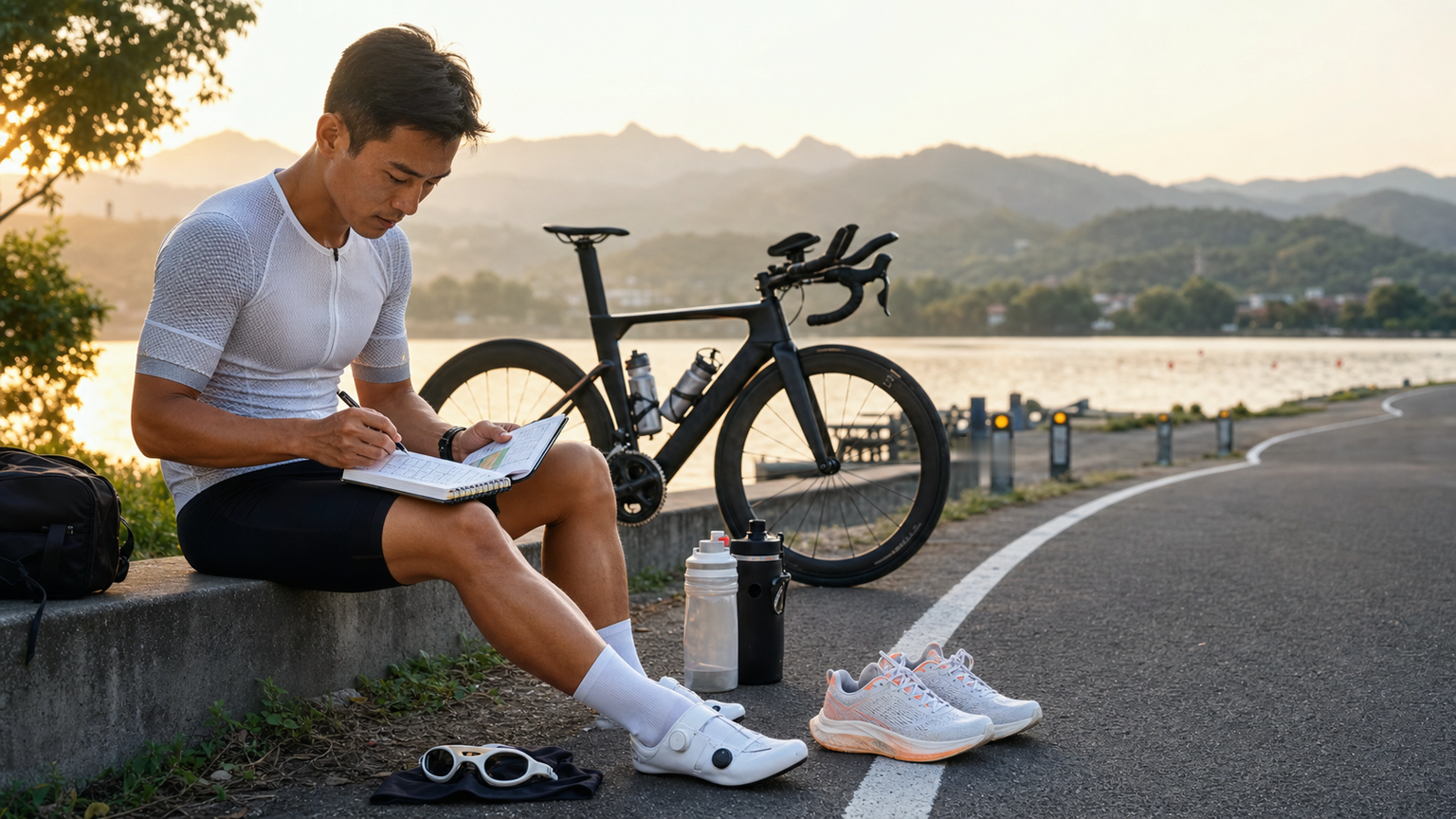
IRONMAN 140.6 Full-Distance Race Preparation: How to Plan a Year of Training
IRONMAN 140.6 km is the ultimate challenge in endurance sports: a 3.8 km swim, a 180 km bike, and a 42.195 km run. “Finish is winning” is not just a slogan—it is the mental anchor that carries athletes through a 10–17 hour race. To finish safely and successfully, you need at least 12–16 months of systematic preparation.
Annual Training Periodization
Assume your target race is in October, and start planning in November of the previous year:
Phase 1: Base Phase (November–February, ~16 weeks)
Goal: Build an aerobic foundation across all three disciplines and increase training tolerance
- Weekly training hours: 8–12 hours
- Intensity primarily in Z1–Z2 (easy aerobic), accounting for over 90% of training
- Swim: Focus on technique improvement, 2–3 sessions per week
- Bike: Accumulate long-distance mileage, with weekend long rides of 2–3 hours
- Run: Build a running volume base while avoiding injury
Key Principle: This phase may feel “too easy,” but a proper aerobic foundation is the key to subsequent high-intensity training. A common mistake among age-group athletes is introducing high intensity too early.
Phase 2: Build Phase (March–May, ~12 weeks)
Goal: Raise your power and pace ceilings in each discipline
- Weekly training hours: 12–15 hours
- Introduce threshold training and interval training (accounting for 15–20% of total volume)
- Bike: Power intervals (4×20 minutes at FTP intensity)
- Run: Tempo runs and lactate threshold training
- Swim: Race-pace sets and long-distance sets (3,000–4,000m per session)
Phase 3: Peak Phase (June–August, ~12 weeks)
Goal: Enhance race-specific fitness and simulate race conditions
- Weekly training hours: 15–20 hours
- Peak weeks can reach 22–25 hours (typically scheduled twice)
- Full brick sessions: Long ride of 5–6 hours followed immediately by a 30–45 minute run
- Race simulation week: Complete 80–90% of race distance
Key Long-Distance Training Milestones:
| Discipline | Longest Training Distance | Timing |
|---|---|---|
| Swim | 4–5 km | 8–10 weeks before race |
| Bike | 150–160 km | 6–8 weeks before race |
| Run | 30–35 km | 8–10 weeks before race |
Phase 4: Taper Phase (September, ~4 weeks)
Goal: Allow the body to recover and arrive at race day in peak condition
- Week 1: Reduce training volume to 60%
- Week 2: Reduce to 40%
- Week 3: Reduce to 25–30%, only light activation work
- Race week: Swim 1,500m, bike 30 minutes (including a few short sprints), run 20 minutes
Annual Training Volume Statistics (Reference Values)
| Discipline | Annual Training Volume |
|---|---|
| Swim | 300–400 km |
| Bike | 8,000–12,000 km |
| Run | 1,500–2,500 km |
| Total training hours | 600–900 hours |
Race Pacing Strategy
Swim (3.8 km)
- Avoid going out too fast in the first leg; find an athlete 5–10% faster than you to draft behind (drafting saves 20–30% energy)
- Target pace: 1:30–2:00 per 100 meters
Bike (180 km)
- Most critical: Pace conservatively at 65–75% of FTP
- Feeling “too easy” during the first 60 km is exactly right
- Refuel with solid food every 20–25 minutes (bananas, energy bars)
- Consume 60–90 grams of carbohydrates per hour
Run Marathon (42.195 km)
- Run the first 10 km 20–30 seconds slower than your target pace
- Use a run-walk strategy (run 9 minutes, walk 1 minute) to conserve energy
- Stop at every aid station; drink water plus cola (in the latter half)
Injury Prevention and Recovery
The most common injuries in full-distance triathlon training:
- Runner’s knee (iliotibial band syndrome): Prevention—increase weekly running volume by no more than 10% and strengthen glute muscles
- Shoulder overuse injuries: Maintain proper stroke technique in swimming and avoid excessive rotation
- Lower back pain: Core training for cycling and adjusting bike fit
Recovery Tools:
- Foam rolling (10 minutes every night)
- Cold water immersion (15–20 minutes after hard sessions)
- Adequate sleep (8–9 hours)
Mental Preparation
A full-distance race includes a “low point” that typically hits at the 20–30 km mark of the run. Prepare a few mental strategies:
- Set small goals (make it to the next aid station)
- Have a motivational song ready
- Remember your hardest training session—you will get through the race
Completing an IRONMAN 140.6 is one of the proudest achievements of many people’s lives. Train systematically, prepare patiently, and the finish line awaits you!
Related Reading
西進武嶺 免費訓練分析服務 Intervals | 練不夠還是練過頭?你哪一種類型選手?AI模型告訴你! | 備戰神器 | 公路車 訓練 | CT Yeh
4 年前
Live) 備戰2019彰化經典百K 賽前攻略 (已完賽請看新影片
7 年前
一日北高前的高裝檢 | 北高 360 | 挑戰11小時的裝備 | 一日雙塔 | 補給
6 年前
2019 夏季KOM 5小 完賽心得 準備攻略 東進武嶺 夏季登山王之路 Taiwan KOM Challenge
7 年前
實景訓練台) 彰化經典百K 高強度喵團 90分鐘 跟著一起練功 2019 Indoor workout Changhua Classic 100 Taiwan
7 年前
單車 一日北高 ( 雙城 ) 肥宅雙人瘋狂行 紀錄片 REACTO
10 年前
FTL 與 SYB 車隊專訪 西進武嶺 實用攻略分享! 2小時 如何練?!你不知道的眉角!新手準備武嶺必看 EP1 | 實力派女車友 | 精華版 | 公路車 | CTYeh
4 年前
半日 小台灣 極限單車路線挑戰實錄
7 年前