文章導覽
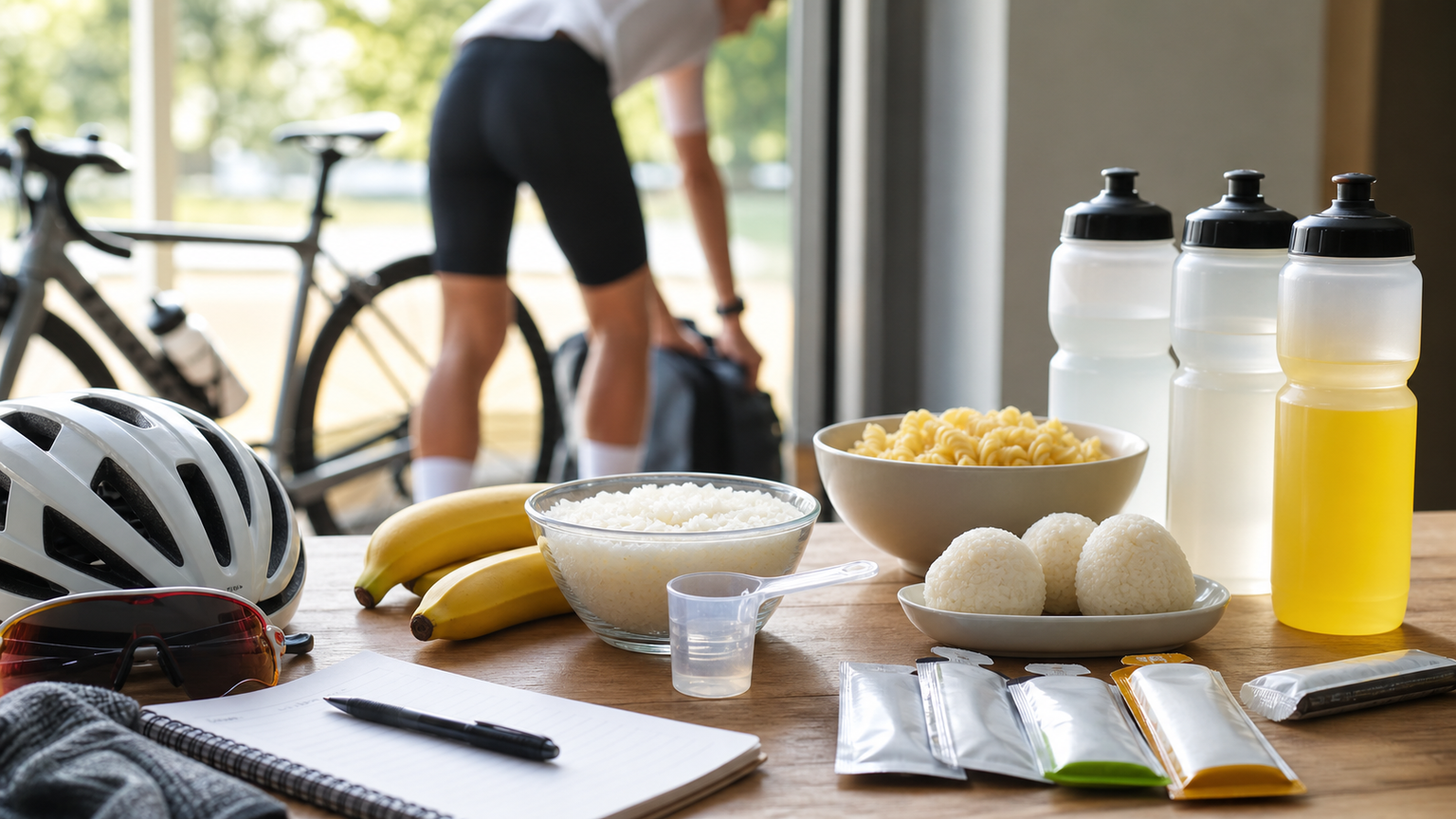
Race Nutrition Strategy: What to Eat the Day Before, Race Morning, and During the Race
“Fuel right, and you’ll run right and ride right.” Training and equipment determine your ceiling, while your race nutrition strategy determines whether you can reach that ceiling on race day. This article provides a complete race nutrition strategy applicable to marathons, triathlons, and road cycling races.
Energy System Fundamentals
Why Is Fueling So Important?
The main energy sources for endurance sports:
| Energy Source | Storage Capacity | Characteristics |
|---|---|---|
| Muscle Glycogen | Approx. 1,200–1,800 kcal | Quickly available, limited supply |
| Liver Glycogen | Approx. 300–400 kcal | Maintains blood sugar, limited supply |
| Body Fat | Tens of thousands of kcal | Stored in abundance, but slow to utilize |
| External Carbohydrates | Depends on fueling | The most important factor to manage during a race |
Core Issue: Glycogen stores are limited and will be depleted after approximately 2–3 hours of high-intensity exercise. Without replenishment, your pace will drop significantly (hitting “the wall”).
The Day Before the Race
Carbohydrate Loading
The purpose of carbohydrate loading is to maximize glycogen stores in the muscles and liver before race day.
When to use it: Endurance events lasting over 90 minutes (full marathon, 70.3 triathlon, cycling races over 120 km)
Not applicable for: Sprints, 5K–10K road races (existing stores are sufficient)
Carbohydrate Loading Calculation
Consume 10–12 grams of carbohydrates per kilogram of body weight (50–80% more than usual)
Example (70 kg runner):
- Target: 700–840 grams of carbohydrates (approx. 2,800–3,360 kcal from carbohydrates)
- Breakdown: White rice (600 g) provides about 210 g of carbohydrates, pasta (300 g) provides about 220 g of carbohydrates…
Food Choices for the Day Before
Recommended (high-carb, low-fiber):
- White rice, white noodles, pasta
- White bread, bagels
- Bananas, grapes, white rice balls
- Sports drinks, fruit juice
Avoid (high-fiber, may cause gastrointestinal discomfort):
- Whole grains, oatmeal
- Large amounts of vegetables (especially legumes)
- High-fat foods (difficult to digest)
- New foods (don’t try anything new before a race!)
Day-Before Schedule
| Time | Meal | Portion |
|---|---|---|
| Breakfast | White rice + fried egg + banana | Normal portion |
| Lunch | Pasta + tomato sauce + chicken breast | Larger portion |
| Afternoon snack | White bread + jam + sports drink | Light supplement |
| Dinner | White rice + steamed chicken leg + small amount of vegetables | Largest portion (main loading meal) |
| Before bed | Banana or a small glass of juice | Light |
Race Morning Breakfast
Golden Rules
- Timing: Finish eating 2.5–3 hours before the start
- Portion: Moderate (don’t overeat, avoid indigestion)
- Choice: Familiar foods (don’t try anything new!)
Recommended Breakfast Combinations
Full marathon runners (3 hours before the start):
- 2–3 slices of white toast + jam
- 1–2 bananas
- Plain rice porridge (can add a small amount of egg)
- 500 ml sports drink
- Total: Approx. 60–80 g of carbohydrates
Triathletes (3 hours before the start):
- 1 bowl of white rice
- 2 boiled eggs
- 1 banana
- 1–2 spoons of honey
- Total: Approx. 80–100 g of carbohydrates
Cycling races (2 hours before the start, if the course is shorter):
- 2 slices of white toast + peanut butter
- 1 banana
- 300 ml water
Hydration Management on Race Day
- Drink 500 ml of water immediately after waking up
- Drink water moderately with breakfast (don’t chug too much at once)
- 30 minutes before the start: 250–500 ml of water or electrolytes
Fueling Strategy During the Race
Full Marathon Fueling Plan
| Mileage | Fueling Recommendation | Notes |
|---|---|---|
| 0–15 km | Water only | Conserve digestive system energy, no food |
| 15–20 km | First gel | Glycogen depletion becomes significant |
| 25 km | Second gel + electrolytes | Sodium replenishment becomes important |
| 30 km | Third gel | Critical fueling to prevent hitting the wall |
| 35 km | Supplement based on condition | If feeling good, can take one more gel |
| Final 7 km | Cola (if available) | Dual boost of caffeine and sugar |
Hourly carbohydrate intake target: 60–80 g (roughly one gel every 30 minutes)
Cycling Race Fueling Plan (Example: 4-Hour Race)
| Time | Fueling | Amount |
|---|---|---|
| Every 20–25 minutes | Water | 150–200 ml |
| Every 45 minutes | Solid food | Banana, energy bar |
| Every 30 minutes | Carbohydrate calculation | Target 60–80 g/hour |
Practical Carbohydrate Content Reference
| Food | Portion | Carbohydrate Content |
|---|---|---|
| Energy gel | 1 packet (30–40 g) | 20–25 g |
| Banana (medium) | 1 piece | 23–27 g |
| Energy bar | 1 bar | 25–45 g |
| Electrolyte tablet | 1 tablet | 3–5 g |
| White rice ball | 1 piece | 30–40 g |
Electrolyte Replenishment
Prolonged sweating causes electrolyte loss, primarily sodium:
- Hourly sodium loss through sweat: 400–1,000 mg (varies by individual)
- Risk of hyponatremia: Consuming too much water without replenishing sodium can lead to hyponatremia (dizziness, nausea)
- Recommendation: Replenish 500–700 mg of sodium per hour (via electrolyte drinks or sodium tablets)
Common Race Nutrition Mistakes
- Eating too much at breakfast: Leads to gastrointestinal discomfort during the race
- Trying new foods: Using untested fueling products before and during the race
- Forgetting to hydrate: Focusing on pace during the race and forgetting to drink at regular intervals
- Drinking only plain water: Drinking only water without electrolytes during long-distance races
- Fueling too late: Supplementing only after feeling hungry or fatigued (should be preventive)
Race nutrition strategy is a skill that needs to be repeatedly tested and optimized during training. Starting with your next long training session, follow your race fueling plan to find the combination that works best for you!
Related Reading
- Race Day Nutrition Plan: A Complete Eating Strategy from the Day Before to the Finish Line
- Pre-Race Week Nutrition Supercompensation Strategy: Maximizing Glycogen Stores
- Cycling Race Fueling Strategy: What to Put in Your Pockets and When to Eat
- Running Nutrition Science: Carbohydrate Loading, Race Day Fueling, and Recovery Nutrition