From Pool to Marathon Sea Swim: This Is a System
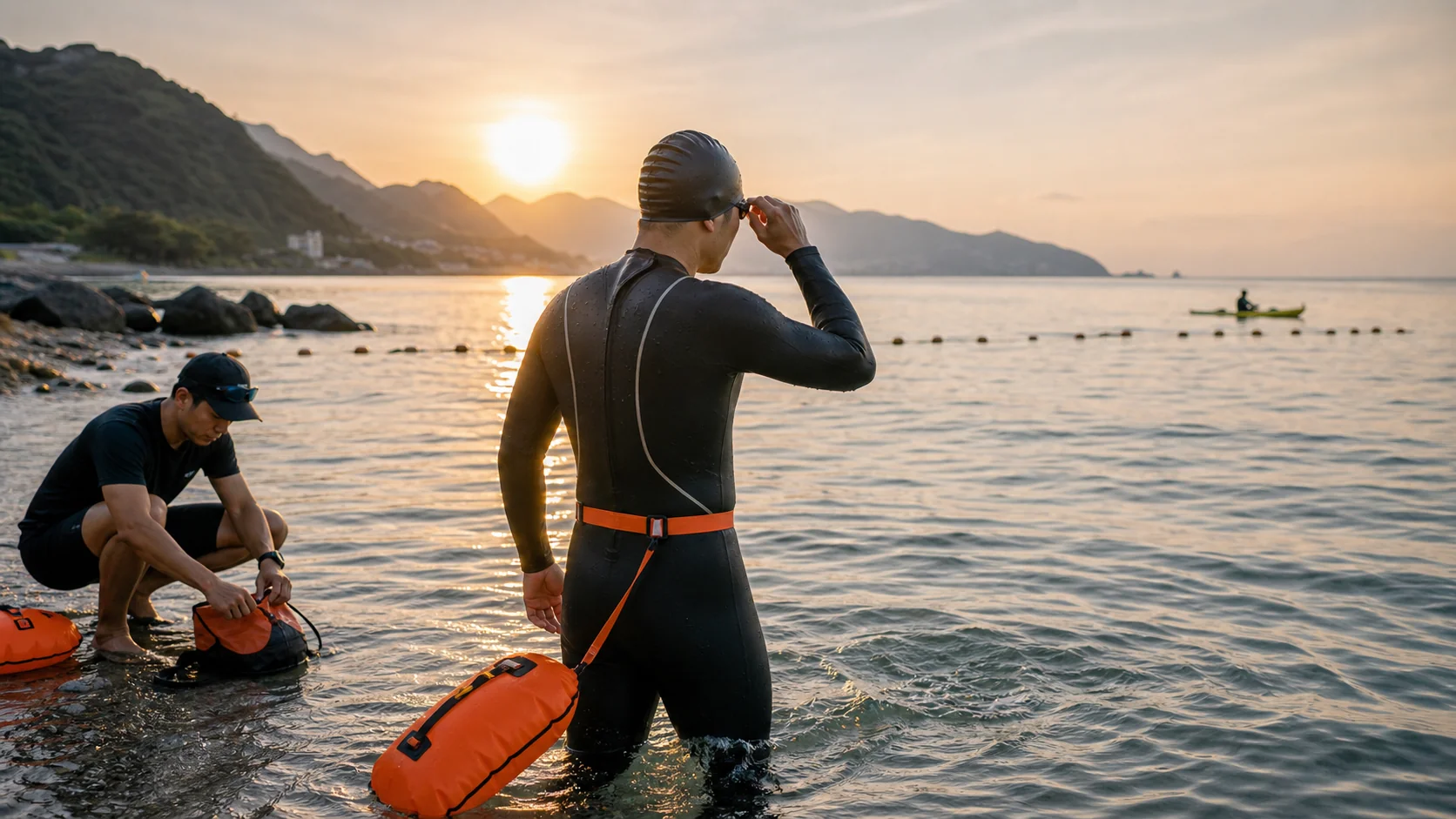
Many swimmers who finish their first triathlon or their first 1500m open water swim start dreaming about longer distances - a marathon sea swim, a long-distance open water race. But long-distance open water swimming isn’t as simple as “doubling your training volume.” It’s a system that combines pacing, fueling, mental preparation, safety, and technique. This article pulls all of those pieces together into one practical roadmap for challengers.
Training Structure: Three Pillars - Volume, Key Long Sessions, and Open Water
| Pillar | What It Involves | Purpose |
|---|---|---|
| Aerobic volume | Polarized distribution, roughly 80% easy aerobic swimming | Build the aerobic engine that can sustain a long distance |
| Key long sessions | One progressively longer continuous swim per week | Adapt to the physical and mental demand of swimming continuously without pool walls |
| Open water practice | Regular training in conditions similar to race day | Practice sighting, drafting, mental toughness, and cold water exposure - things you can’t learn in a pool |
Principle for progressing your long sessions: increase continuous distance gradually (roughly 10% increase per week as an upper limit), and insert a deload week every 3-4 weeks to avoid swimmer’s shoulder or overtraining from mileage spiking too fast.
Pacing: One Effort Level for the Entire Swim
Almost every long-distance blow-up comes from going out too fast. The iron rule: start at the effort level you can sustain all the way to the finish, and accept that it will feel psychologically too slow. Make good use of perceived effort pacing (calibrated by training without a watch) and drafting (which can save 7-18% of energy), and treat the marathon swim as a game of patience rather than a race of speed. Break the swim down mentally into segments - “buoy to buoy,” “100 strokes at a time” - rather than thinking about the whole distance at once.
Fueling: Only Needed for Long Distances, and It Must Be Rehearsed
- Within 90 minutes, you can usually rely on pre-race glycogen stores; swims longer than 75-90 minutes need fueling during the swim: 30-60g of carbohydrate plus electrolytes every 30-45 minutes.
- In open water, use a back-mounted feed buoy to carry gels or water, or make use of a support boat or turnaround points.
- Rehearse your entire fueling schedule and products at least 3 times in long training sessions - never try something new on race day.
- Be careful not to swallow too much (sea)water, which can cause stomach discomfort and electrolyte imbalance.
Mental Preparation: Write a Script for Every Scenario in Advance
Every marathon swim includes a low point where you ask yourself “can I actually make it to the finish?” Write and rehearse scripts before race day: for choking on water, roll onto your back and extend your exhale; for a mental low, pull your focus back to “next stroke, high elbow, full exhale”; for loneliness or cold, use counting your strokes to occupy your mind. When a scenario you’ve already rehearsed happens for real, you follow a process instead of panicking.
Safety: The Top Priority in Any Long-Distance Swim
The longer the distance, the higher the risk of hypothermia and other incidents - safety comes before everything else:
- Assess water temperature and decide whether to wear a wetsuit; in very cold water add a thermal cap, and for long swims consider wetsuit gloves and socks.
- Wear a brightly colored cap plus a tow float for the entire swim; outside of organized events, always swim with a partner or an accompanying boat.
- Understand cold shock response (the first minute in the water is the most dangerous - control your breathing before you start swimming) and hypothermia warning signs (weak, uncoordinated stroke, confusion - stop immediately if these appear).
- Set conservative turnaround and exit criteria, and have the courage to follow them - a marathon swim is only truly finished when you make it home safely.
Sample 12-Week Race Countdown
| Weeks | Focus |
|---|---|
| 12-7 | Aerobic volume plus technique; long sessions get progressively longer; introduce open water training |
| 6-3 | Race-pace and high-intensity stimulus; long sessions approach the target distance; rehearse open water skills (sighting, drafting, fueling) |
| 2-1 | Taper: cut volume, keep intensity, maintain frequency; finalize equipment and fueling |
| 2-3 days before the race | Short activation session, sleep and glycogen replenishment, review mental scripts |
Coach’s note: Swimmers who finish a long-distance open water swim rarely talk afterward about how fast they swam. Almost all of them talk about how they made it through the moment they wanted to quit. Treat every part of your training - pacing, fueling, mental preparation, safety - as a deposit you’re making in advance for that moment. Get through it, and what you take home isn’t just a medal - it’s a stronger version of yourself.
The finish line of a marathon swim is actually drawn on the day you start training the right way.
Related Reading
- 1km Open Water Swim Training Plan: Transitioning from Pool to Sea Swimming
- Advanced Open Water 5K Challenge: Training Methods to Break Through Distance Plateaus
- Open Water Swim Training Plan: A Progressive Program from 500m to 3.8km
- Long-Term Swim Training Planning: A 2-Year Roadmap from Beginner to Completing a 1500m Freestyle
FTL 與 SYB 車隊專訪 西進武嶺 實用攻略分享! 2小時 如何練?!你不知道的眉角!新手準備武嶺必看 EP1 | 實力派女車友 | 精華版 | 公路車 | CTYeh
4 年前
西進武嶺 免費訓練分析服務 Intervals | 練不夠還是練過頭?你哪一種類型選手?AI模型告訴你! | 備戰神器 | 公路車 訓練 | CT Yeh
4 年前
一日北高前的高裝檢 | 北高 360 | 挑戰11小時的裝備 | 一日雙塔 | 補給
6 年前
西進武嶺 自製新版AI配速表產生器 x 賽前攻略 抱佛腳! 沒有功率計也可以產生配速表嗎?有什麼其他眉角賽前要注意的呢? | 西進武嶺 / 東進武嶺 KOM 攻略 | 公路車 | CT Yeh
4 年前
一日北高/長距離團騎 常見問題補充篇 / 組團或跟團的眉角 / 壯車友容易被瘦車友慢性拉爆 / 原來屁股痛可能是這個原因...? / 風場配速法 / 公路車 / CT Yeh
2 年前
備戰 戀戀197 賽前關門點分析 西濱團練 #公路車 4K高畫質
6 年前
#公路車 #西進武嶺 配速配瓦實驗 坡度分析 四小時內攻略 建大盃 NeverStop #西進武嶺攻略
6 年前
一日北高 11小時 賽後心得分享篇 | TWB北高360 | 一日雙城 | 單車 | 公路車
6 年前