Endurance Exercise During Pregnancy: A Safety Framework for Intensity Adjustment, Body Temperature, and Maternal Hemodynamics
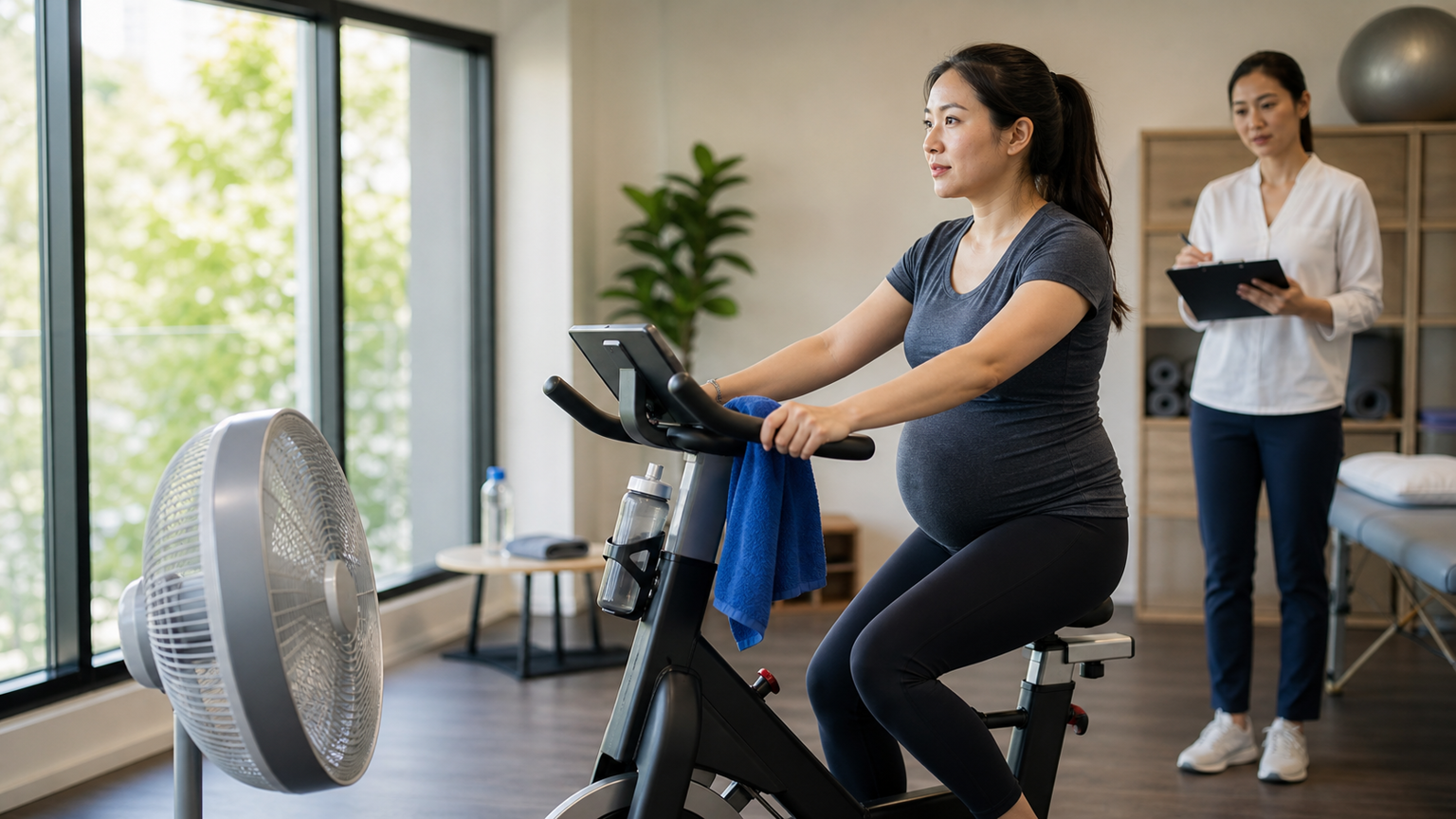
Prerequisite: Individualized, with Obstetric Care Team Instructions as the Highest Priority
This article provides a general educational framework. Every pregnant woman’s health status, obstetric risk profile, and pre-pregnancy training background are different. Any exercise program during pregnancy must first be evaluated and approved by an obstetrician/gynecologist, and this article cannot replace medical advice. Under the premise of uncomplicated, low-risk pregnancies, the consensus in modern sports medicine is that regular moderate-intensity exercise is safe and beneficial for most pregnant women and their fetuses—the key is “adjustment” rather than “cessation.”
How Physiological Changes During Pregnancy Affect Training
| System | Pregnancy Changes | Training Implications |
|---|---|---|
| Cardiovascular | Blood volume and cardiac output increase significantly; resting and exercise heart rates rise | Heart rate zone references become unreliable; switch to RPE/talk test |
| Body Temperature | Heat dissipation demands increase; overheating poses risk to the fetus | Avoid hot/humid environments, prolonged high intensity; pay attention to hydration |
| Respiratory | Minute ventilation increases; feels breathless earlier during exercise | Perceived exertion shifts earlier; this is normal |
| Connective Tissue | Relaxin loosens ligaments | Joint stability decreases; avoid high-impact, unstable movements |
| Center of Gravity and Core | Uterine enlargement; risk of diastasis recti | Adjust core training modalities; avoid prolonged supine positioning (second and third trimesters) |
| Hemodynamics | Supine position compresses the inferior vena cava | Avoid prolonged supine exercise positions in the second and third trimesters |
How to Adjust Intensity
Heart rate is unreliable during pregnancy due to hemodynamic changes. Use Rating of Perceived Exertion (RPE) and the “talk test” instead: an intensity at which you can maintain a conversation is generally safe moderate intensity. The general principle is to maintain regular, moderate aerobic exercise (most guidelines use moderate intensity and a certain weekly accumulated duration as a framework, but the specific amount should be individualized by your physician). Athletes who were well-trained before pregnancy may typically maintain a higher baseline with physician approval, but pursuing new performance peaks or maximal intensity testing during pregnancy is not recommended.
Adjustment Priorities by Trimester
- First Trimester: Fatigue and nausea are common; adjust flexibly based on daily condition—don’t push through. Pay attention to hydration and avoid overheating.
- Second Trimester: Usually a window of better physical sensation; regular aerobic exercise and moderate strength training can be maintained, but begin avoiding prolonged supine positions and high-fall-risk activities (e.g., outdoor road cycling risks, technical off-road riding).
- Third Trimester: Increased load and altered balance; reduce impact (swimming, stationary cycling, and walking are often more accommodating), further reduce intensity and volume, and listen closely to your body’s signals.
Special Considerations for Strength and Core Training
- Strength training can continue with approval, but avoid the blood pressure spikes caused by breath-holding (Valsalva maneuver), avoid prolonged supine positioning, lower absolute loads, and emphasize control.
- Core training focus shifts to deep core and pelvic floor (breathing coordination, diaphragm–pelvic floor connection), avoiding high-tension flexion movements that can worsen diastasis recti (e.g., extensive sit-ups).
- Pelvic floor training has evidence-based value for childbirth and postpartum recovery and can be initiated during pregnancy.
Warning Signs to Stop Exercise Immediately and Seek Medical Attention
Stop exercise and contact your medical team if any of the following occurs: vaginal bleeding, regular painful contractions, amniotic fluid leakage, shortness of breath (occurring before rest), dizziness/syncope, chest pain, calf pain with swelling, or a noticeable decrease in fetal movement. This list should be confirmed as a personalized version with your physician before pregnancy.
Mindset Framework
The goal of training during pregnancy is not to maintain competitive performance or chase PBs, but to maintain health, fitness baseline, and psychological well-being, and to pave the way for childbirth and postpartum recovery. Reframing it from a “training cycle” to “health maintenance and physical preparation” makes decision-making much clearer.
“My instruction to athletes during pregnancy is always the same: today we are not training to get faster—we are keeping both you and the baby well, and banking reserves for that long road back postpartum. Intensity yields to safety; this is not a step backward, it’s a shift to a more important goal.” —A sports medicine physician specializing in pregnancy and women’s exercise
Related Reading
- Endurance Training During and After Pregnancy: Safety Boundaries and Return Timeline
- Endurance Exercise During Pregnancy: Training Adjustments for Triathletes
- Exercise and Pregnancy: A Comprehensive Guide to Safe Prenatal Exercise—From Coaching and Sports Science Perspectives
- Exercise During Pregnancy and Postpartum Return: A Complete Guide for Endurance Athletes
西進武嶺 免費訓練分析服務 Intervals | 練不夠還是練過頭?你哪一種類型選手?AI模型告訴你! | 備戰神器 | 公路車 訓練 | CT Yeh
4 年前
[教學] Premiere 影片 手震 修正 教學 防抖 單眼 影像 GoPro 穩定 Video Stabilization
8 年前
西進武嶺 自製新版AI配速表產生器 x 賽前攻略 抱佛腳! 沒有功率計也可以產生配速表嗎?有什麼其他眉角賽前要注意的呢? | 西進武嶺 / 東進武嶺 KOM 攻略 | 公路車 | CT Yeh
4 年前
#公路車 #Fitting 靠人工智慧APP 幫你調整單車
6 年前
FTL 與 SYB 車隊專訪 西進武嶺 實用攻略分享! 2小時 如何練?!你不知道的眉角!新手準備武嶺必看 EP1 | 實力派女車友 | 精華版 | 公路車 | CTYeh
4 年前
一日北高前的高裝檢 | 北高 360 | 挑戰11小時的裝備 | 一日雙塔 | 補給
6 年前
靠單車減肥35公斤 心得分享與整理
7 年前
Never Stop 西進武嶺 前後雙機 完整全程錄影 訓練台 實境
8 年前