Bringing Exercise into Travel: A Practical Guide to Uninterrupted Training on Business Trips and Vacations
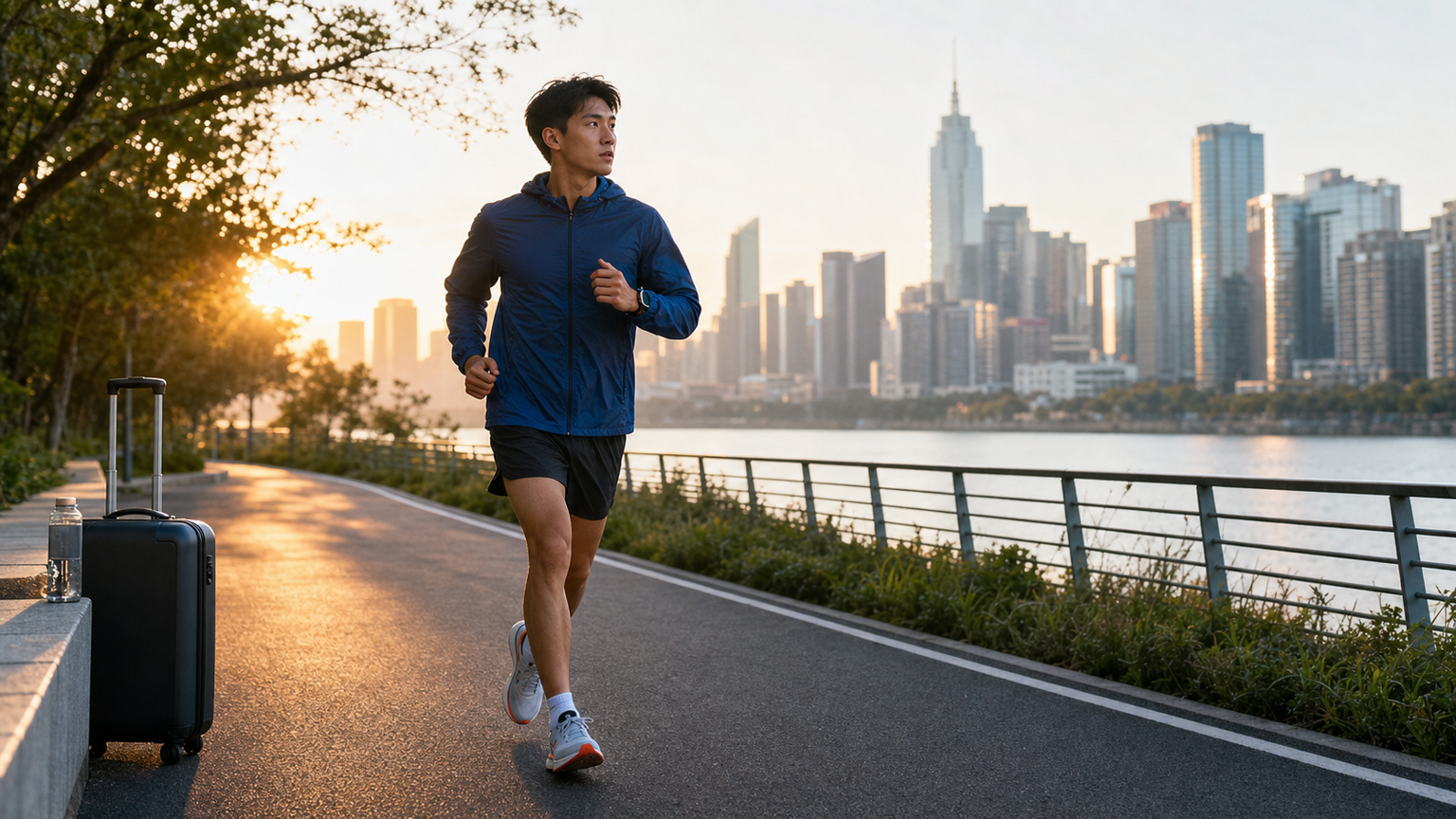
The Break in the Chain Often Starts with “One Trip”
The most common breaking point for training habits isn’t a slump; it’s a business trip or family vacation—time is fully occupied, the environment is unfamiliar, and traveling with family makes it inconvenient. But travel is actually a scenario that “requires the least sacrifice and only needs design.” People who know how to train while traveling instead treat it as a perk for exploring new routes.
Three Specifications for Travel Training
| Specification | Content | Suitable For |
|---|---|---|
| Maintenance | Not seeking improvement, only seeking to avoid breaking the chain | Packed schedules, family vacations |
| Exploration | Using running/cycling to get to know an unfamiliar city | Independent travel, solo business trips |
| Goal-Oriented | Dedicated training camps/overseas races | Having a clear race goal |
Most trips should be set to “Maintenance”—the goal is not to reset to zero, not to hit a new high.
The Minimal Gear Philosophy
The enemy of travel training is “preparation being too troublesome.” Running is the king of travel training: a pair of shoes, one set of functional clothing, no venue or equipment needed, ready to train as soon as you land. Minimize gear requirements to maximize execution rate.
How to Choose Running Spots in an Unfamiliar Environment
- Riverside/park/lake loop trails near the hotel: usually safe and easy to locate
- Use the hotel front desk or map apps to check “popular local running routes”
- Safety/nighttime considerations: In unfamiliar cities, prioritize daytime, well-populated routes; safety outweighs mileage
- Treat “exploring a new city” as a reward: Getting to know a city on your own two feet is the most cost-effective way to play during travel
Time Design That Doesn’t Disturb Family
The key to maintaining training during family vacations is “not sacrificing time together”: complete it in the early morning while the family is still sleeping (most attractions aren’t open yet either, so you’re not wasting sightseeing time), and return just in time to have breakfast together and head out. Fitting training into “non-conflicting gaps” is the only long-term solution for family travel training.
Practical Approaches for the Business Trip Version
- Hotel has a gym: Maintaining cardio on a treadmill/trainer is sufficient
- Packed schedule: Use fragmented, high-intensity short sessions (short duration, sufficient benefit) to replace long, drawn-out ones
- During jet lag: Don’t force high intensity; stabilize your biological clock first, focusing on recovery activities
The Extension of Bringing Gear Abroad
If it’s a goal-oriented trip (overseas race/training camp), you’ll need to handle bike transport, carrying nutrition supplies, and post-arrival adaptation and test rides. At this point, “maintenance” upgrades to “race preparation,” and the preparation level is completely different (check airline and race regulations clearly in advance).
Mindset: Travel Isn’t a Breach in Training, It’s a Change of Scenery
Redefine travel training from a “compromise” to “maintaining your identity in a new place.” Even if it’s just a relaxed 30-minute run around the hotel, what you’re maintaining isn’t just physical fitness, but the uninterrupted self-identity of “I am someone who exercises.”
A true trainer doesn’t ask “Can I train while traveling?” but only “What specification will I use to maintain it this time?” Someone who can still lace up their shoes and head out in the early morning of an unfamiliar city has already surpassed most people whose chain breaks the moment they leave home.
Related Topic Reading
- The Dilemma of Work and Training: How to Maintain Exercise Habits in the Early Morning, Late Night, and During Business Trips
- Maintaining Riding During Travel or Business Trips: A Retention Strategy with Minimal Training Volume
- Travel Nutrition for Athletes: How to Eat When Competing Abroad to Avoid Undoing Your Hard Work in a Foreign Land
- Combining Road Running with Tourism: Planning a Trip to Participate in a Local Road Race During a Business Trip
滑雪新手們慘摔學習全紀錄(請開字幕),滑雪好好玩 | Snowboard + Ski | 岩原 スキー場 | 滑雪APP使用 | GoPro Max
6 年前
西進武嶺 免費訓練分析服務 Intervals | 練不夠還是練過頭?你哪一種類型選手?AI模型告訴你! | 備戰神器 | 公路車 訓練 | CT Yeh
4 年前
大家都在開箱的...單車用藍芽對講耳機真的有幫助嗎? SENA BiKom 20 長距離旅遊 & 海鷗繞圈賽 實際體驗心得 / 公路車 / CT Yeh
9 個月前
FTL 與 SYB 車隊專訪 西進武嶺 實用攻略分享! 2小時 如何練?!你不知道的眉角!新手準備武嶺必看 EP1 | 實力派女車友 | 精華版 | 公路車 | CTYeh
4 年前
摔車後補裝備: 好市多新款單車安全帽& Specialized Romin 北高整路屁股都不痛的坐墊 | 一千元居然有MIPS | CT Yeh | 公路車
4 年前
南竿 單車 | 老婆公路車首航 | 偽出國體驗 | 4K 高畫質 | 綠色騎跡低碳輕旅遊 | #公路車
5 年前
一日北高前的高裝檢 | 北高 360 | 挑戰11小時的裝備 | 一日雙塔 | 補給
6 年前
單車 一日北高 ( 雙城 ) 肥宅雙人瘋狂行 紀錄片 REACTO
10 年前