What to Do on Bad-Weather Days: Strategies to Keep Training Uninterrupted in Taiwan's Rainy Climate
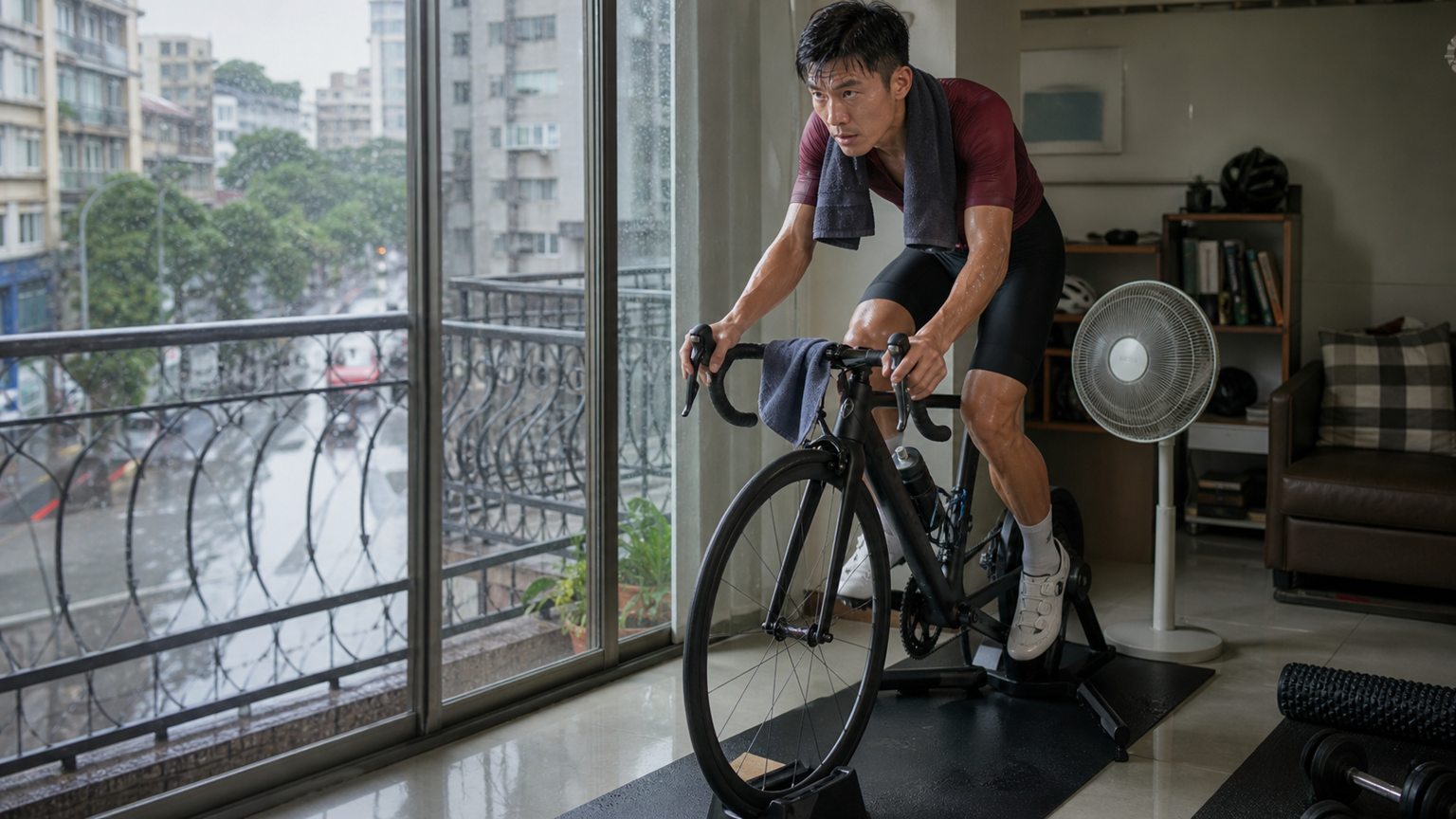
In Taiwan, Bad Weather Is One of the Biggest Enemies of Training
Taiwan’s plum rain season, afternoon thunderstorms, and cold, wet winter northeast monsoons—the proportion of days each year that are “unsuitable for outdoor training” is extremely high. For many people, a break in training isn’t because of laziness; it’s because “when it rains, I don’t know what to do.” Those who can handle bad weather are the ones who can sustain long-term training in Taiwan.
First, Establish a “Safety Threshold” for Decision-Making
Not all bad weather means you should tough it out on the road or trail. First, distinguish clearly:
| Situation | Judgment |
|---|---|
| Light rain, no thunder, road surface acceptable | Outdoor is possible, but increase visibility and reduce speed |
| Heavy rain, poor visibility, wet and slippery roads | High risk; prioritize indoor training |
| Lightning, strong winds, typhoon | Absolutely do not go out; safety trumps the workout plan |
| Low temperature + humidity + wind (hypothermia risk) | Switch to indoor or drastically shorten the session |
“Knowing whether or not to go out” is itself an advanced skill. Risking your life for a single workout is the worst trade-off you can make.
Core Solution: Build an “Indoor Backup System”
In Taiwan’s environment, almost all long-term consistent trainers have a backup plan that doesn’t depend on the weather:
- Cycling: A smart trainer plus structured workouts—rainy days are actually the perfect time for precise power-zone training (no interference from traffic lights or traffic)
- Running: A treadmill can handle pace work and intervals; or use a nearby indoor facility
- Common: Schedule strength training on bad-weather days, which conveniently fills the gaps often neglected due to aerobic training
Key mindset shift: Bad weather isn’t “no training available”; it’s “switching to something else that should be trained but is often overlooked.”
The Hidden Advantages of Indoor Training
- No interference from weather, traffic, or safety concerns—you can do the most precise structured workouts
- High time efficiency (no wasted time traveling to a route or waiting at red lights)
- You can simultaneously strengthen muscular fitness and address weaknesses
Many people, during the forced-indoor rainy season, actually build a more solid foundation than they do on sunny days.
Solutions for When Indoor Training Gets Hard to Sustain
The biggest enemy indoors is “boredom.” Solutions: virtual cycling software/structured workouts provide a sense of purpose; place yourself in an environment where you can be distracted (video/audio); break it into smaller segments; sync up with remote partners. Turning “enduring indoor training” into “structured indoor training” makes a huge difference in completion rates.
Mindset: Don’t Try to “Make Up for Lost Time”
If bad weather forces you to cut back or rest, there’s no need to compensate with “revenge training.” Revenge training is a shortcut to overtraining and injury. Just aim for the overall weekly average to hit your targets; don’t punish yourself over a single missed session.
Build Bad Weather into Your Plan
Since Taiwan’s rainy season is inevitable, when planning your annual training you should assume “there will be a period dominated by indoor training,” rather than treating every rainstorm as an emergency. Normalize it, systematize it, and it will no longer be a reason for a break in training.
Those who can train consistently in Taiwan aren’t lucky enough to have sunny days every day; they’ve long been prepared for “what to do when it rains.” You can’t control the weather, but you can control whether you let it interrupt you.
Related Reading
- Rainy Season Training Strategies: Maintaining Training Quality and Safety in Monsoon Environments
- The Complete Guide to Running in Rain and Cold Weather: Gear, Safety, and Training Adjustments
- Indoor Trainer Workout Library: Complete Plans for Winter and the Rainy Season (SST/Micro-Bursts/Pyramids + ERG Principles)
- Weather Adaptation for Road Running Training: Alternative Plans for Cold Snaps, Heavy Rain, and Typhoons
一日北高前的西濱集訓 | 跟著11小時軍團 | 300W踩不動的大逆風 | 輪車破風差幾瓦?
6 年前
下雨天就是要改車 #ceramicspeed #bike
1 年前
2021 TBA 一日北高 360 慘摔失敗行... 明年再戰濁水溪 | 暴雨的北高真的是OOXX | 尖叫雞進化再升級 | 公路車 | CT Yeh
4 年前
TBA 北高360 逆風爆熱再送空汙 苦行挑戰賽全記錄 4K沈浸式臨空畫質| 公路車 | CT Yeh
3 年前
雨戰! 西進武嶺員工旅遊 加料 各路段大數據分析 | 同事端出5公斤的公路車來挑戰!? EP1
4 年前
一日北高前的高裝檢 | 北高 360 | 挑戰11小時的裝備 | 一日雙塔 | 補給
6 年前
一日北高/長距離團騎 常見問題補充篇 / 組團或跟團的眉角 / 壯車友容易被瘦車友慢性拉爆 / 原來屁股痛可能是這個原因...? / 風場配速法 / 公路車 / CT Yeh
2 年前
西進武嶺 免費訓練分析服務 Intervals | 練不夠還是練過頭?你哪一種類型選手?AI模型告訴你! | 備戰神器 | 公路車 訓練 | CT Yeh
4 年前