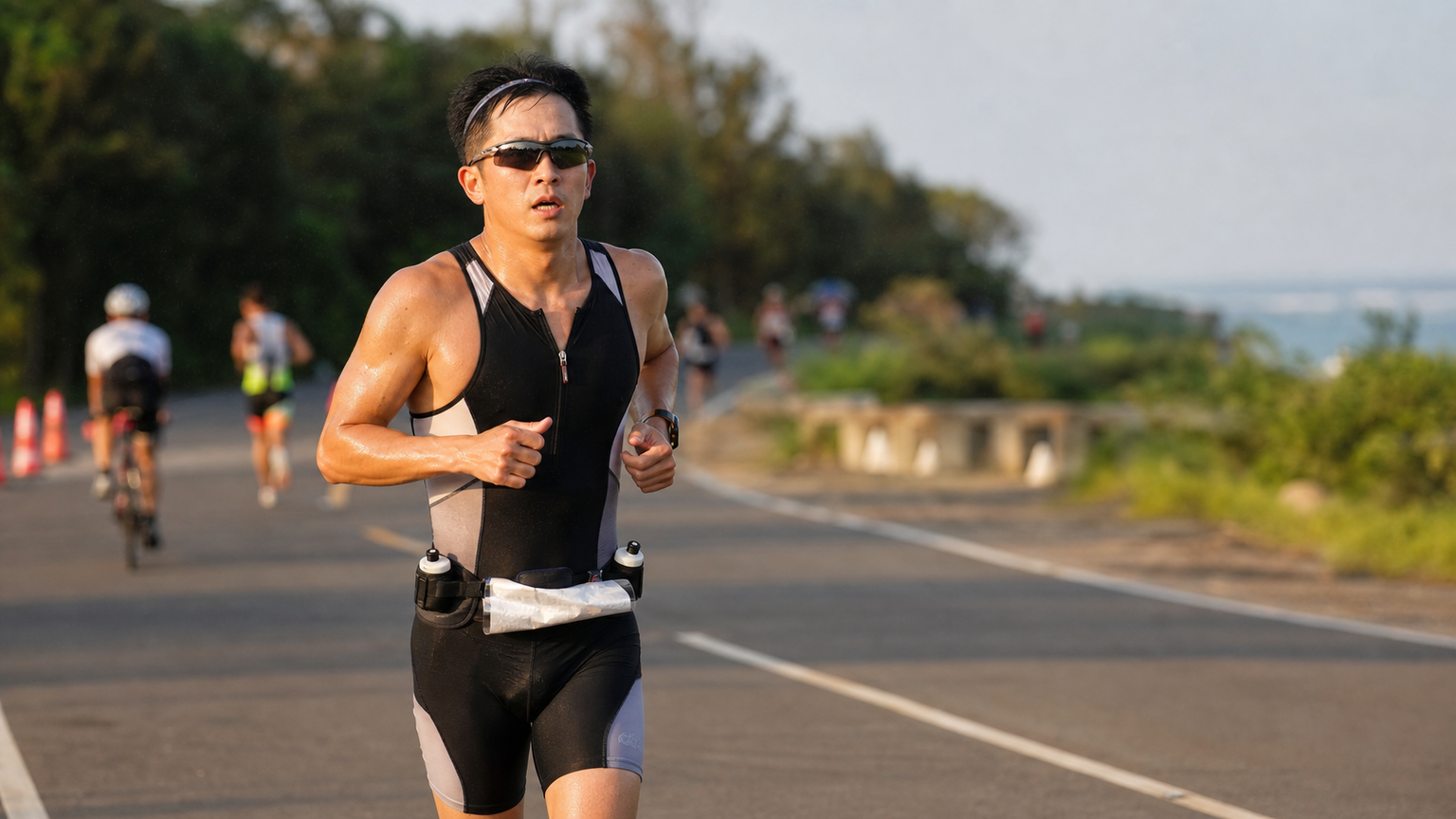
Year One: The Arrogance of the Bike Leg
In my first 70.3, I set a PB on the bike leg, pushing my average power to 88% of FTP (IF 0.88), and got off the bike feeling smug. The first 8km of the marathon was fine, but after 10km my legs felt drained, and the second half fell apart to over 7 minutes per kilometer. My final time was 5:48, with the run 25 minutes slower than my training pace.
Two-Year Data Comparison
| Item | Year One (Blow-Up) | Year Two (Corrected) |
|---|---|---|
| Bike IF | 0.88 | 0.80 |
| Bike Split | 2:28 | 2:34 (+6 min) |
| Run First Half | 47:00 | 49:30 |
| Run Second Half | 1:08:00 (blown up) | 48:00 |
| Overall Time | 5:48 | 5:09 |
Root Cause of the Blow-Up
The “6 minutes saved” on the bike leg were repaid with 20 extra minutes of blow-up on the run. My mistake wasn’t a fitness issue—it was pacing greed. An IF of 0.88 was simply overdrawing on my training base.
Year Two Corrections
My coach changed only three things: strictly cap bike IF at 0.80, force-feed carbs every 20 minutes on the bike, and deliberately run the first 3km of the run 12 sec/km slower. The hard part was suppressing the urge on the bike to think, “I can go faster.”
The Epiphany on the Course
In year two, people kept passing me on the bike, and I held back from chasing them. By the 15km mark of the marathon, I was picking off those same riders one by one. On that final stretch, I experienced the joy of a “negative split” for the first time.
The Metabolic Ledger of “Saving 6 Minutes, Losing 20”
A bike IF of 0.88 in year one looked smart, but it was essentially pacing greed: for every 0.05 your IF exceeds your personal sustainable threshold, your run pace degrades by roughly 15–30 seconds per kilometer, and the blow-up point comes earlier. The 6 minutes saved on the bike in year one were repaid with interest as 20 extra minutes of collapse in the second half of the run—this wasn’t a lack of fitness, it was spending power that wasn’t yours to borrow.
Two-Year Three-Item Correction Comparison
| Correction Item | Year One | Year Two |
|---|---|---|
| Bike IF | 0.88 | 0.80 |
| Bike Carbs | Random | Forced every 20 min |
| First 3km of Run | Full speed | Deliberately 12 sec/km slower |
| Run Second Half | Blown up (1:08) | Negative split (48 min) |
Common Mistake: The Urge to “Go Faster” on the Bike
The hardest part of year two wasn’t the fitness—it was the mental battle of letting people pass you on the bike without chasing back. The essence of a negative split is “deliberately riding the bike slower”—that’s not being conservative, it’s discipline. Writing IF 0.80 at the top of my race plan, holding back from chasing on the bike, and picking off the riders who passed you one by one after 15km of the run—this counterintuitive truth was earned through a 5:48 blow-up, and I’ve never repeated the mistake since.
The most counterintuitive truth in triathlon: those who run well are often “deliberately” riding slow on the bike. That’s not being conservative, it’s discipline. I learned this lesson through a blow-up, and now it’s written at the top of every race plan I make.
Related Reading
2016 桐花飛舞 單車挑戰 精華片段
10 年前
Live) 備戰2019彰化經典百K 賽前攻略 (已完賽請看新影片
7 年前
2019 夏季KOM 5小 完賽心得 準備攻略 東進武嶺 夏季登山王之路 Taiwan KOM Challenge
7 年前
靠單車減肥35公斤 心得分享與整理
7 年前
單車 梅山36灣 坡度介紹 路段介紹 空拍 (相關遊記影片,請參考說明或我的頻道喔,歡迎訂閱)
6 年前
2026 輪霸西濱200K 挑戰VLOG / 第一集團 / 首次參加..經驗不足、膀胱不足 /死守6H內 / AI戰鬥力顯示系統 / 公路車 / CT Yeh
4 個月前
#公路車 #西進武嶺 配速配瓦實驗 坡度分析 四小時內攻略 建大盃 NeverStop #西進武嶺攻略
6 年前
摔車後補裝備: 好市多新款單車安全帽& Specialized Romin 北高整路屁股都不痛的坐墊 | 一千元居然有MIPS | CT Yeh | 公路車
4 年前