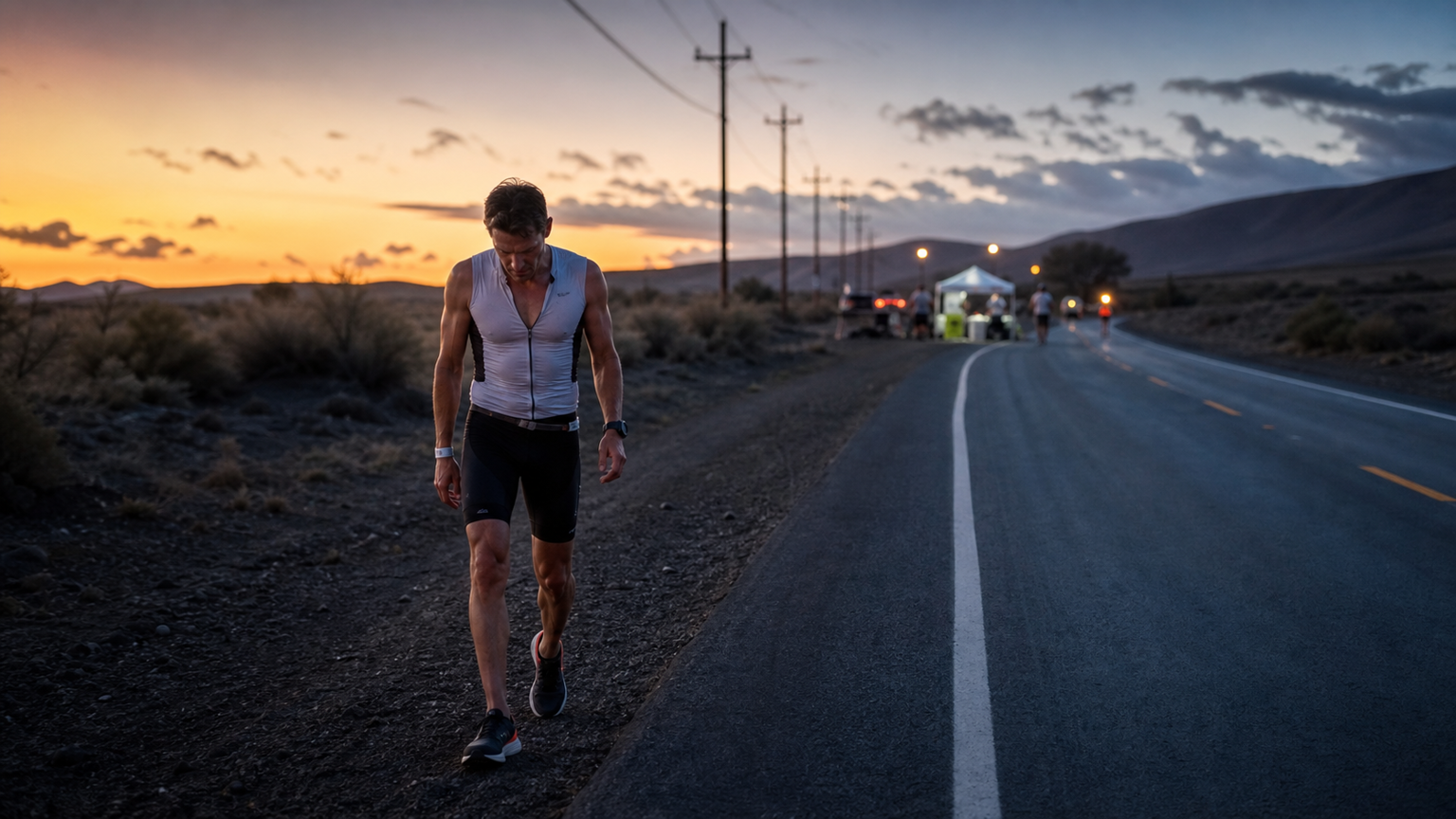
13 Hours 22 Minutes: Three Conversations with the Urge to Quit
This is not a race report bragging about numbers. My IM time of 13:22 is unremarkable, but the three times I genuinely wanted to quit and talked myself back—that is what this sport truly taught me.
Race Milestones
| Segment | Time | Mental State |
|---|---|---|
| Swim 3.8km | 1:18 | Excited, everything on plan |
| Bike 180km | 6:05 | First urge to stop at km 140 |
| First half of run | 2:25 | Still holding on |
| Run km 28–35 | — | Deepest dark zone, second and third urges to quit |
| Finish line | 13:22 | Crying uncontrollably |
First Breakdown: Bike km 140
Headwind, saddle soreness, and I started calculating, “If I quit now, I can still catch the return flight.” What saved me was the sentence I had written on my race number belt before the race: “You have trained this feeling a thousand times.” I ate a banana and narrowed my goal to “just make it to the next aid station.”
The Deepest Dark Zone: Marathon km 30
My legs weren’t in pain—they just “didn’t feel like my legs.” My mind kept replaying reasons to quit. I used chunking—not thinking about the finish line, just running to the next utility pole, then walking 20 steps to the aid station. One pole at a time, I tricked myself to the finish.
The Truth About Crossing the Finish Line
The uncontrollable crying at the finish wasn’t because of the glory of completing the race. It was because I had argued with that voice urging me to quit for 13 hours—and I won.
Breaking the Dark Zone into “Executable Small Units”
The value of an IM 13:22 isn’t in the numbers; it’s in the methodology of wanting to quit three times and walking back each time. The common technique is chunking: when the finish-line goal feels overwhelmingly hopeless, shrink it to units achievable within 30 seconds—“hold on to the next aid station,” “run to the next utility pole, then walk 20 steps”—so the brain keeps receiving the positive feedback of “completion,” bypassing the urge to quit.
Three Breakdown Points and Corresponding Strategies
| Point | Mental State | Strategy Used |
|---|---|---|
| Bike km 140 | Calculating return flights, wanting to stop | Pre-written belief sentence on race number belt + shrinking goal to next aid station |
| Run km 28–35 | “Legs don’t feel like mine” | Utility-pole chunking, not thinking about the finish |
| Finish line | 13-hour standoff with the voice of quitting | Redefining completion as “beating that voice” |
Common Mistake: Treating a Full-Distance Triathlon as a Physical Race
The biggest cognitive error is thinking an IM is all about the legs. In reality, the latter half of a 226 is “a negotiation between you and the voice of quitting in your head”—fitness is just the entry ticket. Writing a sentence on your race number belt before the race that can anchor you in your darkest moment (“You have trained this feeling a thousand times”), breaking the finish line into utility poles—once you learn this negotiation skill, it will stay with you for the rest of your life, far more valuable than any medal.
A full-distance triathlon is never a physical race; it is a negotiation between you and that voice of quitting in your head. The finish medal doesn’t matter. What matters is discovering that the voice can be talked back to, ignored, and walked past. Once you learn this, it will stay with you for the rest of your life.
Related Reading
- Ironman 226 Full-Distance Training: A 30-Week Journey from Zero to Finish
- IRONMAN 226 Full-Distance Pacing Art: How to Keep the Final Marathon from Becoming a Death March
- IM 226 Finish Tactics — A Complete Guide to Nutrition Rhythm, Negative Splits, and Body Temperature Management
- Sub-13 226: An Age-Grouper’s Complete Upgrade Plan to Finish
2016 桐花飛舞 單車挑戰 精華片段
10 年前
一日北高 11小時 賽後心得分享篇 | TWB北高360 | 一日雙城 | 單車 | 公路車
6 年前
TBA 北高360 逆風爆熱再送空汙 苦行挑戰賽全記錄 4K沈浸式臨空畫質| 公路車 | CT Yeh
3 年前
西進武嶺 世界紀錄挑戰!破2:30 ?!一群人推著一個夢上山 直播精華版 / ft. 張翰允 & 台視主播魏于恬 & KPLUS / #cycling 公路車 CT Yeh
2 個月前
2019 夏季KOM 5小 完賽心得 準備攻略 東進武嶺 夏季登山王之路 Taiwan KOM Challenge
7 年前
2026台北自行車展 一日隨意逛小紀錄 / 風櫃嘴16分國手的交流 / 踩台居然刷到季軍🥉 USD150 GET! / ! / CT Yeh
4 個月前
2019 柯P 超越北高 第一集團實錄 (11小時實錄請參考另一部影片) 一日雙城 一日北高 NeverStop Taiwan Long Distance Cycling Challenge
7 年前
全段數據 2024富士山登山賽 ((銅環)) 請開字幕! /全程解說版 4K高畫質/ feat. 樂華演城旭 / 公路車 / CT Yeh / 第20回Mt.富士ヒルクライム
2 年前